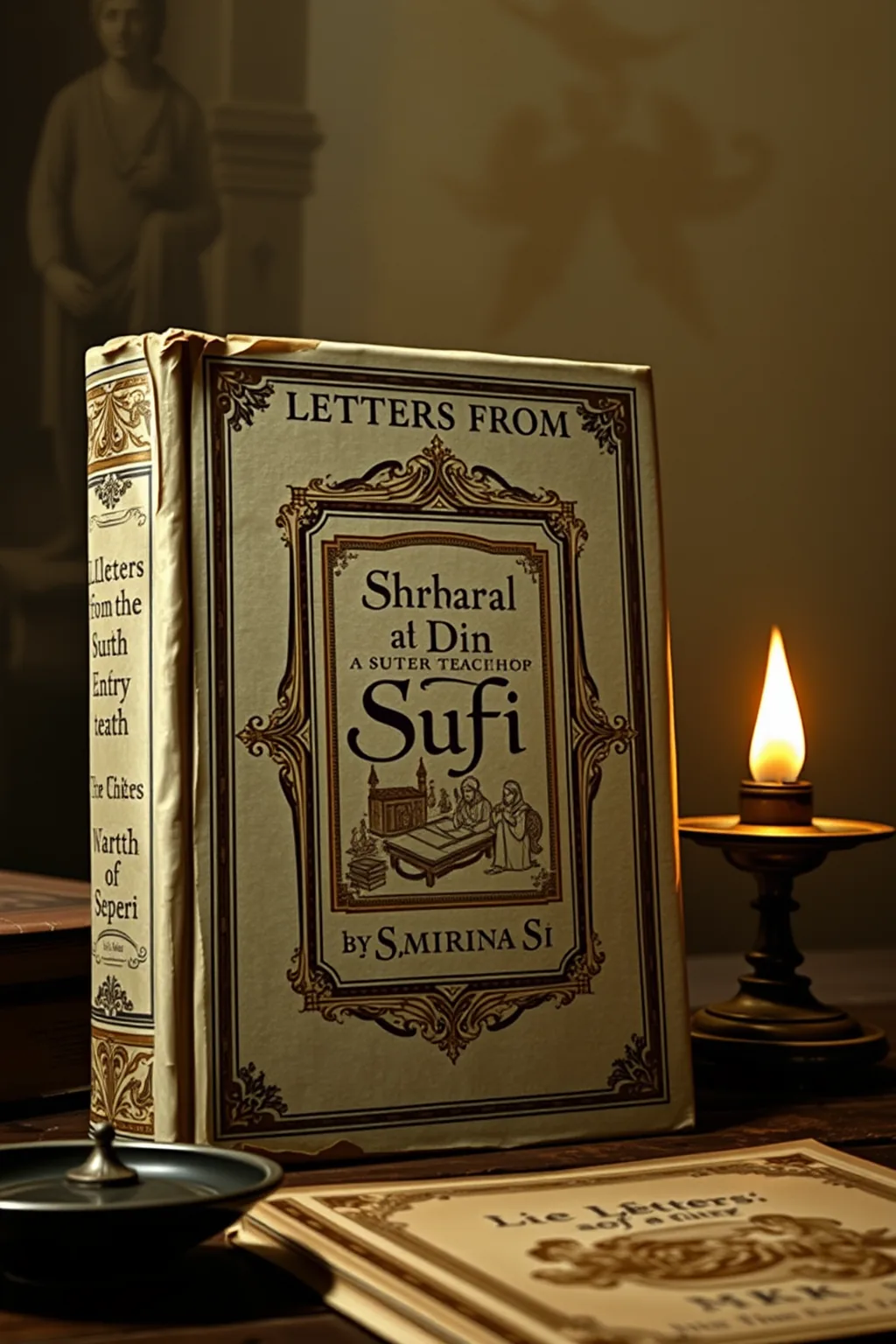
Letters from a Sufi Teacher by Sharf al-Din Maneri
 78
78

Letters from a Sufi Teacher by Sharf al-Din Maneri



Sophia Crane (Associate Editor) — Smirna Si's 'Letters from a Sufi Teacher' is an indispensable addition to the esoteric canon. Sharf al-Din Maneri's Maktubat, rendered with exquisite clarity, offers unparalleled access to the practical teachings of a pre-eminent Sufi master. The letters illuminate the subtle stages of the spiritual path, from the initial stirrings of divine longing to the profound realization of unity. Si’s translation preserves the direct, personal tone, making these ancient counsels resonate with contemporary seekers. This work is essential for anyone deeply engaged with Sufism, mysticism, or the perennial quest for self-transcendence, providing profound insights into the nature of the soul and its relationship with the Divine.
📝 Description
78
Sharf al-Din Maneri's letters, written in 14th-century India, offer direct spiritual counsel.
Smirna Si translates these letters from Shaykh Sharf al-Din Maneri, a significant figure in the 14th-century Indian Sufi tradition. The collection presents Maneri's correspondence, which addresses the practical and experiential aspects of the spiritual path. These are not abstract theological treatises but rather direct communications intended to guide disciples. Maneri discusses the soul's progression, the challenges posed by the ego, and the importance of devotion. His writings aim to illuminate the way for individuals seeking to integrate spiritual principles into their everyday lives.
The missives cover topics such as the nature of divine love, the practice of constant remembrance, and the inner transformation that arises from sincere spiritual effort. Si's translation makes these teachings accessible to a modern audience, retaining the directness and warmth of the original Arabic and Persian. The letters stand as a testament to the enduring relevance of Sufi teachings for those interested in contemplative practices and the development of inner awareness.
Sharf al-Din Maneri belonged to the Suhrawari-Firdausi order, a prominent Sufi tradition in medieval India. This order, like others within Sufism, emphasized both the theoretical understanding of mystical concepts and the practical application of spiritual disciplines. Maneri's letters reflect this emphasis, offering concrete advice on how to cultivate inner states and navigate the spiritual journey. His work fits within a broader lineage of Sufi literature that uses personal correspondence to transmit spiritual knowledge and foster the growth of disciples, connecting the individual seeker to the divine.
💡 Why Read This Book?
Embark on a direct dialogue with a 14th-century Sufi master. 'Letters from a Sufi Teacher' offers practical guidance on navigating the spiritual journey, revealing the subtle yet profound truths of divine love and self-realization. Ideal for sincere seekers, contemplative souls, and scholars of mysticism seeking authentic esoteric wisdom.
⭐ Reader Reviews
Honest opinions from readers who have explored this book.
❓ Frequently Asked Questions
Who was Sharf al-Din Maneri?
Sharf al-Din Maneri (d. 1381) was a prominent Sufi saint and scholar of the Suhrawari-Firdausi order in medieval India, renowned for his profound spiritual insights and influential teachings.
What is the significance of the 'Maktubat'?
The 'Maktubat' (Letters) are a collection of spiritual dispatches from Shaykh Maneri, offering direct, practical advice and profound reflections on the Sufi path, serving as a vital source of wisdom for generations of seekers.
What is the Suhrawari-Firdausi order?
It is a major Sufi order with roots in Persia, known for its emphasis on ecstatic love, spiritual discipline, and the integration of Sharia (Islamic law) with esoteric practices.
Is this book suitable for beginners?
Yes, while rich in depth, the direct, personal nature of the letters makes them accessible to sincere beginners, offering a gentle yet profound introduction to Sufi principles and practices.
What kind of spiritual guidance can one expect?
Expect guidance on cultivating divine love, overcoming egoic obstacles, understanding the stages of spiritual realization, and living a life of constant remembrance and devotion to the Divine.
🔮 Key Themes & Symbolism
The Path of Divine Love (Ishq)
At the core of Maneri's teachings lies the transformative power of divine love, or 'Ishq.' He elucidates how this fervent devotion acts as the primary catalyst for spiritual progress, burning away the veils of ego and ignorance. The letters reveal love not as a passive emotion, but as an active, purifying force that guides the seeker through every trial and ascent. Maneri emphasizes that true love for the Divine is an all-encompassing state, permeating every aspect of existence and leading to an intimate, personal relationship with the Beloved.
Stages of the Soul's Journey (Sayr al-Suluk)
Maneri provides a detailed, yet accessible, map of the soul's arduous ascent towards divine proximity. His letters illuminate the various stations (maqamat) and states (ahwal) that a sincere traveler must navigate. He addresses the challenges of traversing the lower self (nafs), the purification of the heart (qalb), and the eventual unveiling of the spirit (ruh). This intricate understanding of spiritual psychology offers practical wisdom for overcoming inner obstacles and deepening one's connection to the Divine reality.
Ego (Nafs) and its Subjugation
A central theme is the relentless battle against the ego, the 'nafs,' which Maneri identifies as the primary barrier to spiritual realization. Through vivid metaphors and direct admonishments, he guides the reader in recognizing the subtle machinations of the ego and developing strategies for its subjugation. This involves cultivating virtues like humility, patience, and sincere repentance, transforming the ego from a veil into a vehicle for divine service and ultimately, annihilation in the Divine presence.
💬 Memorable Quotes
Direct passages from the work, attributed to the author.
“Love is the fire that purifies the soul.”
— This metaphor emphasizes love's transformative power, suggesting that intense devotion acts as a cleansing agent, burning away impurities and egoic attachments.
“The path is long, but the destination is near.”
— This paradoxical statement points to the inner nature of spiritual progress, where the greatest obstacles are internal, and the realization of the Divine is always accessible to the sincere heart.
“Seek the Beloved within, not without.”
— This underscores the introspective nature of the Sufi path, directing the seeker's attention inward to discover the Divine presence residing within their own being.
“Every moment is an opportunity for remembrance.”
— This encourages constant mindfulness and devotion, framing each instant as a chance to deepen one's connection with the Divine through remembrance (dhikr).
💡 Key Ideas
Editorial paraphrase of the work's core concepts — not direct quotes.
The heart is the mirror of the Divine.
This quote highlights the Sufi belief that the human heart, when purified, can reflect the Divine essence, serving as the primary locus for spiritual perception and connection.
🌙 Esoteric Significance
Tradition
This work is a core part of the Indian Sufi tradition, particularly the Suhrawari-Firdausi lineage. It embodies the esoteric dimensions of Islam, focusing on the inner purification of the soul, the direct experience of divine love, and the subtle pathways of spiritual ascent. Maneri's teachings emphasize the practical application of Sufi principles, moving beyond dogma to the lived reality of spiritual transformation and intimate communion with the Divine.
Symbolism
Maneri's letters are rich with symbolism drawn from Islamic mysticism and universal spiritual archetypes. The 'heart' (qalb) is depicted as a mirror, a locus of divine reflection. 'Love' (ishq) is a purifying fire. The 'nafs' (ego) is a veiled enemy or a restless beast. The journey of the soul is often symbolized by a path or a climb. These symbols serve as potent keys to unlock deeper layers of meaning, guiding the seeker to recognize the Divine presence within and the illusory nature of the material world.
Modern Relevance
In an age often characterized by materialism and spiritual seeking, Maneri's letters offer profound and timeless guidance. His emphasis on inner peace, the cultivation of divine love, and the practical methods for overcoming the ego resonates deeply with contemporary individuals grappling with stress, anxiety, and a sense of disconnection. The direct, accessible nature of his counsel provides a much-needed antidote to superficial spiritual pursuits, offering a pathway to authentic self-discovery and lasting spiritual fulfillment.
👥 Who Should Read This Book
This profound collection is essential for dedicated seekers of spiritual truth, particularly those drawn to the path of Sufism and Islamic mysticism. Scholars of comparative religion and esoteric traditions will find invaluable primary source material. Practitioners of contemplative prayer and meditation will benefit from Maneri's practical insights into the stages of spiritual development. Even beginners on the spiritual path will find the direct, compassionate tone of the letters to be an accessible yet deeply informative introduction to the heart of mystical experience.
📜 Historical Context
Sharf al-Din Maneri lived during a vibrant period of Islamic intellectual and spiritual flourishing in the Indian subcontinent, specifically the Delhi Sultanate era. The 14th century witnessed the consolidation of Sufi influence, with orders like the Suhrawari and Firdausi playing significant roles in disseminating Islamic mysticism to diverse populations. This was a time when Sufi saints often served as spiritual guides, social reformers, and cultural intermediaries, bridging the gap between the ruling elite and the common people. Maneri's letters, originating from Bihar, reflect the regional adaptations and the enduring appeal of Sufi teachings across different cultural landscapes, offering a window into the practical spirituality that shaped lives and communities.
📔 Journal Prompts
Reflect on a time when you felt a profound sense of divine love. What were the circumstances, and how did it transform your perspective?
Identify one aspect of your ego (nafs) that you believe hinders your spiritual progress. How can you begin to consciously work with it?
Consider the metaphor of the heart as a mirror. What 'dust' might be obscuring its clarity, and what practices can help polish it?
If you were to write a letter to your future spiritual self, what guidance would you offer based on your current understanding?
How can you integrate the principle of 'constant remembrance' into your daily activities, even amidst mundane tasks?
🗂️ Glossary
Nafs
In Islamic mysticism, the 'nafs' refers to the lower self, the ego, or the soul's carnal inclination. It is often seen as the primary obstacle on the spiritual path, requiring purification and subjugation.
Qalb
The 'qalb,' or heart, in Sufism, is not merely the physical organ but the spiritual center of perception, intuition, and divine knowledge. It is considered the seat of the soul's connection to the Divine.
Ishq
An intense, passionate, and often ecstatic form of divine love that is central to Sufi spirituality. It signifies a profound yearning and devotion for God, capable of transforming the lover.
Maqamat
Plural of 'maqam,' meaning 'station' or 'stage.' These are the progressive spiritual states or levels that a Sufi traveler attains on the path to God, achieved through effort and divine grace.
Dhikr
The remembrance of God, often through the recitation of divine names or phrases. It is a fundamental practice in Sufism aimed at cultivating constant awareness of the Divine presence.
This book appears in 2 collections
🔮 Readers Also Liked
Browse all →







More by Smirna Si
All books →


From the “Christian Mysticism” Collection
View all →








More Free Mysticism & Contemplation Books
View all →