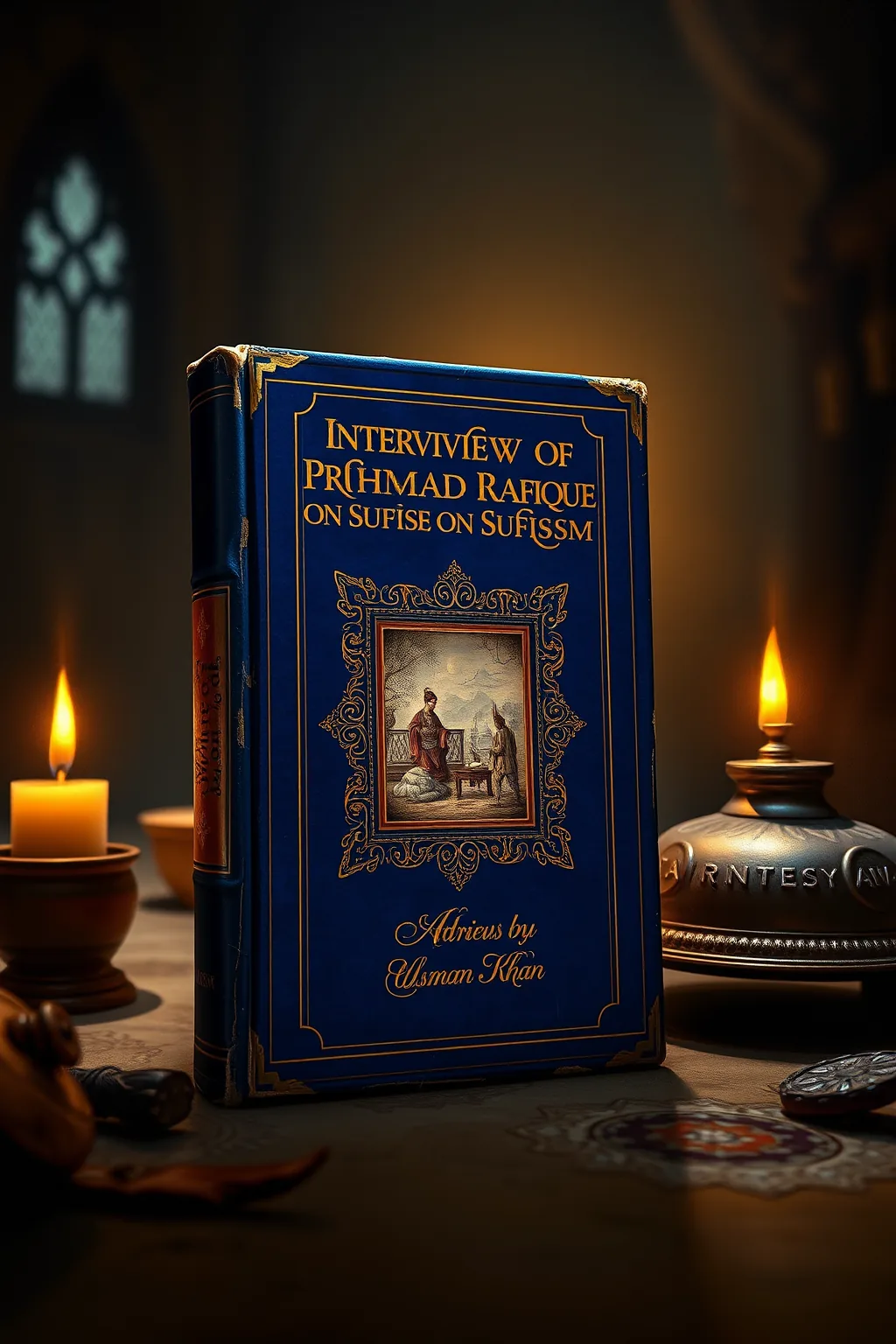
Interview of Prof Ahmad Rafique on Sufism
 79
79

Interview of Prof Ahmad Rafique on Sufism



Usman Khan's "Interview of Prof Ahmad Rafique on Sufism" is a rare gem, offering direct access to the profound insights of a contemporary Sufi master. Professor Akhtar's articulation of Sufi principles is both accessible and deeply evocative, revealing the esoteric dimensions of Islamic spirituality with clarity and grace. Khan’s skillful curation ensures a cohesive and illuminating narrative. This work is particularly valuable for its nuanced exploration of the spiritual journey, emphasizing love, devotion, and the transformative power of remembrance. Esoteric scholars and practitioners alike will find rich material for contemplation and study, making it a vital addition to any library dedicated to mystical traditions.
📝 Description
79
Usman Khan interviewed Professor Ahmad Rafique Akhtar about Sufism in Pakistan.
This interview with Professor Ahmad Rafique Akhtar, a notable figure from Pakistan's mystical tradition, was conducted by Usman Khan. It aims to illuminate the core tenets of Islamic mysticism, moving beyond a simple biographical account. The discussion reveals details about Sufi contemplative practices, their symbolic language, and the path toward spiritual transformation. Professor Akhtar addresses the universal human desire for divine connection, the process of soul purification, and the pursuit of ecstatic union with God. The conversation encourages readers to consider a more profound understanding of existence. It is intended for those interested in inner truth, comparative religion studies, and spiritual realization. The work connects ancient wisdom with contemporary spiritual yearning.
This interview engages with Sufism, the mystical dimension of Islam. It touches upon concepts central to Sufi thought, such as the purification of the self (tazkiyah) and the ecstatic experience of divine presence (wajd). The discussion likely draws from the rich intellectual and spiritual heritage of South Asian Sufi orders, which have historically emphasized both scholarly learning and direct experiential knowledge of the divine. Professor Akhtar's insights place this tradition within the broader context of esoteric paths seeking direct communion with the ultimate reality.
💡 Why Read This Book?
Uncover the living heart of Sufism through the direct voice of a revered master. This interview offers profound esoteric insights into the nature of the soul, divine love, and the path of spiritual purification. Ideal for seekers yearning for authentic wisdom, scholars investigating Islamic mysticism, and practitioners seeking to deepen their contemplative practice with practical guidance and profound understanding.
⭐ Reader Reviews
Honest opinions from readers who have explored this book.
❓ Frequently Asked Questions
Who is Professor Ahmad Rafique Akhtar?
Professor Ahmad Rafique Akhtar is a highly respected and well-known Sufi scholar and practitioner from Pakistan, recognized for his deep wisdom and articulate expression of Sufi teachings and philosophy.
What is Sufism?
Sufism, often referred to as the esoteric or mystical dimension of Islam, is a spiritual path focused on direct experience of God, emphasizing love, devotion, self-purification, and the pursuit of divine knowledge through inner contemplation and practice.
What kind of topics are covered in this interview?
The interview delves into core Sufi concepts such as the nature of the Divine, the journey of the soul, the importance of a spiritual guide, the role of love and devotion, and the practical application of Sufi principles in daily life.
Is this book suitable for beginners interested in Sufism?
Yes, while rich in depth, the interview's conversational format makes it accessible to those new to Sufism, offering a clear and engaging introduction to its fundamental tenets and practices.
What is the significance of Professor Akhtar's perspective from Pakistan?
His perspective is significant as it comes from a region with a long and vibrant Sufi heritage, offering authentic insights rooted in a living tradition and providing a unique cultural and spiritual context.
🔮 Key Themes & Symbolism
The Divine Beloved and the Heart's Journey
This theme explores the central Sufi concept of the Divine Beloved, understood not as a distant deity but as the intimate object of all love and longing. The interview illuminates the 'heart's journey' as the core of the Sufi path—a transformative process of shedding egoic limitations and purifying the inner self to become a vessel for divine presence. Professor Akhtar articulates how this journey is navigated through remembrance (dhikr), contemplation, and the cultivation of unconditional love, leading to an ever-deepening awareness of unity and ecstatic connection with the Absolute.
The Role of the Spiritual Guide (Murshid)
Central to Sufi practice is the indispensable role of the spiritual guide, or Murshid. This theme examines the profound necessity of having a teacher who has traversed the spiritual path and can illuminate the way for disciples. Professor Akhtar explains how the Murshid acts as a mirror, reflecting the disciple's inner state, and as a beacon, guiding them through the intricate landscapes of the soul. The interview highlights the transmission of spiritual knowledge and grace that occurs through this sacred relationship, emphasizing trust, surrender, and devoted adherence to the guide's wisdom.
Symbolism and Inner Transformation
The interview unpacks the collection of symbolism inherent in Sufi tradition, revealing how seemingly simple narratives, metaphors, and practices are imbued with profound esoteric meaning. Professor Akhtar guides the reader to see beyond the literal, understanding concepts like the 'tavern,' 'wine,' and 'nightingale' as allegories for spiritual states and divine intoxication. This theme emphasizes that outward forms are but veils for deeper truths, and true transformation occurs not through external observance alone, but through the inner alchemy of the heart, leading to a profound reorientation of one's perception of reality.
💬 Memorable Quotes
Direct passages from the work, attributed to the author.
“The heart is the mirror; polish it, and you will see the Beloved.”
— This highlights the Sufi practice of inner purification, suggesting that the heart, when cleansed of worldly distractions and ego, becomes capable of reflecting the divine presence.
“Dhikr is not just remembrance, but a conscious presence with the Divine.”
— This emphasizes that Sufi remembrance (dhikr) is an active state of awareness and constant communion with God, rather than mere mechanical recitation.
“The path is not about finding God, but about realizing He has always been within.”
— This speaks to the Sufi understanding of immanence and the journey of recognizing the divine spark that already resides within every individual.
“True knowledge is not learned from books, but tasted in the heart.”
— This underscores the experiential nature of Sufi wisdom, prioritizing direct spiritual insight and realization over purely intellectual understanding.
💡 Key Ideas
Editorial paraphrase of the work's core concepts — not direct quotes.
Love is the essence of all existence, the divine fire that purifies the soul.
This quote captures the Sufi emphasis on divine love as the fundamental principle of creation and the primary catalyst for spiritual growth and purification of the self.
🌙 Esoteric Significance
Tradition
This interview is deeply embedded within the Sunni Islamic Sufi tradition, specifically drawing upon the rich, devotional, and experiential dimensions of the faith. It represents a contemporary expression of a path that traces its origins to the Prophet Muhammad and has been historically shaped by masters like Al-Ghazali, Rumi, and the various Sufi orders (tariqas) prevalent in South Asia. The focus is on the inner purification of the soul and the direct experience of divine reality through love, contemplation, and disciplined practice.
Symbolism
The interview illuminates key Sufi symbolism, such as the 'heart' as the locus of divine perception, 'love' as the divine essence and path, and 'annihilation' (fana) of the ego to achieve union with the Divine. Concepts like the 'veil' represent worldly distractions obscuring truth, while 'intoxication' signifies spiritual ecstasy. Professor Akhtar likely uses these symbolic languages to convey profound spiritual states and stages of the soul's journey, offering a deeper, esoteric understanding beyond literal interpretation.
Modern Relevance
In an age often characterized by materialism, spiritual fragmentation, and a perceived disconnect from the sacred, Professor Akhtar's teachings offer a powerful antidote. His emphasis on inner peace, unconditional love, and the cultivation of a contemplative life provides timeless guidance for navigating modern anxieties. The interview demonstrates that the ancient wisdom of Sufism is not an anachronism but a living, dynamic path offering profound psychological and spiritual solutions, fostering a sense of unity and purpose in an often-disjointed world.
👥 Who Should Read This Book
This profound interview is essential reading for anyone seeking to understand the living heart of Islamic mysticism. **Beginners** will find an accessible yet informative introduction to Sufi philosophy and practice. **Scholars** of religion and comparative mysticism will appreciate the nuanced articulation of core concepts and their contemporary relevance. **Spiritual seekers** yearning for deeper connection, divine love, and inner transformation will discover invaluable guidance and inspiration. **Practitioners** of contemplative traditions, regardless of their background, will find rich insights to deepen their own spiritual journey and expand their understanding of the universal quest for truth.
📜 Historical Context
Professor Ahmad Rafique Akhtar's insights emerge from a lineage deeply rooted in the collection of South Asian Sufism, a tradition that flourished for centuries under various dynasties and cultural influences. The interview takes place in a contemporary era, where the ancient wisdom of Sufism continues to resonate amidst the complexities of modern life and evolving geopolitical landscapes. Pakistan, as a nation, has inherited a profound Sufi heritage, with numerous saints and scholars shaping its spiritual identity. Akhtar's perspective is informed by this historical continuity, offering a voice that bridges the classical teachings of figures like Rumi and Data Ganj Bakhsh with the present-day challenges and opportunities for spiritual seekers. His articulation reflects an ongoing effort to preserve, interpret, and transmit the living essence of Sufism, ensuring its relevance and accessibility to new generations.
📔 Journal Prompts
Reflect on a time you felt a profound sense of love. How did this experience connect with the Sufi concept of Divine Love?
What does 'purifying the heart' mean to you in your daily life? What are the obstacles and how might you address them?
Consider the role of a 'guide' in your life, not necessarily a spiritual teacher, but someone who has illuminated your path. What qualities do they possess?
How can the concept of 'remembrance' (dhikr) be integrated into mundane activities to foster a greater sense of Divine presence?
If the 'heart is a mirror,' what impurities might be preventing you from seeing your true self or the Divine?
🗂️ Glossary
Sufism
The mystical, esoteric, or inner dimension of Islam, focused on the direct experiential knowledge of God through love, devotion, and spiritual discipline.
Murshid
A spiritual guide or master in Sufism, who leads disciples on the path towards divine realization through instruction and spiritual guidance.
Dhikr
The remembrance of God, often practiced through chanting divine names, recitation of prayers, or meditative focus, central to Sufi spiritual discipline.
Fana
An Arabic term meaning 'annihilation' or 'dissolution,' referring to the Sufi concept of the annihilation of the ego or lower self in the Divine presence.
Tariqa
A Sufi order or spiritual path, characterized by a specific set of teachings, practices, and a lineage of spiritual masters.
This book appears in 2 collections
🔮 Readers Also Liked
Browse all →

![The mystic oracle, or, The complete fortune-teller and dream book / [F.M. Lupton].](/img/thumb/the-mystic-oracle-or-the-complete-fortune-teller-and-dream-book-f-m-lupton.webp)




From the “Christian Mysticism” Collection
View all →





More Free Mysticism & Contemplation Books
View all →