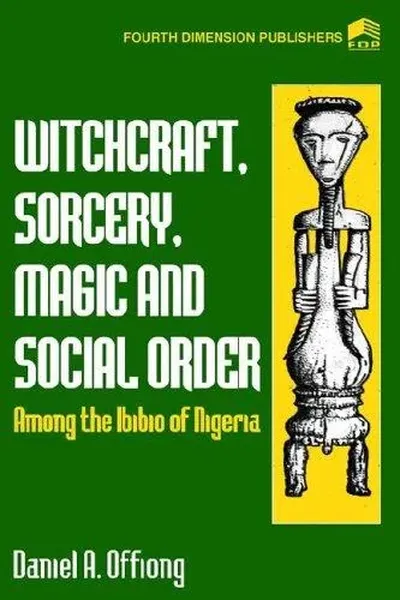
Witchcraft, sorcery, magic, and social order among the Ibibio of Nigeria

 73
73

Witchcraft, sorcery, magic, and social order among the Ibibio of Nigeria
Daniel A. Offiong’s 1991 study offers a sober, analytical look at Ibibio witchcraft and its role in social order. It moves beyond sensationalism, presenting a functionalist perspective where sorcery and witchcraft accusations serve to regulate behavior and address societal discord. The strength lies in its detailed ethnography, providing a grounded view of these practices. However, the work occasionally feels dated in its theoretical framing, leaning heavily on structural-functionalist interpretations prevalent in its publication era. A particularly striking element is the discussion of how accusations of witchcraft can be used to ostracize those who deviate from community norms, illustrating a potent form of social policing. Offiong’s book is a solid, if somewhat conventional, academic examination of a complex cultural phenomenon.
📝 Description
73
### What It Is This 1991 ethnographic study examines the intricate relationship between witchcraft, sorcery, and magic and the maintenance of social order within the Ibibio society of Nigeria. Daniel A. Offiong meticulously details the beliefs and practices surrounding these phenomena, presenting them not as mere superstition but as integral components of the cultural and social fabric.
### Who It's For Scholars of African religions, anthropology, sociology, and comparative religion will find this work particularly valuable. It is also for those interested in understanding how societies conceptualize and manage deviance, power, and social control through supernatural beliefs and practices. Individuals studying indigenous legal systems and belief structures will benefit.
### Historical Context The book emerged from a period of significant anthropological inquiry into African societies and their belief systems. Published in 1991, it contributes to a broader scholarly discourse that sought to understand indigenous knowledge systems beyond colonial or Western frameworks. Offiong's work engages with existing anthropological literature on witchcraft and social order.
### Key Concepts Central to the study are the concepts of witchcraft (often seen as an innate, malevolent force) and sorcery (actions performed through learned techniques). The work explores how accusations of these practices function as mechanisms for social control, reinforcing norms, and addressing societal anxieties within the Ibibio community.
💡 Why Read This Book?
• Gain a nuanced understanding of how witchcraft and sorcery function not as abstract evil, but as active forces shaping social order and individual conduct among the Ibibio, as detailed in Offiong's ethnographic accounts. • Learn about the specific mechanisms of social control employed through accusations of witchcraft, as described in the book, offering insights into societal regulation beyond formal legal systems. • Explore the concept of the 'witch' and 'sorcerer' within the Ibibio context, moving beyond Western preconceptions to grasp their socio-cultural roles as presented in the 1991 study.
⭐ Reader Reviews
Honest opinions from readers who have explored this book.
❓ Frequently Asked Questions
What year was Daniel A. Offiong's study on Ibibio witchcraft first published?
Daniel A. Offiong's comprehensive study, 'Witchcraft, sorcery, magic, and social order among the Ibibio of Nigeria,' was first published in 1991.
What is the primary focus of the book regarding the Ibibio people?
The book's primary focus is the intricate relationship between witchcraft, sorcery, magic, and the maintenance of social order within the Ibibio society of Nigeria.
Does the book present witchcraft as purely negative?
No, the book presents witchcraft and sorcery as integral components of the cultural and social fabric, often functioning as mechanisms for social control and the regulation of societal anxieties.
Who would find this ethnographic study most beneficial?
Scholars of African religions, anthropology, sociology, comparative religion, and those interested in indigenous legal systems and belief structures will find this study particularly beneficial.
What key concepts are explored concerning Ibibio belief systems?
The work explores concepts of witchcraft (innate malevolence) and sorcery (learned techniques), and how accusations of these phenomena serve to reinforce social norms and manage societal discord.
Is this book a primary source for Ibibio cultural practices?
While an academic study, it functions as a detailed ethnographic account, providing primary sociological and anthropological data on Ibibio beliefs and practices regarding witchcraft and social order as observed around the time of its research.
🔮 Key Themes & Symbolism
Witchcraft as Social Control
Offiong's work details how beliefs in witchcraft and sorcery are not merely supernatural phenomena but active tools for maintaining social order among the Ibibio. Accusations serve to police behavior, enforce community norms, and ostracize individuals who deviate from expected conduct. This function highlights the critical role of belief systems in regulating societal interactions and addressing internal tensions.
The Ibibio Conception of Magic
The book distinguishes between witchcraft, often viewed as an inherent, potentially malevolent force, and sorcery, understood as practices learned and performed through specific techniques. Understanding this distinction is crucial to grasping the societal implications of each and how they are addressed within the Ibibio worldview. Magic, in its broader sense, encompasses these practices as integral to their reality.
Societal Order and Supernatural Belief
This study emphasizes the deep integration of supernatural beliefs into the practical functioning of society. For the Ibibio, magic, witchcraft, and sorcery are not separate from daily life but are interwoven with their understanding of justice, power, and social cohesion. The book illustrates how these beliefs provide frameworks for understanding misfortune and maintaining equilibrium.
Ethnographic Analysis of Belief
Daniel A. Offiong employs rigorous ethnographic methods to present a factual account of Ibibio beliefs and practices concerning witchcraft and magic. The work aims to provide an objective, analytical perspective, moving beyond simplistic interpretations to explore the functional significance of these beliefs within their specific socio-cultural context.
💬 Memorable Quotes
“Accusations of witchcraft are often employed to deal with social deviants.”
— This paraphrased concept highlights a key function of witchcraft beliefs: serving as a mechanism to identify and isolate individuals who transgress societal norms, thereby reinforcing the collective order.
“Sorcery is understood as a learned skill, often involving ritualistic actions.”
— This interpretation emphasizes the practical, performative aspect of sorcery within the Ibibio context, distinguishing it from witchcraft and underscoring its role as a deliberate practice rather than an innate state.
“The concept of magic is deeply embedded in the Ibibio understanding of the world.”
— This statement underscores the pervasive influence of magical thinking in the Ibibio worldview, suggesting that supernatural forces and practices are not peripheral but central to their interpretation of reality and social dynamics.
“Social order is maintained through a complex interplay of beliefs and practices.”
— This paraphrased concept points to the dynamic equilibrium within Ibibio society, where supernatural beliefs, including witchcraft and sorcery, actively contribute to the structure and stability of social relationships and community norms.
“The study examines the functional significance of witchcraft beliefs.”
— This highlights Offiong's analytical approach, focusing on *why* these beliefs persist and what purpose they serve within the Ibibio social structure, rather than simply cataloging them.
🌙 Esoteric Significance
Tradition
While not explicitly aligning with a specific Western esoteric tradition like Hermeticism or Kabbalah, Offiong's work is significant for scholars of comparative religion and anthropology interested in the universal aspects of magic and belief. It provides a detailed case study of indigenous systems that, when studied comparatively, can illuminate cross-cultural patterns in how humanity conceptualizes unseen forces and their impact on the material world.
Symbolism
The book implicitly engages with symbols of social order and disorder. Witchcraft, as an often-invisible yet potent force, symbolizes the breakdown of community bonds or the manifestation of hidden malice. Sorcery, involving learned practices, can symbolize the manipulation of these forces for personal gain or retribution. The social order itself acts as a symbolic representation of collective well-being threatened by these unseen elements.
Modern Relevance
Contemporary studies in cultural anthropology, sociology of religion, and even fields like global security (concerning conflict and belief) draw upon detailed ethnographies like Offiong's. Understanding how societies historically and presently integrate belief in magic and sorcery into their social structures remains vital for comprehending diverse cultural logics and the resilience of non-Western epistemologies.
👥 Who Should Read This Book
• Anthropologists and sociologists studying social control mechanisms in non-Western societies, who will gain concrete examples of how belief systems shape community regulation. • Students of comparative religion and African studies, looking for detailed ethnographic data on indigenous belief systems and their societal functions. • Researchers interested in the cross-cultural phenomenology of magic, witchcraft, and sorcery, seeking to understand these phenomena beyond Western interpretations.
📜 Historical Context
Published in 1991, Daniel A. Offiong's work entered a scholarly landscape still heavily influenced by earlier anthropological debates on African magic and social order, particularly the functionalist perspectives of scholars like E.E. Evans-Pritchard. The late 20th century saw a growing demand for nuanced ethnographic accounts that moved beyond colonial-era stereotypes and acknowledged the internal logic of indigenous belief systems. Offiong's study contributed to this by meticulously detailing the Ibibio conception of witchcraft and sorcery, presenting them as integral to the maintenance of social cohesion and the management of deviance. This period also saw increased engagement with African scholars themselves shaping these discussions, moving away from purely Western-centric interpretations. The work aimed to provide a rigorous, non-sensationalist analysis relevant to ongoing discussions in anthropology and sociology regarding belief systems and social control.
📔 Journal Prompts
The function of witchcraft accusations in Ibibio social control.
How sorcery practices differ from witchcraft in the Ibibio context.
The integration of magic into daily Ibibio life.
Mechanisms for reinforcing social order through belief systems.
The role of supernatural beliefs in managing societal anxieties.
🗂️ Glossary
Witchcraft
In the Ibibio context as described by Offiong, often refers to an innate, inherent power or quality possessed by an individual, frequently associated with malevolent intent or the capacity to cause harm through spiritual means.
Sorcery
Refers to magical practices performed through learned techniques, rituals, or the use of magical objects. It is distinguished from witchcraft by its active, performative nature and the acquisition of specific skills.
Social Order
The stability and coherence of a society, maintained through shared norms, values, and institutions. In this context, beliefs about witchcraft and sorcery play a significant role in its maintenance and regulation.
Social Control
The means by which a society regulates the behavior of its members to ensure conformity to norms and maintain social order. Accusations of witchcraft and sorcery are presented as forms of social control.
Ibibio
An ethnic group primarily found in Akwa Ibom State and Cross River State in Nigeria, whose cultural practices, beliefs, and social structures are the subject of Offiong's study.
Magic
Encompasses the broader category of beliefs and practices involving the manipulation of supernatural forces to influence events or people, including both witchcraft and sorcery within the Ibibio framework.
Ethnography
The scientific description of the customs of individual peoples and cultures, based on fieldwork and direct observation, as employed by Offiong in this study.