 62
62

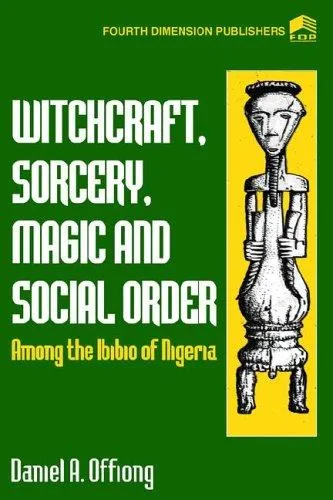
Witchcraft, sorcery, magic, and social order among the Ibibio of Nigeria


📝 Description
62
Delve into the veiled heart of Ibibio cosmology with Daniel A. Offiong's seminal work, 'Witchcraft, Sorcery, Magic, and Social Order Among the Ibibio of Nigeria.' This profound ethnographic exploration unfurls the intricate tapestry of spiritual forces that shaped Ibibio society, revealing a world where the seen and unseen dance in perpetual motion. Offiong meticulously deciphers the complex interplay between magical practices, ancestral reverence, and the very fabric of communal existence. It is a journey into hidden knowledge, exploring the potent symbolism embedded within rituals, incantations, and the nuanced understanding of cosmic balance. This book is an invitation to those who seek to comprehend the primal forces that govern human affairs, offering a rare glimpse into a pre-modern worldview steeped in the mysteries of the spirit realm. For the earnest seeker, the dedicated scholar, and the practitioner of ancient arts, this text offers a foundational understanding of a rich and potent magical tradition.
💡 Why Read This Book?
Uncover the intricate connection between magic, spirituality, and societal structure within the Ibibio culture. This book offers a rare window into ancient cosmologies, potent ritualistic practices, and the philosophical underpinnings of a vibrant African tradition. Ideal for scholars, cultural enthusiasts, and those seeking to deepen their understanding of indigenous magical systems and their role in maintaining social order.
why_read
⭐ Reader Reviews
Honest opinions from readers who have explored this book.
❓ Frequently Asked Questions
What is the primary focus of this book?
The book primarily focuses on the role of witchcraft, sorcery, and magic within the Ibibio society of Nigeria, exploring how these elements influenced their social order, beliefs, and daily life.
Is this book suitable for beginners in occult studies?
While rich in detail, it is an academic work. Beginners might find it more accessible with prior knowledge of anthropology or comparative religion, but its depth offers significant learning potential.
Does the book detail specific spells or rituals?
The book analyzes the *function* and *meaning* of magic and sorcery within Ibibio society, rather than providing a 'how-to' guide for specific spells. It offers anthropological and cultural context.
What is the historical period covered?
The book offers a comprehensive study of the Ibibio people's practices, primarily focusing on the historical period during which these traditions were actively observed and documented, reflecting traditional Ibibio life.
How does this book relate to modern witchcraft practices?
It provides historical and cultural context for understanding the roots of magical thinking and its societal integration, offering a valuable comparative perspective for modern practitioners and scholars.
🔮 Key Themes & Symbolism
The Nexus of Magic and Social Order
This theme meticulously examines how the Ibibio people integrated magical beliefs and practices, including witchcraft and sorcery, into the very structure of their society. It delves into how these esoteric forces were perceived to maintain balance, enforce norms, and address societal challenges, illustrating a worldview where the spiritual was inextricably linked to the pragmatic functioning of the community. The book explores the mechanisms through which 'witchcraft' could be both a source of fear and a tool for social control, highlighting the complex interplay of power dynamics and spiritual understanding.
Cosmological Frameworks and Symbolic Language
Central to Offiong's work is the deciphering of the Ibibio cosmological framework. This theme explores the nuanced belief systems that underpinned their understanding of the universe, the spirit world, and humanity's place within it. It unpacks the rich symbolic language employed in their rituals, myths, and everyday interactions, revealing how everyday objects and phenomena held deeper, often esoteric, meanings. Understanding this symbolic lexicon is crucial to grasping the efficacy and perceived power of their magical practices.
The Anthropology of Ritual and Belief
This theme delves into the anthropological significance of Ibibio ritual practices, exploring their function not just as symbolic acts but as vital mechanisms for navigating life's transitions, appeasing spiritual entities, and reinforcing communal bonds. Offiong meticulously details the ceremonies and rites associated with birth, death, healing, and justice, demonstrating how belief in witchcraft and sorcery shaped these crucial societal engagements. The book offers a profound insight into how shared beliefs, even those concerning unseen forces, forge collective identity and resilience.
💬 Memorable Quotes
“The witch is not merely a symbol of evil; she is a social agent.”
— This quote highlights the functional role of perceived witches within Ibibio society, suggesting their actions, real or imagined, had tangible impacts on social dynamics and order.
“Magic is the art of manipulating unseen forces.”
— A concise definition that encapsulates the core belief in the power of intention and unseen energies to influence the material world, a fundamental concept in many esoteric traditions.
“Sorcery and witchcraft often served as explanations for misfortune.”
— This points to the psychological and explanatory power of magical beliefs, providing frameworks for understanding and coping with life's hardships and uncertainties.
“Rituals are the punctuation marks of social life.”
— This evocative metaphor underscores the essential role of ceremonial practices in structuring, reinforcing, and giving meaning to the key events and transitions in a community's existence.
“The spirit world is not separate, but interwoven with our own.”
— This philosophical insight emphasizes a holistic worldview where the visible and invisible realms are in constant communication and influence, a common tenet in many indigenous spiritual systems.
🌙 Esoteric Significance
Tradition
This work is deeply rooted in the animistic and shamanistic traditions prevalent in many West African societies, particularly the Ibibio. It explores a worldview where spirits inhabit the natural world, ancestors hold significant power, and individuals can interact with these forces through ritual and specialized knowledge. It offers insights into a form of applied spirituality that emphasizes the manipulation of unseen energies for personal and communal well-being or harm, resonating with broader esoteric principles of sympathetic magic and energetic influence.
Symbolism
The Ibibio magical system, as detailed in the book, is rich with potent symbolism. Offiong likely discusses the symbolic meanings embedded in natural elements (plants, animals, stones), the human body, and abstract concepts that are then invoked in rituals and incantations. These symbols act as keys to unlocking spiritual power, establishing connections with ancestral or elemental forces, and directing magical intent. Understanding this symbolic language is crucial for deciphering the deeper layers of Ibibio sorcery and witchcraft.
Modern Relevance
In an era increasingly interested in indigenous wisdom and alternative spiritual paths, Offiong's study offers invaluable context. It highlights the enduring human need to understand and influence the forces that shape our lives, demonstrating how magic and belief systems have historically provided frameworks for social cohesion, psychological resilience, and explanations for the unknown. For modern practitioners and scholars, it provides a rich case study in the functional role of esoteric beliefs within a community, offering lessons in worldview construction and spiritual practice.
👥 Who Should Read This Book
This book is a vital resource for anthropologists and sociologists seeking to understand the intricate relationship between belief systems and societal structures in West Africa. Esoteric scholars and practitioners of magic will find profound insights into indigenous forms of sorcery and witchcraft, offering a comparative lens on magical practice. Students of comparative religion and philosophy will appreciate the deep dive into Ibibio cosmology and their understanding of spiritual forces. Finally, cultural enthusiasts curious about the rich tapestry of African spiritual traditions will discover a meticulously researched and compelling exploration of a unique worldview.
📜 Historical Context
Published in the late 20th century, Daniel A. Offiong's work emerges from a period of intense anthropological and sociological interest in African indigenous knowledge systems. It reflects a shift from colonial-era dismissals of African beliefs as 'primitive superstition' towards a more nuanced understanding of their complex social, philosophical, and spiritual significance. The book contributes to the ongoing discourse on the relationship between magic, religion, and social organization in pre-industrial societies, offering a vital ethnographical account during a time when such traditions were still vibrant and actively practiced, though increasingly influenced by external modernizing forces.
📔 Journal Prompts
How do Ibibio beliefs about witchcraft reflect universal human anxieties about power and control?
What parallels can be drawn between Ibibio ritual practices and modern therapeutic or spiritual healing modalities?
In what ways might the concept of 'social order' in the Ibibio context differ from Western societal structures, and how does magic play into this?
Reflect on a time when you attributed an event to unseen forces. How does this compare to the Ibibio explanations for misfortune?
Consider the symbolic language of Ibibio magic presented in the text. How does symbolism function in your own spiritual or belief system?
🗂️ Glossary
Witchcraft (Ibibio context)
In the Ibibio context, witchcraft refers to the alleged use of supernatural powers, often inherited or acquired through spiritual pacts, to cause harm, misfortune, or illness to others within the community.
Sorcery
Sorcery generally involves the conscious and deliberate use of magic, often through spells, charms, or rituals, to achieve specific outcomes, which can be benevolent or malevolent, distinct from the innate power attributed to witchcraft.
Social Order
The established system of rules, norms, and institutions that maintain stability and predictability within a society, which in the Ibibio case, was significantly influenced by beliefs in magic and spiritual forces.
Cosmology
The Ibibio understanding of the universe, its origin, structure, and the relationship between humanity, the natural world, and the spirit realms, including deities, ancestors, and other supernatural entities.
Ritual
A set of actions, performed according to a prescribed order, often symbolic and sacred, used by the Ibibio to communicate with the spirit world, mark important life events, or maintain social and spiritual balance.