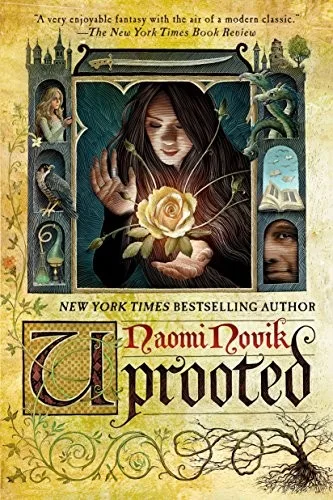
Uprooted
 83
83

Uprooted
Novik constructs a deeply atmospheric fairy tale in *Uprooted*, one that feels both familiar and startlingly original. The narrative's strength lies in its vivid portrayal of the corrupted Wood and the visceral, almost physical manifestation of magic. Agnieszka's journey from a clumsy village girl to a powerful sorceress is compelling, particularly her clash with the Dragon's rigid tutelage. However, the pacing occasionally falters in the middle sections, where the focus shifts to extended journeys that, while necessary for plot, dilute the immediate tension. A particularly memorable passage involves Agnieszka discovering her latent abilities, a moment where her uncontrolled magic erupts with wild, destructive beauty. The book ultimately offers a potent, if at times uneven, exploration of power and corruption. It’s a substantial, character-driven fantasy that rewards patient readers.
📝 Description
83
Naomi Novik’s 2016 novel *Uprooted* centers on a pact with a wizard and the encroaching, malevolent Wood.
The story follows Agnieszka, a young woman living in a village protected by a powerful wizard known as the Dragon. For ten years, one girl from the village is chosen to serve the Dragon, a sacrifice in exchange for his protection against the encroaching Wood, a dangerous, corrupted forest. Agnieszka expects to be overlooked, but the Dragon chooses her, disrupting her life and setting her on a path of unexpected magic. The novel contrasts the Dragon's ordered, learned sorcery with Agnieszka's wild, instinctual magic. As the threat of the Wood grows, Agnieszka must learn to control her untamed abilities. The narrative examines the nature of magic itself, portraying it as an intrinsic force that can be both creative and destructive. The Wood represents primal fear and corruption, a force that resists complete eradication, while the concept of 'taint' signifies the perversion of natural forms.
*Uprooted* appeals to readers who enjoy dark fairy tales and intricate magic systems. It focuses on character development and the complex relationship between mentor and student, rather than constant action. The pacing is deliberate, allowing the story and its characters to unfold gradually. This book is well-suited for those interested in folklore inspired fantasy and stories with strong, unconventional protagonists.
Published in 2016, *Uprooted* taps into a modern resurgence of interest in Eastern European folklore, particularly Polish tales. Its depiction of the Wood and the concept of 'taint' echoes Romantic era fascinations with the sublime and terrifying aspects of nature. The novel's exploration of magic as an inherent, wild force, often contrasted with structured sorcery, aligns with certain esoteric traditions that view magic as a primal energy rather than a purely intellectual pursuit. This approach resonates with a broader current in contemporary fantasy that seeks to ground magical systems in primal, natural forces.
💡 Why Read This Book?
• Gain insight into a unique magic system: Learn how Novik presents magic not as codified spells but as an organic, wild force tied to the land, a concept explored through Agnieszka's innate connection to nature. • Experience a nuanced depiction of the 'monster': Understand how the corrupted Wood, a central antagonistic entity, embodies primal fears and the destructive potential of unchecked growth, a theme distinct from typical fantasy villains. • Explore the mentor-mentee dynamic: Witness the complex relationship between Agnieszka and the Dragon, a dynamic that challenges traditional power structures and reveals the cost of protection, as depicted in their evolving interactions.
⭐ Reader Reviews
Honest opinions from readers who have explored this book.
❓ Frequently Asked Questions
What is the central conflict in Naomi Novik's Uprooted?
The central conflict revolves around the village's struggle against the malevolent Wood, a corrupted forest that threatens to consume it. This external threat is mirrored by the internal conflict of Agnieszka, who must learn to control her wild magic while navigating her complex relationship with the wizard known as the Dragon.
Who is the Dragon in Uprooted?
The Dragon is the powerful, solitary wizard who protects the village from the Wood in exchange for a young woman serving him for ten years. He is a stern, demanding mentor to Agnieszka, whose methods are often at odds with her own intuitive approach to magic.
What kind of magic is featured in Uprooted?
The magic in Uprooted is depicted as a wild, elemental force deeply connected to nature. The Dragon wields structured, learned sorcery, while Agnieszka possesses an intuitive, chaotic magic that stems from her own being and her connection to the natural world.
What are the main themes explored in Uprooted?
Key themes include the corrupting influence of power, the wildness of nature versus civilization, the nature of magic, the complexities of mentorship and duty, and the struggle against encroaching darkness, both external and internal.
Is Uprooted based on any specific fairy tales?
While not a direct retelling, Uprooted draws heavily on Eastern European folklore and fairy tales, particularly Polish traditions. It incorporates elements common to these stories, such as a fearsome forest, a powerful wizard, and a young woman thrust into extraordinary circumstances.
What is the significance of the Wood in the novel?
The Wood represents a primal, corrupting force of nature that threatens to overwhelm civilization. It symbolizes decay, untamed wilderness, and the encroaching darkness that characters must confront, both literally and metaphorically.
🔮 Key Themes & Symbolism
Nature's Dual Power
The novel presents nature as both a source of immense power and terrifying corruption. The Wood is not merely a backdrop but an active, malevolent entity, embodying the destructive potential of the untamed wild. This contrasts with the more structured magic of the Dragon and the intuitive, nature-aligned magic that Agnieszka develops. The work explores how natural forces, when twisted or left unchecked, can become monstrous, mirroring the internal struggles of characters grappling with their own darker impulses and the 'taint' that can afflict living beings.
The Cost of Protection
A central theme is the significant personal cost associated with protecting a community. The Dragon's pact with the village, demanding ten years of service from a chosen young woman, highlights this sacrifice. Agnieszka's own journey involves understanding the burdens of power and the difficult choices required to defend others. The narrative questions whether the 'greater good' justifies immense personal sacrifice and the potential for such pacts to breed resentment and misunderstanding.
Intuition vs. Structure
The novel sharply contrasts two approaches to magic and life: the Dragon's methodical, learned, and structured sorcery versus Agnieszka's raw, intuitive, and often chaotic abilities. This dichotomy extends to their personalities and problem-solving methods. Agnieszka's power grows not from following rigid rules but from embracing her connection to the wild, suggesting that true strength can sometimes lie in spontaneity and instinct, even when it appears dangerous or unconventional to established authorities.
Corruption and Purity
The theme of corruption, particularly through the influence of the Wood, is pervasive. It manifests as a physical 'taint' that twists nature and living beings into monstrous forms. The narrative explores how this corruption can be resisted, fought, and even cleansed, but also how it can seep into the minds and actions of individuals. The struggle against this pervasive decay is a constant undercurrent, raising questions about the resilience of purity in the face of overwhelming darkness.
💬 Memorable Quotes
Direct passages from the work, attributed to the author.
“She understood that the Dragon was a man, and a man with a man's needs and desires.”
— This realization shifts Agnieszka's perception of the Dragon from a mythical, untouchable figure to a flawed human being. It acknowledges his power but also his vulnerabilities, humanizing him and paving the way for a more complex, less purely adversarial relationship.
“The world was full of magic, and it was all equally dangerous.”
— This statement reflects the novel's view of magic as an inherently powerful and unpredictable force. It suggests that whether magic is wielded by a wise wizard or a village girl, its potential for both creation and destruction necessitates respect and caution.
“The Dragon always chose girls who were too clever, who asked too many questions.”
— This observation offers insight into the Dragon's selection criteria, suggesting he seeks out intelligence and a certain rebellious spirit. It hints that his choice is not arbitrary but perhaps strategic, seeking those who might be capable of challenging him or the status quo.
💡 Key Ideas
Editorial paraphrase of the work's core concepts — not direct quotes.
The woods were not alive. They were dead and rotten and dark.
This line expresses the terrifying nature of the Wood, presenting it not as a natural, living entity but as a perverted, dead force. It emphasizes the unnatural corruption that has taken hold, making the threat more insidious and malevolent than mere wildness.
It was not the first time that Agnieszka had found herself in the woods, and it would not be the last.
This quote highlights Agnieszka's growing familiarity and intertwined fate with the perilous Wood. It signifies her increasing agency and the inevitability of her confronting this dark force, suggesting a destiny deeply bound to the magical and dangerous elements of her world.
🌙 Esoteric Significance
Tradition
While not strictly adhering to a single esoteric lineage, *Uprooted* draws heavily from animistic and nature-based folk magic traditions prevalent in Eastern Europe. Its depiction of magic as an inherent, wild force that can be both nurtured and corrupted aligns with certain Gnostic concepts of a fallen or tainted creation, and with panpsychist philosophies that attribute consciousness to the natural world. The structured sorcery of the Dragon might echo Hermetic principles of order and cosmic law, contrasting with Agnieszka's more chaotic, vitalist approach.
Symbolism
The Wood functions as a primary symbol, representing primal chaos, corruption, and the destructive potential of untamed nature, echoing the concept of the shadow self or the abyss in various mystical traditions. The 'taint' it spreads is a potent metaphor for spiritual or psychological decay. The Dragon, as a solitary protector and teacher, embodies the archetype of the wise old man or the stoic guardian, often associated with hidden knowledge and the harsh discipline required for spiritual growth.
Modern Relevance
Contemporary practitioners of witchcraft and nature-based spirituality often find resonance in *Uprooted*'s portrayal of magic as an intimate connection with the land. The novel's exploration of intuition versus dogma also speaks to modern debates within esoteric communities about authentic spiritual experience versus rigid adherence to tradition. Thinkers exploring ecopsychology and deep ecology may also find its depiction of nature's sentience and destructive capacity relevant to contemporary environmental concerns.
👥 Who Should Read This Book
• Readers fascinated by Eastern European folklore: Those interested in Slavic myths, fairy tales, and their darker, more primal elements will find a rich, imaginative exploration of these themes. • Aspiring practitioners of nature magic: Individuals drawn to the concept of magic as an inherent, wild force connected to the earth will appreciate Agnieszka's journey and Novik's unique magic system. • Fans of complex mentor-mentee dynamics: Readers who enjoy exploring challenging relationships between powerful figures and their students, marked by conflict, growth, and evolving understanding, will be drawn to the Dragon and Agnieszka's interactions.
📜 Historical Context
Naomi Novik’s *Uprooted*, published in 2016, arrived during a vibrant period for folkloric fantasy, a genre that had seen a resurgence with works like Catherynne M. Valente's *The Girl Who Circled the World in 80 Days* (2015) and Katherine Arden's *The Bear and the Nightingale* (2017). While *Uprooted* does not engage directly with specific philosophical movements of its publication era, it taps into a long-standing literary tradition of exploring the dark, untamed aspects of nature and magic, a sentiment reminiscent of Romanticism and the Gothic. The novel's Eastern European folkloric roots distinguish it from the more prevalent Arthurian or Norse-inspired fantasy of earlier decades. Its reception was largely positive, earning critical acclaim and winning the Nebula Award for Best Novel in 2016, cementing its place within contemporary speculative fiction.
📔 Journal Prompts
The corrupted Wood's encroachment and its symbolism.
Agnieszka's intuitive magic versus the Dragon's structured sorcery.
The personal sacrifices demanded by the Dragon's pact.
The nature of the 'taint' and its effects on living beings.
The evolving relationship between Agnieszka and the Dragon.
🗂️ Glossary
The Wood
A malevolent, sentient forest that corrupts and destroys everything it touches. It represents a primal, decaying force that threatens the human world in the novel.
The Dragon
The powerful wizard who protects the village of Dvernik from the Wood. He lives in a tower and requires a young woman to serve him for ten years as payment for his protection.
Taint
A corrupting influence, often emanating from the Wood, that twists living things into monstrous forms or causes decay. It can be both a physical and spiritual affliction.
Sorcery
The structured, learned form of magic practiced by the Dragon, involving complex spells and rituals. It is contrasted with Agnieszka's more innate, wild magical abilities.
Dvernik
The village protected by the Dragon, located near the corrupted Wood. It is Agnieszka's home and the primary community threatened by the encroaching darkness.
Flesh and Bone Magic
Agnieszka's innate, powerful magic that draws directly from her own life force and connection to nature, often manifesting in wild, unpredictable ways.
Pact
The agreement between the Dragon and the village elders, stipulating that a young woman will serve the Dragon for ten years in exchange for protection from the Wood.
🔮 Readers Also Liked
Browse all →








More by Naomi Novik
All books →
More Free Magic & Ritual Books
View all →