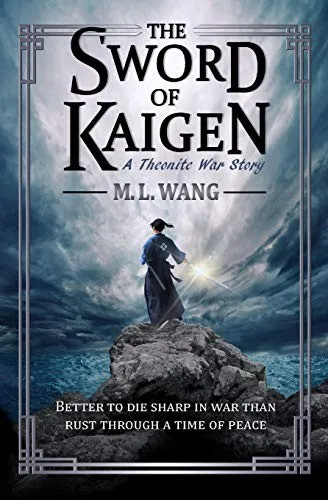
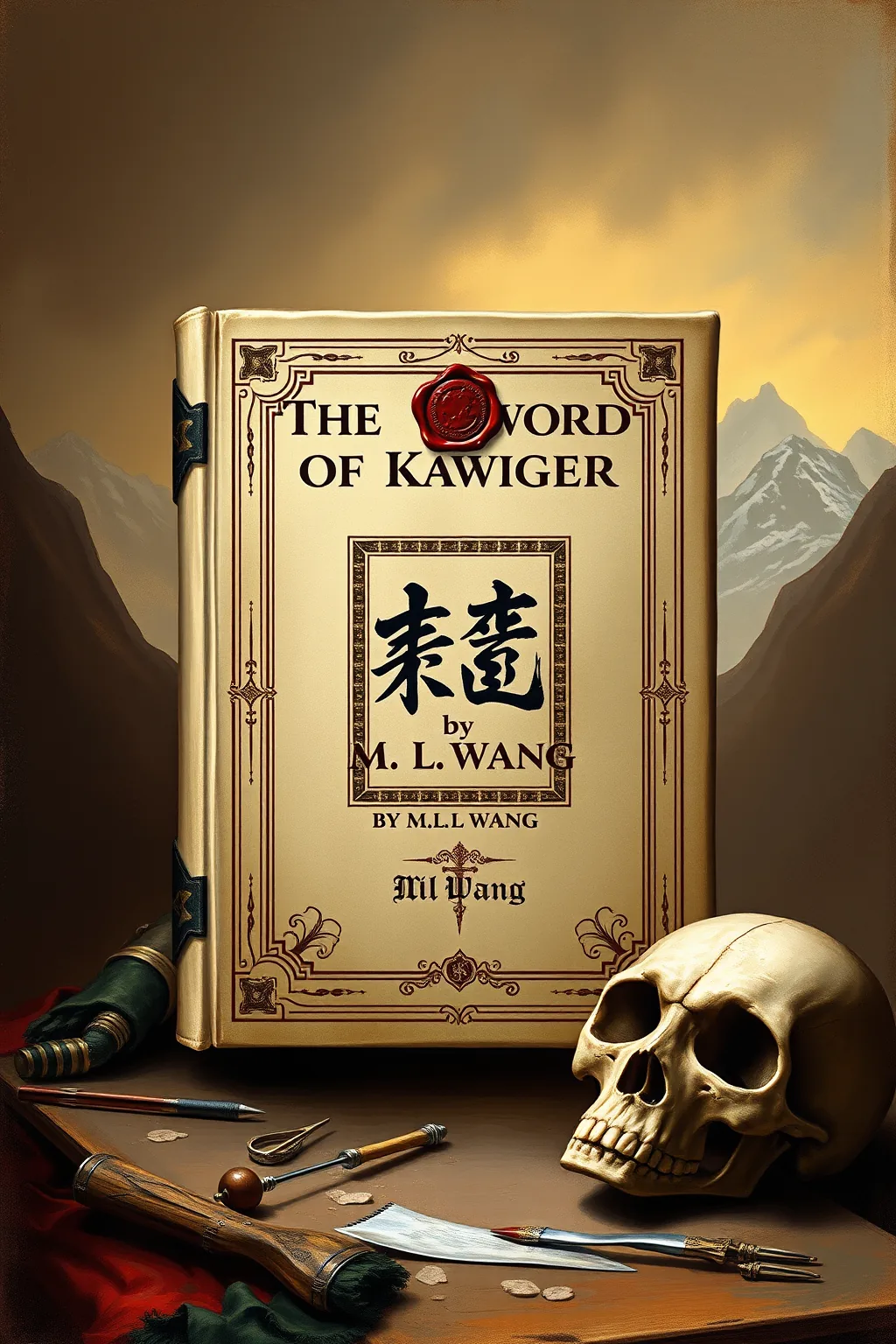
The Sword of Kaigen
 74
74

The Sword of Kaigen
M. L. Wang’s "The Sword of Kaigen" is an ambitious work that attempts to blend epic fantasy with deep philosophical exploration. The strength of the novel lies in its meticulously crafted world, particularly the distinct cultural and martial traditions of the Kuden people. Wang excels at portraying the internal conflict of her protagonist, Marta, showcasing the immense pressure of duty versus personal desire. However, the pacing occasionally falters, particularly in the middle sections, where the narrative becomes somewhat bogged down in political machinations that, while vital to the plot, can slow the momentum. A particularly effective passage involves Marta’s internal struggle to reconcile her upbringing with the harsh realities of her position, demonstrating Wang’s skill in character introspection. Despite its length, the novel manages to convey a sense of lived history and cultural depth. It's a solid, if sometimes demanding, entry into thoughtful fantasy.
📝 Description
74
<p>### The Core Narrative</p><p></p><p>The Sword of Kaigen presents a compelling narrative centered on the fictional continent of the Crescent Sea, a world fractured by political intrigue and the remnants of a devastating war. It follows the life of a young woman, Marta, as she navigates her destiny within a rigid, honor-bound society. The story explores themes of duty, sacrifice, and the internal struggles faced by individuals thrust into positions of great responsibility. Wang constructs a detailed world with its own unique history, societal structures, and martial traditions, drawing inspiration from East Asian philosophies and aesthetics.</p><p></p><p>### Who Will Appreciate This Story</p><p></p><p>This novel is crafted for readers who appreciate intricate world-building and character-driven plots. Those interested in fantasy that incorporates elements of philosophical inquiry and societal critique will find much to engage with. It appeals to an audience that enjoys exploring the personal cost of conflict and the complexities of loyalty within a richly imagined, non-Western-inspired setting. Readers seeking a departure from typical European fantasy tropes will find "The Sword of Kaigen" a refreshing exploration.</p><p></p><p>### Historical Echoes and Influences</p><p></p><p>While a work of fiction, "The Sword of Kaigen" echoes historical periods of intense societal change and philosophical debate, reminiscent of East Asian dynasties grappling with modernization and tradition. The emphasis on martial discipline and societal hierarchy can be compared to the Edo period in Japan or Confucian ideals in China, focusing on the balance between personal ambition and collective duty. The narrative’s exploration of war and its aftermath also mirrors the lingering impact of historical conflicts on subsequent generations.</p><p></p><p>### Central Concepts Explored</p><p></p><p>The narrative delves into concepts such as the "Way of the Sword," a philosophy that dictates not just martial prowess but a code of conduct and mental discipline. It examines the societal pressures placed upon individuals, particularly women, in patriarchal structures, and the concept of "Kaigen," the spiritual or inner strength required to overcome adversity. The book also touches upon the consequences of ambition and the cyclical nature of conflict and peace within its fictional world.</p>
⭐ Reader Reviews
Honest opinions from readers who have explored this book.
❓ Frequently Asked Questions
What is the primary setting for The Sword of Kaigen?
The story unfolds on the continent of the Crescent Sea, a fictional land characterized by distinct nations, cultures, and a history shaped by past conflicts and the remnants of war.
What are the main themes explored in The Sword of Kaigen?
Key themes include duty, honor, sacrifice, the conflict between personal ambition and societal expectations, the impact of war, and the development of inner strength or 'Kaigen'.
What kind of fantasy is The Sword of Kaigen?
It is a character-driven epic fantasy with intricate world-building, influenced by East Asian aesthetics and philosophies, focusing on martial traditions and societal structures.
Who is the author of The Sword of Kaigen?
The author is M. L. Wang, who first published the novel in 2019. The work has gained a following for its unique approach to fantasy.
Does The Sword of Kaigen have a connection to other books?
Yes, The Sword of Kaigen is part of a larger series, the 'Grandest Age' saga, which explores interconnected stories within the same world.
What is 'The Way of the Sword' in The Sword of Kaigen?
The Way of the Sword is a central concept representing not just martial skill but a comprehensive philosophy of discipline, honor, and mental fortitude integral to the Kuden culture.
🔮 Key Themes & Symbolism
The Way of the Sword
This concept transcends mere combat technique, embodying a comprehensive philosophy of life for the Kuden people. It dictates not only how one wields a blade but how one lives: with discipline, honor, and a profound understanding of oneself and one's place in the world. The narrative explores the rigorous training and mental conditioning required to master this Way, highlighting its role in shaping character and societal order. It presents a holistic approach to self-mastery, linking physical prowess with spiritual and ethical development, making it a central pillar of the novel's esoteric framework.
Duty Versus Personal Desire
A core tension within The Sword of Kaigen revolves around the agonizing conflict between individual aspirations and the obligations imposed by family, society, and destiny. Characters, particularly Marta, grapple with the immense weight of their inherited roles and the sacrifices demanded by their station. This theme is explored through internal monologues and external pressures, illustrating how societal structures and ancestral legacies can shape or even suppress personal freedom. The narrative questions the nature of true fulfillment when it is at odds with one's perceived duty.
The Nature of Kaigen
Kaigen represents the inner spiritual strength, resilience, and depth of character necessary to face life's greatest challenges. It is not merely physical endurance but a profound mental and emotional fortitude cultivated through discipline and self-awareness. The book examines how individuals develop and draw upon their Kaigen in moments of crisis, suggesting it is a cultivated quality rather than an innate gift. This concept serves as an esoteric guide for overcoming adversity, emphasizing the power of the inner self in shaping one's destiny.
Societal Hierarchy and Gender Roles
The novel critically examines the rigid social strata and patriarchal structures prevalent in its fictional world. It particularly focuses on the expectations and limitations placed upon women within such a society, exploring their struggles for agency and recognition. Through the experiences of its female characters, the book critiques the inherent inequalities and the ways in which tradition can stifle individual potential. The narrative highlights the courage required to defy established norms and carve out one's own path within a restrictive environment.
💬 Memorable Quotes
“The Way of the Sword is not just how you fight, but how you live.”
— This statement encapsulates the core philosophy of the Kuden people, positioning their martial arts not merely as a physical discipline but as a complete ethical and spiritual code that guides all aspects of life and decision-making.
“To truly master the sword, one must first master oneself.”
— This paraphrase highlights the emphasis on internal discipline and self-control as prerequisites for external skill. It suggests that true mastery comes from within, through rigorous self-examination and emotional regulation.
“Duty binds us, but honor defines us.”
— This concept underscores the tension between societal obligations and personal integrity. It implies that while external responsibilities are unavoidable, the choices made in upholding or betraying one's honor are what truly shape an individual's identity.
“The strength of Kaigen lies not in the absence of fear, but in acting despite it.”
— This interpretation emphasizes that true inner strength (Kaigen) is demonstrated not by being fearless, but by confronting and acting through fear. It speaks to courage as a cultivated response to perceived threats.
“A broken lineage can still forge a strong future.”
— This paraphrase suggests that past failures or disruptions within a family or society do not preclude future success or strength. It offers a message of hope and resilience, focusing on the potential for renewal and rebuilding.
🌙 Esoteric Significance
Tradition
While not strictly adhering to a single lineage, "The Sword of Kaigen" draws heavily on East Asian philosophies, particularly Neo-Confucianism and Zen Buddhism, in its exploration of martial ethics and self-cultivation. The concept of "The Way of the Sword" functions as a unique esoteric discipline, integrating physical training with moral philosophy. It departs from Western esoteric traditions by grounding its spiritual elements in a highly structured, martial society, emphasizing duty and societal role alongside individual enlightenment.
Symbolism
The primary symbol is the sword itself, representing not only martial prowess but also justice, authority, and the individual's commitment to the "Way." The concept of "Kaigen" signifies inner spiritual depth and resilience, often depicted through imagery of internal fortitude or a calm center amidst chaos. Another motif is the ancestral lineage, symbolizing the weight of history, tradition, and the obligation to uphold the past while forging a new future.
Modern Relevance
Contemporary readers and practitioners of mindfulness and martial arts find relevance in "The Sword of Kaigen's" exploration of disciplined living and mental fortitude. Thinkers interested in comparative philosophy and the intersection of ethics and action can draw parallels to its depiction of a codified moral system. The novel's critique of rigid social structures also resonates with modern discussions on societal change and individual agency, making its themes applicable to contemporary concerns about conformity and personal growth.
👥 Who Should Read This Book
['• Students of Eastern philosophies and martial ethics: Those interested in how discipline, honor, and self-cultivation are integrated into a societal framework will find "The Way of the Sword" a compelling case study.', '• Readers seeking complex, character-driven fantasy: Individuals who appreciate intricate world-building, nuanced character arcs, and narratives that explore the psychological impact of duty and conflict will be engaged.', '• Fans of historical fiction inspired by non-Western settings: Readers drawn to detailed explorations of fictional societies influenced by East Asian aesthetics and social structures will find a rich and immersive experience.']
📜 Historical Context
Published in 2019, M. L. Wang's "The Sword of Kaigen" emerged during a period when the fantasy genre was increasingly exploring diverse cultural influences beyond traditional European settings. While not directly tied to a specific historical movement, its detailed world-building and emphasis on martial philosophy echo the intellectual currents found in East Asian traditions, particularly the focus on discipline, honor, and societal harmony, akin to Confucian ideals. It can be seen as part of a broader trend in speculative fiction to move beyond Western archetypes and explore more varied cultural landscapes. In terms of reception, the novel gained significant traction within online reader communities, particularly on platforms like Reddit, where its intricate plot and thematic depth were widely discussed, distinguishing it from more formulaic fantasy offerings.
📔 Journal Prompts
The Way of the Sword as a personal discipline.
Reflecting on Marta's internal conflict between duty and desire.
The cultivation of Kaigen in moments of adversity.
Analyzing the societal pressures within the Kuden hierarchy.
Interpreting the symbolism of the ancestral lineage in your own life.
🗂️ Glossary
Kaigen
The core concept of inner spiritual strength, resilience, and mental fortitude. It represents the cultivated capacity to face challenges with composure and determination, transcending mere physical strength.
The Way of the Sword
A comprehensive philosophy and code of conduct governing the Kuden people. It dictates not only martial skill but also ethical behavior, self-discipline, and one's role within society.
Kuden
The primary ethnic and cultural group featured in the novel, known for their strict societal hierarchy, martial traditions, and the philosophy of the Way of the Sword.
Marta
The central protagonist of the novel, a young woman whose journey involves grappling with duty, societal expectations, and the development of her inner strength.
Crescent Sea
The fictional continent where the events of The Sword of Kaigen take place, characterized by diverse nations and a history shaped by conflict.
Lineage
Refers to ancestral descent and the inherited responsibilities, traditions, and societal roles associated with it, a significant factor in the characters' lives and decisions.
Honor
A fundamental concept within Kuden society, representing personal integrity, reputation, and adherence to the Way of the Sword. It is often pitted against personal desire or survival.