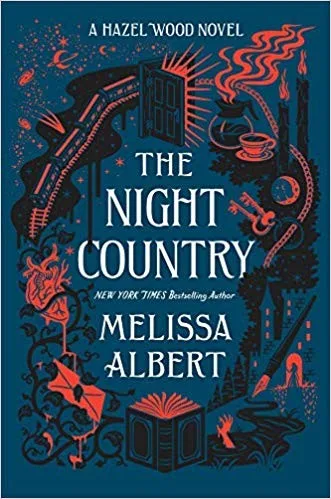
The Night Country
 79
79

The Night Country
Melissa Albert’s *The Night Country* offers a disquieting atmosphere that lingers long after the final page. The strength of the novel lies in its creation of the Night Country itself – a place of lost objects and forgotten people, rendered with a palpable sense of decay and mystery. Albert excels at conjuring a mood that is both eerie and melancholic. However, the narrative’s pacing occasionally falters, particularly in the midsection, where the momentum built by the initial premise seems to dissipate. The exploration of Em's connection to her grandmother and the town’s secrets is compelling, especially the passages detailing the specific ways the Night Country manifests in Ithaca, like the recurring appearance of certain lost items. While the resolution feels earned, a touch more urgency in the earlier stages might have elevated the overall impact. It is a book that succeeds more in its evocative world-building than in its plot mechanics.
📝 Description
79
Melissa Albert's 2019 novel, *The Night Country*, connects a New York town to a world of lost things.
The story centers on Ithaca, a town with a secret connection to a subterranean world called the Night Country. This place acts as a holding area for lost objects and people, accessible through a decaying network beneath the town. Em, a teenager, ventures into this strange realm seeking her missing grandmother and the truth behind her disappearance. The narrative unfolds as Em uncovers secrets about her family and the nature of the Night Country itself.
Albert weaves a dark fantasy narrative that appeals to readers who appreciate atmospheric young adult fiction. It draws on elements of magical realism and folklore, focusing on themes of memory, loss, and the permeable boundaries of reality. The book combines a slow-burn mystery with a coming-of-age story, particularly for those drawn to the melancholic aspects of fantasy.
While not directly referencing specific esoteric movements, *The Night Country* taps into the tradition of portal fantasies. This genre, exemplified by works like Lewis Carroll's *Alice's Adventures in Wonderland*, imagines mundane reality cracking to reveal hidden, often dangerous, magical dimensions. The novel uses the Night Country as a literal and metaphorical space where forgotten elements of the world and individual lives exist, suggesting that these boundaries are not as solid as they appear.
💡 Why Read This Book?
• Learn about the unique concept of the Night Country, a subterranean realm for lost things and people, and how its existence mirrors themes of memory and absence, as explored through the narrative's central mystery. • Understand the symbolism of Ithaca's decaying infrastructure as a gateway, offering insight into how physical decay can represent hidden emotional or forgotten histories. • Experience a narrative that blends coming-of-age elements with dark fantasy, providing a unique perspective on navigating loss and uncovering familial secrets in a world where reality is not always as it seems.
⭐ Reader Reviews
Honest opinions from readers who have explored this book.
❓ Frequently Asked Questions
What is the primary setting of The Night Country?
The primary setting is the town of Ithaca, which has a hidden connection to a mysterious subterranean realm called the Night Country, a place where lost things and people reside.
Who is the protagonist of The Night Country?
The protagonist is Em, a teenager who becomes entangled in the mysteries of the Night Country while searching for her missing grandmother.
What are the main themes explored in The Night Country?
The novel explores themes of loss, memory, identity, family secrets, and the permeable boundary between the known world and hidden realities.
When was The Night Country first published?
The Night Country was first published in 2019.
Does The Night Country have any supernatural or magical elements?
Yes, the book features significant supernatural and magical elements, most notably the existence and accessibility of the Night Country.
Is The Night Country considered a YA novel?
Yes, The Night Country is generally categorized as young adult (YA) dark fantasy or magical realism.
🔮 Key Themes & Symbolism
The Night Country as Liminal Space
The novel posits the Night Country as a profound liminal space, a subterranean realm that serves as a repository for all that is lost, forgotten, or missing. This concept extends beyond mere physical objects; it encompasses people, memories, and even aspects of identity. Its existence, accessed through decaying urban infrastructure in Ithaca, suggests that the hidden underbelly of reality is closer than we perceive. This aligns with esoteric traditions that explore parallel worlds or the astral plane as destinations for the displaced or unmanifested, blurring the lines between the mundane and the mystical.
Memory and Identity
Central to *The Night Country* is the intricate relationship between memory and identity. The characters' searches for missing loved ones, particularly Em’s quest for her grandmother, are deeply intertwined with uncovering fragmented memories. The Night Country itself can be seen as a physical manifestation of collective and individual memory, a place where forgotten moments and people persist. This appeals to Hermetic principles that suggest the mind and spirit hold vast archives of experience, and that understanding the past is crucial for forming a coherent sense of self in the present.
The Unseen World Beneath
Albert's narrative plays with the idea of an unseen world existing directly beneath the surface of everyday life. The decaying infrastructure of Ithaca—old tunnels, forgotten passages—acts as a literal gateway to the Night Country. This motif of a hidden world coexisting with our own is a recurring trope in occult literature, suggesting that reality is layered and that certain individuals can perceive or access these deeper strata. The book invites readers to consider what might lie beneath the familiar, echoing Gnostic ideas of hidden realities and secret knowledge.
Loss and Belonging
The theme of loss permeates *The Night Country*, driving the plot and shaping the characters' journeys. The Night Country serves as a symbolic destination for those who have been lost, creating a complex dynamic of belonging for those who find themselves there. Em's personal journey is one of confronting loss and finding her place within her family's history and her own evolving identity. This exploration of absence and the search for connection mirrors esoteric quests for spiritual integration and wholeness, where perceived separation is an illusion.
💬 Memorable Quotes
Direct passages from the work, attributed to the author.
“The Night Country is where lost things go.”
— This core tenet establishes the central premise of the novel: a hidden realm that acts as a cosmic lost-and-found for both inanimate objects and sentient beings, highlighting themes of absence and retrieval.
“Everything that’s lost is somewhere.”
— A philosophical statement underscoring the novel's premise, implying that nothing truly vanishes but merely relocates to the mysterious Night Country, offering a unique perspective on oblivion.
“The air in the Night Country tasted like old pennies and forgotten promises.”
— This sensory detail vividly describes the atmosphere of the Night Country, associating it with decay, history, and unfulfilled potential, creating a strong impression of its unique environment.
💡 Key Ideas
Editorial paraphrase of the work's core concepts — not direct quotes.
She was looking for a ghost, but she found a map.
This quote captures Em's journey, suggesting that her search for her grandmother (a 'ghost' in a sense) leads her to uncover the hidden structure and secrets of the Night Country itself.
Ithaca was a town built on secrets, and the Night Country was where they went to sleep.
This paraphrased concept illustrates the deep connection between the town and the subterranean realm, suggesting that the Night Country is a literal resting place for the town's hidden truths and unresolved histories.
🌙 Esoteric Significance
Tradition
While *The Night Country* is primarily a work of dark fantasy, its exploration of hidden realms and the nature of reality aligns with Gnostic and Hermetic sensibilities. The concept of a parallel world coexisting with our own, particularly one filled with lost souls and forgotten things, mirrors Gnostic ideas of a flawed material world concealing a higher, true reality. The journey of self-discovery through uncovering hidden truths also echoes Hermetic principles of attaining gnosis. The novel departs from strict adherence to any single tradition, instead drawing on a general sense of the hidden, the arcane, and the subconscious.
Symbolism
The decaying infrastructure of Ithaca, such as old tunnels and forgotten passages, serves as a potent symbol for the hidden pathways to the subconscious or alternate realities. These physical remnants represent the permeable boundaries between the mundane world and the Night Country. The Night Country itself symbolizes the collective unconscious or a spiritual 'underworld' where lost elements of existence reside, waiting to be reclaimed or understood. The recurring motif of lost objects in this realm can symbolize fragmented aspects of the self or unresolved spiritual issues.
Modern Relevance
Contemporary thinkers exploring archetypal psychology and the nature of consciousness might find resonance in Albert's depiction of the Night Country as a manifestation of the collective unconscious. The novel's focus on navigating hidden truths and confronting personal and familial histories connects with modern therapeutic approaches that emphasize understanding the past to inform the present. It also appeals to writers and readers interested in the evolving range of urban fantasy and magical realism, which often incorporate folkloric and esoteric elements in fresh, accessible ways.
👥 Who Should Read This Book
• Young adult readers seeking dark, atmospheric fantasy with complex themes of loss and identity, who appreciate narratives that explore the uncanny. • Fans of magical realism and portal fantasies who enjoy stories where the ordinary world conceals extraordinary, often unsettling, hidden layers. • Readers interested in exploring metaphorical landscapes of memory and the subconscious, and how they can manifest in narrative form through a compelling mystery.
📜 Historical Context
Published in 2019, *The Night Country* emerged during a period of renewed interest in dark fantasy and portal narratives within young adult literature. While not directly aligned with specific historical esoteric movements, its exploration of hidden worlds and liminal spaces taps into a broader cultural fascination with the uncanny, a current that has persisted since the late 19th century with authors like Arthur Machen. The novel's premise of a secret realm beneath a seemingly ordinary town echoes motifs found in urban fantasy and folklore collections that have been popular for decades. While no specific contemporary scholars are known to have directly analyzed Albert's work in an esoteric context, the book's themes resonate with discussions in comparative mythology and the study of folklore, areas that often intersect with esoteric thought. The literary range of 2019 saw a diverse range of speculative fiction, with authors like Catherynne M. Valente and Naomi Novik exploring magical realism and fantastical elements in nuanced ways, creating a receptive environment for Albert's unique contribution.
📔 Journal Prompts
The Night Country's nature as a repository for lost things, reflected in Em's search.
Ithaca's decaying infrastructure as a gateway, prompting reflection on hidden access points in your own environment.
The concept of 'everything that's lost is somewhere,' and its implications for personal history.
The air of the Night Country tasting like 'old pennies and forgotten promises'—what sensory details define places of memory for you?
The boundary between the known world and the Night Country, and what lies just beyond perception.
🗂️ Glossary
Night Country
A mysterious, subterranean realm where lost things, people, and memories are said to reside. It exists parallel to the ordinary world, accessible through hidden passages.
Ithaca
The seemingly ordinary town that serves as the primary setting for the novel, characterized by its decaying infrastructure that conceals entrances to the Night Country.
Em
The protagonist of the novel, a teenager who becomes deeply involved in uncovering the secrets of the Night Country while searching for her missing grandmother.
Liminal Space
A concept referring to a transitional or in-between state or place. In the novel, the Night Country functions as a liminal space for lost entities.
Portal Fantasy
A subgenre of fantasy fiction where a protagonist travels from their known world to a different, usually magical, world, often through a portal.
Magical Realism
A genre where magical elements are presented in an otherwise realistic setting, treated as mundane or normal by the characters.
Collective Unconscious
A term from analytical psychology referring to a layer of the unconscious mind that is shared by all members of a given culture or society.
🔮 Readers Also Liked
Browse all →








More by Melissa Albert
All books →
More Free Magic & Ritual Books
View all →