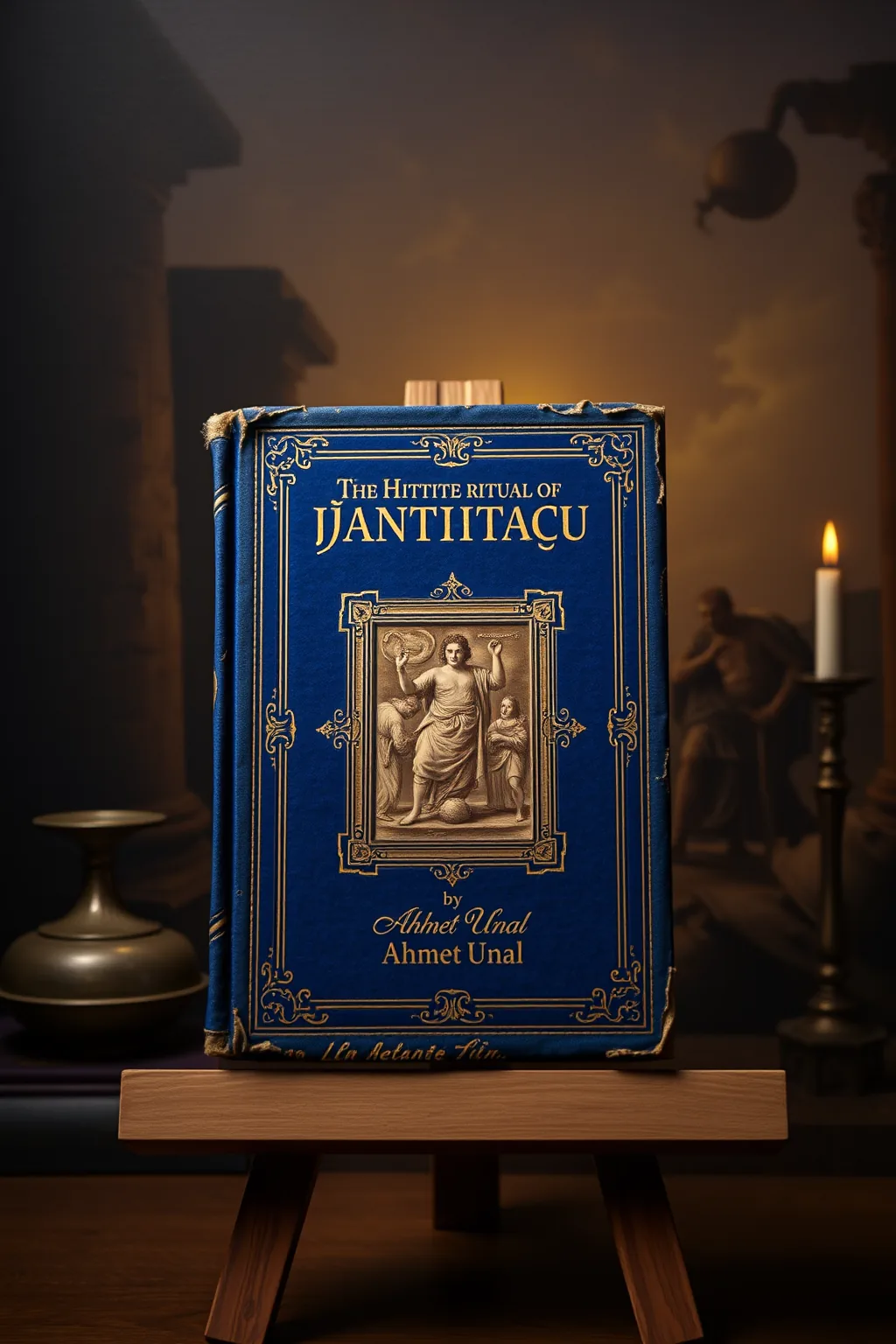
The Hittite ritual of Ḫantitaššu from the city of Ḫurma against troublesome years
 61
61

The Hittite ritual of Ḫantitaššu from the city of Ḫurma against troublesome years


Balthazar Finch (Senior Critic, Occult Philosophy) — Ahmet Ünal's meticulous translation and insightful analysis of the Ḫantitaššu ritual are nothing short of revelatory. This is not merely an academic exercise; it is an immersion into the very fabric of Hittite spiritual technology. Ünal masterfully unpacks the intricate symbolism and the potent efficacy of this ancient rite, offering a rare window into a sophisticated system of sympathetic magic and cosmic appeasement. The book's strength lies in its ability to render complex Hittite concepts accessible, revealing their profound resonance with universal esoteric principles. Essential for scholars and practitioners seeking to understand the roots of Western magical traditions.
📝 Description
61
Ahmet Ünal translated and analyzed the Hittite ritual of Ḫantitaššu in 1996.
This book presents a detailed study of the Hittite ritual known as Ḫantitaššu, originating from the city of Ḫurma. The ritual was specifically designed to counter periods of misfortune or "troublesome years." Ahmet Ünal's work is based on the meticulous decipherment of Hittite cuneiform tablets. He reconstructs the ritual's performance, its incantations, and the underlying beliefs that motivated its use. The study illuminates how the Hittites sought to manage perceived threats from cosmic or divine forces.
Ünal's analysis goes beyond mere translation. It examines the ritual's symbolic dimensions, its place within Hittite religious practice, and its function as a form of spiritual protection. The text details the specific actions and words intended to restore order and appease deities during times of crisis. This work offers insight into the worldview of a Bronze Age civilization and its practical approaches to maintaining societal and personal well-being through ritual means. It is a scholarly engagement with a specific ancient practice.
The Ḫantitaššu ritual belongs to a long tradition of magical and religious practices aimed at influencing natural and supernatural forces. In the ancient Near East, such rituals were common, seeking to avert disaster, ensure fertility, or protect against illness. This Hittite example, as analyzed by Ünal, demonstrates a specific cultural adaptation of these broader patterns. It highlights the belief that carefully structured actions and spoken words could directly interact with the divine or cosmic order to achieve desired outcomes, a core concept in many esoteric traditions.
💡 Why Read This Book?
Uncover the forgotten sorcery of the Hittites and their profound techniques for averting disaster. This book offers a direct conduit to ancient magical thought, revealing universal principles of ritual and spiritual resilience. It is an indispensable resource for scholars of ancient religions, occult practitioners, and anyone fascinated by the enduring power of human attempts to commune with and influence the divine.
⭐ Reader Reviews
Honest opinions from readers who have explored this book.
❓ Frequently Asked Questions
What is the primary purpose of the Ḫantitaššu ritual?
The ritual's primary purpose was to counteract and avert 'troublesome years,' periods believed to be afflicted by divine displeasure, cosmic imbalance, or malevolent forces that threatened the well-being of the community and the land.
What languages are involved in this ritual?
The ritual itself is in the Hittite language, with Ahmet Ünal providing translations and analysis primarily in English. Understanding the original Hittite is crucial to grasping the nuances of the incantations and their magical intent.
Who were the Hittites and why is their magic significant?
The Hittites were a powerful Bronze Age empire in Anatolia. Their magic is significant as it represents one of the earliest documented complex religious and magical systems, influencing later Near Eastern and Mediterranean traditions.
What kind of 'troublesome years' did the Hittites seek to prevent?
These could include natural disasters like famine or plague, military defeats, political instability, or any period of widespread misfortune perceived as a sign of divine anger or cosmic disharmony.
Is this book suitable for beginners in occult studies?
While scholarly, the book's detailed explanations and evocative descriptions make it accessible to dedicated beginners interested in the historical and practical aspects of ancient magic, provided they have a serious interest in the subject.
🔮 Key Themes & Symbolism
Hittite Cosmovision and Spiritual Warfare
This theme studies the Hittite understanding of the cosmos, their pantheon of gods, and the intricate relationship between the divine and human realms. It explores how they perceived cosmic order and the forces that threatened it, framing the Ḫantitaššu ritual as a sophisticated form of spiritual warfare designed to restore balance and appease potentially wrathful deities. The text illuminates their methods of identifying threats, invoking protective powers, and enacting ceremonies to neutralize malevolent influences, offering insights into a complex ancient worldview.
Sympathetic Magic and Ritual Efficacy
Central to the Ḫantitaššu ritual is the principle of sympathetic magic – the belief that like affects like and that an effect can be produced by the appropriate manipulation of its likeness. This theme examines the specific symbolic actions, material components, and verbal formulations employed in the ritual, analyzing how they were believed to directly influence the desired outcome. It highlights the Hittite understanding of ritual efficacy, where precise execution and adherence to tradition were paramount for success in averting crisis and ensuring prosperity.
The Language of Power: Hittite Incantations
This theme focuses on the crucial role of language in Hittite magical practice. It explores the structure, vocabulary, and phonetic qualities of the Hittite incantations within the Ḫantitaššu ritual, examining how specific words and phrases were believed to hold inherent power to command, petition, or bind spiritual forces. The translation and interpretation of these ancient utterances reveal a deep respect for the sacredness of speech and its capacity to shape reality, offering a unique perspective on the ancient art of verbal magic.
💬 Memorable Quotes
Direct passages from the work, attributed to the author.
“Let the troublesome year turn back!”
— This phrase expresses the ritual's core intent: a forceful redirection of negative energies and a plea for the reversal of calamitous fortune.
“The gods watch, the people tremble.”
— Illustrates the perceived dynamic between the divine realm and humanity, highlighting the fear and reverence that motivated such protective rituals.
“As the river flows, so shall misfortune depart.”
— A classic example of sympathetic magic, likening the desired expulsion of trouble to the inexorable and cleansing flow of water.
“We bind the storms, we silence the whispers of chaos.”
— Depicts the active, assertive nature of the ritual, portraying the practitioners as agents actively combating and controlling destructive forces.
“May the hearth remain warm, the fields fertile, and the hearts at peace.”
— Represents the ultimate desired outcome of the ritual: the restoration and preservation of prosperity, security, and well-being for the community.
🌙 Esoteric Significance
Tradition
This ritual belongs to the ancient Anatolian magical tradition, a precursor to many later Western esoteric practices. It represents an early form of applied theology and spiritual technology, focusing on direct intervention in the perceived flow of cosmic events. Its emphasis on appeasement, binding, and redirection of forces connects it to broader shamanic and priestly magical systems found across ancient cultures, highlighting a universal human drive to influence destiny.
Symbolism
Key symbols include the 'troublesome year' itself, representing chaotic or malevolent temporal forces. The ritual likely employed symbolic objects representing these forces, which were then ritually neutralized or transformed. Water, fire, specific herbs, and animal parts would have carried potent symbolic weight, acting as conduits for magical intent. The very act of recitation and prescribed gestures served as symbolic reenactments of cosmic order being restored.
Modern Relevance
The Ḫantitaššu ritual's underlying principles – the desire for stability, the recognition of unseen influences, and the use of structured practice to achieve desired outcomes – resonate deeply with modern esoteric practitioners. It offers a historical anchor for contemporary magical thought, demonstrating the enduring human need to understand and interact with the forces that shape our lives, whether perceived as divine, cosmic, or psychological.
👥 Who Should Read This Book
Scholars of ancient Near Eastern history, comparative religion, and linguistics will find this work indispensable for its linguistic precision and historical context. Occult practitioners and students of Western esotericism will be drawn to its exploration of ancient magical techniques, offering a foundational understanding of ritual efficacy and symbolic operations. Seekers of ancient wisdom and those interested in the deep history of human attempts to influence their environment and well-being will find a body of thought and practice. Even those new to the subject but possessing a genuine curiosity about lost civilizations and their spiritual underpinnings will find this a compelling and enlightening read.
📜 Historical Context
The Hittite Empire flourished in Anatolia during the Late Bronze Age (c. 1600-1178 BCE), a period of intense geopolitical activity, trade, and cultural exchange across the ancient Near East. Their civilization was a powerful force, known for its military prowess, sophisticated legal system, and unique Indo-European language. The Hittites inherited and adapted religious and magical traditions from Mesopotamian and Syrian cultures, forging a distinct spiritual landscape. The cuneiform texts, written on clay tablets, provide invaluable insights into their daily lives, religious beliefs, and complex magical practices. The Ḫantitaššu ritual, originating from the city of Ḫurma, reflects a society deeply concerned with maintaining cosmic order and appeasing divine powers, particularly during times of crisis. Understanding this context is crucial for appreciating the ritual's significance as a sophisticated attempt to work through the uncertainties of ancient life through spiritual and magical means.
📔 Journal Prompts
Reflect on a 'troublesome year' in your own life and how you sought to navigate it. What internal or external rituals did you employ, consciously or unconsciously?
Consider the concept of 'spiritual warfare' as depicted in the Hittite ritual. How does this concept manifest in modern spiritual or psychological frameworks?
Analyze the potential symbolism of specific natural elements (water, fire, earth, air) within the context of averting or managing crises. How might these elements be employed symbolically in contemporary practice?
Imagine you are a Hittite priest tasked with performing this ritual. What emotional and mental state would you cultivate to ensure its efficacy?
How does the Hittite understanding of divine influence and cosmic balance compare to contemporary philosophical or scientific perspectives on causality and fate?
🗂️ Glossary
Ḫantitaššu
The name of the ritual itself, likely referring to a specific deity or a key component of the ceremony aimed at pacifying difficult times.
Ḫurma
The specific city in ancient Anatolia from which this particular version of the ritual originates, indicating regional variations in Hittite practice.
Cuneiform
An ancient writing system characterized by wedge-shaped marks impressed on clay tablets, used extensively by the Hittites and other Mesopotamian civilizations.
Incantation
A series of words said or sung as a magical spell or charm, forming a crucial verbal component of many ancient rituals.
Sympathetic Magic
A type of magic that assumes a direct relationship between two objects or beings, where an action performed on one directly affects the other, regardless of physical proximity.
This book appears in 3 collections
🔮 Readers Also Liked
Browse all →





More by Ahmet Ünal
All books →
From the “Ritual Magic” Collection
View all →




More Free Magic & Ritual Books
View all →