Navaho Witchcraft
 71
71

Navaho Witchcraft
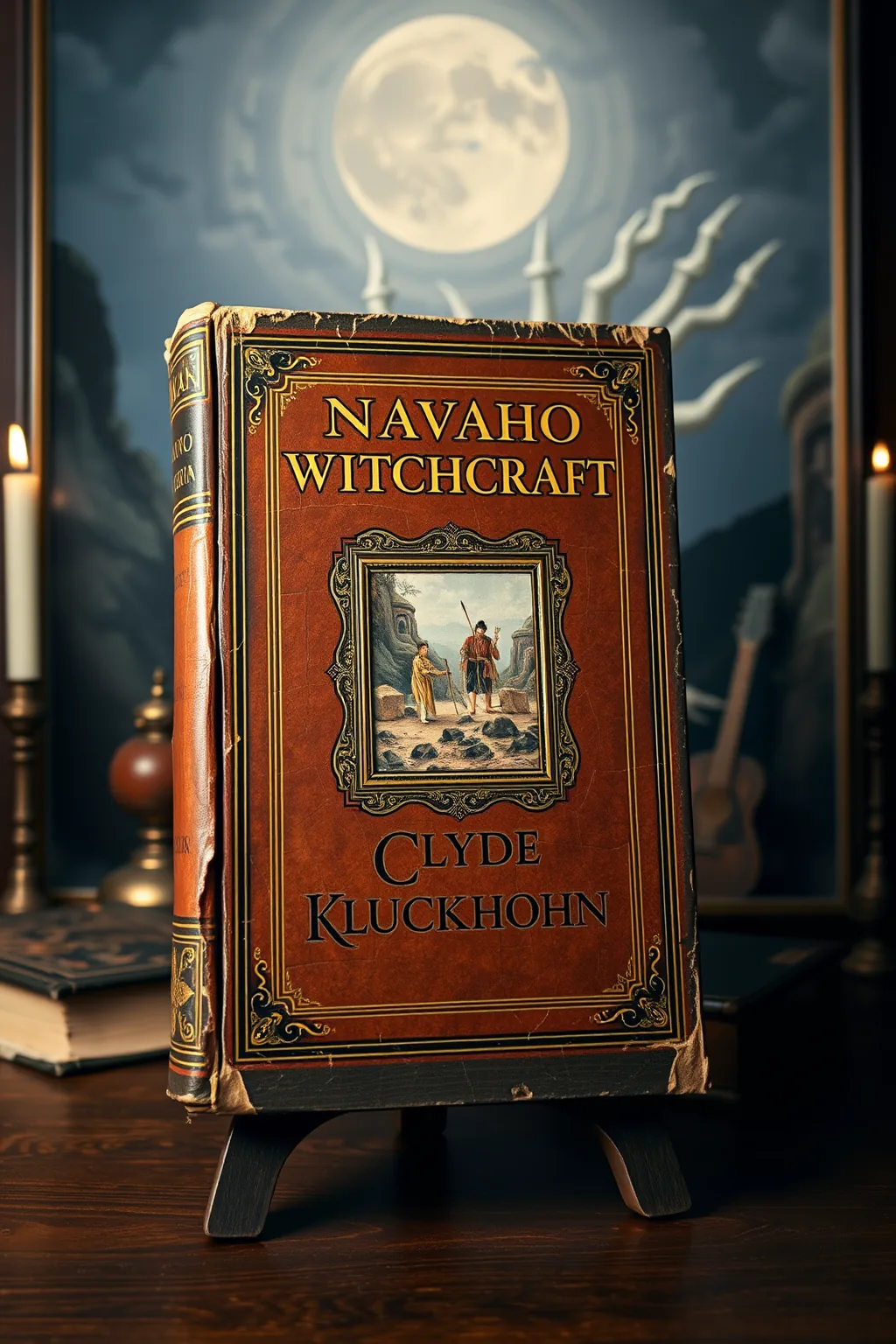
Clyde Kluckhohn’s "Navaho Witchcraft" remains a cornerstone for understanding the intricacies of indigenous magical belief systems, presenting a starkly academic dissection of a subject often sensationalized. The strength of the work lies in its meticulous ethnographic detail, particularly Kluckhohn’s careful rendering of Navaho terminology for witchcraft and its practitioners, such as *'adahiłt'eeh*. He avoids imposing Western psychological frameworks, instead attempting to present the beliefs as they were understood by the Diné themselves. A notable limitation, however, is the inherent distance created by this academic objectivity; the raw emotional and social impact of witchcraft accusations on individuals and communities is sometimes understated. The section detailing the societal mechanisms for identifying witches, which involved trials and the use of specific paraphernalia, offers a chilling glimpse into the practical application of these beliefs. While the book offers unparalleled insight, its scholarly tone can occasionally obscure the lived reality of its subject. It is an indispensable, if dispassionate, record.
📝 Description
71
### What This Book Is
Clyde Kluckhohn's "Navaho Witchcraft" offers a foundational ethnographical study of the spiritual and magical practices of the Diné people, commonly known as the Navaho. Originally published in 1993, this work is not a practitioner's guide but a scholarly examination of beliefs, rituals, and the social structures surrounding witchcraft within Navaho culture. Kluckhohn, a prominent anthropologist, meticulously documented observations and narratives gathered during extensive fieldwork, providing a detailed look at how the Navaho understood and dealt with malevolent forces and the individuals believed to wield them. The book explores the intricate cosmological framework that informs these beliefs, including concepts of *hozhó* (balance and harmony) and the disruption of this state by sorcery. It presents witchcraft not as an external imposition but as an intrinsic element of Navaho social and spiritual life, deeply intertwined with morality, healing, and community well-being.
### Who It's For
This volume is intended for serious students of anthropology, religious studies, and comparative mythology. It is essential for scholars interested in indigenous belief systems of North America and those investigating the phenomenology of magic and witchcraft across diverse cultures. Readers seeking an academic, objective account of cultural practices, rather than a popularized or sensationalized portrayal, will find significant value here. It appeals to individuals engaged in the study of shamanism, animism, and the role of sorcery in social control and cohesion within traditional societies. Those with a background in ethnography or a specific interest in the work of Clyde Kluckhohn will also find this a crucial reference.
### Historical Context
"Navaho Witchcraft" emerges from the mid-20th century, a period of intense anthropological interest in the American Southwest. Kluckhohn’s research built upon and sometimes diverged from earlier ethnographic accounts, particularly those by figures like Washington Matthews and later by his contemporaries such as Oliver La Farge. The book was developed during a time when functionalist and structuralist approaches to anthropology were prevalent, aiming to understand the role of beliefs and practices within their societal context. The early publication of Kluckhohn's findings, particularly in journals and collected works before the 1993 compilation, contributed to a growing academic discourse on Native American religions, often in dialogue with or in contrast to the evolving field of psychology and its interpretations of cultural phenomena. The reception of such detailed ethnographies was often complex, balancing academic praise with societal unease about the subject matter.
### Key Concepts
The book systematically breaks down the Navaho understanding of witchcraft, differentiating it from European concepts. Key concepts include the distinction between *naayéé' * (monsters or witches) and their malevolent actions, the role of *'adahiłt'eeh* (sorcery or witchcraft) as a force that disrupts *hozho* (harmony), and the intricate system of *'adahiłt'eeh* practices. It details the mechanisms of sorcery, including the use of *'adahiłt'eeh bits'a' * (witchcraft paraphernalia) and the methods by which individuals were believed to become witches. The text also addresses the societal responses to witchcraft, such as the role of *'adahiłt'eeh yázhí* (little witches) and the procedures for identifying and confronting suspected sorcerers, often involving complex diagnostic rituals and trials by ordeal that Kluckhohn carefully observed and documented. The work emphasizes the internal logic and social function of these beliefs within the Navaho worldview.
💡 Why Read This Book?
• Gain a deep understanding of Navaho concepts of *'adahiłt'eeh'* (witchcraft) and *hozho* (harmony), differentiating them from Western notions of magic, as explored in Kluckhohn's original fieldwork. • Learn about the specific social functions and mechanisms of witchcraft belief within a non-Western culture, including the roles of *'adahiłt'eeh bits'a'* (paraphernalia) and alleged sorcerers. • Appreciate the rigorous ethnographic methodology employed by Clyde Kluckhohn in the 1940s, providing a factual basis for studying indigenous spiritual systems that challenges superficial interpretations.
⭐ Reader Reviews
Honest opinions from readers who have explored this book.
❓ Frequently Asked Questions
What is the primary focus of Clyde Kluckhohn's "Navaho Witchcraft"?
The book primarily focuses on an academic and ethnographic examination of the beliefs, practices, and social implications of witchcraft within Navaho (Diné) culture, as observed by anthropologist Clyde Kluckhohn.
Is "Navaho Witchcraft" a practical guide to performing magic?
No, "Navaho Witchcraft" is strictly an anthropological study. It describes and analyzes Navaho witchcraft beliefs and practices from an academic perspective, not as instructions for practitioners.
When was Clyde Kluckhohn's research on Navaho witchcraft conducted?
Clyde Kluckhohn conducted his extensive fieldwork and research on Navaho witchcraft primarily during the 1940s, with the findings later compiled and published.
What is the significance of the term 'hozho' in the context of Navaho witchcraft?
'Hozho' represents the Navaho concept of balance, harmony, and well-being. The book explains how witchcraft, or 'adahiłt'eeh', is seen as a force that actively disrupts and destroys this essential state of hozho.
Does the book discuss specific individuals accused of witchcraft?
While the book details the general beliefs and societal responses to witchcraft, it focuses on the cultural patterns and mechanisms rather than naming specific individuals accused during Kluckhohn's fieldwork to protect privacy and anonymity.
What academic disciplines benefit most from reading "Navaho Witchcraft"?
Anthropology, religious studies, comparative mythology, and sociology of religion benefit most, offering insights into indigenous belief systems, magic, and social control mechanisms in non-Western societies.
🔮 Key Themes & Symbolism
The Concept of 'Adahiłt'eeh'
This theme delves into the Navaho understanding of witchcraft, termed 'adahiłt'eeh', as a malevolent force distinct from European magical traditions. Kluckhohn meticulously details how it is perceived not merely as an abstract evil but as a tangible practice capable of causing illness, misfortune, and death. The book explores the belief that individuals could acquire the power to practice 'adahiłt'eeh' through illicit means, often involving pacts or the misuse of sacred knowledge. This section illuminates the internal logic of Navaho sorcery beliefs, emphasizing their role in maintaining social order and explaining unexplained calamities within the community.
Disruption of Hozho
Central to the Navaho worldview is the concept of 'hozho', representing harmony, balance, and beauty. This theme examines how witchcraft is understood as a direct antithesis to 'hozho'. Kluckhohn illustrates how the practice of 'adahiłt'eeh' introduces chaos, sickness, and destruction, thereby disrupting the natural and social order. The book explains that Navaho society actively sought to combat these disruptions through healing rituals and counter-sorcery practices, aiming to restore the state of 'hozho'. This opposition highlights the deeply ingrained moral and cosmological framework within which Navaho witchcraft beliefs operated.
Social Mechanisms and Control
This theme focuses on the societal implications of witchcraft beliefs within Navaho culture. Kluckhohn details the mechanisms through which suspected witches were identified, accused, and dealt with, often involving elaborate diagnostic ceremonies and trials. The book explores the fear and suspicion that 'adahiłt'eeh' could engender, and how these beliefs served as a form of social control, reinforcing community norms and punishing transgressors. The presence of figures like 'adahiłt'eeh yázhí' (little witches) and the societal responses to them are examined, revealing the complex interplay between belief, fear, and social cohesion.
Ethnographic Methodology
The work itself is a significant exploration of ethnographic methodology, particularly in studying sensitive and potentially feared aspects of a culture. Kluckhohn's approach, developed during the 1940s, emphasizes detailed observation, careful documentation of indigenous terminology, and an attempt to understand beliefs from the insider's perspective. This theme highlights the challenges and ethical considerations involved in researching subjects like witchcraft, particularly the need to balance academic inquiry with respect for cultural beliefs and the potential impact on individuals. The book serves as a case study in rigorous, context-sensitive anthropological research.
💬 Memorable Quotes
“Witchcraft is a fear of internal, humanly caused evil.”
— This interpretation highlights Kluckhohn's central argument that Navaho witchcraft beliefs are not about external demonic forces but about the perceived capacity for malice and harm residing within human beings and their society.
“The witch must be a Navaho, and must have been initiated.”
— This paraphrase underscores the idea that within the Navaho system, witchcraft is an internal affair, requiring membership and formal initiation into its practices, distinguishing it from external threats or accidental malevolence.
“The witch is a perversion of the healer.”
— This concept suggests that the figure of the witch in Navaho belief is often seen as a corrupted or inverted form of a healer, someone who uses spiritual knowledge for destructive rather than restorative purposes.
“Accusations of witchcraft served to enforce social conformity.”
— This interpretation points to the social function of witchcraft beliefs, suggesting that the fear of being labeled a witch or being targeted by one acted as a powerful deterrent against behaviors that deviated from societal norms.
“The purpose of diagnosis was to discover the source of evil.”
— This paraphrase emphasizes the practical, diagnostic aspect of Navaho beliefs concerning witchcraft, where elaborate rituals were employed to identify the specific witch or cause responsible for a person's suffering or misfortune.
🌙 Esoteric Significance
Tradition
While not strictly an esoteric text in the Western Hermetic or Kabbalistic sense, "Navaho Witchcraft" offers profound insights into an indigenous shamanic and animistic tradition. It aligns with broader esoteric interests in non-Western magical systems, comparative religion, and the phenomenology of altered states and spiritual forces. The work provides a case study for how universal concepts of spiritual imbalance, malevolent forces, and the human capacity for both creation and destruction manifest in a distinct cultural cosmology, differing significantly from the structured magical orders of the West.
Symbolism
Key symbols within Navaho witchcraft, as explored by Kluckhohn, include specific paraphernalia ('adahiłt'eeh bits'a') believed to be used in sorcery, such as animal parts or personal effects of the victim, which served as conduits for malevolent energy. The concept of 'naayéé' (monsters) also functions symbolically, representing the primal forces of chaos and disruption that threaten the ordered universe. Furthermore, the disruption of 'hozho' itself can be seen as a symbolic state of spiritual sickness, with specific illnesses or misfortunes acting as visual manifestations of this imbalance caused by witchcraft.
Modern Relevance
Contemporary indigenous studies scholars and practitioners continue to draw on Kluckhohn's work for its detailed ethnographic record, though often with critical re-evaluation of its colonial context. The book remains relevant for those studying comparative shamanism, animism, and the cross-cultural understanding of magic and sorcery. Modern practitioners of comparative spirituality or those interested in the psychology of belief systems find value in its objective analysis of how societies conceptualize and manage perceived supernatural threats. It informs discussions on cultural appropriation and the ethical presentation of indigenous spiritual practices.
👥 Who Should Read This Book
• Anthropologists and religious studies scholars seeking foundational ethnographies on indigenous North American belief systems and the study of magic. • Comparative mythology students interested in understanding how concepts of evil, sorcery, and social control manifest in non-Western cultural frameworks. • Researchers of shamanism and animism looking for detailed case studies on spiritual practices and their integration into societal structures and daily life.
📜 Historical Context
Clyde Kluckhohn's "Navaho Witchcraft" emerged from the robust field of American anthropology in the mid-20th century, a period characterized by intensive study of Native American cultures. His research, conducted primarily in the 1940s, built upon earlier ethnographies by scholars like Washington Matthews, while also engaging with evolving theoretical perspectives. This era saw a tension between functionalist explanations, which Kluckhohn largely employed to understand witchcraft's role in social cohesion, and emerging psychological interpretations of cultural phenomena. Contemporaries like Oliver La Farge were also publishing on Navaho culture, creating a rich academic dialogue. While Kluckhohn's work was widely respected for its detail and scholarly rigor, the subject matter itself—witchcraft—often provoked discomfort and was subject to careful academic framing to avoid sensationalism. The book's detailed account of Navaho diagnostic and punitive practices related to sorcery offered a counterpoint to European-centric witchcraft studies, highlighting the diversity of magical belief systems.
📔 Journal Prompts
The disruption of 'hozho' by 'adahiłt'eeh': explore personal experiences of imbalance.
Navaho witchcraft beliefs as a form of social control: reflect on societal pressures.
The perversion of healing: consider instances where expertise is misused.
Interpreting 'naayéé': analyze symbolic representations of chaos.
Kluckhohn's documentation of diagnostic rituals: what do they reveal about Navaho causality?
🗂️ Glossary
'Adahiłt'eeh'
The Navaho term for witchcraft or sorcery, referring to the malevolent practice of using supernatural means to cause harm to others.
'Hozho'
A fundamental Navaho concept signifying balance, harmony, beauty, and well-being, representing the ideal state of the universe and individual life.
'Naayéé'
Navaho term for monsters or malevolent beings that threaten the established order; often associated with the origins of evil and disorder in the world.
'Adahiłt'eeh bits'a'
Literally 'witchcraft's contents' or 'paraphernalia,' referring to the objects and substances believed to be used by witches to carry out their malevolent work.
'Adahiłt'eeh yázhí'
A term that can translate to 'little witches,' often referring to younger individuals or those less powerful believed to be involved in witchcraft practices.
Diné
The name the Navaho people use for themselves, meaning 'The People'.
Ethnography
The scientific description of the customs of individual peoples and cultures, often based on fieldwork and participant observation.