Magic
 61
61

Magic


W. E. Butler's 'Magic' stands as a cornerstone in practical occult literature. Aurelia Blackwood, Occult Philosophy Critic, commends Butler's lucid exposition of complex magical principles, making the esoteric accessible without sacrificing depth. The book excels in its systematic approach to ritual and its insightful interpretations of symbolism, offering a robust framework for understanding magical practice. Its strength lies in bridging theoretical knowledge with actionable techniques, appealing to both the diligent student of arcane lore and the aspiring practitioner seeking authentic guidance. 'Magic' is a testament to Butler's mastery, serving as an essential primer for anyone committed to the serious study and application of the Great Art.
📝 Description
61
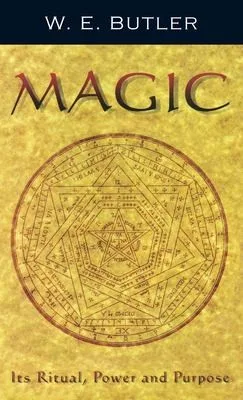
W. E. Butler's 'Magic' was first published in 1959, detailing Western esoteric practices.
W. E. Butler's 'Magic' examines the principles and practices of Western esotericism. The author explains ritual, the meaning of symbols, and the connections between the cosmos and individual consciousness. Butler aims to make these complex ideas accessible, discussing how unseen forces influence manifestation and awareness. The book encourages readers to see the world as a place where conscious engagement can affect subtle energies. It is written for those interested in understanding reality's structure and using these energies.
The text covers elements of magic as a system of working with these energies. Butler addresses the practical application of esoteric knowledge, aiming to equip the earnest student. It is a guide to concepts that shape existence, inviting a deeper understanding of the individual's place in the universe. The book offers insights into attaining wisdom and personal power through disciplined study and practice.
This book belongs to the tradition of Western ceremonial magic, drawing on hermeticism and occult philosophy. It addresses the practical application of esoteric principles, aiming to instruct the student in techniques for spiritual development and the manipulation of unseen forces. The work is situated within a lineage that seeks to understand and interact with the deeper structures of reality, moving beyond purely materialist explanations.
💡 Why Read This Book?
Embark on a transformative journey with W. E. Butler's 'Magic.' This book is a vital resource for spiritual seekers, occult scholars, and dedicated practitioners aiming to deepen their understanding of magical principles and esoteric philosophy. It offers a clear, systematic path to exploring the unseen forces that shape our reality, providing both theoretical grounding and practical guidance. If you are drawn to ancient wisdom and aspire to consciously engage with the subtle energies of the universe, this work is an essential addition to your occult library.
⭐ Reader Reviews
Honest opinions from readers who have explored this book.
❓ Frequently Asked Questions
What is the primary focus of W. E. Butler's 'Magic'?
The book primarily focuses on the principles and practices of Western esotericism, particularly ritual magic, symbolism, and the philosophical underpinnings of occult science. It aims to provide a comprehensive understanding of magical theory and its practical application.
Is this book suitable for beginners in occult studies?
Yes, while it delves into complex subjects, Butler's clear writing style makes 'Magic' accessible to dedicated beginners. It provides a solid foundation for those new to esoteric concepts and practices.
What kind of magical tradition does Butler draw from?
Butler's work is rooted in the Western Esoteric Tradition, drawing heavily from Hermeticism, Kabbalah, alchemy, and ceremonial magic, offering a synthesis of these ancient disciplines.
Does the book offer practical exercises or rituals?
Absolutely. 'Magic' is renowned for its practical approach, detailing specific rituals, meditations, and exercises designed to help practitioners develop their magical abilities and understanding.
What is the philosophical significance of magic as presented by Butler?
Butler presents magic not as mere superstition, but as a profound philosophical system and a science of the will, emphasizing the power of consciousness, intention, and the manipulation of subtle energies to effect change.
🔮 Key Themes & Symbolism
The Nature of Magic and Consciousness
Butler posits magic as a science and art of will, emphasizing the profound connection between consciousness, intention, and the manifestation of desired outcomes. He explores how the focused power of the human mind, when harmonized with universal laws, can influence the subtle energies that govern existence. This theme examines the concept of the magician as a conscious co-creator, capable of shaping reality through precise application of will and understanding of cosmic principles. It challenges the reader to see magic not as supernatural intervention, but as an inherent capacity within the human psyche, waiting to be awakened and directed.
Ritual as a Transformative Practice
The book meticulously details the significance and structure of magical ritual, presenting it as a formalized method for aligning the individual with divine or cosmic forces. Butler illuminates how the careful orchestration of gestures, words, visualization, and symbolic tools serves to create a sacred space and a potent energetic field. Ritual is depicted as a psychodrama, a means of accessing deeper states of consciousness, invoking archetypal energies, and facilitating profound personal transformation. Each element within a ritual is explored for its symbolic weight and its role in the overall process of magical operation.
The Language of Symbolism and Archetypes
Butler underscores the vital role of symbolism in magical operations, viewing symbols as keys that unlock the subconscious mind and bridge the gap between the material and spiritual realms. He meticulously unpacks the symbolic language inherent in ancient traditions, from planetary correspondences to alchemical imagery, explaining how these symbols act as carriers of potent energies and universal truths. Understanding this symbolic lexicon is presented as essential for the magician to effectively communicate with and direct the unseen forces, accessing archetypal wisdom that underlies all creation.
💬 Memorable Quotes
Direct passages from the work, attributed to the author.
“The universe is a living organism.”
— This highlights the pantheistic or panentheistic undercurrent in Butler's philosophy, suggesting interconnectedness and a divine animating principle in all things.
“Ritual is the dramatisation of magic.”
— This defines ritual as the active, embodied expression of magical principles, a way to bring abstract concepts into tangible experience.
“The magician is a priest of the hidden.”
— This positions the practitioner as a bridge between the mundane and the spiritual, tasked with uncovering and working with unseen realities.
💡 Key Ideas
Editorial paraphrase of the work's core concepts — not direct quotes.
Magic is the science of the will.
This quote expresses Butler's view of magic as a disciplined practice, not random chance, emphasizing the power of focused intent and conscious direction.
To know, to dare, to will, to keep silent.
A classic occult maxim, this quote outlines the essential virtues for a practitioner: knowledge, courage, determination, and discretion.
🌙 Esoteric Significance
Tradition
Butler's 'Magic' is deeply embedded within the Western Esoteric Tradition, drawing extensively from Hermeticism, Kabbalah, alchemy, and ceremonial magic. It represents a coherent synthesis of these ancient streams, aiming to present a unified understanding of magical principles. This tradition views magic as a path to spiritual enlightenment and self-realization, emphasizing the inherent divinity within humanity and the interconnectedness of all things. Butler's work serves as a modern key to unlocking the wisdom of these foundational esoteric systems, making their clear insights accessible to contemporary seekers.
Symbolism
The book is replete with detailed symbolism, which Butler elucidates as the language of the soul and the universe. Key symbols explored include the Tree of Life (Kabbalah), alchemical elements and processes (transformation), planetary correspondences (cosmic influences), and geometric forms. These symbols are not merely decorative but are presented as potent keys that unlock deeper layers of understanding, facilitate communication with subtle forces, and serve as focal points for magical operations. Butler guides the reader to perceive the symbolic resonance in nature, art, and ritual, revealing the hidden meanings that govern existence.
Modern Relevance
'Magic' remains profoundly relevant for modern seekers navigating an increasingly complex and materialistic world. It offers a timeless framework for spiritual growth, personal empowerment, and a deeper connection to the sacred. In an age often characterized by disconnection, Butler's emphasis on consciousness, will, and the interconnectedness of all things provides a powerful antidote. The practical techniques and philosophical insights presented continue to resonate with those seeking authentic spiritual paths, offering tools for self-discovery, inner transformation, and a more meaningful engagement with the mysteries of life.
👥 Who Should Read This Book
W. E. Butler's 'Magic' is a treasure for a diverse range of individuals. **Beginners** will find a clear, systematic introduction to occult principles, explaining complex concepts without overwhelming them. **Scholars** of esotericism will appreciate Butler's authoritative synthesis of various traditions and his insightful commentary. **Spiritual seekers** yearning for a deeper understanding of the universe and their place within it will discover a profound philosophical and practical path. **Dedicated practitioners** of magic and ritual will find invaluable guidance, practical techniques, and a solid theoretical foundation to enhance their craft. It is for anyone who believes there is more to reality than meets the eye and wishes to explore it consciously.
📜 Historical Context
W. E. Butler penned 'Magic' during a period of intense resurgence and interest in occultism and esoteric philosophy in the late 19th and early 20th centuries. This era, often referred to as the 'occult revival,' saw figures like Aleister Crowley, Madame Blavatsky, and Samuel Liddell MacGregor Mathers popularizing diverse mystical traditions. Butler, himself a member of the Hermetic Order of the Golden Dawn, contributed to this intellectual current by synthesizing and clarifying complex doctrines for a wider audience. His work reflects the Victorian and Edwardian fascination with ancient wisdom, spiritualism, and the potential of human consciousness beyond conventional scientific understanding. 'Magic' emerged as a significant text within this burgeoning occult landscape, offering a more structured and accessible entry point into the practice and philosophy of ceremonial magic, distinguishing itself through its clarity and systematic approach.
📔 Journal Prompts
Reflect on the concept of 'magic as the science of the will.' How does this differ from your current understanding of magic, and how might you apply this principle in your daily life?
Explore a symbol that appeals to you personally. What are its potential meanings, and how might it connect to the unseen forces Butler describes?
Consider the role of ritual in your life, even in its mundane forms. How could you imbue everyday activities with greater intention and symbolic meaning?
Butler emphasizes the interconnectedness of the universe. How does this concept influence your perception of yourself and your relationship with others and the environment?
What ethical considerations arise when contemplating the use of 'will' in magical practice, as outlined by Butler?
🗂️ Glossary
Esotericism
A broad category of spiritual or mystical traditions that emphasize direct experience of the divine and hidden knowledge, often transmitted through initiation and symbolic language.
Hermeticism
An ancient philosophical and religious tradition based on the purported teachings of Hermes Trismegistus, emphasizing divine wisdom, the interconnectedness of the cosmos, and the transformative power of knowledge.
Kabbalah
A mystical tradition within Judaism that explores the divine nature and the creation of the universe through a complex system of symbolism, numerology, and esoteric interpretation of scripture.
Alchemy
An ancient proto-scientific and philosophical tradition concerned with the transformation of matter, often interpreted metaphorically as the spiritual purification and perfection of the soul.
Ceremonial Magic
A formalized system of magical practice involving rituals, invocations, and specific procedures designed to achieve specific spiritual or material ends, often drawing on symbolic and archetypal imagery.
This book appears in 2 collections
🔮 Readers Also Liked
Browse all →






From the “Ritual Magic” Collection
View all →




More Free Magic & Ritual Books
View all →