Elemental Magick

 84
84

Elemental Magick
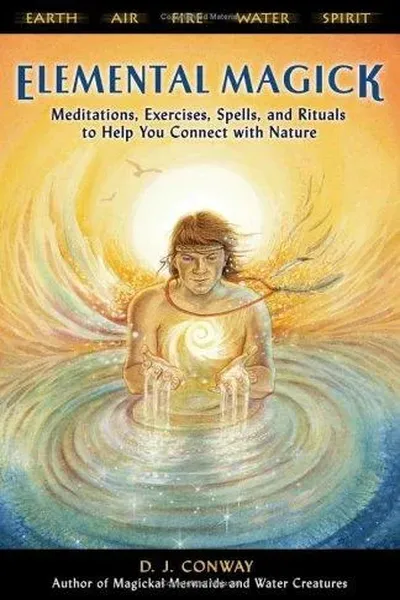
D. J. Conway’s Elemental Magick offers a refreshingly direct approach to a foundational subject in esoteric studies. Conway avoids the verbose historical detours common in many texts, instead focusing on the practical application of elemental theory. A particular strength lies in the clear delineation of correspondences for each element, making it easy for practitioners to reference during ritual preparation. However, the book occasionally feels overly prescriptive, leaving little room for individual interpretation or the development of personal elemental relationships. The section detailing the "invoking and banishing" of elements, while clear, could benefit from more nuanced examples of how these energies manifest beyond simple directional associations. Despite this limitation, Conway provides a solid, accessible framework for understanding and working with the classical elements.
Conway presents a functional guide to elemental magic.
📝 Description
84
### What It Is Elemental Magick, first published in 2020 by D. J. Conway, is a focused exploration of the fundamental forces that underpin magical practice. It moves beyond generalized theory to examine the distinct energies and correspondences associated with Earth, Air, Fire, and Water. The work aims to provide practitioners with a structured understanding of how to engage with these elements for efficacy in spellcraft and ritual.
### Who It's For This text is intended for individuals who have moved past introductory occult concepts and seek a deeper, more systematic approach to elemental work. It will appeal to practicing witches, ceremonial magicians, and solitary practitioners who wish to refine their connection to the natural world and its inherent magical currents. Those interested in building potent magical constructs through elemental alignment will find particular value.
### Historical Context While published in 2020, Elemental Magick engages with traditions stretching back to ancient Greece, where philosophers like Empedocles first posited four classical elements as the basis of all matter. Conway's work can be seen as a modern articulation of these enduring principles, reinterpreting them for contemporary magical practitioners. It follows in a lineage of esoteric writers such as Eliphas Lévi and Dion Fortune, who also explored elemental symbolism and its application in occult philosophy.
### Key Concepts The book dissects the unique qualities of each element, assigning them specific directions, colors, tools, and spiritual associations. It details how to invoke and banish elemental energies, the importance of elemental balance in ritual space, and the application of elemental correspondences in divination and spellcasting. A central theme is the understanding that each element is not merely a physical substance but a potent spiritual force with its own intelligence and influence.
💡 Why Read This Book?
• Gain a structured understanding of the four classical elements—Earth, Air, Fire, and Water—and their specific correspondences, enabling more precise spellcraft and ritual construction, as detailed in the book's explanations of elemental attribution. • Learn practical methods for invoking and banishing elemental energies, enhancing your ability to create balanced and potent magical spaces, a key technique discussed in the chapters on ritual practice. • Develop a deeper connection to the natural world by recognizing the inherent magical power within each element, fostering a more intuitive and grounded approach to your spiritual path, as highlighted by the elemental symbolism presented.
⭐ Reader Reviews
Honest opinions from readers who have explored this book.
❓ Frequently Asked Questions
What is the primary focus of D. J. Conway's Elemental Magick?
The book primarily focuses on the practical application and understanding of the four classical elements—Earth, Air, Fire, and Water—within magical practice, detailing their correspondences and energetic qualities for ritualistic use.
When was Elemental Magick first published?
Elemental Magick by D. J. Conway was first published in 2020, making it a relatively contemporary text within the field of esoteric literature.
Who is the intended audience for Elemental Magick?
The book is intended for practitioners who have moved beyond basic occult concepts and seek a systematic, practical guide to working with elemental energies in their magical endeavors.
Does Elemental Magick explain how to perform elemental rituals?
Yes, the work provides guidance on invoking and banishing elemental energies, establishing elemental balance in ritual spaces, and applying elemental correspondences to spellcasting.
What ancient philosophical concepts does Elemental Magick draw upon?
The book draws upon the ancient Greek concept of the four classical elements, first theorized by philosophers such as Empedocles, reinterpreting them for modern magical practitioners.
Are there specific tools associated with each element in the book?
Yes, Conway assigns specific magical tools, colors, directions, and spiritual associations to each of the four elements, aiding in their identification and invocation.
🔮 Key Themes & Symbolism
Elemental Correspondences
This theme explores the detailed attribution of specific qualities to each of the four classical elements: Earth, Air, Fire, and Water. Conway meticulously assigns directions (North for Earth, East for Air, South for Fire, West for Water), colors, tools (e.g., pentacle for Earth, sword for Air), and symbolic meanings. Understanding these correspondences is presented as crucial for correctly invoking and directing elemental energies in magical workings, ensuring the practitioner is aligned with the desired force.
Invocation and Banishing
A core practical element of the book involves the techniques for calling forth (invoking) and sending away (banishing) elemental energies. Conway outlines specific methods and visualizations to interact with these forces, emphasizing the importance of both drawing power from an element and clearing residual energies. This process is vital for maintaining energetic balance within a ritual space and for achieving focused intent in spellcraft.
Elemental Balance
The concept of balance among the elements is presented as fundamental to effective magic and well-being. The work stresses that an overabundance or deficiency of any single element can lead to ineffectual spells or personal disharmony. Conway guides the reader on how to assess and correct elemental imbalances within ritual settings and potentially within oneself, promoting a harmonious flow of magical power.
Elemental Symbolism in Magic
Beyond their physical representation, the elements are treated as potent spiritual forces with distinct intelligences and roles. The book delves into the symbolic significance of each element, linking them to psychological states, life processes, and spiritual archetypes. This deeper symbolic understanding allows practitioners to engage with the elements on multiple levels, moving from mere manipulation to a more profound communion.
💬 Memorable Quotes
“Each element possesses its own distinct energy signature, direction, and spiritual association.”
— This highlights the book's core premise: that the classical elements are not just physical substances but carriers of specific magical power, each requiring a unique approach for effective use in ritual.
“The proper invocation of an element draws its power into your working space.”
— This emphasizes the active, participatory nature of elemental magic, suggesting that practitioners must consciously invite and harness these forces rather than passively observing them.
“Banishing ensures that residual elemental energies do not interfere with subsequent workings.”
— This underscores the importance of energetic hygiene in magic, framing banishing not just as dismissal but as a necessary step for maintaining clarity and preventing unwanted magical interference.
“Fire represents transformation and passion, while Water governs emotions and intuition.”
— This offers a glimpse into the symbolic language of the elements, connecting them to specific human experiences and faculties, which is key to their application in spellcraft and personal development.
“Earth provides grounding and stability, Air offers intellect and communication.”
— This illustrates the foundational principles of elemental work, showing how these forces can be understood and utilized to manifest tangible results (Earth) or facilitate conceptual understanding (Air).
🌙 Esoteric Significance
Tradition
Elemental Magick fits within the broad umbrella of Western Esotericism, particularly drawing from traditions that emphasize the four classical elements as primary forces. While not explicitly Hermetic, Gnostic, or Kabbalistic, it utilizes a symbolic framework common to these lineages, where elements represent fundamental aspects of existence and consciousness. Conway’s work can be seen as a modern, accessible articulation of these ancient principles, adapted for contemporary magical practitioners seeking a structured understanding of energetic forces.
Symbolism
Central symbols include the Pentacle (Earth), representing stability, manifestation, and the physical realm; the Sword or Wand (Air), symbolizing intellect, communication, and the unseen currents of thought; the Chalice or Cup (Water), embodying emotions, intuition, and the flow of life; and the Athame or Candle (Fire), signifying transformation, passion, and dynamic energy. These symbols are not merely decorative but are active tools for focusing and directing elemental power.
Modern Relevance
This work remains relevant for contemporary pagan and witchcraft communities, as well as solitary practitioners. Its clear, practical approach to elemental work serves as a valuable resource for those seeking to deepen their connection to nature and refine their magical skills. Thinkers and practitioners in modern animism and nature-based spiritualities often draw upon similar elemental frameworks, finding Conway's systematic approach a useful starting point or a point of comparison.
👥 Who Should Read This Book
• Beginning practitioners of witchcraft or ceremonial magic seeking a clear, foundational understanding of elemental forces and their role in ritual. • Experienced practitioners looking to refine their elemental work and gain a structured system for invoking, banishing, and balancing energies. • Students of comparative religion or esoteric history interested in the enduring influence of the four classical elements across different magical and philosophical traditions.
📜 Historical Context
D. J. Conway's Elemental Magick, published in 2020, enters a field rich with historical discourse on the four classical elements. Its roots trace back to ancient Greek philosophers like Empedocles, who proposed the elements as fundamental constituents of reality. This concept was later integrated into Hermeticism and various Western esoteric traditions. Conway’s approach, while contemporary in its presentation, echoes the systematic elemental work explored by figures like Eliphas Lévi in the 19th century, who codified many of the symbolic associations still in use. The book's focus on practical application aligns with a resurgence of interest in witchcraft and neo-pagan practices that began in the mid-20th century, often drawing inspiration from earlier occult revivals. Unlike purely academic explorations, Conway's work is firmly rooted in the practitioner's perspective, differentiating it from purely philosophical treatises and aiming to provide actionable techniques for modern magical endeavors.
📔 Journal Prompts
Reflect on the primary attributes assigned to the element of Fire in Conway's system.
How does the concept of elemental balance, as presented in the book, relate to your personal experiences?
Consider the specific correspondences for Earth and how they might manifest in your daily life.
Visualize the invocation of Air, as described in the text, and note any sensations or thoughts that arise.
Analyze the symbolic representation of Water and its connection to emotional states discussed in the work.
🗂️ Glossary
Elemental Invocation
The magical practice of calling forth and drawing upon the specific energies and attributes of one of the four classical elements (Earth, Air, Fire, Water) for use in ritual or spellcraft.
Elemental Banishing
The magical practice of sending away or neutralizing the energies of the four classical elements after they have been used, ensuring energetic purity and balance within a ritual space.
Correspondences
In esoteric contexts, these are symbolic associations attributed to elements, planets, deities, or other concepts, used to link them and direct magical energies during workings.
Ritual Space
A designated area, often consecrated or prepared, where magical ceremonies and spells are performed, intended to create a focused and energetically distinct environment.
Spellcraft
The art and practice of designing and executing magical spells or enchantments to achieve a specific desired outcome or effect.
Athame
A ritual dagger, typically with a black handle and double-edged blade, primarily used for directing energy and cutting magical cords, often associated with the element of Fire or Air.
Pentacle
A five-pointed star, often enclosed within a circle, used as a symbol and tool in ritual, most commonly associated with the element of Earth and grounding.