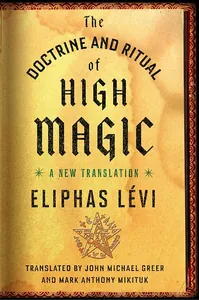
Cinderella

 78
78

Cinderella
Perrault's "Cinderella" offers a fascinating glimpse into the courtly sensibilities of late 17th-century France, a far cry from the more rustic or psychologically complex versions that followed. The story's elegance lies in its directness; the moral is appended almost as an afterthought, a common practice for the period. The introduction of the fairy godmother, a concept perhaps influenced by contemporary Neoplatonic ideas of benevolent guiding forces, provides the magical catalyst for Ella's ascent. However, the very refinement that makes Perrault's version historically significant also renders it less dynamically engaging for a modern reader accustomed to deeper character development or sharper social critique. The focus remains squarely on the miraculous, the eventual triumph of innate goodness, and the pragmatic outcome of a royal marriage. It functions less as a psychological exploration and more as a fable of divine providence operating within a rigid social hierarchy. The story’s enduring power rests not in its psychological nuance, but in its archetypal simplicity and the potent imagery of transformation.
📝 Description
78
Charles Perrault's Cinderella, published in 1697, is a tale of servitude and magical ascent.
Perrault's 1697 "Cendrillon" recounts the story of a young woman enduring mistreatment from her stepfamily. Her fortunes change with the aid of a fairy godmother, leading to her recognition by a prince and eventual transformation. This version differs from later retellings by emphasizing elegance and moral instruction. It was included in Perrault's "Tales of Past Times, with Morals," a collection that aimed to entertain and educate the aristocracy.
The narrative highlights virtue finding its reward and the impact of kindness against envy. It also touches upon the possibility of social advancement, framed within a magical, courtly setting. The story subtly addresses societal standards of the time, presenting a moral framework through its characters' fates. Perrault's work was part of a literary movement that elevated vernacular stories to a recognized literary form.
Within the tradition of fairy tales and their moralistic interpretations, Perrault's "Cinderella" stands as a significant artifact of 17th-century French literary culture. It reflects the *Grand Siècle*'s interest in didactic narratives presented for aristocratic salons. The collection it belongs to, "Tales of Past Times, with Morals," specifically aimed to imbue popular stories with lessons in propriety and social order, a common practice in periods emphasizing refinement and structured society. Perrault's contribution to the "Quarrel of the Ancients and the Moderns" further situates his work as a deliberate attempt to legitimize folk narratives within a formal literary context.
💡 Why Read This Book?
• Understand the origins of the archetypal Cinderella narrative as presented in 1697, focusing on aristocratic refinement and moral instruction. • Analyze the 17th-century French social context influencing the tale, particularly regarding marriage, status, and the role of providence. • Examine the symbolic significance of the fairy godmother as a guiding, transformative agent within the story's specific literary and historical milieu.
⭐ Reader Reviews
Honest opinions from readers who have explored this book.
❓ Frequently Asked Questions
When was Charles Perrault's Cinderella first published?
Charles Perrault's "Cinderella" (Cendrillon) was first published in 1697 as part of his collection "Histoires ou contes du temps passé, avec des moralités."
What is the main difference between Perrault's Cinderella and the Grimm brothers' version?
Perrault's version, published in 1697, is more refined and focuses on elegant transformation and a clear moral lesson, featuring a fairy godmother. The Grimm brothers' later version (1812) is often more brutal, with magical birds and self-mutilation by the stepsisters.
Who was the intended audience for Perrault's fairy tales?
Perrault's tales, including "Cinderella," were initially intended for the aristocratic salons of 17th-century France, particularly for young ladies, and were imbued with moralistic undertones.
What does the fairy godmother symbolize in Perrault's Cinderella?
The fairy godmother in Perrault's 1697 tale symbolizes benevolent intervention, magical aid, and the external force that enables Cinderella's inherent worth to be recognized and rewarded.
Is Perrault's Cinderella considered an esoteric text?
While "Cinderella" is a fairy tale, Perrault's 1697 version can be viewed through an esoteric lens by examining its archetypal symbolism, its embedded moral philosophy, and its reflection of Neoplatonic or occult influences present in 17th-century thought.
What is the primary moral of Perrault's Cinderella?
The primary moral, as stated by Perrault in the 1697 publication, emphasizes that good sense and virtue are essential, and that a beautiful appearance is insufficient without them, advocating for prudence and good breeding.
🔮 Key Themes & Symbolism
Virtue and Reward
The narrative in Perrault's 1697 "Cinderella" hinges on the principle that innate virtue, kindness, and patience will ultimately be recognized and rewarded. Cinderella endures her harsh treatment with grace, a stark contrast to her stepsisters' malice. This theme reflects a common moralistic undercurrent in 17th-century literature, suggesting a cosmic or social order where goodness, even when hidden, eventually triumphs. The magical intervention serves as the catalyst for this recognition, implying that external forces can align with inherent merit.
Transformation and Social Mobility
Cinderella's physical and social transformation is central to the tale. From a soot-covered servant (hence her name, derived from 'cendre' meaning ash) to a dazzling princess, the change is dramatic. Perrault's version emphasizes the elegance and magical nature of this shift, facilitated by the fairy godmother. This transformation speaks to the archetypal desire for escape from oppressive circumstances and the attainment of a higher social standing, a potent theme in any era but particularly resonant in the structured society of 17th-century France.
The Fairy Godmother Archetype
The fairy godmother in the 1697 text is more than just a magical helper; she represents a benevolent, guiding force. Her appearance signifies hope and the possibility of external aid when all seems lost. This figure can be interpreted through various esoteric lenses, potentially as a manifestation of divine providence, a tutelary spirit, or an aspect of the anima guiding the protagonist. Her gifts are temporary, emphasizing that true change requires Cinderella's own inherent qualities to be recognized once the magic fades.
Appearance vs. Essence
Perrault's "Cinderella" grapples with the distinction between outward appearance and inner worth. While Cinderella's beauty and grace are evident even before her magical makeover, the story highlights how societal recognition often depends on presentation. The fairy godmother provides the temporary, splendid attire that allows Cinderella to enter the ball and capture the prince's attention. However, the narrative implies that her inherent qualities—her virtue and gentle nature—are what ultimately sustain the prince's fascination beyond the initial enchantment.
💬 Memorable Quotes
Direct passages from the work, attributed to the author.
“The fairy godmother said to her, 'Go to the ball, and make yourself fine; you shall be there.'”
— This represents the key moment of magical intervention. The fairy godmother's command empowers Cinderella, transforming her from a passive victim of circumstance into an active participant, enabled by supernatural assistance to fulfill her desires.
“As for her sisters, they were forced to let her go; and she returned within the year, all covered with gold and jewels.”
— This phrase illustrates the eventual triumph and return of Cinderella, adorned and elevated. It signifies the complete reversal of her fortunes and the stark contrast between her restored status and the diminished state of her envious stepsisters.
“The prince… had found the shoe of glass, which she had left behind.”
— This iconic detail, the glass slipper from Perrault's 1697 version, serves as the unique identifier. It's the tangible proof of Cinderella's magical night, a delicate yet powerful object that becomes the key to her recognition and eventual marriage.
“Good sense is the best of all gifts, and good fortune is very welcome when good sense is present.”
— This concluding moral, attributed to Perrault's 1697 publication, emphasizes the story's didactic purpose. It suggests that while luck and magic play a role, true and lasting success is founded upon innate wisdom and virtue.
💡 Key Ideas
Editorial paraphrase of the work's core concepts — not direct quotes.
For when the prince danced with her, he found himself so much in love with her that, both in the evening and the day after, he declared he could not dance with any other.
This passage from the 1697 text highlights the immediate and overwhelming impact Cinderella has on the prince. It underscores the fairy tale's focus on love at first sight and the narrative's swift progression toward a romantic union, prioritizing enchantment over gradual courtship.
🌙 Esoteric Significance
Tradition
While not explicitly part of a formal esoteric lineage like Hermeticism or Kabbalah, Perrault's "Cinderella" (1697) can be interpreted through a Neoplatonic or Hermetic lens. The narrative's emphasis on inner virtue being recognized and rewarded, facilitated by a benevolent intermediary (the fairy godmother), echoes concepts of divine emanation and the soul's journey toward its true, higher state. The story functions as a symbolic allegory for spiritual transformation, where the mundane self is elevated through grace and adherence to virtue.
Symbolism
The glass slipper is a potent symbol of Cinderella's delicate purity and unique destiny; its fragility contrasts with its power to identify her. The pumpkin transformed into a carriage represents the magical potential within the mundane, a common theme in alchemical and Hermetic thought where base matter can be transmuted. The fairy godmother herself can symbolize the Anima, the guiding feminine principle or higher self that aids in the individuation process and facilitates the soul's journey toward wholeness and recognition.
Modern Relevance
Contemporary practitioners of Jungian psychology and archetypal studies frequently analyze "Cinderella" as a prime example of the Anima figure and the transformative journey of the self. Modern spiritual traditions that focus on manifesting desires or personal growth often draw upon the narrative's core elements of transformation and the power of intention, viewing the fairy godmother as a metaphor for inner guidance or the universal law of attraction. The story's archetypal resonance continues to inform therapeutic approaches and self-help literature.
👥 Who Should Read This Book
• Students of comparative folklore and mythology seeking the foundational Perrault version of the Cinderella narrative, first published in 1697. • Readers interested in 17th-century French literature and social history, exploring tales presented in the salons of the era. • Individuals exploring archetypal psychology and symbolism, examining the fairy godmother and the glass slipper as potent motifs.
📜 Historical Context
Charles Perrault's "Cendrillon" emerged in 1697, a significant year within the *Grand Siècle* of French literature. The tale was included in his "Histoires ou contes du temps passé," a collection that legitimized vernacular fairy tales for aristocratic audiences. This period, dominated by the Sun King Louis XIV, valued refinement and social order. Perrault's work engaged with the *querelle des Anciens et des Modernes*, a debate on the merits of classical versus contemporary literature, by showcasing the literary potential of popular stories. While Perrault presented his tales with appended morals, often reflecting the era's emphasis on propriety and advantageous marriage, their underlying archetypal power transcended simple didacticism. Unlike the more naturalistic or psychologically driven narratives favored by some contemporaries, Perrault embraced the magical and the marvelous, drawing on a tradition that stretched back through oral folklore.
📔 Journal Prompts
The fairy godmother's intervention and the temporary nature of her gifts.
Cinderella's enduring patience amidst her stepfamily's cruelty.
The symbolic meaning of the glass slipper in Perrault's 1697 tale.
Reflecting on the transformation from 'Cendrillon' to the ball's radiant figure.
The moral appended to the 1697 version regarding good sense and good fortune.
🗂️ Glossary
Cendrillon
The French name for Cinderella, derived from 'cendre' meaning ash. It refers to her state of servitude and constant proximity to the hearth, symbolizing her lowly position before transformation.
Fairy Godmother
A benevolent magical being who aids Cinderella, providing the means for her to attend the royal ball. In Perrault's 1697 version, she represents a force of grace and transformative power.
Glass Slipper
The delicate shoe left behind by Cinderella at the ball. In Perrault's text, it is made of glass and serves as the crucial object for the prince's identification of his beloved.
Grand Siècle
The 'Great Century,' referring to the 17th century in France, particularly the reign of Louis XIV, a period of significant cultural, political, and military influence for France.
Moralité
A moral lesson or concluding statement, often appended to tales in the 17th century. Perrault included moralités with his fairy tales, aiming to provide edification alongside entertainment.
Querelle des Anciens et des Modernes
A literary and intellectual dispute in late 17th-century France concerning the relative merits of classical authors ('Ancients') versus contemporary writers ('Moderns').
Archetype
A recurring symbol, character type, or motif that is universally understood across cultures and time periods, often explored in mythology and psychology.
🔮 Readers Also Liked
Browse all →









More by Charles Perrault
All books →




More Free Magic & Ritual Books
View all →