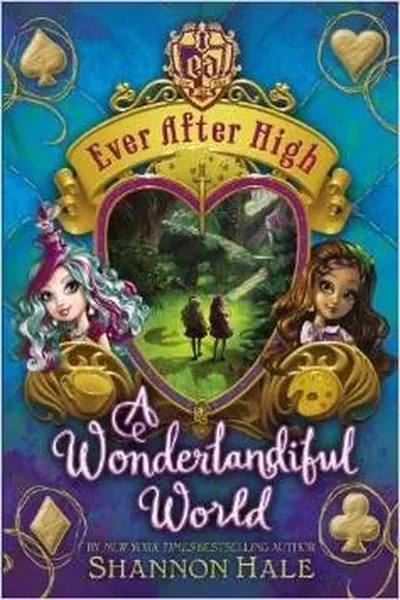
A Wonderlandiful World

 79
79

A Wonderlandiful World
Shannon Hale's A Wonderlandiful World is less a portal to a mystical realm and more a meticulously crafted diorama of one. The strength lies in its precise, almost clinical depiction of the fantastical as mundane, forcing a contemplation of what we accept as real. The narrative's self-awareness, its understanding of its own artifice, is its most compelling feature. However, this very self-containment can sometimes feel isolating; the reader is an observer of a meticulously constructed reality, rarely invited to truly inhabit it. The passage where the concept of "making" is discussed, highlighting the author's deliberate choices, is particularly revealing, underscoring the book's meta-fictional core. It is a work that admires its own construction above all else.
📝 Description
79
Shannon Hale's 2018 novel, A Wonderlandiful World, examines how personal mythologies construct reality.
A Wonderlandiful World presents the extraordinary as ordinary, blurring the boundaries between inner experience and outward appearance. The narrative serves as a literary artifact, questioning perception and the very nature of reality. It invites readers to consider how we build meaning within our own subjective worlds.
The book is suited for those who enjoy meta-narrative and fairy tale deconstruction. Readers interested in psychological archetypes and the power of belief will find it engaging. It appeals to those who seek literature that encourages contemplation on the construction of reality itself.
Published in 2018, this work follows a tradition of books that challenge established narratives, from Lewis Carroll's Alice stories to modern explorations of consciousness. Hale's approach, however, is distinctly self-referential and contemporary.
While not overtly esoteric, A Wonderlandiful World engages with ideas relevant to occult philosophy through its focus on personal mythologies and the construction of reality. It touches on how belief systems and internal narratives shape our experience, a concept echoed in hermetic traditions and certain strands of modern paganism that emphasize the power of will and imagination. The book explores the idea that our personal 'wonderlands' are not mere fantasy but fundamental structures that define our existence, aligning with philosophies that posit consciousness as the primary creative force.
💡 Why Read This Book?
• Gain an understanding of narrative as a tool for constructing personal reality, as demonstrated by the book's exploration of how stories shape perception. • Experience a unique meta-fictional approach that questions the boundaries between author, character, and reader, offering a novel perspective on literary creation. • Contemplate the nature of "wonder" not as external magic but as an internally generated state, inspired by the book's focus on subjective experience.
⭐ Reader Reviews
Honest opinions from readers who have explored this book.
❓ Frequently Asked Questions
What is the publication year of A Wonderlandiful World by Shannon Hale?
A Wonderlandiful World by Shannon Hale was first published in 2018. This year places it within the contemporary landscape of meta-fictional and speculative literature.
Is A Wonderlandiful World a direct sequel to Alice in Wonderland?
No, A Wonderlandiful World is not a direct sequel. It is a new narrative that draws thematic inspiration from the concept of Wonderland and the nature of fantastical worlds.
What genre does A Wonderlandiful World fall under?
The book can be categorized under meta-fiction, literary fiction, and speculative fiction, exploring themes of reality, storytelling, and perception.
Does Shannon Hale's A Wonderlandiful World explore esoteric themes?
While not overtly religious or occult, the work explores esoteric themes related to the construction of reality, the power of belief, and the subjective nature of perception, which can be interpreted through an esoteric lens.
What is the primary focus of the narrative in A Wonderlandiful World?
The primary focus is on the self-aware creation and deconstruction of a fantastical world, examining the relationship between the creator and the created, and how narratives shape reality.
Where can I find A Wonderlandiful World?
A Wonderlandiful World is available through major booksellers, libraries, and online retailers. As it was published in 2018, it is widely accessible.
🔮 Key Themes & Symbolism
Narrative Construction of Reality
The book interrogates how stories actively build and define our understanding of existence. It presents a world where the act of storytelling is not merely descriptive but formative, shaping the very fabric of what is perceived as real. This concept aligns with philosophical ideas about narrative theory and semiotics, suggesting that our reality is, in essence, a story we tell ourselves and others, with "A Wonderlandiful World" serving as a prime literary example of this process.
The Nature of Wonder
Wonder is depicted not as an external magical force but as an internal state of being, a perspective cultivated through engagement with the extraordinary. The work explores how individuals create and maintain their own subjective "wonderlands," questioning the boundary between imaginative escape and fundamental aspects of consciousness. This theme invites readers to consider their own capacity for wonder and how it is shaped by narrative.
Meta-Fictional Self-Awareness
A central theme is the book's own self-awareness as a constructed artifact. It plays with the relationship between author, narrative, and reader, blurring these lines to highlight the artifice of storytelling. This meta-fictional quality prompts reflection on the nature of authorship and the reader's role in completing the meaning of a text, positioning the book as a commentary on its own existence.
Subjectivity and Perception
The narrative emphasizes that reality is filtered through individual perception. What one character experiences as miraculous, another might dismiss as ordinary, depending on their internal narrative framework. This focus on subjective experience encourages readers to examine their own perceptual biases and how they construct their personal worlds, echoing ideas found in phenomenology and existentialist thought.
💬 Memorable Quotes
Direct passages from the work, attributed to the author.
“The act of creation is a kind of magic.”
— This statement highlights the book's focus on the power of authorship and narrative. It suggests that bringing a story or a world into existence is akin to performing an act of magic, imbuing the created entity with a life and reality of its own.
“Wonderland exists because someone believed it could.”
— This interpretation emphasizes the role of belief and imagination in manifesting reality. It points to the idea that subjective conviction can shape the perceived world, aligning with concepts of manifestation and the power of positive thinking.
“We choose the realities we inhabit.”
— This concept underscores the theme of subjective perception and personal agency in constructing one's world. It suggests that individuals have the power to select or emphasize certain aspects of their experience, thereby shaping their lived reality.
“The extraordinary is merely the ordinary viewed differently.”
— This phrase points to the book's exploration of perception. It suggests that the fantastical is not necessarily separate from reality but rather a different way of interpreting or framing everyday occurrences.
💡 Key Ideas
Editorial paraphrase of the work's core concepts — not direct quotes.
The story is the world, and the world is the story.
This quote captures the book's meta-fictional premise, suggesting an inseparable link between narrative and reality. It implies that our understanding of existence is fundamentally mediated by the stories we employ to describe it.
🌙 Esoteric Significance
Tradition
While not adhering to a specific named esoteric tradition like Hermeticism or Gnosticism, A Wonderlandiful World engages with themes resonant in esoteric thought, particularly concerning the power of consciousness and belief to shape reality. It touches upon the idea that perception is a creative act, a concept found in various mystical traditions that posit the universe as a manifestation of mind or divine thought. The work can be seen as a secular exploration of these principles, framed through a literary lens.
Symbolism
The primary symbolic motif is the "Wonderland" itself, representing not just a place but a state of mind or a constructed reality. Within this, the act of "making" or storytelling serves as a potent symbol for creation and the imposition of order (or delightful disorder) upon existence. Characters who embody or manipulate these "wonderlands" symbolize the creative consciousness, the storyteller within each individual who shapes their own perceived reality.
Modern Relevance
Contemporary thinkers and practitioners in fields like positive psychology, manifestation coaching, and even certain branches of transpersonal psychology often draw on principles similar to those explored in A Wonderlandiful World. The idea that our thoughts and narratives create our reality is a core part of many modern self-help and personal development movements. The book's literary exploration provides a relatable and thought-provoking entry point for understanding these concepts.
👥 Who Should Read This Book
• Readers interested in meta-fiction and narrative theory, who will appreciate the book's self-aware exploration of storytelling mechanics. • Aspiring writers and creators seeking to understand the power of narrative in shaping perception and reality. • Individuals exploring philosophical concepts of subjective reality and the role of belief, looking for a literary rather than purely academic treatment.
📜 Historical Context
Published in 2018, Shannon Hale's A Wonderlandiful World emerged during a period of intense literary exploration into meta-fiction and the nature of reality, building upon foundations laid by authors like Lewis Carroll in the late 19th century. The era saw a resurgence of interest in unreliable narrators, self-reflexive storytelling, and questioning established narratives, influenced by postmodern thought. Hale's work engages with this intellectual current by dissecting the very mechanics of storytelling and world-building. It arrived in a literary landscape populated by contemporaries who also played with narrative structures, such as Jeff VanderMeer's Southern Reach Trilogy (2014), which similarly explored liminal spaces and subjective experience. While not directly part of a specific philosophical movement, A Wonderlandiful World echoes contemporary discussions in literary theory and psychology regarding constructivism and the subjective experience of truth.
📔 Journal Prompts
The concept of "making" in A Wonderlandiful World.
Your personal "Wonderland" and its construction.
The relationship between story and perceived reality.
Moments where the "extraordinary" became "ordinary" for you.
The power of belief in shaping your experiences.
🗂️ Glossary
Meta-fiction
A type of fiction that self-consciously draws attention to its status as a work of fiction, often by discussing the processes of storytelling or the relationship between author, text, and reader.
Narrative Construction
The process by which stories and plotlines are built, shaping how events are understood and presented, often influencing the reader's perception of reality within the text.
Subjective Reality
The philosophical concept that reality is dependent on individual consciousness and perception, rather than existing independently as an objective truth.
Wonderland
In the context of this book, a symbolic representation of a self-created or perceived reality, often characterized by the fantastical or the extraordinary, shaped by individual belief and narrative.
Perception
The way in which something is regarded, understood, or interpreted, influenced by personal experiences, beliefs, and mental frameworks.
Authorial Choice
The deliberate decisions made by the author in the creation of a literary work, including plot, character development, theme, and narrative style.
Manifestation
The act of making something appear or become real, often through belief, visualization, or conscious intent, a concept explored thematically in the book.
🔮 Readers Also Liked
Browse all →







More by Shannon Hale
All books →


More Free Magic & Ritual Books
View all →