A Midsummer Night's Dream

 76
76

A Midsummer Night's Dream
Shakespeare's 1600 comedy, *A Midsummer Night's Dream*, remains a potent exploration of love's bewildering effects. The play’s brilliance lies in its masterful interweaving of disparate worlds: the ordered Athenian court, the chaotic fairy realm, and the earnest amateur theatre troupe. Its linguistic dexterity, particularly in the lovers' bewildered pronouncements and Bottom's transformed state, offers a unique window into the Elizabethan perception of passion as a kind of temporary insanity. A slight limitation is the sheer density of its verse, which can occasionally obscure the narrative for modern readers without annotation. However, the scene where Puck mistakes Lysander for Demetrius, leading to further romantic confusion, exemplifies the play's genius for escalating comedic chaos through magical intervention. It is a work that demonstrates theatre's capacity to hold a mirror to both our rational minds and our wildest dreams.
📝 Description
76
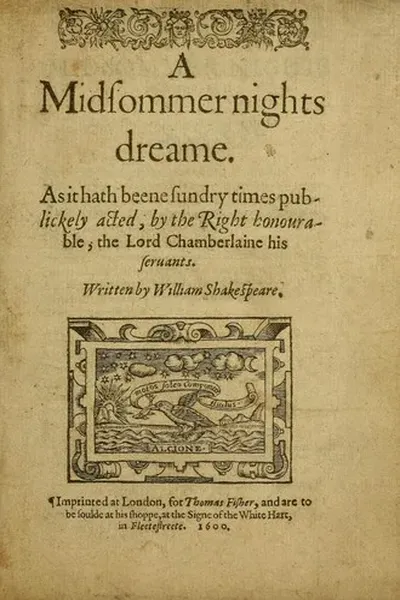
### What It Is A Midsummer Night's Dream is a Shakespearean play, first published in 1600, that chronicles the chaotic romantic entanglements of four young Athenians and a group of amateur actors, all ensnared by the mischief of fairies in an enchanted forest. It blurs the lines between reality and illusion, waking life and dream, through its intertwined plots and fantastical elements.
### Who It's For This work appeals to scholars of Renaissance literature, enthusiasts of mythology and folklore, and those interested in early modern English drama. Its complex language and layered symbolism also draw readers seeking to explore themes of love, magic, and the human psyche through a classical lens. It is particularly relevant for students of dramatic arts and comparative literature.
### Historical Context First performed around 1595-1596 and published in quarto form in 1600, A Midsummer Night's Dream emerged during the height of Elizabethan England. This period saw a flourishing of theatre, with contemporaries like Christopher Marlowe pushing dramatic boundaries. The play reflects a fascination with classical mythology, evident in its references to figures like Pyramus and Thisbe, and also engages with contemporary beliefs in fairies and folk magic, which were prevalent in rural England and discussed in works like Reginald Scot's *The Discoverie of Witchcraft* (1584). The play's enduring popularity suggests it tapped into cultural anxieties and delights of its era.
### Key Concepts The play explores the transformative power of love, often depicted as irrational and uncontrollable, akin to a form of madness or enchantment. It contrasts the structured, rational world of Athens with the wild, magical realm of the forest, suggesting that the latter holds a potent, albeit chaotic, truth about human desires. The concept of performance itself is central, with the play-within-a-play highlighting the relationship between art, illusion, and reality.
✍️ Author
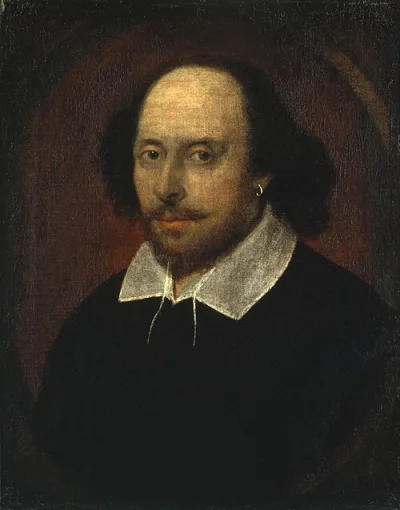
William Shakespeare
William Shakespeare (c. 23 April 1564 – 23 April 1616) was an English playwright, poet and actor.
💡 Why Read This Book?
• Gain insight into Elizabethan beliefs about magic and folklore, as evidenced by the detailed portrayal of Oberon and Titania's court, which reflects contemporary fascination with the supernatural. • Understand the Renaissance concept of love as a form of delightful madness, exemplified by the lovers' rapid shifts in affection and confusion after interacting with the fairy kingdom. • Appreciate the meta-theatrical commentary embedded in the play-within-a-play, showcasing the amateur players' earnest but flawed performance of *Pyramus and Thisbe*, a technique Shakespeare employed to explore the nature of reality and art.
⭐ Reader Reviews
Honest opinions from readers who have explored this book.
❓ Frequently Asked Questions
When was William Shakespeare's A Midsummer Night's Dream first published?
A Midsummer Night's Dream was first published in quarto form in 1600, though it is believed to have been written and performed several years prior, likely between 1595 and 1596.
What are the main settings in A Midsummer Night's Dream?
The play primarily contrasts two settings: the city of Athens, representing order and law, and an enchanted forest nearby, which serves as the domain of fairies and the site of magical chaos and romantic misadventures.
Who are the main groups of characters in the play?
The play features four young Athenian lovers (Hermia, Lysander, Helena, Demetrius), a group of amateur actors known as the 'mechanicals', and the fairy royalty, Oberon and Titania, along with their attendants like Puck.
What is the role of Puck (Robin Goodfellow) in the play?
Puck, also known as Robin Goodfellow, is a mischievous fairy and a servant to Oberon. He is the primary agent of magical chaos, misinterpreting and executing Oberon's commands, leading to much of the play's confusion and comedy.
What is the significance of the play-within-a-play, 'Pyramus and Thisbe'?
The performance of 'Pyramus and Thisbe' by the mechanicals serves as a comedic commentary on theatrical conventions and the nature of illusion versus reality, highlighting the audience's willingness to suspend disbelief.
Does A Midsummer Night's Dream have a connection to solstice celebrations?
The title and the magical, chaotic events occurring in the forest strongly suggest a connection to Midsummer's Eve, a traditional time of folklore, revelry, and perceived heightened supernatural activity in Elizabethan England.
🔮 Key Themes & Symbolism
The Nature of Love
The work explores love not as a rational choice but as an overwhelming, often irrational force, akin to enchantment or madness. The young lovers' fickle affections, dictated by fairy magic and love potions, mirror the Elizabethan understanding of passion as a temporary delirium. This theme is central to the chaotic romantic entanglements that drive the plot, questioning whether true love can exist amidst such confusion.
Reality vs. Illusion
Shakespeare masterfully blurs the lines between what is real and what is dreamt or magically imposed. The enchanted forest becomes a space where normal rules of society and perception are suspended, allowing for transformations and illusions. The mechanicals' play-within-a-play further interrogates this theme, demonstrating how theatre itself creates a powerful illusion that audiences willingly embrace.
The Power of Magic and the Supernatural
The fairy realm, ruled by Oberon and Titania, directly influences the mortal characters' lives through spells and mischief. This reflects the widespread Elizabethan belief in fairies and their capacity to meddle in human affairs, for good or ill. The play uses magic not just for spectacle but to reveal hidden desires and to orchestrate the comedic resolution.
Order vs. Chaos
The play sets up a stark contrast between the structured, lawful world of Athens and the wild, unpredictable nature of the forest. While Athens represents societal norms and reason, the forest embodies instinct, passion, and disorder. The resolution, with order restored in Athens, suggests a need for balance, acknowledging the essential, if disruptive, role of chaos and magic.
💬 Memorable Quotes
“Lord, what fools these mortals be!”
— This line, spoken by Puck, succinctly captures the fairies' detached and often mocking perspective on human romantic follies and irrationality, highlighting the contrast between the supernatural and mortal realms.
“The course of true love never did run smooth.”
— A famous observation on the inherent difficulties and obstacles faced in romantic relationships. It serves as a prelude to the lovers' immediate troubles, setting a tone of anticipated conflict and struggle.
“I have had a most rare vision. I have had a dream, past the wit of man to say what dream it was.”
— Bottom's bewildered reflection after his transformation and encounter with Titania encapsulates the play's central theme of the blurred boundary between dream and reality, and the ineffable nature of profound experiences.
“Though she be but little, she is fierce.”
— This quote, referring to Helena, humorously points out that physical size does not dictate personality or intensity. It speaks to the varied and sometimes unexpected qualities of characters within the play.
“If we shadows have offended, Think but this, and all is mended, That you have but slumbered here While these visions did appear.”
— A concluding address from Puck to the audience, framing the entire play as a dream or illusion. This meta-theatrical device encourages the audience to accept the fantastical elements and find no real offense in the performance.
🌙 Esoteric Significance
Tradition
While not strictly aligned with a single esoteric lineage, *A Midsummer Night's Dream* resonates with Neoplatonic and Hermetic ideas concerning the influence of celestial and elemental beings on human affairs. The fairies can be seen as analogous to elemental spirits or daimons, beings that mediate between the divine and the material world, influencing human emotions and destinies. The play's exploration of love as a potentially irrational, transformative force also echoes alchemical concepts of union and dissolution.
Symbolism
The enchanted forest serves as a potent symbol of the unconscious mind or the liminal space where the rational ego dissolves, allowing primal desires and magical forces to surface. Puck, the trickster spirit, embodies chaos and transformation, a catalyst for change who disrupts order to reveal deeper truths. The ass's head transformation of Bottom symbolizes the beastly or instinctual nature that can be awakened within humans when societal constraints are removed, often under the influence of love or magic.
Modern Relevance
Contemporary practitioners of ecopsychology and nature spirituality find resonance in the play's depiction of the forest as a place of profound transformation and connection to primal energies. Modern fantasy literature and film often echo its themes of otherworldly intervention in human lives and the power of love to transcend obstacles. Additionally, theatrical directors continue to draw on its rich symbolism for interpretations that explore psychology, mythology, and the very nature of performance.
👥 Who Should Read This Book
• Students of Renaissance literature and theatre seeking to understand the cultural milieu and dramatic conventions of Elizabethan England, particularly concerning comedy and the supernatural. • Enthusiasts of mythology and folklore interested in how ancient beliefs about fairies, magic, and elemental spirits were creatively adapted and explored in early modern drama. • Individuals drawn to psychological exploration of love, desire, and the subconscious, who appreciate dramatic works that use enchantment and dreamlike scenarios to examine human experience.
📜 Historical Context
Emerging around 1595-1596 and published in 1600, *A Midsummer Night's Dream* belongs to the vibrant theatrical landscape of Elizabethan England. This era witnessed a surge in dramatic creativity, with playwrights like Christopher Marlowe exploring complex themes. Shakespeare's play draws heavily on classical mythology and contemporary folklore, reflecting a society that still held beliefs in fairies and the supernatural, as documented by Reginald Scot in *The Discoverie of Witchcraft* (1584). The play’s blend of aristocratic romance, working-class comedy, and fairy magic resonated with a broad audience. It engaged with the popular fascination for the mystical elements of Midsummer's Eve, a time traditionally associated with heightened magic and revelry. The play’s structure, blending multiple plotlines, was typical of Elizabethan comedies, but its unique imaginative scope set it apart.
📔 Journal Prompts
The mechanicals' earnest yet flawed performance of 'Pyramus and Thisbe': how does their play reflect broader themes of illusion and reality?
Puck's role as a catalyst for chaos: examine a specific instance where his actions directly lead to a significant plot development.
Bottom's transformation and experience with Titania: what does this episode reveal about the relationship between instinct and societal conditioning?
The contrast between Athens and the forest: how does each setting symbolize different aspects of human existence and consciousness?
Reflect on the concept of love as a form of 'madness' as depicted in the play, and its implications for rational decision-making.
🗂️ Glossary
Mechanicals
The group of amateur actors in the play, consisting of tradesmen from Athens, who rehearse and perform the play 'Pyramus and Thisbe' for the Duke's wedding celebration.
Puck (Robin Goodfellow)
A mischievous fairy, servant to Oberon, known for his pranks and his role in orchestrating much of the play's magical confusion and comedic events.
Demetrius
An Athenian nobleman initially loved by Helena, but who pursues Hermia. He becomes a target of fairy magic, leading to complicated romantic entanglements.
Helena
A young Athenian woman, deeply in love with Demetrius. She is often scorned and mistreated by the men but ultimately finds happiness through the play's magical twists.
Oberon
The King of the Fairies, who commands Puck to administer a love potion to Titania and later to the Athenian lovers, driving much of the play's magical action.
Titania
The Queen of the Fairies, married to Oberon. She falls comically in love with the transformed Bottom under the influence of Oberon's love potion.
Quarto
A format of book in which a single sheet of paper is folded in half twice to produce four leaves (eight pages). The first quarto of 'A Midsummer Night's Dream' was published in 1600.







![Works [37 plays, 5 poems, sonnets]](/img/thumb/works-37-plays-5-poems-sonnets-william-shakespeare.webp)