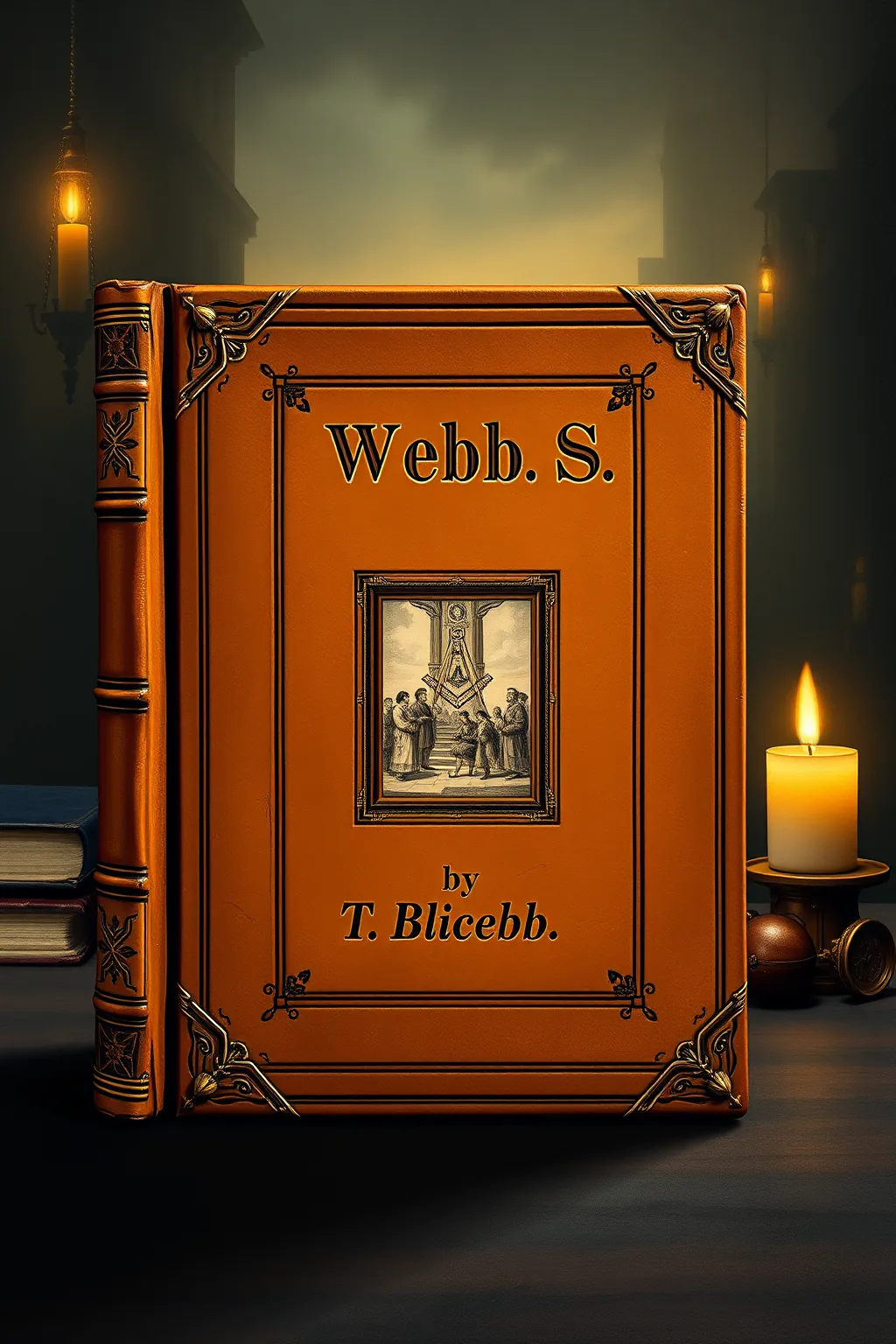
Webb T S Freemasons Monitor 1865 Cincinnati
 75
75

Webb T S Freemasons Monitor 1865 Cincinnati


Celeste Moreau (Divination & Symbolism Reviewer) — This 1865 Freemasons' Monitor is a foundational text for anyone seeking to understand the esoteric dimensions of Masonic ritual. Webb’s work, though seemingly straightforward, is steeped in layers of symbolic meaning, offering insights into the alchemical and spiritual allegories woven into the degrees. Its strength lies in its clarity and comprehensive approach, making the complex accessible without sacrificing depth. Ideal for serious students of Freemasonry, occult history, and comparative religious studies, this edition is a crucial artifact for deciphering the enduring quest for wisdom within the Craft.
📝 Description
75
This 1865 Cincinnati edition of Webb's Freemasons' Monitor details Masonic symbolism and philosophy.
Published in Cincinnati in 1865, this edition of T.S. Webb's Freemasons' Monitor addresses the symbolic language and philosophical ideas within Freemasonry. It goes beyond simple ritual descriptions to discuss spiritual wisdom, allegorical meanings, and esoteric teachings used by the fraternity. The book aims to help serious practitioners understand the glyphs and stories that form the basis of Masonic thought.
It is meant for those who see Freemasonry as a way to find personal insight and a greater connection to the universe, not just a social organization. The text encourages reflection on morality, fellowship, and the search for knowledge, all conveyed through Masonic ritual and symbols. It offers a way for initiates to move toward a better understanding.
This text belongs to a tradition of Masonic literature that interprets the fraternity's rituals and symbols as a system of moral and spiritual instruction. These works often draw parallels between Masonic principles and older philosophical or religious systems, suggesting a path of self-improvement and enlightenment through ritual engagement. The Monitor, in this context, functions as a guide for members seeking a deeper, more philosophical understanding of their obligations and the symbolic meaning behind their ceremonies.
💡 Why Read This Book?
Embark on a profound exploration of Masonic symbolism and its hidden philosophical currents. This 1865 edition is an indispensable resource for seekers of ancient wisdom, scholars of secret societies, and practitioners of esoteric traditions aiming to understand the roots of fraternal allegory and its spiritual implications. Discover the timeless quest for light and enlightenment.
⭐ Reader Reviews
Honest opinions from readers who have explored this book.
❓ Frequently Asked Questions
What is the primary purpose of the Freemasons' Monitor?
The primary purpose of the Freemasons' Monitor is to serve as a guide and exposition of Masonic rituals, symbols, and philosophical teachings, offering an in-depth understanding of the Craft's allegorical framework and moral lessons.
Who is T.S. Webb?
While the original author is unknown, T.S. Webb is often associated with influential Masonic rituals and texts from the early 19th century, contributing significantly to the standardization and dissemination of Masonic knowledge.
Is this book suitable for non-Masons?
Yes, it is highly suitable for non-Masons interested in the historical, philosophical, and symbolic aspects of Freemasonry, offering a comprehensive overview of its teachings and esoteric underpinnings.
What kind of symbolism is explored in this text?
The text explores a rich tapestry of symbolism, including architectural metaphors, celestial imagery, geometric principles, and allegorical narratives that represent moral and spiritual development.
What makes the 1865 Cincinnati edition special?
The 1865 Cincinnati edition represents a specific historical printing of a foundational Masonic text, offering a tangible connection to the era and potentially unique textual variations or introductions relevant to its publication time.
🔮 Key Themes & Symbolism
The Allegory of the Temple
This central theme revolves around the symbolic construction of King Solomon's Temple, serving as a metaphor for the building of a spiritual temple within oneself. The text meticulously dissects the tools, materials, and stages of construction, revealing profound lessons on morality, self-discipline, and the pursuit of divine knowledge. Each element of the Temple's design and the labor involved is imbued with allegorical significance, guiding the initiate through a process of inner refinement and spiritual architecture.
The Seven Liberal Arts and Sciences
The Monitor emphasizes the foundational role of the Seven Liberal Arts and Sciences (Grammar, Rhetoric, Logic, Arithmetic, Geometry, Music, and Astronomy) as pillars of Masonic education and enlightenment. These disciplines are presented not merely as academic subjects, but as keys to unlocking a deeper understanding of the universe and humanity's place within it. Their study is depicted as essential for cultivating reason, discernment, and the capacity to apprehend higher truths.
The Journey Towards Light
Central to Masonic philosophy is the ongoing journey from darkness to light, symbolizing the progression from ignorance to knowledge, from materialism to spirituality. The Monitor traces this path through the various degrees, illustrating how each step involves shedding old illusions and embracing new understanding. This theme underscores the continuous striving for illumination, self-improvement, and the ultimate attainment of wisdom and truth.
💬 Memorable Quotes
Direct passages from the work, attributed to the author.
“The square teaches us to square our actions, and the compass to circumscribe our desires.”
— Illustrates the practical application of Masonic symbols to daily life, advocating for ethical conduct and temperance in personal pursuits, a fundamental tenet of moral philosophy.
“True light is not found in the East, but within the heart.”
— Suggests that spiritual enlightenment and profound understanding originate from inner reflection and self-awareness, rather than external sources or dogma.
“The rough ashlar must be hewn and polished ere it can fit the sacred edifice.”
— Represents the unrefined individual (rough ashlar) requiring diligent effort, education, and moral refinement (hewing and polishing) to become a valuable contributor to the spiritual and social order.
“Wisdom is the principal thing; therefore get wisdom.”
— A direct exhortation to prioritize the acquisition of knowledge and understanding, positioning wisdom as the paramount goal in the pursuit of a meaningful and enlightened existence.
💡 Key Ideas
Editorial paraphrase of the work's core concepts — not direct quotes.
As we are taught to build the Temple, so must we build our own souls.
This quote highlights the core Masonic principle of internal spiritual development mirroring external construction, emphasizing self-cultivation through disciplined learning and moral practice.
🌙 Esoteric Significance
Tradition
This text is deeply rooted in the Western Esoteric Tradition, particularly within the framework of Freemasonry, which draws heavily from Hermeticism, Kabbalah, Neoplatonism, and Gnosticism. It serves as a practical manual for initiating individuals into these ancient streams of wisdom, using allegorical narratives and symbolic tools to convey complex metaphysical and spiritual principles. The Monitor acts as a gateway, translating abstract concepts into tangible rituals and moral lessons.
Symbolism
The Monitor is a veritable lexicon of Masonic symbolism. Key symbols include the Square and Compasses, representing morality and restraint; the Gavel, symbolizing the power to shape and refine; the Rough and Perfect Ashlars, illustrating the transformation from an unpolished self to a perfected individual; and the Celestial Sphere, denoting the vastness of the universe and the search for cosmic order. Each symbol functions as a glyph, unlocking layers of meaning related to creation, human potential, and the divine.
Modern Relevance
Despite its 19th-century origins, the esoteric and philosophical insights within the Freemasons' Monitor remain profoundly relevant. Its emphasis on moral rectitude, brotherhood, the pursuit of knowledge, and self-improvement speaks to enduring human aspirations. In an age often characterized by superficiality, the Monitor offers a timeless call to introspection, ethical living, and the development of character, providing a framework for seeking deeper meaning and spiritual growth.
👥 Who Should Read This Book
This key work is important for a diverse audience. **Beginners** in esoteric studies will find it an accessible entry point into the detailed symbolism of Western mystery traditions. **Scholars of Freemasonry and secret societies** will appreciate its historical significance and detailed exposition of ritual. **Spiritual seekers** looking for a structured path to self-discovery and moral development will resonate with its profound philosophical underpinnings. **Practitioners of contemplative or allegorical disciplines** may find parallels and inspiration in its symbolic language and emphasis on inner transformation.
📜 Historical Context
Published in Cincinnati in 1865, this edition of Webb's Freemasons' Monitor emerges from a central era in American history, following the Civil War. Freemasonry, deeply embedded in the societal fabric, experienced significant growth and standardization during the 19th century. This period saw a concerted effort to codify rituals and lodge practices, making texts like the Monitor crucial for ensuring uniformity and transmitting the fraternity's philosophical and moral tenets. The Cincinnati location places it within a burgeoning industrial and cultural center, reflecting the widespread dissemination of Masonic ideals across the growing nation. The book embodies the era's fascination with symbolism, moral instruction, and the pursuit of self-improvement through structured fraternal organizations.
📔 Journal Prompts
Reflect on the symbolism of the 'rough ashlar' and identify areas in your life where you need to 'hew and polish'.
How can the principles of the 'Square' and 'Compasses' be applied to guide your daily decisions and desires?
Consider the concept of 'light' as presented in the Monitor. What does 'light' mean to you, and how do you pursue it?
Explore the allegorical representation of building a spiritual temple within yourself. What steps are you taking towards this inner construction?
How does the pursuit of the 'Seven Liberal Arts and Sciences' relate to your own quest for knowledge and understanding in the modern world?
🗂️ Glossary
Ashlar
In Masonic terminology, refers to a stone prepared for building; the 'rough ashlar' represents the unrefined state of man, while the 'perfect ashlar' signifies the perfected individual after moral and intellectual cultivation.
Circumambulation
The act of walking in a prescribed path, typically around a sacred space or altar, during Masonic rituals. It symbolizes the journey of life, the passage of time, and the harmonious movement of celestial bodies.
Degree
A distinct stage or rank within Freemasonry, each representing a progression in knowledge, moral instruction, and symbolic understanding, often involving specific rituals and allegories.
Obligation
A solemn pledge or promise taken by a Mason upon entering a new degree, binding them to uphold the principles of the fraternity and maintain secrecy regarding its internal workings.
Ritual
The prescribed form and manner of conducting Masonic ceremonies, which employs symbolism, allegory, and dramatic representation to convey moral and spiritual lessons.
This book appears in 2 collections
🔮 Readers Also Liked
Browse all →







From the “Secret Societies” Collection
View all →






More Free Freemasonry & Secret Societies Books
View all →