The true principles and precepts of freemasonry, a sermon
 72
72

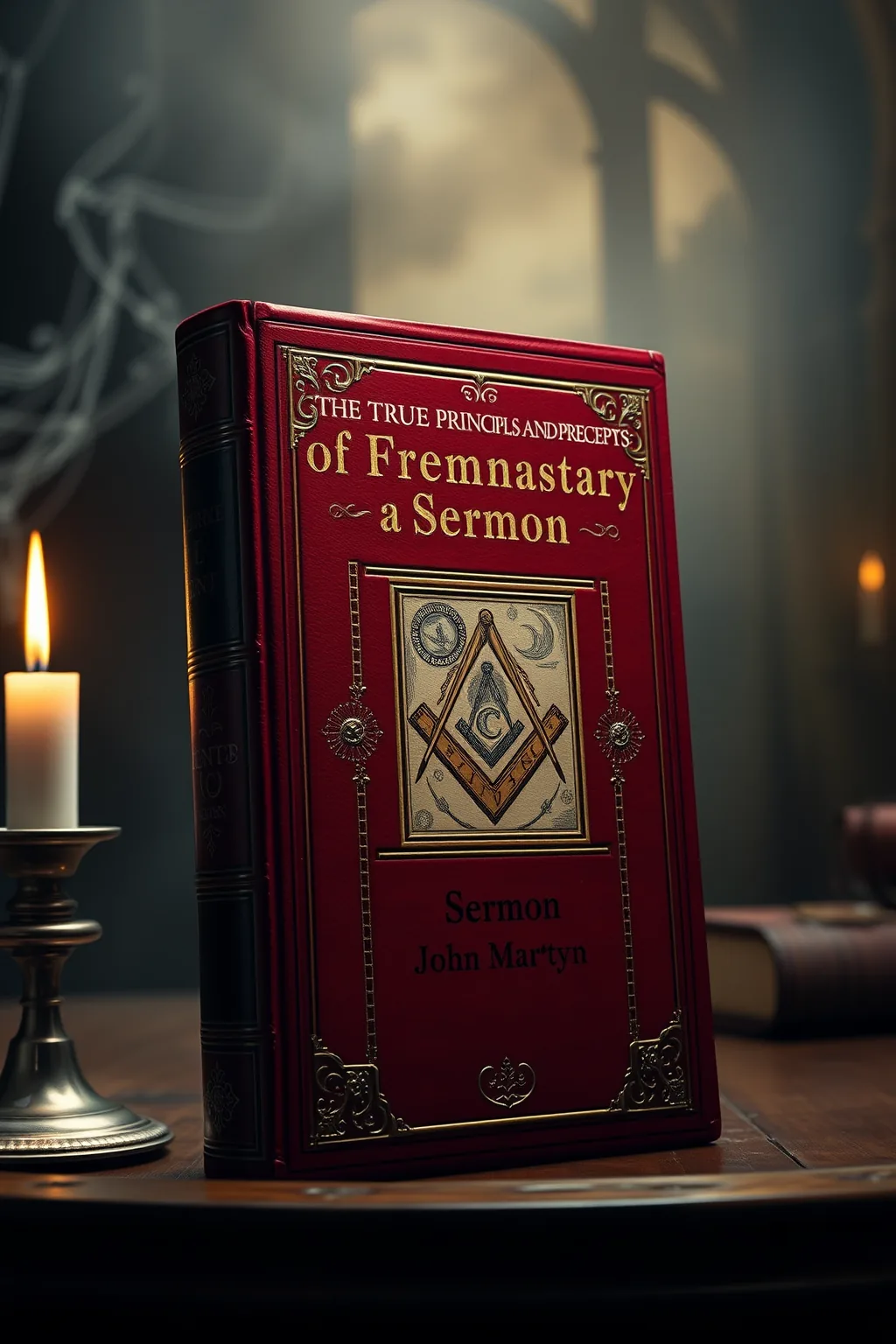
The true principles and precepts of freemasonry, a sermon


Evander Ashcroft (Alchemy & Hermeticism Editor) — Martyn's sermon is a gem, offering a clear yet profound exposition of Freemasonry's esoteric heart. He skillfully navigates the symbolic landscape, revealing principles that resonate with Hermetic philosophy and other ancient wisdom traditions. The text's strength lies in its ability to distill complex ideas into accessible precepts, making it ideal for both neophytes curious about the Craft's deeper meanings and seasoned practitioners seeking to reinvigorate their understanding. This is not a mere historical document, but a living testament to enduring spiritual truths, urging introspection and the pursuit of virtuous living. A must-read for anyone drawn to the mysteries of fraternal orders and their timeless quest for enlightenment.
📝 Description
72
Charles John Martyn delivered "The True Principles and Precepts of Freemasonry" as a sermon, likely in the late 19th century.
Charles John Martyn's sermon, "The True Principles and Precepts of Freemasonry," examines the philosophical core of the Masonic fraternity. Martyn moves beyond the surface level of Masonic rituals to discuss the symbolic language and allegorical meanings embedded within its traditions. He presents Freemasonry as a system that fosters moral development and spiritual growth.
The sermon addresses concepts such as wisdom, strength, and beauty as fundamental virtues within the brotherhood. Martyn outlines a framework for understanding the spiritual and ethical teachings that guide those initiated into its mysteries. This work serves as a guide for individuals seeking a deeper comprehension of Masonic philosophy and its role in personal betterment.
This sermon places itself within the esoteric tradition by focusing on the hidden meanings and symbolic interpretations of Masonic practices, rather than their purely social or historical aspects. It suggests that Freemasonry contains a deeper, spiritual architecture designed for the initiate's journey toward self-discovery and moral perfection. Martyn frames these teachings as perennial truths woven into the fabric of Masonic tradition, aligning with broader esoteric concerns about universal principles and human refinement.
💡 Why Read This Book?
Uncover the symbolic heart of Freemasonry and its profound spiritual teachings. This sermon offers a rare glimpse into the esoteric philosophy that underpins the Craft, ideal for seekers of hidden knowledge, scholars of secret societies, and practitioners looking to deepen their understanding of Masonic principles and their universal relevance.
⭐ Reader Reviews
Honest opinions from readers who have explored this book.
❓ Frequently Asked Questions
What is the primary focus of this sermon?
The sermon's primary focus is to elucidate the fundamental, often hidden, principles and moral precepts that form the spiritual and philosophical core of Freemasonry, moving beyond superficial ritual.
Who is the intended audience for this text?
The intended audience includes Freemasons seeking deeper understanding, individuals curious about the esoteric aspects of the Craft, and scholars interested in the history and philosophy of secret societies.
What kind of knowledge does Martyn claim to reveal?
Martyn claims to reveal the 'true' and often veiled principles of Freemasonry, emphasizing its symbolic language, moral teachings, and its role as a path to personal enlightenment and spiritual growth.
How is this text significant within Masonic literature?
Its significance lies in its direct, sermon-like approach to expounding core Masonic tenets, offering a clear and authoritative voice on the philosophy that guides the brotherhood, presented with a focus on its enduring wisdom.
Is prior knowledge of Freemasonry required to understand this sermon?
While prior knowledge can enhance appreciation, Martyn's clear exposition aims to make the core principles accessible to those new to Masonic concepts, inviting them to explore its symbolic depth.
🔮 Key Themes & Symbolism
The Architecture of the Soul
Martyn views Freemasonry as a symbolic blueprint for constructing a virtuous character and a spiritually enlightened self. The rituals and allegories are presented not as mere historical reenactments, but as tools for 'building' one's inner temple. This theme emphasizes the transformative power of Masonic teachings, suggesting that the physical structures and tools of the Craft are metaphors for the internal work required for personal growth and moral perfection. It's an exploration of how symbolic actions lead to tangible spiritual development.
The Language of Symbols
This sermon examines the profound significance of Masonic symbolism, positing that these visual and ritualistic elements are a sacred language designed to convey complex philosophical and spiritual truths. Martyn guides the reader to interpret these symbols as keys to unlocking deeper understanding, revealing the interconnectedness of moral precepts, cosmic order, and personal responsibility. It highlights how the seemingly simple tools and emblems of the Craft are, in fact, rich with layers of meaning, intended to illuminate the path of wisdom.
The Unseen Brotherhood
Beyond the outward fraternity, Martyn touches upon the esoteric dimension of Freemasonry as a spiritual fellowship united by shared ideals and a quest for higher knowledge. This theme explores the concept of an 'unseen brotherhood' bound by virtuous principles and a commitment to mutual improvement, transcending physical boundaries. It speaks to the idea that membership in the Craft is not merely social but a participation in a timeless lineage of seekers dedicated to the pursuit of truth and the betterment of humanity.
💬 Memorable Quotes
Direct passages from the work, attributed to the author.
“The square teaches us to square our actions.”
— This highlights the symbolic teaching of a fundamental Masonic tool, illustrating how its form and function are translated into a direct ethical imperative for the individual's conduct.
“Light is found in the darkness of ignorance.”
— A classic esoteric concept, this suggests that the path to enlightenment begins with acknowledging one's lack of knowledge and actively seeking truth and understanding.
“The brethren are bound by more than oaths.”
— This points to the deeper, spiritual connection and shared ideals that unite Masons, suggesting a bond that transcends mere ritualistic promises.
💡 Key Ideas
Editorial paraphrase of the work's core concepts — not direct quotes.
We build not with stone, but with character.
This quote captures the sermon's core message: Freemasonry's true work is the cultivation of virtue and the shaping of a moral self, rather than mere physical construction.
Wisdom is the a core part of true masonry.
Emphasizing the intellectual and spiritual pursuit inherent in the Craft, this quote positions wisdom as the foundational element upon which all other Masonic virtues are built.
🌙 Esoteric Significance
Tradition
This text is deeply rooted in the Western Esoteric Tradition, particularly within the framework of Freemasonry as a Mystery School. It draws parallels with Hermeticism, Neoplatonism, and Kabbalistic thought, interpreting Masonic symbols and rituals as allegorical pathways to spiritual enlightenment, self-knowledge, and an understanding of divine principles.
Symbolism
The sermon emphasizes the body of Masonic symbolism, from the working tools (square, compasses, level) to architectural elements and celestial bodies. These are presented not as mere decorative elements, but as potent keys designed to unlock profound philosophical and moral truths about man's place in the cosmos and his journey towards perfection.
Modern Relevance
In an age often characterized by superficiality and disconnection, Martyn's sermon offers a timeless call to introspection, ethical development, and the pursuit of deeper meaning. Its exploration of symbolic language and virtue remains highly relevant for those seeking self-improvement, spiritual growth, and an understanding of ancient wisdom traditions that continue to shape contemporary thought.
👥 Who Should Read This Book
This sermon is important for Freemasons eager to deepen their understanding of the Craft's philosophical underpinnings and its esoteric dimensions. Scholars of secret societies and comparative religion will find it a rich source for examining Masonic discourse. For spiritual seekers and practitioners of other esoteric traditions, it offers a unique window into a structured system of moral and symbolic instruction designed for personal transformation and the pursuit of higher knowledge.
📜 Historical Context
Charles John Martyn’s sermon, dating from an era of burgeoning interest in fraternal organizations and philosophical inquiry, emerges from a period when Freemasonry was increasingly scrutinized for its alleged secrets and profound influence. The late 18th and 19th centuries saw a surge in Masonic literature, with authors seeking to clarify, defend, or delve deeper into its teachings. Martyn’s work fits within this tradition, offering a spiritual interpretation that resonated with those seeking moral guidance and esoteric knowledge amidst societal changes. Digitized from the venerable collections of Oxford University, this sermon is a proof of the enduring academic and spiritual significance attributed to Masonic precepts, reflecting a time when the pursuit of hidden wisdom was a cherished intellectual and personal endeavor.
📔 Journal Prompts
Reflect on a Masonic symbol (e.g., the square, the compass) and its personal meaning in your daily life.
How can the 'architecture of the soul' be built through consistent virtuous actions?
What does it mean to be part of an 'unseen brotherhood,' and how does this concept apply beyond formal organizations?
Consider a personal area of 'ignorance' and the steps you can take to find 'light' or understanding.
How do the principles of squaring your actions and circumscribing your desires contribute to a balanced life?
🗂️ Glossary
The Craft
A common appellation for Freemasonry, referring to its principles, rituals, and fellowship as a form of skilled, spiritual, and moral 'workmanship'.
Precepts
Fundamental rules or principles, especially one of the ten rules given by God to Moses, or a guiding principle for conduct.
Allegory
A story, poem, or picture that can be interpreted to reveal a hidden meaning, typically a moral or political one.
Esoteric
Intended for or likely to be understood by only a small number of people with a specialized knowledge or interest; dealing with profound, secret, or mysterious subjects.
Virtue
Behavior showing high moral standards; the quality of acting in accordance with established moral requirements.
This book appears in 2 collections
🔮 Readers Also Liked
Browse all →






From the “Secret Societies” Collection
View all →






More Free Freemasonry & Secret Societies Books
View all →