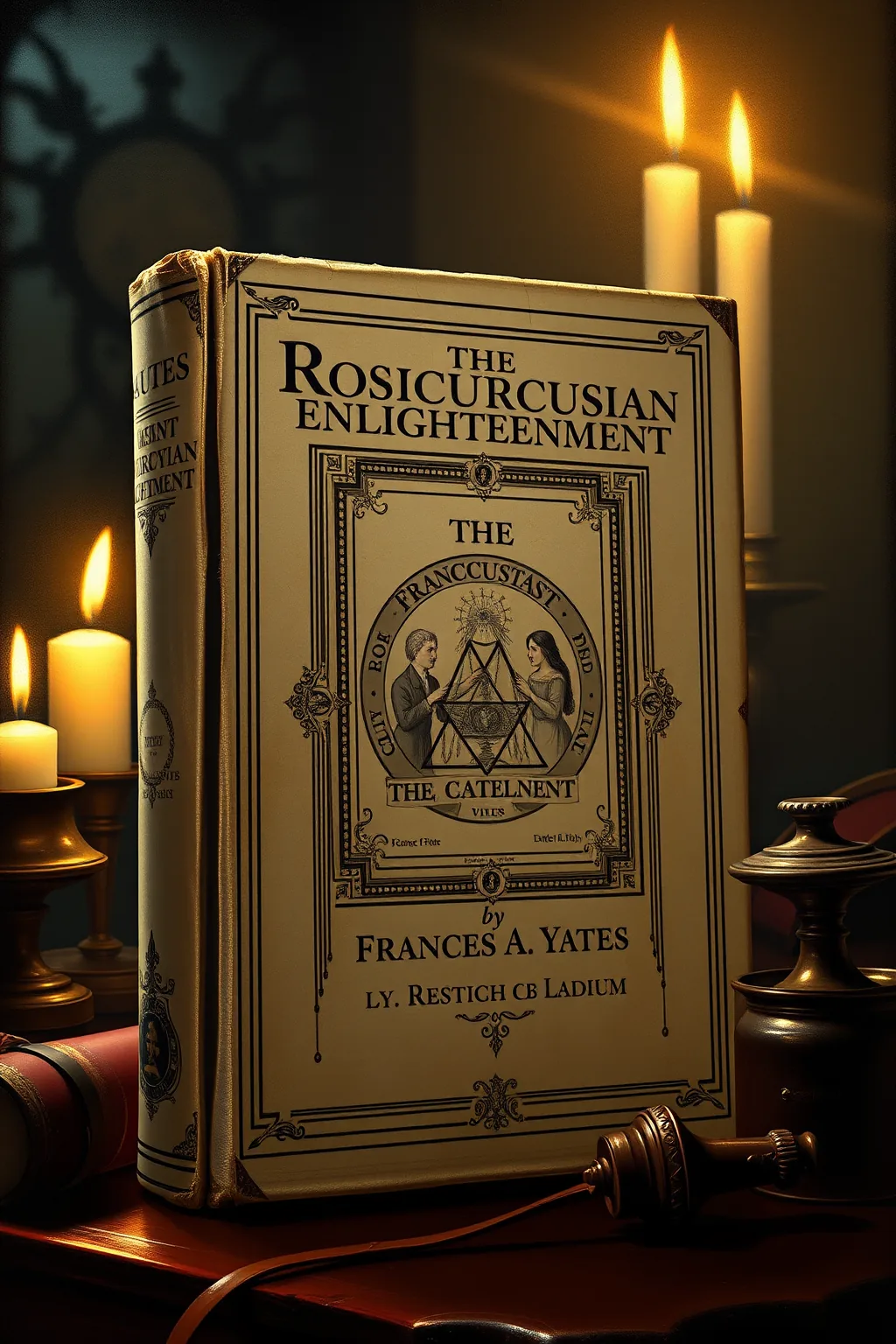
The Rosicrucian Enlightenment
 72
72

The Rosicrucian Enlightenment


Lorelei Sage, Contemplative Literature Editor — Frances A. Yates's 'The Rosicrucian Enlightenment' remains an indispensable cornerstone for understanding the genesis of modern Western esotericism. Yates meticulously excavates the intellectual ferment of the 17th century, revealing the profound, often hidden, influence of Rosicrucian ideas on philosophy, science, and secret societies. Her profound scholarship illuminates the intricate interplay of Hermeticism, Kabbalah, and early modern thought, offering unparalleled insights into the era's quest for hidden knowledge. This work is essential for scholars and dedicated seekers alike, providing a clear, authoritative roadmap through a complex and vital period of esoteric history.
📝 Description
72
Frances A. Yates argued in 1972 that the Rosicrucian manifestos sparked a European intellectual movement.
Frances A. Yates's 1972 book, 'The Rosicrucian Enlightenment,' examines the impact of the Rosicrucian manifestos published in the early 17th century. Yates traces how these texts, which appeared anonymously, connected Renaissance Hermeticism, Christian Kabbalah, and the emerging idea of secret societies. She argues that these ideas fostered a desire for hidden knowledge and a spiritual renewal across Europe.
The book details the convergence of alchemy, astrology, and mystical thought in this period. Yates shows how these elements formed a distinct ideology that influenced European intellectual life and set the stage for later esoteric traditions. It is written for readers interested in the deeper currents of Western esotericism, revealing a historical moment where philosophy, magic, and early science intertwined in a search for divine understanding.
This work situates the Rosicrucian movement within the intellectual ferment of the early 17th century. It connects the manifestos to a broader tradition of Renaissance esotericism, which sought to reconcile Christian beliefs with ancient philosophies and mystical practices. Yates highlights how this period saw a renewed interest in magic, alchemy, and astrology as paths to understanding the cosmos and achieving spiritual transformation, a trend that the Rosicrucian episode significantly amplified.
💡 Why Read This Book?
Uncover the hidden roots of Western esoteric thought and the profound influence of Rosicrucianism on philosophy and secret societies. Ideal for seekers of hidden knowledge, scholars of intellectual history, and practitioners interested in the historical evolution of mystical traditions. This book offers a crucial lens through which to understand the foundational ideas that shaped centuries of occult inquiry and spiritual questing.
⭐ Reader Reviews
Honest opinions from readers who have explored this book.
❓ Frequently Asked Questions
What was the Rosicrucian Enlightenment?
It refers to a period in early modern Europe where Rosicrucian ideals, emphasizing esoteric knowledge, Hermetic philosophy, and a spiritual reform of society, significantly influenced intellectual and cultural movements, leading to a renewed interest in hidden wisdom.
Who were the Rosicrucians?
A semi-legendary, secretive brotherhood said to have emerged in early 17th-century Germany, advocating for a universal reformation based on esoteric and alchemical knowledge. Their existence and impact are a subject of intense historical and esoteric debate.
What is Hermeticism?
An ancient philosophical and religious tradition based on the writings attributed to Hermes Trismegistus. It emphasizes divine wisdom, the interconnectedness of all things, and the pursuit of spiritual knowledge through understanding the cosmos.
How did this period influence Freemasonry?
The Rosicrucian Enlightenment provided a rich symbolic and philosophical vocabulary that was absorbed and adapted by early Freemasonry, particularly its higher degrees, contributing to its mystical and allegorical dimensions.
Is this book suitable for beginners?
While scholarly, Yates's work is accessible to dedicated beginners with a genuine interest in esoteric history. It serves as an excellent introduction to a complex subject, provided the reader is prepared for in-depth intellectual engagement.
🔮 Key Themes & Symbolism
The Hermetic Revival and its Influence
This theme explores the profound re-emergence of Hermetic philosophy during the Renaissance and its pervasive impact on intellectual and spiritual currents. Yates demonstrates how the ancient wisdom attributed to Hermes Trismegistus, with its emphasis on cosmic interconnectedness, divine knowledge, and the transformative power of understanding hidden laws, became a fertile ground for new interpretations and esoteric practices. It highlights how this revival provided a vital intellectual framework for the Rosicrucian movement and subsequent secret societies, fueling a desire for a deeper, more spiritual understanding of reality.
The Genesis of Secret Societies and Esoteric Ideologies
This theme examines the historical emergence of secretive groups and the propagation of esoteric ideologies, particularly the Rosicrucian manifestos. Yates meticulously traces the intellectual lineage and symbolic language that characterized these movements, showcasing how they offered a counter-narrative to established dogma and a pathway to personal enlightenment. It examines the fusion of alchemy, Kabbalah, and Neoplatonism within these societies, and how their clandestine nature fostered an aura of mystery and the pursuit of privileged knowledge, ultimately shaping the field of Western esotericism.
The Interplay of Science, Magic, and Spirituality
This theme investigates the fluid boundaries between what we now perceive as distinct disciplines in the early modern period, particularly the intertwined nature of scientific inquiry, magical practices, and spiritual aspirations. Yates illustrates how figures associated with the Rosicrucian movement viewed the study of nature, the cosmos, and divine mysteries as a unified endeavor. Alchemy was not merely chemical experimentation but a path to spiritual purification, and celestial observation was deeply entwined with astrological and mystical understandings, revealing a worldview where the material and the divine were intimately connected.
💬 Memorable Quotes
Direct passages from the work, attributed to the author.
“The world was beginning to be enchanted again.”
— This poignant statement captures the essence of the 'enlightenment' described, highlighting a shift from a purely rationalistic worldview back towards one imbued with wonder, mystery, and a belief in hidden, magical forces.
“Hermeticism offered a key to unlocking hidden truths.”
— This highlights the central role of Hermetic philosophy as a conduit for accessing esoteric knowledge, suggesting that its ancient wisdom held the secrets to understanding the universe and one's place within it.
“The invisible world was as real as the visible.”
— This expresses a core tenet of many esoteric traditions, asserting the equal validity and influence of spiritual and unseen realms alongside the empirical, tangible world.
💡 Key Ideas
Editorial paraphrase of the work's core concepts — not direct quotes.
The Rosicrucian movement was a spiritual force.
This quote emphasizes the deeply internalized, transformative nature of Rosicrucian aspirations, suggesting it was more than a philosophical system but a living, breathing quest for inner illumination and societal renewal.
The desire for a new heaven and a new earth.
This quote speaks to the reformist and utopian ambitions of the period, indicating a longing for profound societal and spiritual transformation, driven by esoteric ideals and a vision of a perfected world.
🌙 Esoteric Significance
Tradition
The primary esoteric tradition explored is Hermeticism, with significant threads of Christian Kabbalah and Neoplatonism woven throughout. Yates illuminates how these ancient streams of wisdom, emphasizing divine knowledge, cosmic unity, and the transformative power of spiritual discipline, provided the foundational language and philosophical underpinnings for the Rosicrucian movement and its adherents. It showcases how these traditions offered a framework for understanding the universe as a divinely ordered, interconnected whole, accessible through esoteric study and mystical experience.
Symbolism
Central to the Rosicrucian Enlightenment is a body of symbolism drawn from alchemy, astrology, and biblical interpretation. The rose and the cross, iconic Rosicrucian symbols, represent the union of the spiritual and material, the microcosm and macrocosm, and the path of purification. Alchemical imagery of transformation, celestial configurations as divine blueprints, and Kabbalistic numerology all served as keys to unlocking hidden meanings and correspondences. This symbolic language was not mere decoration but a vital means of conveying complex esoteric truths and facilitating a deeper communion with the divine.
Modern Relevance
The Rosicrucian Enlightenment holds profound modern relevance for seekers of esoteric knowledge and those interested in the history of consciousness. It demonstrates the enduring human quest for meaning beyond material existence and highlights the persistent appeal of hidden wisdom and spiritual transformation. The integration of diverse traditions and the exploration of interconnectedness resonate with contemporary holistic and transpersonal perspectives. Understanding this historical period offers valuable insights into the origins of many modern occult and spiritual movements, providing a deeper context for contemporary esoteric practices and philosophical inquiries.
👥 Who Should Read This Book
This important work is essential for anyone with a serious interest in the foundational currents of Western esotericism. Scholars of intellectual history, religious studies, and the history of science will find Yates's rigorous scholarship invaluable. Seekers of hidden knowledge, practitioners of occult arts, and students of Freemasonry and secret societies will gain a profound understanding of the historical and philosophical roots of their interests. While demanding, it is highly rewarding for those willing to engage deeply with the complex ideas that shaped a central era in the quest for spiritual and intellectual illumination.
📜 Historical Context
Frances A. Yates's 'The Rosicrucian Enlightenment' is firmly rooted in the intellectual ferment of the late Renaissance and early Baroque periods, specifically the early 17th century. This era was characterized by a profound cultural and intellectual transition, moving from the Humanist revival of classical texts to a burgeoning scientific revolution. It was a time of intense religious and political upheaval, yet also a period of remarkable intellectual curiosity and a deep engagement with esoteric traditions, including Hermeticism, Kabbalah, and Neoplatonism. The infamous Rosicrucian manifestos, published anonymously in 1614-1615, ignited widespread debate and speculation, symbolizing a desire for spiritual and intellectual reform that resonated with many seeking alternatives to established religious and philosophical paradigms. This context of intellectual exploration, spiritual yearning, and the clandestine nature of esoteric knowledge forms the essential backdrop for understanding the 'enlightenment' Yates so brilliantly describes.
📔 Journal Prompts
Reflect on the concept of 'enchantment' in a modern context. Where do you see the world becoming more or less enchanted?
Consider a personal quest for hidden knowledge. What symbolic language or traditions might guide your own path?
How do you perceive the interplay between science, spirituality, and 'magic' in your own understanding of reality?
If you were to create a modern 'manifesto' for a spiritual reformation, what core principles would it embody?
Explore the idea of secret societies in contemporary society. What purpose do they serve, and how do they compare to historical examples?
🗂️ Glossary
Hermeticism
An ancient philosophical and religious tradition based on writings attributed to Hermes Trismegistus, emphasizing divine wisdom, the interconnectedness of all things, and the pursuit of spiritual knowledge.
Kabbalah
A system of Jewish mysticism and esoteric interpretation of the Torah, focusing on divine emanations and the structure of the universe, often involving symbolic diagrams and numerology.
Neoplatonism
A philosophical system derived from Plato's teachings, emphasizing the existence of a transcendent, singular God or 'The One,' from which all reality emanates.
Alchemy
An ancient protoscience and philosophical tradition focused on the transformation of matter, often interpreted as a symbolic representation of spiritual purification and the attainment of enlightenment.
Rosicrucian Manifestos
A series of anonymous pamphlets published in the early 17th century that announced the existence of a secretive brotherhood dedicated to esoteric knowledge and spiritual reform, sparking widespread interest and controversy.
This book appears in 2 collections
🔮 Readers Also Liked
Browse all →





More by Frances A. Yates
All books →
From the “Secret Societies” Collection
View all →



More Free Freemasonry & Secret Societies Books
View all →