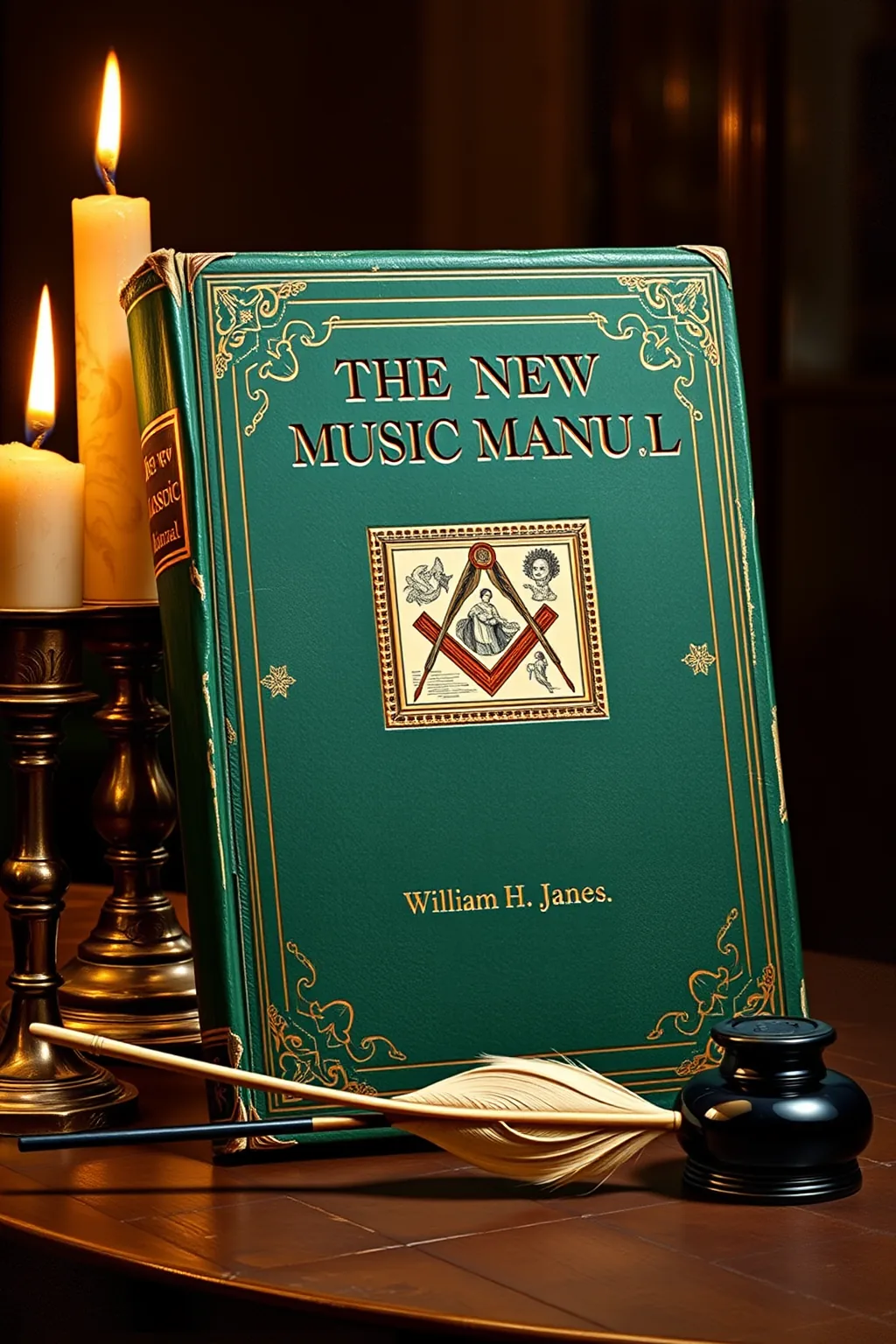
The New Masonic Music Manual
 76
76

The New Masonic Music Manual

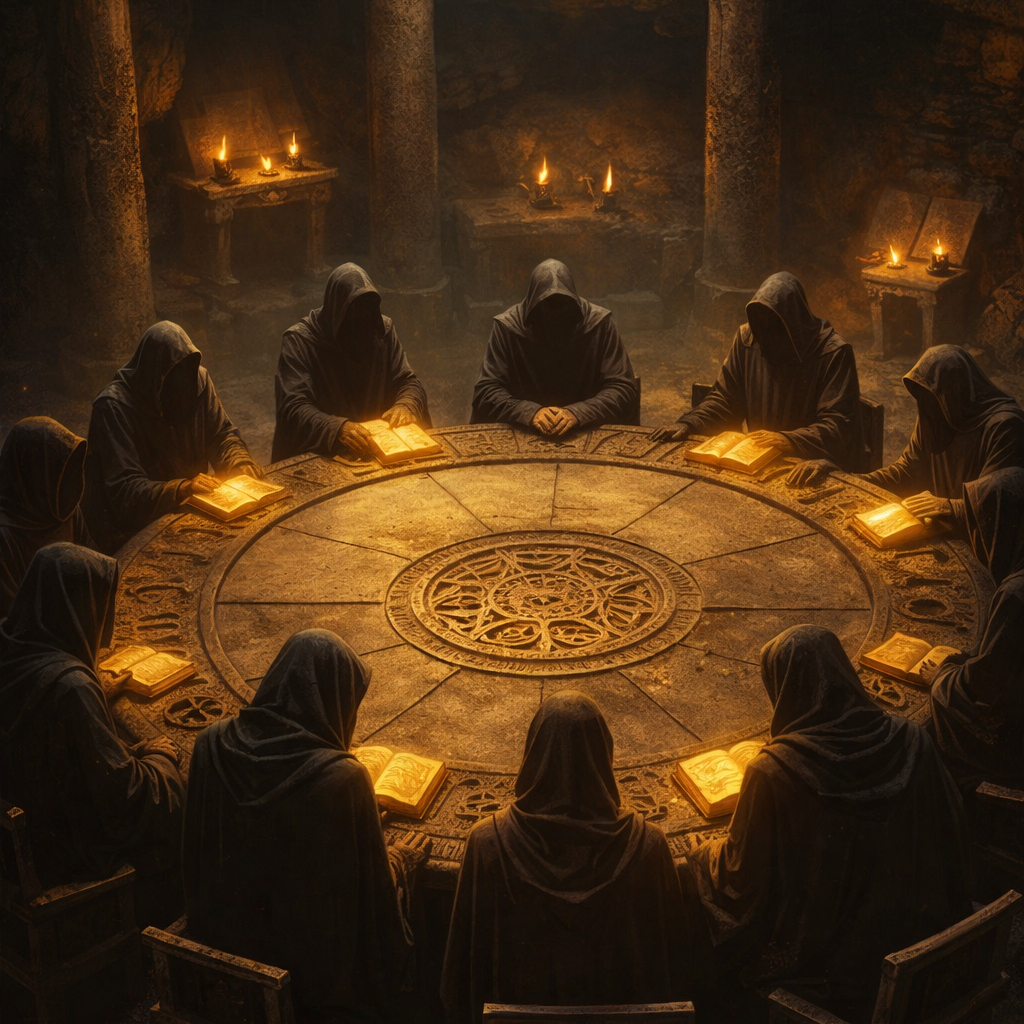

Lorelei Sage (Contemplative Literature Editor) — William H. Janes' "The New Masonic Music Manual" is an indispensable key for unlocking the sonic dimensions of Freemasonry. Janes masterfully illuminates the esoteric significance of Masonic musical traditions, revealing how specific harmonies and melodies are crafted to facilitate ritualistic progression and spiritual insight. This work is not merely a collection of tunes but a philosophical treatise, offering readers a profound understanding of music's role in esoteric practice. Its strength lies in its ability to connect the audible with the ineffable, making it essential for serious Masonic students, practitioners, and anyone interested in the mystical applications of sound.
📝 Description
76
William H. Janes' 1908 "The New Masonic Music Manual" deciphers the sonic symbolism within Freemasonry.
Published in 1908, William H. Janes' "The New Masonic Music Manual" examines the role of music within Masonic ritual. Janes argues that musical elements are not merely decorative but integral to the initiatory and symbolic dimensions of the Craft. He details how specific melodies, harmonies, and rhythms are employed to create particular states of consciousness and convey esoteric teachings.
The book aims to educate the serious Mason on the "celestial science of music" as it relates to Masonic philosophy. Janes presents the idea that sonic vibrations act as channels for spiritual growth and deeper understanding, moving beyond purely intellectual comprehension. It is a manual for those seeking to grasp the cosmic order through its musical expression within the Masonic system.
This work situates itself within the esoteric traditions that interpret ritualistic practices as vehicles for spiritual development. Similar to how other esoteric systems might analyze the symbolism of colors, gestures, or sacred geometry, Janes focuses on the vibrational and harmonic aspects of sound. He connects Masonic music to a broader concept of cosmic harmony, reflecting ideas found in Pythagoreanism and other ancient philosophies that saw music as a fundamental principle of the universe. The manual aims to reveal the hidden metaphysical meanings embedded in the sounds used in Masonic ceremonies.
💡 Why Read This Book?
Uncover the hidden sonic keys to Masonic ritual. This manual offers a profound exploration of music's esoteric role, bridging the gap between sound and spiritual attainment. Ideal for Freemasons seeking deeper understanding, scholars of secret societies, and seekers of vibrational metaphysics who wish to explore the harmonic underpinnings of ancient wisdom.
⭐ Reader Reviews
Honest opinions from readers who have explored this book.
❓ Frequently Asked Questions
What is the primary focus of "The New Masonic Music Manual"?
The manual's primary focus is on the esoteric and symbolic significance of music within Masonic ritual, exploring how sound facilitates spiritual progression and conveys hidden knowledge.
Who is the intended audience for this book?
The intended audience includes Freemasons seeking a deeper understanding of their ritual music, scholars of esotericism and secret societies, and individuals interested in the metaphysical applications of sound and vibration.
Does this book contain musical scores?
Yes, the book contains musical scores and notations integral to its purpose of illustrating and explaining Masonic music within an esoteric context.
Is prior musical knowledge required to understand this book?
While some musical familiarity is beneficial, Janes' explanations are designed to be accessible, focusing on the symbolic and philosophical aspects of the music rather than purely technical musical theory.
What is the historical context of this work?
Published in an era of burgeoning interest in esoteric traditions and their ceremonial applications, the book reflects a period where the symbolic and spiritual dimensions of Freemasonry were deeply explored.
🔮 Key Themes & Symbolism
The Harmonic Architecture of Ritual
This theme explores how specific musical compositions and their structural elements are intentionally designed to mirror the stages of Masonic initiation. It explores the concept of sonic architecture, where melodies, harmonies, and rhythms are not merely decorative but foundational components that guide the candidate through symbolic landscapes and prepare the mind and spirit for profound revelations. The manual posits that the very frequencies used can influence consciousness, facilitating a deeper connection to the symbolic teachings and the collective consciousness of the fraternity. It is a study of how sound becomes a blueprint for spiritual construction.
Vibrational Keys to Inner Illumination
Here, the focus shifts to the vibratory nature of music and its capacity to unlock latent spiritual potential. Janes suggests that certain sonic patterns act as keys, resonating with specific energetic centers within the individual, thereby facilitating inner illumination and the awakening of higher faculties. This theme explores the idea that music, when properly understood and applied within a ritualistic framework, can harmonize the subtle bodies and align the practitioner with cosmic forces. It's an exploration of sound as a tool for alchemical transformation, purifying the lower aspects and elevating the spirit towards divine consciousness.
Symbolism Encoded in Sacred Sound
This crucial theme examines how Masonic symbols are not only visual but are deeply embedded within the musical compositions used in ceremonies. Each note, chord, and melodic phrase can be interpreted as carrying specific symbolic meanings, representing virtues, stages of journey, or divine principles. The manual guides the reader in deciphering this sonic symbolism, revealing how the auditory experience reinforces and amplifies the visual and allegorical teachings of Freemasonry. It's about understanding the universal language of music as a vehicle for transmitting profound, timeless truths across generations.
💬 Memorable Quotes
Direct passages from the work, attributed to the author.
“Harmony unlocks the hidden chambers of the mind.”
— This implies that carefully constructed musical harmony has the power to break down mental barriers and reveal insights or knowledge that are otherwise inaccessible.
“The vibrations of sound shape our spiritual ascent.”
— This highlights the belief that the energetic frequencies produced by music play a direct and active role in the process of spiritual growth and evolution.
“Within the notes, ancient wisdom resides.”
— This suggests that musical compositions, particularly those used in sacred contexts, are repositories of profound, age-old knowledge and spiritual truths.
“Hear the silence between the notes; there lies true understanding.”
— This encourages contemplation of the pauses and rests in music, implying that the absence of sound can be as significant as its presence in conveying deeper meaning.
💡 Key Ideas
Editorial paraphrase of the work's core concepts — not direct quotes.
Music is the language of the soul.
This quote suggests that musical expression transcends the limitations of spoken words, directly accessing and communicating the deepest emotional and spiritual states of being.
🌙 Esoteric Significance
Tradition
This work is deeply rooted in the Western Esoteric Tradition, specifically within the context of Freemasonry, which itself draws from Hermeticism, Kabbalah, Pythagoreanism, and ancient mystery schools. It views music as a divine art, a tool for spiritual alchemy and a means of attuning the individual to cosmic harmonies, echoing Pythagorean concepts of the 'music of the spheres.'
Symbolism
The music discussed is rich with symbolism, where specific melodies, harmonies, and rhythms represent Masonic virtues, stages of the Great Work, and divine principles. It acts as a sonic representation of the geometric patterns and allegorical narratives central to Masonic teachings, transforming abstract concepts into resonant, experiential truths.
Modern Relevance
In an age often characterized by disconnection and superficiality, Janes' manual offers a compelling argument for the profound spiritual power of music. Its insights into vibrational resonance and symbolic sound remain highly relevant for contemporary seekers exploring meditation, sound healing, and the integration of esoteric philosophy into daily life and practice.
👥 Who Should Read This Book
This manual is a treasure for initiated Masons seeking to deepen their understanding of ritual music's symbolic weight. Scholars of comparative religion, secret societies, and Western esotericism will find it an invaluable primary source. Seekers of spiritual wisdom and practitioners of vibrational metaphysics will discover a unique perspective on how sound can be a powerful tool for personal transformation and attunement with universal principles. It is for the dedicated student who believes that true enlightenment often resonates through unseen channels, including the sacred art of music.
📜 Historical Context
Published during a period of intense intellectual and spiritual curiosity, "The New Masonic Music Manual" emerged from an era where Freemasonry was not only a fraternal organization but also a significant conduit for esoteric thought and philosophical exploration. The late 19th and early 20th centuries saw a resurgence of interest in ancient mysteries, Hermeticism, and the mystical traditions of the West. Authors like Janes sought to systematize and illuminate the symbolic depth of Masonic practices, believing that its rituals held keys to universal truths. This work reflects a desire to elevate Masonic music from mere accompaniment to a vital element of initiatory pedagogy, aligning it with the broader occult revival and the search for spiritual meaning in a rapidly changing world. Its digitization by Harvard and dissemination through the Internet Archive speaks to its enduring relevance and its role in preserving esoteric knowledge.
📔 Journal Prompts
How do the musical elements in a specific Masonic ritual (if known) contribute to the emotional and spiritual atmosphere?
Reflect on a piece of music that has personally evoked a sense of profound spiritual connection or insight. What elements of the music facilitated this?
Consider the Pythagorean concept of the 'music of the spheres.' How might this ancient idea be reflected in Masonic musical practices?
Explore the idea of music as a 'language of the soul.' What are the limitations and powers of this non-verbal communication in conveying complex ideas?
If sound shapes our spiritual ascent, what intentions or qualities should one cultivate when engaging with sacred music?
🗂️ Glossary
Esotericism
The study of hidden spiritual or mystical knowledge, often passed down through traditions and initiatory practices, seeking deeper understanding beyond conventional religious or philosophical doctrines.
Hermeticism
A philosophical and religious tradition based on the purported teachings of Hermes Trismegistus, emphasizing the unity of all things, the correspondence between the macrocosm and microcosm, and the pursuit of spiritual enlightenment.
Pythagoreanism
An ancient Greek school of philosophy and religious teaching founded by Pythagoras, emphasizing the importance of mathematics, music, and cosmology, and the concept of the 'music of the spheres.'
Alchemy
An ancient practice and philosophical tradition aimed at purification, transformation, and perfection, often associated with the transmutation of metals but also understood as a spiritual process of personal evolution and enlightenment.
Initiation
A ritual or ceremony marking a person's entry into a new stage of life, a society, or a level of knowledge, often involving symbolic acts and the imparting of secret teachings.
This book appears in 2 collections
🔮 Readers Also Liked
Browse all →






From the “Secret Societies” Collection
View all →



![EBOOK COLLECTION ( PART 8) [ CSI][h 33t]](/img/thumb/ebook-collection-part-8-csi-h-33t.webp)



More Free Freemasonry & Secret Societies Books
View all →