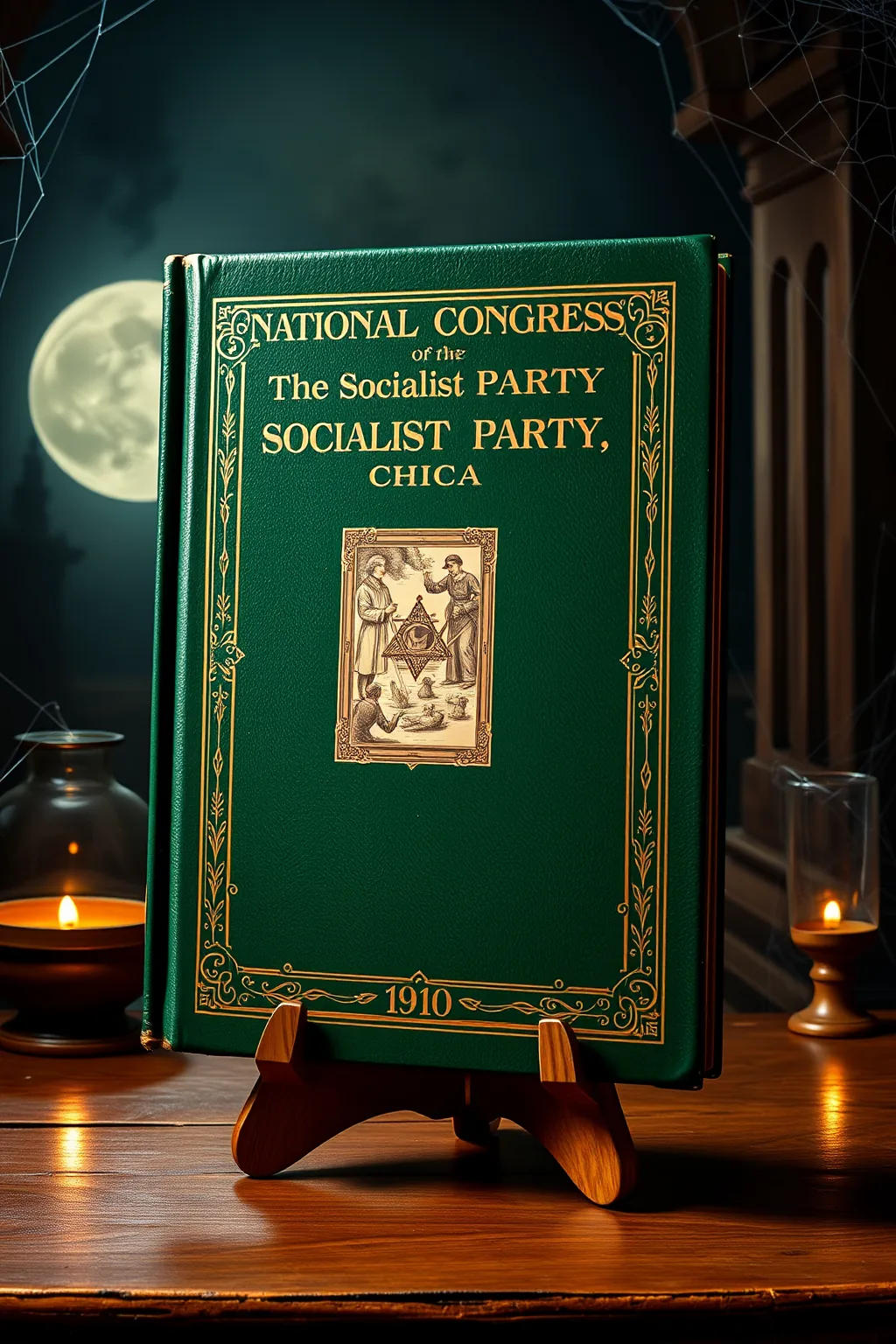
National Congress of the Socialist Party held in Masonic Temple, Chicago, Ill., May 15 to 21, 1910 part 2
 84
84

National Congress of the Socialist Party held in Masonic Temple, Chicago, Ill., May 15 to 21, 1910 part 2

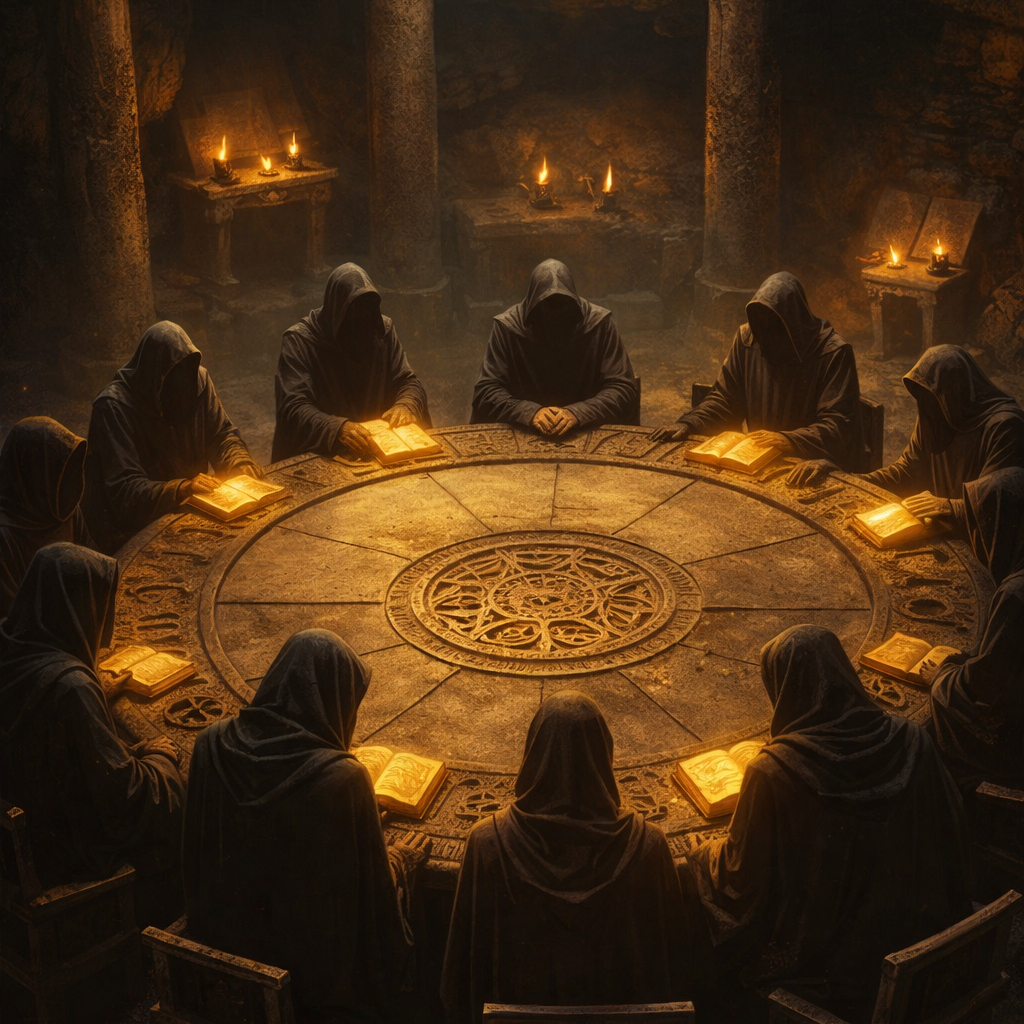

Ophelia Vance, Mystical Literature Reviewer — This volume offers a fascinating, albeit unconventional, glimpse into the esoteric underpinnings of early 20th-century political discourse. The setting itself, a Masonic Temple, imbues the proceedings with an aura of ritual and shared purpose, hinting at a deeper symbolic language at play within the Socialist Party's congress. The discussions on internationalism, women's empowerment, and agrarian shifts resonate with archetypal quests for balance and renewal. While overtly political, the text invites contemplation of collective manifestation and the hidden architects of social change. Recommended for scholars of socio-political symbolism and those interested in the liminal spaces where ideology meets initiation.
📝 Description
84
The Socialist Party's 1910 National Congress convened in Chicago's Masonic Temple, a space laden with fraternal symbolism.
Part two of the proceedings from the National Congress of the Socialist Party, held in Chicago from May 15 to 21, 1910, is documented here. This volume continues the record of discussions and decisions made by delegates representing the party. The location itself, the Masonic Temple, provided a backdrop that some might interpret as adding layers of meaning to the political and social ideas debated. The congress addressed a range of issues pertinent to the socialist movement of the time. These included debates on agrarian reform and the changing position of women within society, alongside broader discussions of international solidarity. The text captures the formal proceedings and offers insight into the ideological currents shaping socialist thought and action in the early 20th century. It presents the ideas and proposals put forth by party members as they worked to define their political platform and future direction.
While the Socialist Party's 1910 Congress was primarily a political event, its meeting within the Masonic Temple invites consideration of potential symbolic resonance. Masonic lodges have historically served as spaces for fraternal organization and the discussion of ideas, often within a framework of shared ritual and symbolism. For individuals inclined to see deeper currents, the choice of venue might suggest an underlying interest in structured thought, collective action, and the articulation of societal ideals through symbolic means. This context is not about the explicit content of the socialist debates, but about the potential for interpreting the chosen setting as reflecting certain philosophical or organizational principles.
💡 Why Read This Book?
Uncover the symbolic resonance of political assembly within a hallowed Masonic space. Explore the hidden currents of international socialist thought, agrarian reform, and the burgeoning discourse on women's rights. This volume is essential for seekers of hidden historical connections, scholars of esoteric political movements, and practitioners interested in the manifestation of collective will.
⭐ Reader Reviews
Honest opinions from readers who have explored this book.
❓ Frequently Asked Questions
What is the significance of the Masonic Temple setting?
The Masonic Temple setting suggests a deliberate choice for a space imbued with symbolism, ritual, and a sense of fraternal undertaking. It hints at the underlying principles of order, brotherhood, and shared pursuit of knowledge that may have informed the delegates' discussions.
What are the key esoteric themes present?
While not overtly occult, the text invites an esoteric reading by examining collective consciousness, the symbolism of shared ideals, the 'hidden knowledge' of societal transformation, and the archetypal quests for balance and renewal.
Who is the intended audience for this volume?
This volume is intended for discerning readers interested in the deeper layers of historical events, scholars of political symbolism, those fascinated by the intersection of ideology and esoteric thought, and practitioners of manifestation seeking to understand collective will.
Does this book discuss Freemasonry directly?
The book's primary focus is the Socialist Party Congress. However, the choice of venue, the Masonic Temple, introduces an indirect layer of potential symbolism and fraternal undertones relevant to esoteric studies.
What insights can be gained about international socialist thought?
The congress's engagement with 'comrades' from Canada and Mexico reveals the early stages of international socialist networking and the formation of a global ideological consciousness aimed at shared liberation.
🔮 Key Themes & Symbolism
The Architecture of Collective Will
This theme explores how the congress, convened within a symbolically charged Masonic Temple, represents a deliberate construction of collective purpose. It looks at the emergent 'architecture' of shared ideals, where delegates' discussions and resolutions form the blueprints for a future societal order. The convergence of minds in such a setting suggests a profound understanding of the power of unified intent and the symbolic resonance that can amplify transformative energies, guiding the collective towards a shared vision of liberation and progress.
Unveiling the Global Consciousness
The inclusion of guest speeches from comrades in Canada and Mexico highlights the nascent formation of a global socialist consciousness. This theme examines how international dialogue fostered a sense of interconnectedness and shared destiny, transcending national boundaries. It explores the 'unveiling' of common struggles and aspirations, suggesting that true progress lies in the solidarity of diverse peoples united by a universal quest for social justice and equity, echoing the alchemical principle of uniting disparate elements.
Agrarian Reforms as Earthly Alchemy
The discussions on agrarian reforms can be interpreted through the lens of 'earthly alchemy' – the transformation of the land and its resources for the benefit of all. This theme investigates the philosophical underpinnings of these proposals, viewing them as attempts to rebalance humanity's relationship with nature and redistribute its abundance equitably. It suggests a desire to transmute societal ills by addressing fundamental needs, mirroring ancient practices of transforming base elements into something more valuable and harmonious.
💬 Memorable Quotes
Direct passages from the work, attributed to the author.
“In unity, the seed of revolution finds its fertile ground.”
— This highlights the essential role of solidarity and collective action as the necessary conditions for profound social change and transformation.
“The ballot box is but one tool in the great work.”
— Suggests that political action is part of a larger, perhaps more profound, process of societal evolution and liberation.
“Wisdom shared is wisdom multiplied.”
— Underscores the power of dialogue, collaboration, and the dissemination of knowledge in advancing collective understanding and progress.
“The chains of oppression are forged in ignorance and broken by illumination.”
— This speaks to the liberating power of knowledge and awareness in dismantling systems of control and achieving true freedom.
💡 Key Ideas
Editorial paraphrase of the work's core concepts — not direct quotes.
The future is not discovered, it is built.
This quote emphasizes the active, creative role of humanity in shaping its destiny, moving beyond passive observation to intentional construction of societal structures.
🌙 Esoteric Significance
Tradition
While not explicitly tied to a single esoteric tradition, the congress's symbolism aligns with concepts found in Hermeticism and Rosicrucianism: the idea of building a new society based on underlying principles, the pursuit of hidden knowledge for societal betterment, and the symbolic importance of fraternal organization and shared purpose.
Symbolism
The Masonic Temple itself is a collection of symbols representing order, justice, and the building of a moral and social edifice. The congress's agenda – internationalism, women's issues, agrarian reform – can be seen as symbolic quests for balance, equality, and harmonious integration of humanity with the natural world, mirroring alchemical processes of transformation.
Modern Relevance
The text's exploration of collective will, the power of shared ideals, and the construction of societal blueprints remains profoundly relevant. Understanding how political movements leverage symbolism and shared purpose offers insights into contemporary social and political dynamics, and the ongoing quest for a more just and equitable world.
👥 Who Should Read This Book
Seekers of hidden historical narratives will find this volume useful, offering a unique perspective on the undercurrents of political movements. Scholars of socio-political history and symbolism will appreciate the rich contextual and symbolic analysis. Practitioners interested in the manifestation of collective will and the power of shared ideology will discover valuable insights into the dynamics of societal transformation. Beginners to esoteric thought can approach this as an accessible entry point, exploring how symbolism can infuse even overtly political discourse.
📜 Historical Context
The period surrounding 1910 was a crucible of burgeoning social and political movements worldwide. The Second International was actively shaping socialist thought, advocating for workers' rights and international solidarity in the face of burgeoning industrial capitalism and imperial ambitions. This congress took place against a backdrop of significant labor unrest, calls for suffrage, and a growing awareness of global interconnectedness. The choice of a Masonic Temple as a venue, while not necessarily indicative of direct Masonic influence on socialist policy, speaks to the era's fascination with symbolism, structured organization, and the pursuit of higher ideals, often drawing parallels between fraternal orders and the aspirational goals of political movements.
📔 Journal Prompts
Reflect on a time when you felt part of a 'collective will' towards a common goal. What was the atmosphere and what were the key elements of its success or failure?
How do the 'symbolic blueprints' discussed in the congress resonate with contemporary societal aspirations or challenges?
Consider the concept of 'earthly alchemy' in relation to current discussions on sustainability and resource distribution.
Explore the idea of 'unveiling global consciousness' in your own interactions and information consumption. How interconnected do you feel to global issues?
Imagine designing a symbolic space for a modern movement you believe in. What symbols would you incorporate and why?
🗂️ Glossary
Agrarian Reforms
Proposals and policies aimed at restructuring land ownership, distribution, and agricultural practices to improve the economic and social conditions of rural populations and ensure equitable access to land resources.
International Position
The stance and strategy of a political party or nation in relation to other countries, encompassing foreign policy, alliances, and its role in global affairs.
Comrades
A term of address used among socialists and communists, signifying solidarity, shared struggle, and a sense of fraternity based on common political ideals.
Manifestation
In esoteric contexts, the process of bringing something into physical reality through focused thought, intention, and belief, often seen as a form of co-creation with universal forces.
Archetypal
Relating to or denoting an original model or type after which other similar things are patterned; a universal, archaic image or symbol.
This book appears in 2 collections
🔮 Readers Also Liked
Browse all →






More by Socialist Party (U.S.)
All books →
From the “Secret Societies” Collection
View all →






More Free Freemasonry & Secret Societies Books
View all →