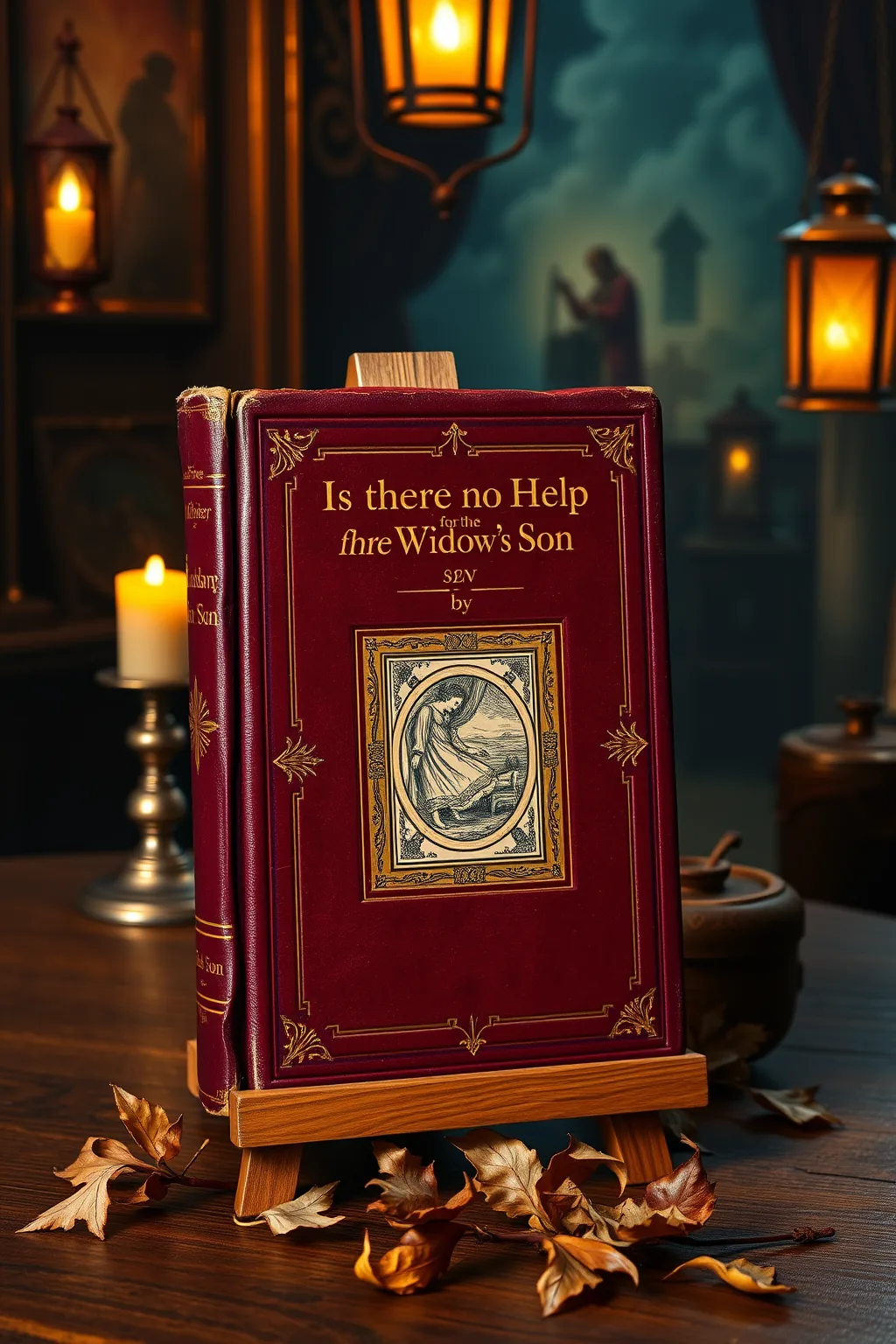
Is there no Help for The Widow's Son
 73
73

Is there no Help for The Widow's Son


Is There No Help for the Widow's Son is a fascinating exploration of the occult world of Freemasonry and its intricate ties to Mormonism. The book's strength lies in its meticulous research and the author's ability to weave together historical facts with esoteric lore. For modern esoteric seekers, this text serves as a valuable resource, providing insights into the secret rituals and symbolism that have captivated minds for centuries. The author's detailed analysis of Joseph Smith's death adds a layer of intrigue, making the book a compelling read for both historians and those interested in the occult. The writing is engaging and accessible, making complex topics understandable for a wide audience. This book is a must-have for anyone looking to deepen their understanding of Freemasonry and its enduring influence.
📝 Description
73
'Is There No Help for the Widow's Son' examines the connections between early Mormonism and Freemasonry.
This book investigates the historical and symbolic links between the early Latter Day Saint movement and Masonic lodges. It scrutinizes the shared rituals and language that appear in both traditions, suggesting a complex relationship between them. The text specifically addresses the circumstances surrounding Joseph Smith's death, proposing theories that connect his end to Masonic secrets.
It aims to shed light on these often hidden connections for readers interested in esoteric subjects, religious history, and secret societies. The author does not shy away from controversial interpretations, encouraging readers to question established narratives. The work prompts reflection on the pursuit of knowledge, the structure of clandestine groups, and the subtle influences that guide historical and spiritual developments.
This work fits within the tradition of esoteric scholarship that explores hidden or suppressed connections between religious and fraternal organizations. It engages with the historical period when both Freemasonry and the Latter Day Saint movement were establishing their identities, a time rife with symbolic exchange and mutual influence. The book's focus on ritual and secret knowledge places it alongside studies of Western esotericism, particularly those that examine the intersection of religion, ritual, and secret societies.
💡 Why Read This Book?
Read "Is There No Help for the Widow's Son" today to uncover the hidden truths of Freemasonry and its impact on religious movements like Mormonism. This book offers a unique perspective on the occult and esoteric traditions, providing readers with a deeper understanding of secret societies and their influence on modern spirituality. By exploring the mysterious death of Joseph Smith, readers will gain insights into the power struggles and hidden agendas that have shaped history.
⭐ Reader Reviews
Honest opinions from readers who have explored this book.
❓ Frequently Asked Questions
What is the main focus of this book?
The main focus of this book is the relationship between Freemasonry and Mormonism, particularly the mysterious death of Joseph Smith.
Is this book suitable for beginners in esoteric studies?
Yes, this book is accessible to beginners while also providing deep insights for those already familiar with esoteric traditions.
Does the book provide historical evidence for its claims?
The book is meticulously researched and provides historical evidence to support its claims about Freemasonry and Joseph Smith's death.
🔮 Key Themes & Symbolism
The Symbiotic Roots of Faith and Fraternalism
This theme examines the intricate and often unacknowledged interplay between the foundational narratives of Mormonism and the ancient, secretive traditions of Freemasonry. It posits that beyond mere temporal coincidence, there existed a deeper, symbolic resonance and perhaps even a direct influence of Masonic principles and rituals on the development of early LDS doctrine and practice. The exploration focuses on how shared archetypes, allegorical structures, and initiatory processes might have shaped the spiritual landscape for both adherents, suggesting a fascinating convergence of esoteric thought.
Symbolism and the Unseen Architect
Here, the focus shifts to the profound symbolic language that permeates both Masonic lodges and sacred Mormon texts. The book dissects key symbols, tracing their lineage and exploring their potential meanings within the context of hidden knowledge and spiritual ascent. It suggests that these symbols are not merely decorative but serve as conduits for esoteric wisdom, offering insights into the nature of creation, divine order, and the human soul's journey. The 'Unseen Architect' represents the ultimate divine principle, understood through the veiled language of these symbols.
The Enigma of the Martyr's Demise
This theme confronts the controversial and tragic end of Joseph Smith, framed by the book's exploration of Masonic influences. It interrogates the events leading to his death, seeking to understand whether the secrets and allegiances associated with Freemasonry played a role, either directly or indirectly, in his martyrdom. The narrative probes the historical accounts and symbolic parallels to offer a new perspective on this central moment, suggesting that understanding the esoteric context is crucial to comprehending the full significance of his sacrifice and legacy.
💬 Memorable Quotes
Direct passages from the work, attributed to the author.
“The Widow's Son seeks knowledge beyond the veil.”
— This highlights the core quest of both Masonic initiates and spiritual seekers – the pursuit of hidden truths and understanding that transcend ordinary perception.
“Where faith sprouts, secrecy often takes root.”
— This aphorism points to the inherent human tendency to guard profound beliefs and experiences, suggesting a natural connection between nascent religions and the formation of secret societies.
“Joseph's end, a riddle bound by ritual.”
— This concise statement frames the mystery of Joseph Smith's death as intrinsically linked to the symbolic and ceremonial aspects of the esoteric orders discussed.
“The compass and square guide not just hands, but souls.”
— This interprets Masonic tools as having a deeper, spiritual significance, representing moral and existential guidance for the individual's inner journey.
💡 Key Ideas
Editorial paraphrase of the work's core concepts — not direct quotes.
Within the lodge, shadows dance with ancient truths.
This quote evokes the mystical atmosphere of Freemasonry, suggesting that its secretive nature allows for the preservation and revelation of profound, timeless wisdom.
🌙 Esoteric Significance
Tradition
This work deeply engages with the esoteric traditions of Freemasonry and, by extension, Hermeticism and Gnosticism, which often inform Masonic symbolism and philosophy. It explores themes of divine creation, initiation, the pursuit of hidden knowledge, and the spiritual journey of the individual soul towards enlightenment or reunion with the divine. The 'Widow's Son' narrative itself is a potent allegorical framework for understanding trials, death, and resurrection, central to many ancient mystery schools.
Symbolism
The book hinges on the detailed symbolism embedded within both Masonic rituals and early Mormon teachings. Key symbols such as the compass, square, all-seeing eye, and various degrees of initiation are analyzed for their potential meanings. It explores how these symbols might have been interpreted or adapted, suggesting a shared symbolic language that speaks to universal spiritual truths about order, morality, and the hidden architecture of the cosmos.
Modern Relevance
In an age still captivated by the allure of secret societies, conspiracy theories, and the search for deeper meaning, this book's exploration of the intersection between faith and fraternalism remains highly relevant. It encourages critical thinking about the origins of religious movements and the enduring power of symbolic language. For contemporary seekers, it offers a historical case study in how esoteric ideas can influence cultural and spiritual phenomena, prompting reflection on the hidden currents that shape our understanding of history and belief.
👥 Who Should Read This Book
This compelling volume is essential for the dedicated scholar of comparative religions and secret societies, offering a unique perspective on the historical development of Mormonism and Freemasonry. For the spiritual seeker, it provides a provocative exploration of esoteric connections and symbolic interpretations, encouraging a deeper understanding of hidden knowledge. Practitioners of occult arts and students of mysticism will find valuable insights into the allegorical layers of fraternal rituals and their potential spiritual applications. Even the curious general reader, intrigued by the mysteries surrounding Joseph Smith and the allure of clandestine organizations, will find this book an clear and thought-provoking read.
📜 Historical Context
Penned in an era of fervent religious expansion and burgeoning fraternal organizations, 'Is There No Help for the Widow's Son' emerges from a period rich with spiritual seeking and societal transformation in 19th-century America. This was a time when new faiths were taking hold, and secret societies, like Freemasonry, held considerable sway, often intertwined with political and social elites. The charged atmosphere following the establishment of the Church of Jesus Christ of Latter-day Saints and the subsequent violent persecution and eventual death of its founder, Joseph Smith, created fertile ground for speculation and intense scrutiny. The book reflects the cultural fascination with hidden knowledge, conspiracy, and the perceived influence of clandestine groups on major historical events, offering a lens into how these elements were understood and debated in its time.
📔 Journal Prompts
Consider the concept of 'hidden knowledge' in your own spiritual or intellectual pursuits. Where do you find it, and how does it shape your understanding?
Reflect on the symbolism of the 'Widow's Son' in Masonic lore. How does this archetype resonate with your own experiences of loss, initiation, or transformation?
If you are familiar with Masonic or LDS rituals, what parallels or divergences do you observe in their symbolic language, as discussed in the book?
How might societal anxieties about secret societies influence the narrative surrounding historical figures and events, as suggested by the book's exploration of Joseph Smith's death?
Explore the idea of 'symbiotic roots' between different belief systems. Can you identify instances in history or contemporary life where distinct traditions have influenced each other in unexpected ways?
🗂️ Glossary
Widow's Son
A central figure in Masonic lore, often representing Hiram Abiff, a master craftsman whose allegorical story of betrayal, death, and resurrection is a core part of Masonic teachings and symbolizes spiritual rebirth.
Hiram Abiff
The legendary master architect of King Solomon's Temple, whose murder by rebellious workmen and subsequent discovery by his fellow craftsmen form the basis of the Master Mason degree in Freemasonry.
Esoteric
Relating to or accessible only by a select number of people possessing special knowledge or interest; intended for or likely to be understood by only a small number of people with a specialized knowledge or interest.
Mormonism
The religious traditions and theology of the Latter Day Saint movement, founded by Joseph Smith in the early 19th century, characterized by its unique scriptures and distinct doctrines.
Freemasonry
A fraternal organization originating in the late 16th to early 17th century, tracing its origins to the guilds of stonemasons, that emphasizes moral and spiritual values through allegory and ritual.
This book appears in 2 collections
🔮 Readers Also Liked
Browse all →




From the “Secret Societies” Collection
View all →

More Free Freemasonry & Secret Societies Books
View all →