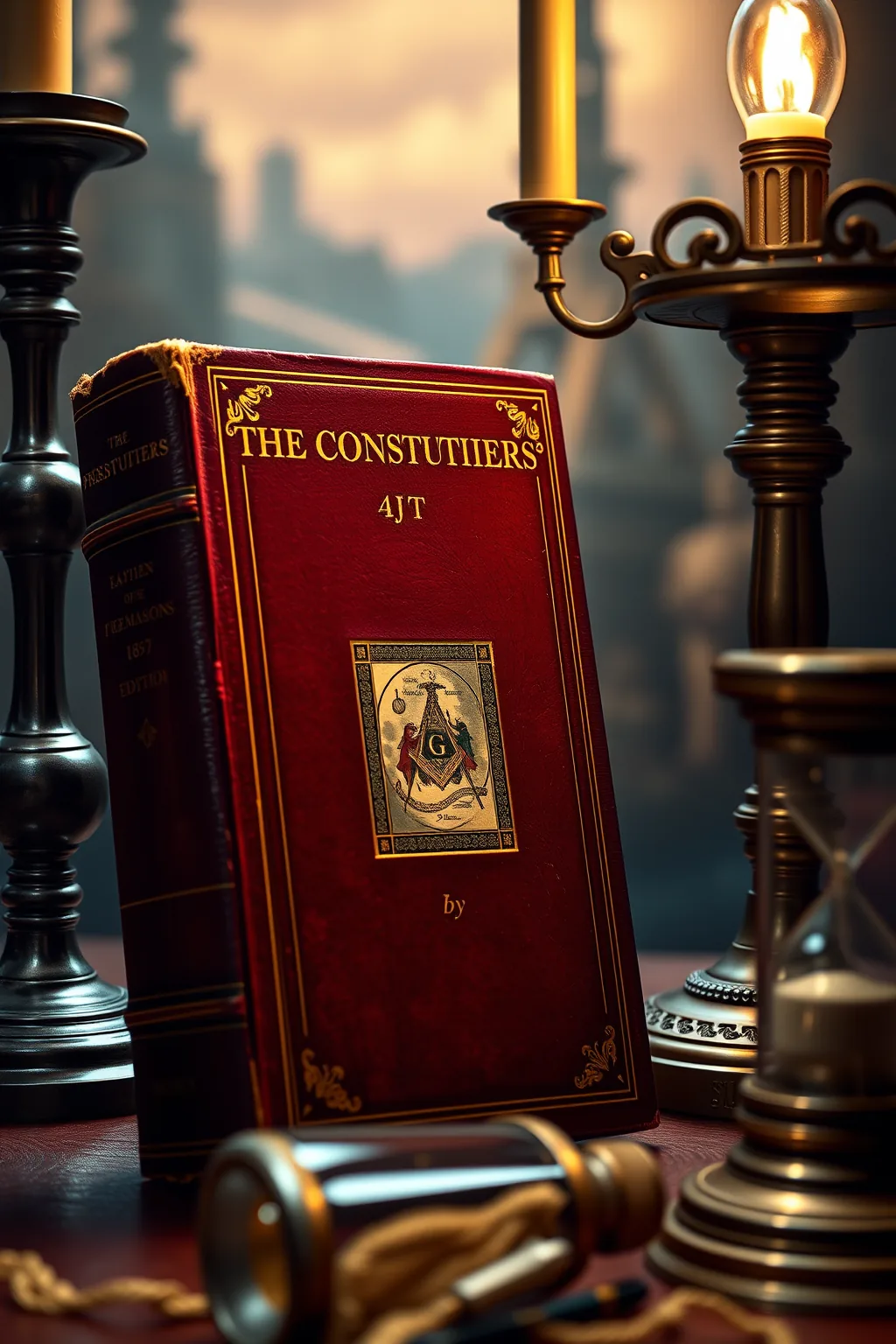
Desaguliers J T The Constitutions Of The Freemasons New York 1859
 73
73

Desaguliers J T The Constitutions Of The Freemasons New York 1859


Isolde Whitaker, Sacred Texts Editor, writes: This 1859 New York edition of *The Constitutions of the Freemasons* is a treasure for any serious student of esoteric traditions. While the authorship is complex, the text powerfully conveys the philosophical and ethical core of Freemasonry, often veiled in potent symbolism. It excels in presenting the foundational principles in a manner accessible to both the nascent inquirer and the seasoned practitioner. The clarity with which it outlines the 'Ancient Charges' and the philosophical underpinnings of Masonic degrees makes it an indispensable resource for understanding the fraternal bonds and the pursuit of moral perfection. Its enduring appeal lies in its ability to articulate universal truths through a uniquely Masonic lens, making it a vital read for scholars and practitioners alike.
📝 Description
73
The 1859 New York edition of The Constitutions of the Freemasons presents Masonic regulations alongside symbolic allegories.
This 1859 New York edition of *The Constitutions of the Freemasons* contains more than just the formal rules of the fraternity. It includes allegorical narratives and symbolic language intended to guide moral and spiritual growth. The text uses familiar Masonic tools like the square, compass, and trowel as metaphors for self-improvement and broader understanding. It addresses individuals seeking to learn the deeper meanings within Masonic ritual and philosophy.
For those interested in the principles of brotherhood, the search for truth, and the history of Western esoteric thought, this edition offers a clear entry point. It encourages reflection on personal virtue, civic duty, and the ongoing pursuit of knowledge. The book stands as a significant resource for understanding the philosophical currents within organized society and Freemasonry itself.
This text fits within the broader tradition of esoteric Freemasonry that emerged in the 18th and 19th centuries. Such constitutions often served a dual purpose: codifying organizational rules and embedding esoteric teachings within the structure. The use of allegory and symbolism aligns with hermetic and alchemical traditions, which frequently employed symbolic language to convey spiritual truths. This edition reflects a period when Masonic lodges were actively developing their symbolic systems and philosophical interpretations, drawing from ancient mystery traditions and Enlightenment rationalism.
💡 Why Read This Book?
This edition offers a crucial key to understanding the philosophical and symbolic heart of Freemasonry. It is essential for seekers exploring the roots of Western esoteric thought, scholars investigating secret societies, and practitioners seeking a deeper connection to the ancient wisdom embedded within Masonic rituals. It provides a foundational text for deciphering the allegorical language and moral teachings that have guided countless individuals on their path of self-improvement and spiritual discovery.
⭐ Reader Reviews
Honest opinions from readers who have explored this book.
❓ Frequently Asked Questions
Who is considered the primary author of these Constitutions?
While often attributed to J. T. Desaguliers for his significant role in earlier versions, this specific 1859 edition represents a compilation and refinement, with the true authorship of this particular publication being more collaborative and less singularly defined than early iterations.
What is the primary purpose of the Constitutions of the Freemasons?
The Constitutions serve as a foundational document outlining the historical origins, ancient charges, regulations, and fundamental principles of Freemasonry. They are designed to guide the moral conduct and spiritual development of its members.
Is this book suitable for non-Masons?
Absolutely. This text provides invaluable insight into the philosophical and symbolic framework of Freemasonry, making it highly relevant for anyone interested in Western esotericism, secret societies, comparative religion, or the history of fraternal organizations.
What makes the 1859 New York edition significant?
This edition reflects the specific interpretations and adaptations of Masonic principles prevalent in mid-19th century America, offering a distinct historical snapshot of the fraternity's evolution and its resonance within a rapidly changing society.
What kind of symbolism can one expect to find within this text?
Readers can anticipate encountering rich allegorical symbolism related to operative masonry, geometry, and moral virtues, such as the square, compass, plumb line, and level, all employed to illustrate principles of uprightness, harmony, and spiritual construction.
🔮 Key Themes & Symbolism
The Art of Moral Architecture
This theme looks at how Masonic philosophy views the individual as a spiritual edifice to be constructed. It explores the 'rough ashlar' and 'perfect ashlar' allegories, emphasizing the transformative journey of self-improvement through the disciplined application of moral virtues. The Constitutions lay out the blueprint for this inner work, using tools and symbols from operative stonemasonry to represent the shaping of character, the building of integrity, and the pursuit of divine proportion in one's life. It's about constructing a noble soul through reason, fraternity, and adherence to sacred principles.
The Language of Symbols and Allegory
Central to the Constitutions is the understanding that true wisdom is often conveyed through veiled language and potent symbols. This theme examines how Masonic teachings employ allegory to impart profound truths that resonate on multiple levels. From the celestial canopy representing the universe to the working tools symbolizing virtues, each element serves as a key to unlock deeper comprehension. The text invites the reader to move beyond literal interpretation and engage with the symbolic grammar of the Craft, fostering an intuitive grasp of esoteric concepts and their application to the human condition.
Brotherhood and the Sacred Compact
This theme investigates the profound emphasis on fraternity and mutual obligation within the Masonic framework. The Constitutions articulate the 'Ancient Charges,' detailing the sacred vows and responsibilities that bind Masons together. It explores the concept of a brotherhood built on trust, loyalty, and the shared pursuit of knowledge and betterment. This is not merely social camaraderie, but a spiritual covenant, a collective endeavor to uphold the highest moral and ethical standards, fostering a supportive environment for individual growth and the advancement of humanity.
💬 Memorable Quotes
Direct passages from the work, attributed to the author.
“Let the brethren be true to God and the Craft.”
— This foundational charge speaks to a dual allegiance: to a higher power and to the principles and fellowship of Freemasonry, underscoring the spiritual and ethical commitment required.
“To be true and faithful, and to do unto others as you would have them do unto you.”
— This captures the Golden Rule within the Masonic context, highlighting the paramount importance of ethical conduct, empathy, and reciprocal respect in all interactions.
“Let the square direct your actions, and the compasses circumscribe your desires.”
— This powerful metaphor illustrates the Masonic ideal of living a life of integrity and moderation, guided by justice and tempered by the wisdom of self-control.
“The fraternity is a school of virtue, and the world is its university.”
— This highlights the continuous learning and practical application of Masonic principles, emphasizing that the lessons learned within the lodge are meant to be lived out in the wider world.
💡 Key Ideas
Editorial paraphrase of the work's core concepts — not direct quotes.
Building a house not made with hands, eternal in the heavens.
This quote points to the ultimate Masonic aspiration: the construction of a spiritual temple within the self, transcending the material and aiming for eternal spiritual perfection.
🌙 Esoteric Significance
Tradition
This text is a central to the Western Esoteric Tradition, specifically within the symbolic and philosophical branches of Freemasonry. It draws from Hermeticism, Neoplatonism, and Kabbalistic thought, tying their principles into a coherent system of moral and spiritual instruction. The focus is on inner transformation, the pursuit of divine knowledge, and the understanding of cosmic order through allegorical representation.
Symbolism
The Constitutions are replete with potent symbols derived from operative masonry, geometry, and the natural world. Key symbols include the square (morality, integrity), compasses (temperance, self-restraint), plumb line (uprightness), level (equality), and the various architectural elements representing the stages of spiritual development and the construction of the inner temple.
Modern Relevance
In an age often characterized by superficiality and disconnection, the principles outlined in these Constitutions offer a timeless framework for ethical living, personal growth, and the cultivation of meaningful community. The emphasis on virtue, brotherhood, and the search for truth remains profoundly relevant for individuals seeking deeper purpose and a structured path toward self-mastery and spiritual understanding.
👥 Who Should Read This Book
This edition is essential for a diverse audience. **Beginners** in esoteric studies will find a clear, foundational text that introduces complex philosophical ideas through accessible allegory. **Scholars** of religion, history, and sociology will gain crucial insights into the development and influence of secret societies. **Spiritual seekers** will discover a rich source of wisdom for personal growth and ethical living, regardless of their affiliation. **Practitioners** of Masonic or related fraternal orders will find a definitive guide to the core tenets and historical context of their path.
📜 Historical Context
The mid-19th century, particularly in America, was an era of significant social and industrial transformation. The 1859 New York edition of *The Constitutions of the Freemasons* emerged during a period when Freemasonry was deeply ingrained in the cultural fabric, serving as a prominent fraternal and philanthropic organization. This era witnessed a surge in interest in esoteric knowledge and spiritualism, alongside a growing desire for structured moral guidance. The publication reflects the fraternity's commitment to preserving its ancient traditions while adapting to the intellectual currents of the time, including the burgeoning fields of philosophy and comparative religion. It stands as a evidence of Freemasonry's enduring role as a repository of wisdom and a vehicle for moral instruction in a rapidly evolving world.
📔 Journal Prompts
Reflect on a time you felt like a 'rough ashlar' and how you began to shape yourself into a 'perfect ashlar'.
Consider one Masonic symbol (e.g., square, compass) and how its meaning can be applied to your daily life.
What does the concept of 'brotherhood' mean to you beyond superficial acquaintance?
How can the 'Ancient Charges' inform your ethical decision-making in challenging situations?
In what ways can the 'world' serve as your 'university' for learning virtue?
🗂️ Glossary
Ashlar
In Freemasonry, an ashlar refers to a stone. The 'rough ashlar' represents the unrefined individual, while the 'perfect ashlar' symbolizes a person who has been morally and spiritually improved through Masonic teachings and self-discipline.
Ancient Charges
A body of traditional rules and moral precepts that form the ethical foundation of Freemasonry, outlining the duties of Masons to God, their neighbors, and the fraternity.
Allegory
A story, poem, or picture that can be interpreted to reveal a hidden meaning, typically a moral or political one. Masonic teachings extensively use allegory to convey complex philosophical and spiritual truths.
Esotericism
Belief systems or practices that are concerned with the inner, spiritual or psychological aspects of the human being, and which are generally not open to the public. It often involves symbolic language and hidden meanings.
Operative Masonry
The historical craft of stonemasonry, which formed the basis for the allegorical and symbolic language adopted by speculative (modern) Freemasonry.
This book appears in 2 collections
🔮 Readers Also Liked
Browse all →





From the “Secret Societies” Collection
View all →



More Free Freemasonry & Secret Societies Books
View all →