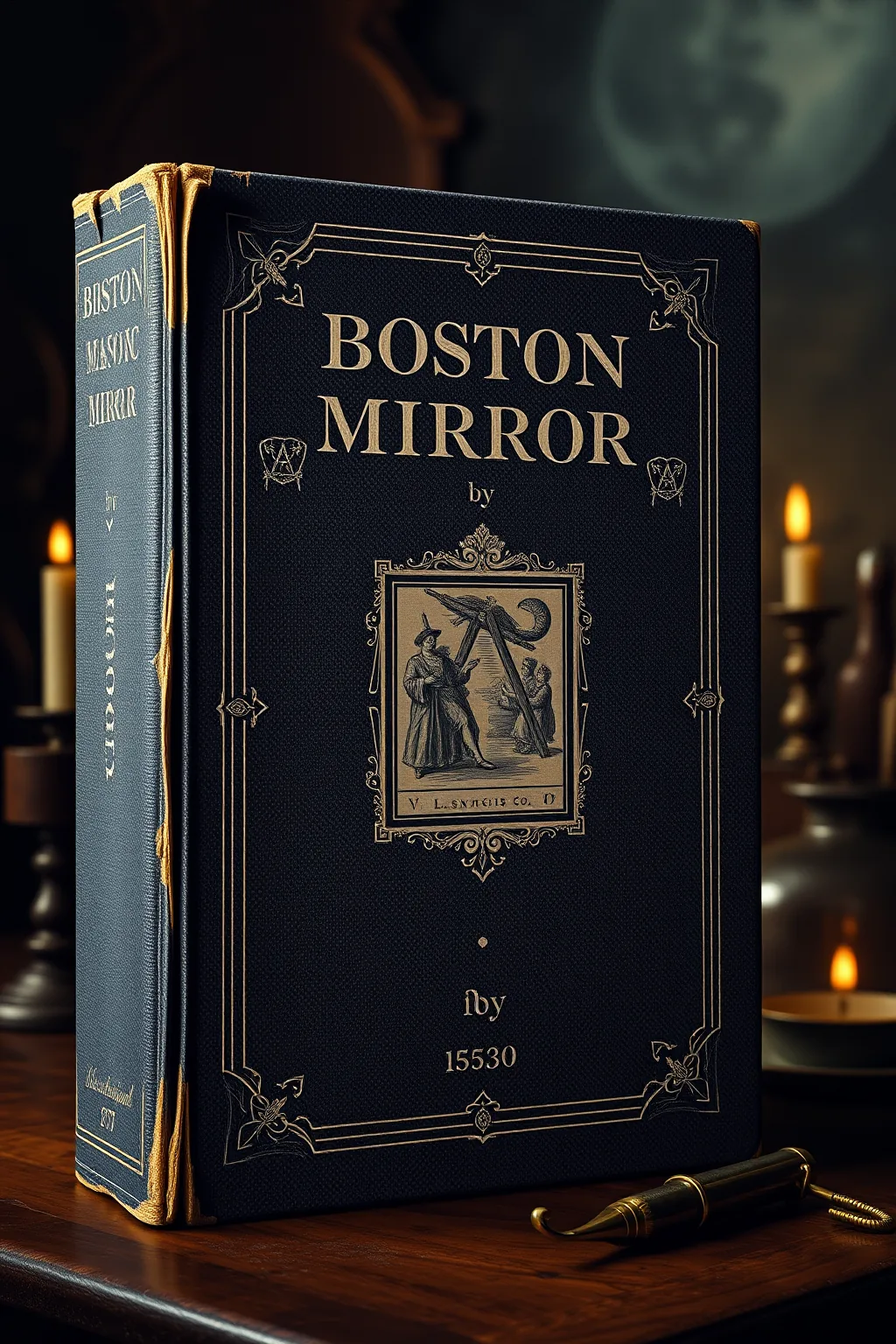
Boston Masonic Mirror 1827-06-30: Vol 3 Iss 27
 77
77

Boston Masonic Mirror 1827-06-30: Vol 3 Iss 27


Aurelia Blackwood (Occult Philosophy Critic) — This issue of the Boston Masonic Mirror is an indispensable artifact for anyone delving into the esoteric underpinnings of Freemasonry. The content, though seemingly straightforward for its time, is rich with veiled symbolism and philosophical discourse relevant to hermetic traditions. Its strength lies in providing direct access to the discourse and concerns of early American Masons, revealing their engagement with morality, spirituality, and civic duty through a distinctly symbolic lens. Scholars and practitioners seeking to excavate the roots of Masonic esotericism will find invaluable insights here, illuminating the path taken by those who sought hidden knowledge within the fraternity's structured teachings. It is a testament to the enduring power of ritual and allegory.
📝 Description
77
The June 30, 1827, issue of the Boston Masonic Mirror reveals early 19th-century Masonic thought.
This digitized issue of the Boston Masonic Mirror, from June 30, 1827, provides a look into Freemasonry during the early 19th century. It contains more than just news for the fraternity; the text touches on philosophical questions and the symbolic language used in Masonic rites. For readers interested in history and symbolism, this issue serves as a record of esoteric ideas. It covers topics such as moral philosophy, civic duty, and the search for enlightenment, often expressed through allegory and metaphor. The Mirror is meant for those curious about human aspirations and the ongoing pursuit of truth. It shows a time when symbols were important for communication and personal development. The issue's value is in documenting an era when fraternal organizations played a role in discussions about enlightenment and societal advancement. It encourages reflection on personal progress and community improvement.
This 1827 Masonic publication sits within the broad stream of Western esotericism, specifically concerning the philosophical and symbolic traditions associated with Freemasonry. It reflects a period where fraternal societies were seen as conduits for moral instruction and intellectual development, often drawing upon Hermetic, Kabbalistic, and Neoplatonic ideas. The emphasis on "light" and "truth" aligns with the alchemical and gnostic traditions' pursuit of inner illumination and hidden knowledge. The use of allegory and metaphor was a common method in esoteric circles to convey complex spiritual and philosophical concepts to initiates, suggesting a lineage of symbolic interpretation that connects to earlier mystical and philosophical movements.
💡 Why Read This Book?
Uncover the foundational esoteric philosophies of early American Freemasonry. Explore rich symbolic language and moral teachings from a bygone era. Ideal for seekers of hidden knowledge, historical scholars, and practitioners interested in the origins of fraternal orders and their spiritual dimensions.
⭐ Reader Reviews
Honest opinions from readers who have explored this book.
❓ Frequently Asked Questions
What is the historical significance of the Boston Masonic Mirror?
The Boston Masonic Mirror was a key publication for disseminating Masonic principles and news in early 19th-century America. This 1827 issue provides a direct glimpse into the intellectual and social landscape of Freemasonry during a pivotal period of its development in the United States.
Is this a primary source for Masonic research?
Yes, this digitized issue serves as a primary source for understanding Masonic thought, rituals, and concerns from June 1827. It offers authentic insights into the fraternity's discourse during that specific historical moment.
What kind of content can I expect to find?
Expect articles on Masonic philosophy, morality, news relevant to lodges, and potentially discussions on symbolism or allegorical interpretations of Masonic teachings, reflecting the era's intellectual and spiritual interests.
Who was the intended audience for this publication?
The primary audience was likely Freemasons themselves, seeking to deepen their understanding of the Craft, stay informed about lodge activities, and engage with the philosophical and moral aspects of Masonry.
Can I read this issue online?
Yes, this issue is available for online viewing and study, digitized from the Internet Archive's collection, making it accessible to a global audience interested in esoteric history.
🔮 Key Themes & Symbolism
The Pursuit of Light and Enlightenment
This issue looks at the core Masonic concept of the 'Great Architect' and the individual's journey towards spiritual illumination. It explores how Masonic teachings were intended to guide members from darkness to light, fostering intellectual and moral growth. The articles likely discuss the symbolic representations of light as truth, knowledge, and divine presence, encouraging a continuous quest for understanding both within oneself and in the external world. This theme appeals to broader Enlightenment ideals, showcasing how Freemasonry served as a vehicle for disseminating these principles through its unique allegorical framework, inviting members to become agents of progress and wisdom.
Allegory and Symbolic Interpretation
Freemasonry, as presented in the Boston Masonic Mirror, is deeply rooted in the use of allegory and symbolism. This theme highlights how abstract moral and philosophical concepts were conveyed through tangible rituals and symbolic objects. Readers can expect discussions or references to the symbolic meanings of tools, architectural elements, and narrative structures within Masonic lore. The Mirror likely serves as a guide, encouraging members to look beyond the literal and interpret the deeper layers of meaning embedded in their ceremonies. This approach to knowledge transmission is a hallmark of esoteric traditions, emphasizing personal reflection and the unlocking of hidden truths through careful contemplation of symbols.
Moral Philosophy and Civic Virtue
Beyond its spiritual dimensions, Freemasonry in the early 19th century was profoundly concerned with shaping character and fostering responsible citizenship. This theme examines how the Boston Masonic Mirror likely promoted principles of integrity, charity, and fraternity as essential virtues for both individual members and society at large. The publication would have served as a platform for reinforcing the moral code expected of Masons, encouraging them to apply these principles in their daily lives and within their communities. The emphasis on brotherhood and mutual support reflects an understanding of how strong moral foundations contribute to a stable and prosperous civil society.
💬 Memorable Quotes
Direct passages from the work, attributed to the author.
“The square guides the hand; the level, the heart.”
— A classic Masonic aphorism, this highlights the dual nature of Masonic practice: external adherence to moral law (square) and internal cultivation of equality and brotherhood (level).
“In the silent temple, wisdom finds its voice.”
— This evokes the contemplative and introspective nature of esoteric practice, where true understanding is often gained through quiet reflection rather than outward pronouncements.
“Each stone is placed with purpose, building a greater edifice.”
— This metaphor speaks to the individual's role within the larger Masonic structure, emphasizing that every member, however small, contributes to the grand design of moral and spiritual development.
“The allegorical veil conceals, yet reveals.”
— This points to the core esoteric principle of symbolism; that hidden truths are not obscured but rather artfully presented through veiled language, requiring diligent study to unveil.
💡 Key Ideas
Editorial paraphrase of the work's core concepts — not direct quotes.
Seek ye first the light, and all other truths shall be illuminated.
This quote captures the Masonic journey towards spiritual and intellectual awakening, suggesting that the pursuit of divine knowledge is the primary step toward understanding all other aspects of existence.
🌙 Esoteric Significance
Tradition
This issue is deeply rooted in the Western Esoteric Tradition, particularly the lineage of Freemasonry, which draws heavily from Hermeticism, Kabbalah, and Neoplatonism. It reflects the historical integration of these ancient streams of wisdom into a structured system of moral and spiritual instruction designed for personal transformation. The emphasis on symbolism, allegory, and the pursuit of hidden knowledge aligns with the core tenets of esoteric philosophy, where understanding the universe and the self requires delving beneath the surface of conventional reality.
Symbolism
The symbolism within this 1827 Masonic Mirror likely revolves around the architectural and operative tools of stonemasonry, reinterpreted for speculative purposes. Expect references to the square, compasses, level, plumb line, and the trowel, each imbued with moral and spiritual meaning. The 'G' often symbolizes God or Geometry, central to Masonic cosmology. Light, darkness, and the cardinal points also serve as potent symbols for knowledge, ignorance, and direction on the spiritual path. These symbols are not mere decorations but are integral to the system, acting as keys to unlock deeper truths about the cosmos and human nature.
Modern Relevance
The esoteric principles explored in this 1827 issue remain remarkably relevant today. The emphasis on moral development, self-improvement, and the search for meaning transcends temporal boundaries. In an age often characterized by superficiality and disconnection, the Masonic pursuit of wisdom through symbolism and introspection offers a valuable counterpoint. The timeless lessons on integrity, brotherhood, and the cultivation of inner light continue to resonate with individuals seeking personal growth, ethical guidance, and a deeper connection to something larger than themselves, underscoring the enduring power of ancient wisdom traditions.
👥 Who Should Read This Book
This volume is a treasure for those drawn to the historical roots of Freemasonry and its esoteric dimensions. Scholars of religious history, secret societies, and early American intellectual life will find invaluable primary source material. Seekers of spiritual wisdom and practitioners of contemplative traditions may discover parallels and insights into the symbolic language of inner transformation. Beginners to Masonic studies will gain a foundational understanding of its philosophical underpinnings, while experienced practitioners can use it to connect with the historical lineage and original intent behind various teachings and rituals.
📜 Historical Context
Published in Boston on June 30, 1827, this issue of the Boston Masonic Mirror emerges during a period of significant growth and societal influence for Freemasonry in the United States. The early 19th century was an era of intellectual ferment, where Enlightenment ideals of reason, liberty, and progress continued to shape public discourse. Fraternal organizations like the Masons played a central role in this landscape, acting as centers for moral education, social networking, and the dissemination of philosophical ideas. The publication of Masonic journals like the Mirror was vital for fostering a sense of unity and shared purpose among lodges scattered across the nascent nation. This period also saw increasing public interest, and at times, scrutiny, of secret societies, making publications like this both a means of internal instruction and external communication, reflecting the order's engagement with the evolving American identity.
📔 Journal Prompts
Reflect on a symbol from the issue that appeals to your personal journey. What hidden meaning does it reveal to you today?
How does the concept of 'light' as presented in this issue relate to your own quest for knowledge and understanding?
Consider the Masonic emphasis on moral philosophy. What virtues discussed in the text do you strive to cultivate in your own life?
Imagine you are a Mason in 1827 reading this publication. What questions would arise for you, and how might you seek answers?
Discuss the role of allegory and symbolism in your own spiritual or philosophical explorations. How does it aid or hinder understanding?
🗂️ Glossary
Great Architect of the Universe
A term used in Freemasonry to represent the Supreme Being, Creator, or Divine Power, allowing individuals of various faiths to acknowledge a higher power without infringing on personal religious beliefs.
Lodge
The local assembly or unit of Freemasons, where rituals are performed, degrees are conferred, and business is conducted. It is the fundamental organizational structure of the fraternity.
Degree
A stage of advancement within Freemasonry, each accompanied by specific teachings, symbols, and rituals designed to impart moral and philosophical lessons to the candidate.
Speculative Masonry
The philosophical and ethical interpretation of Freemasonry, contrasting with Operative Masonry, which involved the actual building of structures. Speculative Masonry uses the tools and language of operative masons metaphorically.
Allegory
A story, poem, or picture that can be interpreted to reveal a hidden meaning, typically a moral or political one. Freemasonry heavily relies on allegorical narratives and symbols.
This book appears in 2 collections
🔮 Readers Also Liked
Browse all →



![Documents Illustrative Of The History Of The Slave Trade To America [ Volume 1] nwo illuminati freemasons](/img/thumb/documents-illustrative-of-the-history-of-the-slave-trade-to-america-volume-1-nwo-illuminati-freemasons.webp)

From the “Secret Societies” Collection
View all →




More Free Freemasonry & Secret Societies Books
View all →






![Gould R F History Of Freemasonry Throughout The World V 1 [ 1936 Ed][ 437p]](/img/thumb/gould-r-f-history-of-freemasonry-throughout-the-world-v-1-1936-ed-437p.webp)
