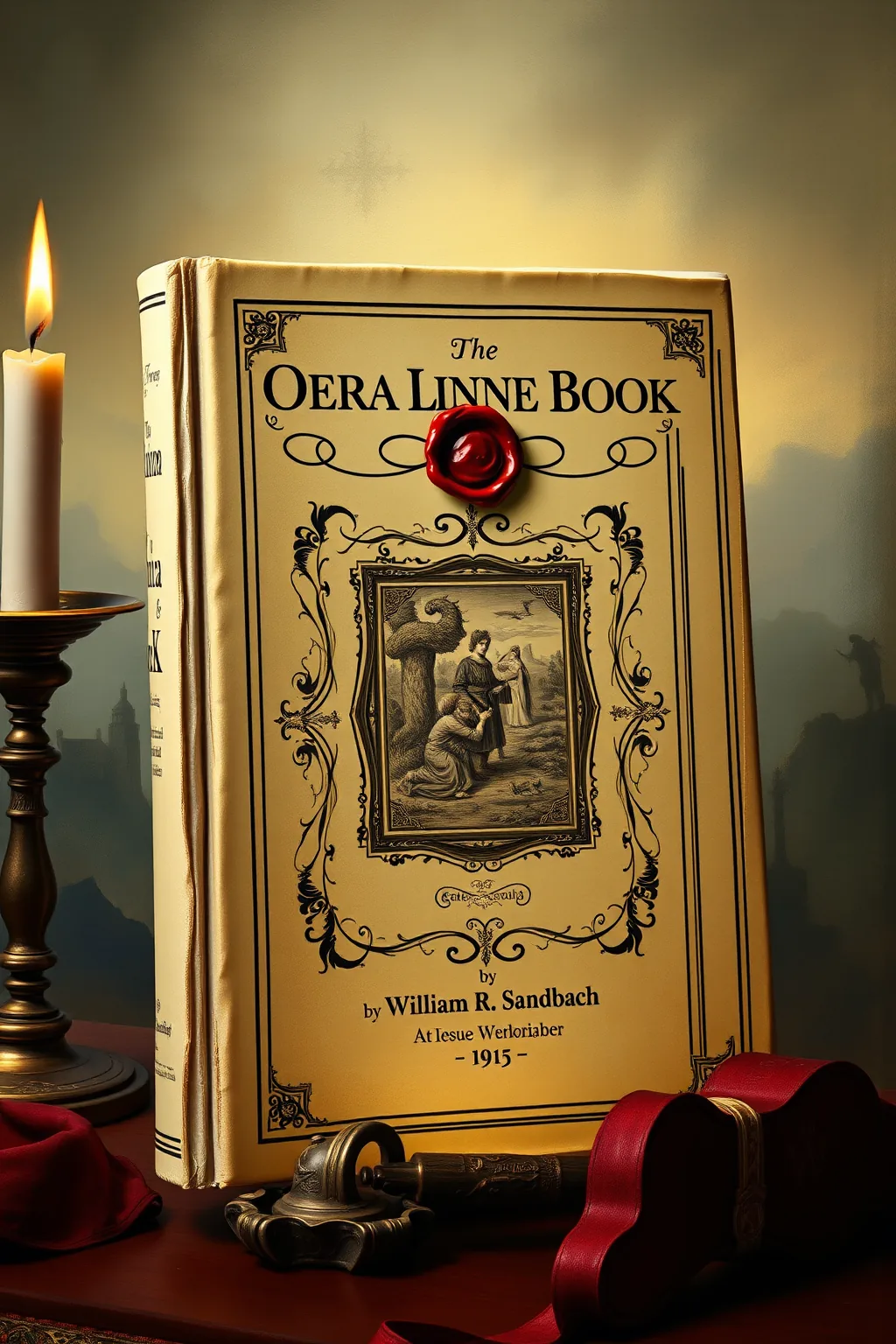
The Oera Linda Book
 73
73

The Oera Linda Book



Ophelia Vance, Mystical Literature Reviewer — The Oera Linda Book, as presented by Sandbach, is a fascinating, if debated, artifact of esoteric inquiry. Its supposed ancient origins offer a compelling narrative of forgotten matriarchal wisdom and a pre-Christian European spiritual heritage. While modern scholarship leans towards its 19th-century fabrication, the book’s enduring appeal lies in its rich tapestry of myth, prophecy, and philosophical musings. It provides fertile ground for those interested in alternative mythologies, proto-feminist spiritualities, and the psychological impact of historical reconstruction. A must-read for anyone intrigued by the power of narrative to shape identity and explore the liminal spaces between history and legend.
📝 Description
73
Published in 1876, The Oera Linda Book claims descent from a 13th-century Frisian manuscript.
The Oera Linda Book is a text presented as a translation of an ancient Frisian manuscript. Its authorship is attributed to William R. Sandbach, who claimed to have discovered and translated it. The book details a history of a matriarchal society, the "Oera Linda," predating known European civilizations. It describes their laws, prophecies, and spiritual practices, often referencing a connection to Atlantis and a cosmic order.
The narrative follows a line of priestesses who were custodians of this knowledge. It posits a worldview where nature, divinity, and humanity exist in close union, distinct from later patriarchal structures. The text presents a vision of Europe before Christianity, emphasizing a different kind of spiritual authority and societal organization. It challenges mainstream historical accounts by proposing an alternative lineage and belief system.
The book’s origins are debated, with many scholars viewing it as a 19th-century creation rather than an authentic ancient document. Regardless of its provenance, it has attracted interest for its unique mythological and pseudo historical content.
The Oera Linda Book occupies a space within 19th-century esoteric and occult literature, a period marked by intense interest in ancient mythologies and lost civilizations. It aligns with movements that sought alternative historical narratives and spiritual traditions outside established religious and academic frameworks. The book’s themes of matriarchy, ancient wisdom, and hidden knowledge resonate with broader currents of occult revivalism and early pagan reconstructionism that explored pre-Christian European heritage.
💡 Why Read This Book?
Unearth a hidden narrative of ancient European spirituality, challenging conventional history and revealing a lost matriarchal lineage. Explore themes of prophecy, cosmic law, and the interconnectedness of humanity and nature. Ideal for seekers of esoteric knowledge, historians of alternative thought, and practitioners interested in pre-Christian mythologies.
⭐ Reader Reviews
Honest opinions from readers who have explored this book.
❓ Frequently Asked Questions
What is the Oera Linda Book?
The Oera Linda Book is a controversial manuscript claimed to be an ancient Frisian text. While conventionally considered a 19th-century forgery, it presents a unique narrative of matriarchal societies, ancient wisdom, and prophecy.
Who is considered the author?
While the manuscript purports to be ancient, the modern version and its presentation are attributed to William R. Sandbach, who translated and published it in the 19th century.
What is the historical debate surrounding the book?
The primary debate centers on its authenticity. Linguistic, paper, and internal evidence strongly suggest it was written in the mid-19th century, despite claims of an earlier origin.
What esoteric themes are present?
Key esoteric themes include matriarchal spiritual leadership, prophecies, ancient cosmologies, the concept of 'good' and 'evil' as cosmic forces, and a unique calendar system.
What is the philosophical significance of the Oera Linda Book?
Its significance lies in its challenge to established historical narratives and its exploration of alternative spiritual and social structures, prompting reflection on the fluidity of history and identity.
🔮 Key Themes & Symbolism
Matriarchal Spiritual Authority
The book champions a vision of an ancient society governed by wise priestesses, tracing a lineage of spiritual and temporal authority through women. This theme challenges patriarchal historical accounts, suggesting a forgotten era where feminine wisdom and intuition were paramount in guiding civilization. It explores the concept of divine feminine energy as a foundational force in societal structure and spiritual understanding, offering a radical alternative to prevailing historical interpretations of early governance and religious practice.
Cosmic Cycles and Prophecy
Central to the Oera Linda Book is its intricate system of cosmic cycles, predicting epochs of change, spiritual awakening, and periods of darkness. The text functions as a prophetic guide, detailing the ebb and flow of spiritual energies and their impact on human destiny. This theme speaks to perennial wisdom traditions that view time as cyclical rather than linear, emphasizing the interconnectedness of celestial movements and terrestrial events, and offering a framework for understanding historical patterns and potential future trajectories.
Lost Knowledge and Forgotten Civilizations
The manuscript purports to be a repository of knowledge lost to mainstream history, hinting at connections to advanced ancient civilizations, possibly even Atlantis. It presents a narrative of a people preserving sacred texts and traditions through cataclysms, safeguarding esoteric lore from oblivion. This theme taps into the universal human fascination with lost wisdom and the possibility of forgotten golden ages, encouraging readers to question accepted historical timelines and consider the vast, uncharted territories of human intellectual and spiritual heritage.
💬 Memorable Quotes
Direct passages from the work, attributed to the author.
“Wisdom is the light that guides the blind.”
— A powerful metaphor emphasizing the transformative and informative power of knowledge, particularly esoteric understanding, in navigating ignorance.
“The past is a mirror to the future.”
— This highlights the cyclical nature of history and human experience, suggesting that understanding past patterns is crucial for anticipating and shaping what is to come.
“Nature holds the secrets of the divine.”
— An invocation of animism and pantheism, asserting that the natural world is a direct manifestation of sacred principles and a source of spiritual revelation.
“Truth is not found, but remembered.”
— This implies that innate spiritual knowledge exists within us, and the process of spiritual growth is one of uncovering or recalling this inherent understanding.
💡 Key Ideas
Editorial paraphrase of the work's core concepts — not direct quotes.
The world is but a dream, and we are the dreamers.
This quote suggests a profound metaphysical perspective, viewing reality as subjective and consciousness as the primary shaper of existence, echoing mystical philosophies.
🌙 Esoteric Significance
Tradition
While not directly aligned with a single established esoteric tradition, the Oera Linda Book draws heavily from Gnosticism, ancient mystery schools, and proto-feminist spiritual philosophies. It reflects the Gnostic emphasis on hidden knowledge, a divine feminine principle, and a cyclical view of creation and salvation. Its matriarchal focus and emphasis on intuitive wisdom align with certain streams of Goddess spirituality and pre-Christian European paganism, offering a unique synthesis of ancient mystical concepts.
Symbolism
The book is rich in symbolic language, from its celestial calendars and prophecies to its descriptions of sacred rites and natural phenomena. Key symbols include the 'Great Mother' (representing primordial creative force), the cyclical nature of time symbolized by the sun and moon, and the concept of 'good' and 'evil' as cosmic dualities. The very act of preserving ancient texts symbolizes the enduring power of knowledge and tradition against the forces of oblivion or corruption.
Modern Relevance
In an age grappling with ecological crises and the need for more inclusive societal structures, the Oera Linda Book's emphasis on nature's sacredness and matriarchal wisdom holds contemporary resonance. Its challenge to patriarchal historical narratives encourages critical re-evaluation of established truths. For practitioners, it offers alternative spiritual frameworks and a connection to a perceived primal, earth-centered spirituality that can inform personal practice and foster a deeper ecological consciousness.
👥 Who Should Read This Book
This text is a compelling read for the curious historian and the mythographer, offering a unique case study in the construction of historical narratives. Seekers of esoteric wisdom will find fertile ground in its exploration of matriarchal spirituality, prophecy, and ancient cosmologies. Practitioners interested in alternative spiritual paths and pre-Christian European traditions will discover rich symbolic language and philosophical insights. While scholars may approach it with a critical eye regarding its authenticity, its enduring influence on esoteric thought and its provocative reimagining of history make it essential reading for anyone interested in the fringes of historical and spiritual inquiry.
📜 Historical Context
The Oera Linda Book emerged in the mid-19th century, a period marked by burgeoning nationalism across Europe. This era saw intense interest in local folklore, ancient myths, and linguistic origins as nations sought to solidify their identities and historical claims. The book's purported Frisian origins tapped into this zeitgeist, offering a compelling, albeit fabricated, narrative of ancient European heritage. It was a time when romanticism fueled a fascination with the 'primitive' and the 'authentic,' and scholars and enthusiasts alike were eager to uncover 'lost' histories. The book’s controversial nature, later revealed as a probable forgery, also reflects the scholarly debates and critical methodologies developing during this period, as well as the powerful influence of narrative in shaping collective memory and national consciousness.
📔 Journal Prompts
Reflect on a time when you felt a strong connection to a matriarchal archetype or figure. What lessons did you learn?
Consider the concept of 'lost knowledge.' What ancient wisdom do you believe has been forgotten or suppressed in modern society?
If you were to create a new calendar based on natural cycles, what phenomena would you prioritize and why?
How does the idea of prophecy influence your understanding of personal or collective destiny?
Explore the balance of 'masculine' and 'feminine' energies in your own life and in society. Where do you see imbalance and how might it be addressed?
🗂️ Glossary
Frisian
Referring to the people and language of Friesland, a coastal region in the Netherlands with a distinct historical and cultural identity.
Matriarchal
A social system in which females hold the primary power positions and descent is reckoned through the female line.
Esoteric
Intended for or likely to be understood by only a small number of people with a specialized knowledge or interest.
Cosmology
The branch of astronomy that deals with the origin and structure of the universe; the study of the universe as a whole.
Prophecy
A prediction of what will happen in the future; a statement that something will happen in the future.
This book appears in 1 collection
🔮 Readers Also Liked
Browse all →









From the “Transcendental Meditation” Collection
View all →







More Free Esoteric History & Biography Books
View all →