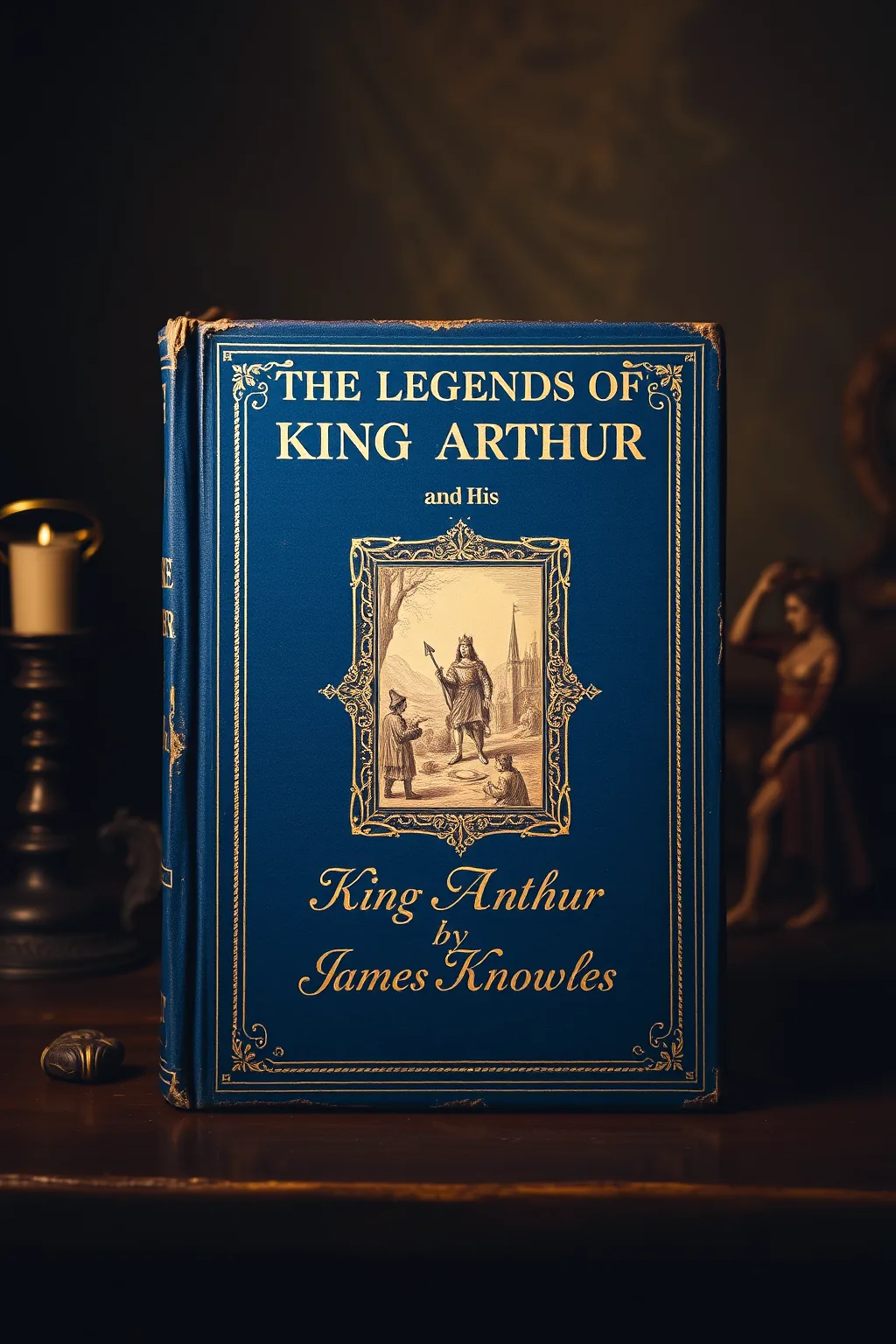
The Legends of King Arthur and His Knights
 75
75

The Legends of King Arthur and His Knights


Ophelia Vance, Mystical Literature Reviewer: James Knowles' "The Legends of King Arthur and His Knights" is an essential text for anyone seeking the esoteric heart of Arthurian myth. His concise yet evocative Victorian prose masterfully distills complex cycles into a coherent, spiritually resonant narrative. The focus on chivalric ideals and the inevitable fall of Camelot offers profound insights into human nature and the cyclical patterns of power and decay. This work is particularly valuable for its accessible presentation of themes that resonate deeply with seekers of ancient wisdom and practitioners of symbolic interpretation.
📝 Description
75
James Knowles published "The Legends of King Arthur and His Knights" in 1862, presenting Malory's tales with a Victorian sensibility.
Knowles' 1862 work reworks Sir Thomas Malory's "Le Morte d'Arthur," making the Arthurian legends accessible to a Victorian audience. He gathers the stories of Arthur, Merlin, the Grail quest, and the fall of Camelot into a coherent narrative. Knowles aimed to bring out spiritual and psychological meanings he found within the old tales. The book traces the rise and fall of Arthur's kingdom, from Merlin's magic and Arthur's ascension to the tragic end of his fellowship. It is a retelling that seeks to connect the ancient stories to deeper human experiences.
This edition focuses on the symbolic aspects of the Arthurian mythos. It examines the chivalric code, themes of loyalty, betrayal, and the search for spiritual fulfillment. Knowles frames the legends as a reflection of enduring human struggles and aspirations. The text invites contemplation on the nature of leadership, the consequences of ambition, and the persistence of ideals even in the face of defeat.
Knowles' rendition positions the Arthurian legends within a tradition of finding spiritual and psychological depth in ancient myths. This Victorian approach often sought hidden meanings, seeing figures like Merlin and the Grail as symbols for inner transformation or esoteric knowledge. The book reflects a broader cultural interest in the mystical dimensions of Western civilization, aligning with occult and spiritual revival movements of the 19th century that looked to medieval romances for archetypal truths.
✍️ Author
James Knowles
James Knowles (1759 – 8 February 1840) was an Irish schoolteacher and, late in life, the author of A Pronouncing and Explanatory Dictionary of the English Language. He was the father of the actor and dramatist James Sheridan Knowles.
💡 Why Read This Book?
Uncover the mystical foundations of Western legend. This book is ideal for spiritual seekers, mythology enthusiasts, and students of esotericism who wish to explore the archetypal journeys of chivalry, destiny, and the perennial quest for enlightenment. It offers a clear path into the rich symbolism and hidden knowledge embedded within the Arthurian cycle.
⭐ Reader Reviews
Honest opinions from readers who have explored this book.
❓ Frequently Asked Questions
What is the primary focus of Knowles' retelling?
Knowles emphasizes the chivalric ideals, grand adventures, and the tragic arc leading to Camelot's downfall, presenting a more streamlined and accessible version of the complex Arthurian legends.
What sources did James Knowles primarily draw upon?
He largely synthesized material from Sir Thomas Malory's "Le Morte d'Arthur" and earlier medieval chronicles, aiming for a cohesive narrative.
Is this book suitable for beginners in Arthurian legend?
Yes, its straightforward prose and organized structure make it an excellent entry point for those new to Arthurian lore.
What makes this version 'esoteric'?
The book's inherent mysticism lies in its exploration of archetypes, the spiritual quest (like the Grail), and the symbolic representation of moral and spiritual struggles within the narrative.
Does this book contain illustrations?
While the original 1862 edition may not have extensive illustrations, many later printings and digital versions include evocative artwork to enhance the mystical atmosphere.
🔮 Key Themes & Symbolism
The Archetype of the King and the Kingdom
This theme explores the spiritual and symbolic role of King Arthur as the embodiment of order and divine right, and Camelot as the ideal, yet fragile, manifestation of a divinely guided society. The narrative explores the inherent tensions between worldly power and spiritual purity, examining how the kingdom's descent mirrors the internal moral failings of its inhabitants, a timeless allegory for the rise and fall of civilizations and the human soul's capacity for both transcendence and corruption.
The Quest for the Holy Grail and Spiritual Illumination
The pursuit of the Holy Grail serves as the ultimate spiritual pilgrimage within the Arthurian cycles. This theme illuminates the concept of the soul's arduous journey toward divine grace and ultimate truth. It explores the trials and tribulations faced by the knights, representing the inner battles against ego, temptation, and doubt. The Grail itself symbolizes divine presence, unattainable perfection, and the profound spiritual awakening that rewards purity of heart and unwavering faith, a core part of esoteric spiritual disciplines.
The Mystical Power of Merlin and Prophecy
Merlin, the enigmatic sorcerer and prophet, represents the bridge between the mundane and the magical realms, embodying ancient wisdom and cosmic foresight. His role highlights the influence of unseen forces and the intricate collection of destiny that guides human affairs. The narrative explores the esoteric nature of prophecy, the channeling of divine will, and the wide impact of knowledge that transcends ordinary human perception, serving as a reminder of the hidden currents that shape history and individual lives.
💬 Memorable Quotes
Direct passages from the work, attributed to the author.
“Forsooth, I am weary of this world.”
— A poignant expression of existential weariness, hinting at the spiritual disillusionment that can arise when ideals clash with harsh reality.
“And many marvelled at the saying of the hermit.”
— Highlights the power of spiritual counsel and hidden wisdom, suggesting that profound truths often emerge from unexpected sources.
“The quest is never truly ended.”
— Speaks to the perpetual nature of spiritual seeking and the ongoing journey of self-discovery and enlightenment.
“For love is the strongest thing in the world.”
— An affirmation of love's transformative and redemptive power, a central theme in many spiritual traditions.
“And so was the Round Table broken.”
— Symbolizes the inevitable fragmentation of unity and the tragic consequences of betrayal and internal discord, a universal archetype of societal collapse.
🌙 Esoteric Significance
Tradition
This work taps into the Western esoteric tradition, particularly its roots in Hermeticism, Neoplatonism, and early Christian mysticism. It explores archetypal patterns that resonate with Gnosticism's dualities of spirit and matter, and the chivalric ideals echo Templar mysticism and sacred oaths. The Grail quest, in particular, aligns with alchemical and mystical paths of spiritual transformation and the pursuit of divine union.
Symbolism
Key symbols abound: the sword (will, authority, divine justice), the Grail (divine grace, spiritual perfection, the feminine divine), the Round Table (unity, equality, cosmic order), and Camelot itself (the ideal society, earthly paradise, a fragile spiritual kingdom). Merlin represents hidden knowledge, prophecy, and the integration of intellect and intuition. The forest and wilderness symbolize the subconscious and the trials of spiritual initiation.
Modern Relevance
The enduring power of Arthurian legend lies in its exploration of timeless themes: leadership, loyalty, betrayal, the search for meaning, and the struggle between good and evil. In a fragmented modern world, the archetypes of the noble king, the devoted knight, and the spiritual quest offer potent metaphors for personal growth, ethical conduct, and the enduring human desire for purpose and unity. These stories continue to inspire spiritual seekers and provide a body of work for understanding collective consciousness.
👥 Who Should Read This Book
This meticulously crafted collection is indispensable for a diverse readership. **Spiritual Seekers** will find profound allegories for their own journeys of self-discovery and enlightenment. **Mythology Enthusiasts** will appreciate the distillation of complex cycles into a cohesive narrative. **Scholars of Esotericism** will recognize the deep currents of Western mystical thought embedded within the tales. **Practitioners of symbolic disciplines** can draw inspiration from the rich archetypal imagery and its potential for interpretation. Beginners will find an accessible gateway, while seasoned researchers will appreciate Knowles' judicious compilation.
📜 Historical Context
Published in 1862, James Knowles' "The Legends of King Arthur and His Knights" emerged during the Victorian era's fervent fascination with medievalism, romanticism, and the nascent interest in folklore and national epics. This period saw a revival of interest in Arthurian legends, partly fueled by Tennyson's popular "Idylls of the King." Knowles' work, however, sought to present a more comprehensive and accessible compilation, distilling earlier, often fragmented, sources. It reflects a Victorian desire to find moral and spiritual resonance in the past, viewing Arthurian tales as embodying timeless virtues and cautionary lessons applicable to their own industrializing society. This era also saw the beginnings of more systematic studies in comparative mythology and occult traditions, creating fertile ground for the reception of such lore.
📔 Journal Prompts
Reflect on a personal 'quest' for meaning or enlightenment. What are your 'Grail' symbols?
Consider the archetypes of leadership. What qualities does an ideal 'King Arthur' embody today?
How does the concept of 'chivalry' translate into modern ethical conduct and relationships?
Explore the duality of Merlin: wisdom and manipulation. Where do we see this in contemporary figures?
Meditate on the fall of Camelot. What societal or personal 'betrayals' lead to fragmentation and loss?
🗂️ Glossary
Chivalry
A medieval knightly system of conduct encompassing courage, honor, loyalty, courtesy, and the protection of the weak, often imbued with spiritual and courtly ideals.
The Grail
A mystical vessel, often depicted as a cup or dish, central to Arthurian legend, symbolizing divine grace, spiritual perfection, and the ultimate object of the noblest quests.
Camelot
The legendary court and castle of King Arthur, representing an idealized kingdom and a symbol of chivalric society, often depicted as a center of justice and virtue.
Excalibur
King Arthur's legendary sword, imbued with magical properties and signifying rightful kingship and divine authority, often associated with Arthur's destiny.
Round Table
A symbolic table at Camelot where Arthur and his knights sat as equals, representing unity, fellowship, and the ideal of a just and egalitarian society.
This book appears in 1 collection
🔮 Readers Also Liked
Browse all →







From the “Transcendental Meditation” Collection
View all →






More Free Esoteric History & Biography Books
View all →