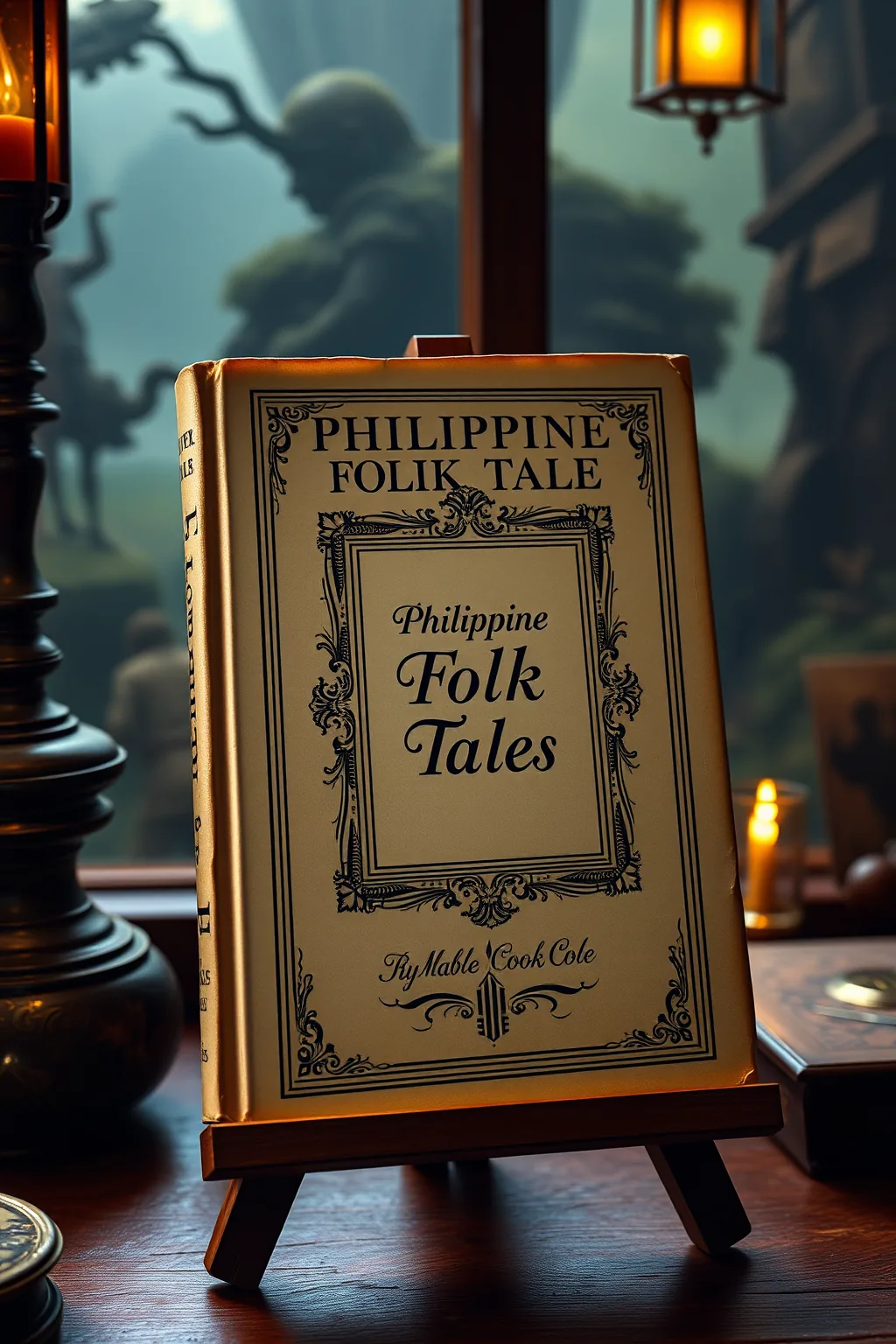
Philippine Folk Tales
 83
83

Philippine Folk Tales


Silas Hawthorne (Hermetic Studies Editor) — Mabel Cook Cole's 'Philippine Folk Tales' is an invaluable artifact for the esoteric scholar. Beyond its ethnographic merit, the collection unfurls a sophisticated cosmology, revealing indigenous belief systems that mirror universal archetypes. Cole skillfully presents narratives rich with symbolism, from trickster figures embodying liminal states to origin myths detailing primal creation. The tales offer profound insights into animistic philosophies and the intricate relationship between humanity and the spirit world, serving as a potent source for comparative mythology and spiritual inquiry. This book is essential for those who seek to expand their understanding of global esoteric traditions and the enduring power of myth.
📝 Description
83
Mabel Cook Cole published Philippine Folk Tales in 1916, collecting stories from Filipino indigenous groups.
Mabel Cook Cole's 1916 collection, 'Philippine Folk Tales,' gathers oral traditions from various Filipino peoples. The book includes creation myths, tales of tricksters, and cosmological discussions that reveal the spiritual beliefs of groups like the Visayan and Tagalog. Cole's anthropological work captures a worldview influenced by animism and the interplay between the physical and spiritual worlds.
This volume offers insight into the symbolic language and philosophies of these cultures. It demonstrates how myth shaped ancestral knowledge and connects humanity to its surroundings. The stories present unique spiritual perspectives passed down through generations.
This book documents the animistic and cosmological beliefs of Filipino indigenous peoples as recorded in the early 20th century. It falls within the tradition of early anthropological studies that collected indigenous mythologies and spiritual practices. These collections often served as a primary source for later esoteric scholars interested in non-Western religious systems, shamanism, and pre-Christian belief structures. The focus on creation stories and the relationship between the seen and unseen realms aligns with broader interests in comparative mythology and the study of folk religion.
✍️ Author
Mable Cook Cole
Leslie Pamela Cook-Ioannidis (born c. 1945) is an American mathematician, the Unidel Professor of Mathematical Sciences and Professor of Chemical Engineering at the University of Delaware.
💡 Why Read This Book?
Uncover the mystical heart of the Philippines. This collection offers a rare glimpse into ancestral wisdom, revealing symbolic languages, creation myths, and spiritual philosophies. Ideal for seekers of hidden knowledge, comparative mythologists, and practitioners interested in indigenous spiritual traditions. Dive into ancient cosmologies and discover universal archetypes embedded within unique cultural narratives.
⭐ Reader Reviews
Honest opinions from readers who have explored this book.
❓ Frequently Asked Questions
What is the primary focus of Philippine Folk Tales?
The book primarily focuses on collecting and presenting traditional myths, origin stories, trickster tales, and cosmological legends from various indigenous groups in the Philippines, offering a rich tapestry of their spiritual and cultural heritage.
Who was Mabel Cook Cole and when was this book published?
Mabel Cook Cole was an anthropologist who conducted fieldwork in the Philippines. 'Philippine Folk Tales' was first published in 1916, making it an early and significant compilation of these oral traditions.
What kind of spiritual or esoteric themes are present in the tales?
The tales are rich with animistic beliefs, creation narratives, explanations of natural phenomena through spiritual forces, trickster figures representing chaos and order, and explorations of the relationship between humans and the spirit world.
Is this book suitable for beginners interested in esoteric studies?
Yes, the book's accessible narrative style makes it suitable for beginners. It provides a foundational understanding of indigenous spiritual concepts and mythologies without requiring prior specialized knowledge.
How does this collection contribute to understanding global mythology?
By presenting unique Philippine narratives, the book allows for comparative studies with other global mythologies, highlighting universal themes, archetypes, and the diverse ways human cultures interpret the cosmos and their place within it.
🔮 Key Themes & Symbolism
Animistic Worldviews and the Spirit Realm
This collection deeply explores animistic philosophies, where the natural world is imbued with spirit and consciousness. Tales reveal a profound interconnectedness between humans, animals, plants, and elemental forces, illustrating how indigenous Filipinos perceived the universe as alive and responsive. The presence of spirits, deities, and ancestral guardians in everyday life underscores a holistic spiritual framework, offering insights into ancient beliefs about the unseen dimensions that govern existence. Understanding these narratives provides a window into a worldview where the sacred is an inherent part of the terrestrial plane.
Cosmological Narratives and Creation Myths
The book meticulously documents creation myths that explain the origin of the world, humanity, and the celestial bodies. These narratives often involve primordial beings, epic struggles, and the ordering of chaos into existence, reflecting universal cosmological patterns. They serve not only as explanations for the physical universe but also as moral and ethical blueprints for human society. The symbolism within these origin stories offers a unique perspective on the fundamental questions of existence and the cyclical nature of life, death, and rebirth within a distinct cultural context.
The Archetypal Trickster and Cultural Dynamics
A significant thread running through these tales is the presence of the trickster figure, a complex character embodying both disruptive chaos and the potential for innovation. These tricksters challenge societal norms, test the boundaries of order, and often inadvertently bring about change or reveal hidden truths. Their stories provide a fascinating lens through which to examine cultural values, social structures, and the inherent tensions between tradition and adaptation. The trickster's ambiguous nature offers profound lessons about human fallibility and the unpredictable forces that shape destiny.
💬 Memorable Quotes
Direct passages from the work, attributed to the author.
“The world was not made in a day.”
— This proverb speaks to the gradual unfolding of creation and the intricate processes involved in bringing existence into being, hinting at the patient, cyclical nature of cosmic development.
“Even the smallest spirit has its power.”
— This highlights the animistic belief that every element of nature possesses a vital force or spirit, emphasizing respect for all beings and the interconnectedness of the spiritual and material realms.
“The trickster laughs at the wise.”
— This illustrates the trickster's role in subverting established authority and wisdom, suggesting that true understanding often comes from unexpected sources and that ego can blind one to deeper truths.
“Listen to the whispers of the wind.”
— A poetic invocation to attune oneself to the subtle messages and spiritual guidance that can be found in the natural world, representing a form of intuitive or elemental communication.
“From dust we rise, to dust we return.”
— A profound statement on the cyclical nature of life and the ephemeral existence of all things, echoing themes of impermanence and the grander cosmic cycle of birth and dissolution.
🌙 Esoteric Significance
Tradition
This collection looks at the esoteric traditions of Filipino indigenous animism and shamanism. It reveals a worldview where the veil between the physical and spiritual realms is thin, with spirits inhabiting natural phenomena and guiding human destiny. These tales are not mere stories but encoded transmissions of ancestral knowledge, offering pathways to understanding elemental forces, inter-species communication, and the profound interconnectedness of all life, reflecting a holistic spiritual practice deeply rooted in the natural world.
Symbolism
The symbolism within these tales is rich and many-sided, often referring to cosmic dualities (e.g., sky father/earth mother), the transformative power of water, the wisdom of animals, and the symbolic journey of the soul. Creation myths detail the ordering of the cosmos, while trickster narratives employ archetypal figures to represent chaos and order, challenging rigid perceptions. The elements themselves—earth, air, fire, and water—are imbued with potent spiritual significance, acting as conduits for divine intervention and reflections of universal energies.
Modern Relevance
In an era increasingly disconnected from nature and ancient wisdom, these folk tales offer a vital re-connection to primal energies and holistic worldviews. They provide frameworks for understanding ecological spirituality, the importance of oral tradition in preserving cultural memory, and the enduring power of myth to shape identity and meaning. For modern seekers, these narratives serve as potent reminders of humanity's deep-seated connection to the cosmos and the spiritual dimensions that permeate existence, offering timeless lessons applicable to contemporary challenges.
👥 Who Should Read This Book
This compendium is a valuable collection for anyone drawn to the mystical. **Beginners** in esoteric studies will find an accessible entry point into diverse spiritual traditions, presented through captivating narratives. **Scholars** of mythology, anthropology, and comparative religion will appreciate its ethnographic value and the unique insights it offers into Filipino belief systems. **Spiritual seekers** will discover profound wisdom, archetypal patterns, and a renewed sense of connection to the natural world and ancestral knowledge. **Practitioners** of shamanism or animistic paths may find resonances with their own traditions and gain new perspectives on elemental forces and spirit communication.
📜 Historical Context
Published in 1916, 'Philippine Folk Tales' emerged during a period of significant anthropological interest in indigenous cultures worldwide, coinciding with the early 20th-century 'Age of Exploration' for scholars. Mabel Cook Cole's work was part of a broader effort to document and preserve oral traditions before they were potentially altered or lost due to colonial influences and modernization. The collection reflects a growing academic curiosity about non-Western mythologies and belief systems, positioning them as vital components of human cultural heritage. This era saw the development of ethnography as a discipline, with scholars like Cole venturing into remote regions to gather firsthand accounts, contributing to a nascent global understanding of diverse spiritual and philosophical landscapes.
📔 Journal Prompts
Reflect on a creation myth from the collection: What parallels do you see with other creation narratives you know, and what unique aspects stand out?
Consider the role of the trickster figure in these tales. How does this archetype challenge conventional notions of good and evil or order and chaos?
Identify a specific natural element (e.g., a river, a mountain, an animal) mentioned in a tale. How is its spirit or significance portrayed, and how does this differ from modern perspectives?
Write a short story inspired by one of the tales, focusing on how the spiritual or unseen world might influence everyday life for its characters.
Explore the concept of interconnectedness presented in these myths. How might embracing this worldview impact your relationship with nature and the communities around you?
🗂️ Glossary
Animism
The belief that spirits inhabit natural objects and phenomena, such as plants, animals, rocks, and weather, and that these spirits can influence human affairs. This worldview is foundational to many indigenous spiritual practices.
Cosmology
The study of the origin, evolution, and eventual fate of the universe. In the context of folk tales, it refers to the narratives that explain the creation and structure of the cosmos according to a particular culture's beliefs.
Trickster
A mythological archetype characterized by cunning, disruptive behavior, and often a disregard for conventional rules. Tricksters can be creators, destroyers, or simply agents of change, embodying the unpredictable aspects of existence.
Myth
A traditional story, especially one concerning the early history of a people or explaining some natural or social phenomenon, and typically involving supernatural beings or events. Myths often carry deep cultural and spiritual significance.
Archetype
A recurring symbol or motif in literature, art, or mythology that represents universal patterns of human nature or experience. Examples include the Hero, the Mother, and the Trickster.
This book appears in 1 collection
🔮 Readers Also Liked
Browse all →









From the “Transcendental Meditation” Collection
View all →





More Free Esoteric History & Biography Books
View all →