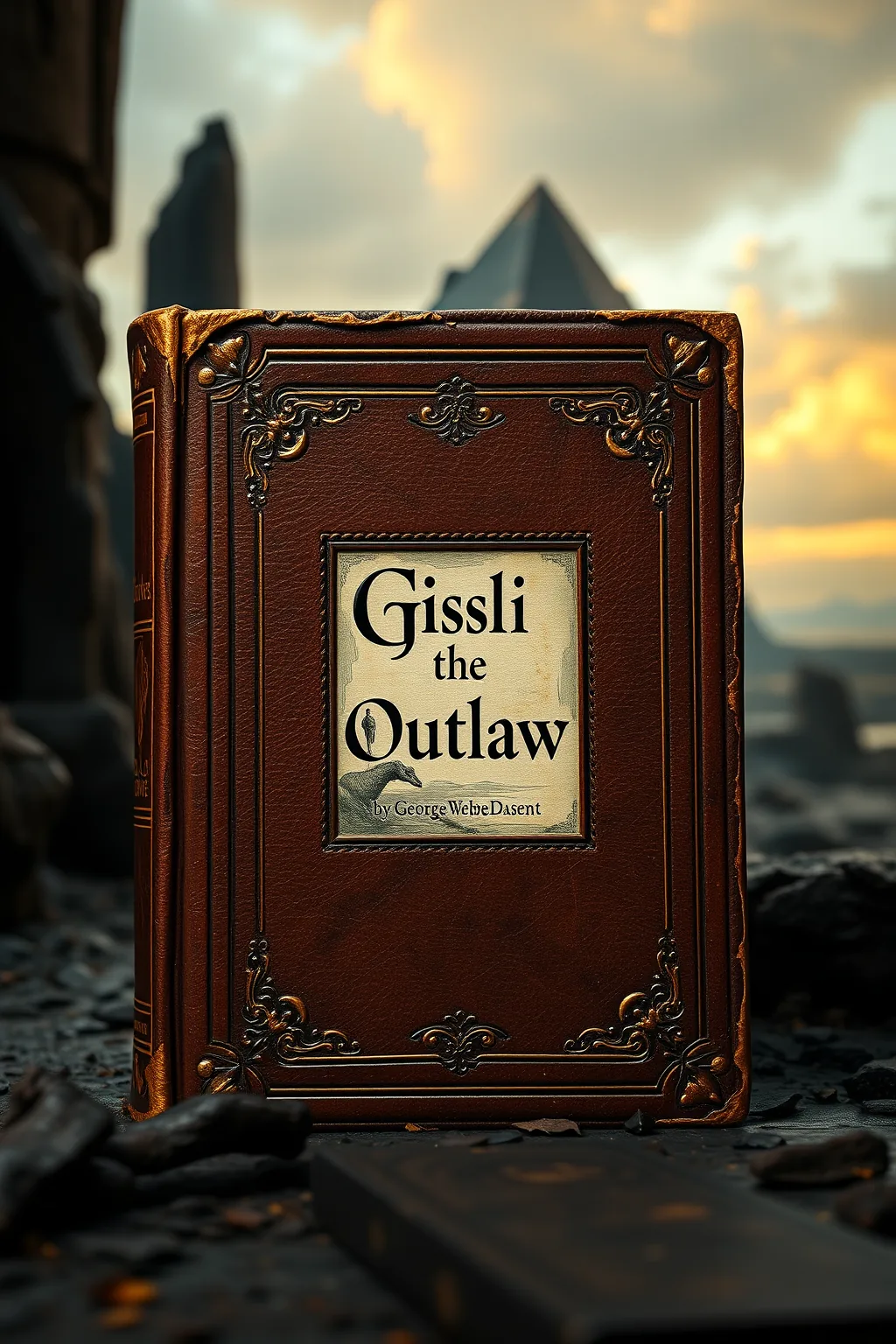
Gisli the Outlaw
 80
80

Gisli the Outlaw



Lorelei Sage, Contemplative Literature Editor — "Gisli the Outlaw" is a masterpiece of translation, breathing vibrant life into a saga steeped in the mystical underpinnings of Norse culture. Dasent masterfully captures the intricate tapestry of loyalty, betrayal, and the inescapable grip of fate, revealing a world where the spiritual and the mundane are inextricably linked. The narrative offers profound insights into the warrior ethos, the burden of prophecy, and the spiritual resilience required to navigate a life dictated by ancient codes and supernatural premonitions. Essential reading for anyone drawn to the deep currents of esoteric history and the enduring power of myth.
📝 Description
80
George Webbe Dasent translated the Icelandic saga 'Gisli the Outlaw' in 1866.
This 1866 translation of the Icelandic saga 'Gisli the Outlaw' presents the story of a warrior bound by fate and kinship. Set against Iceland's stark scenery, the narrative follows Gisli's life, emphasizing the strong bonds of family and honor that defined Viking society. The saga goes beyond the typical accounts of raids and battles to examine the spiritual beliefs of pre-Christian Icelanders. Dreams function as omens, sworn promises hold great power, and the separation between the earthly and spiritual worlds appears permeable.
The story offers a look into the struggles of its protagonist against a seemingly predetermined path. It highlights the difficult choices faced by individuals within a rigid social structure and their relationship with the supernatural forces influencing their lives. This translation makes available a rich source for understanding the worldview and values of medieval Norse culture.
The saga of Gisli the Outlaw belongs to the tradition of Old Norse literature, which often incorporates elements of cosmology, magic, and the supernatural. These narratives reflect a worldview where fate, or 'wyrd,' was a central concept, shaping the lives of individuals and the actions of gods and humans alike. The text demonstrates a belief in the power of oaths, the significance of dreams as divine communication, and a spiritual understanding that blurred the lines between the physical and metaphysical. It serves as a window into the complex belief systems that predated the full Christianization of Scandinavia.
✍️ Author
George Webbe Dasent
Sir George Webbe Dasent, D. C.
💡 Why Read This Book?
Embark on a profound exploration of Norse spirituality, fate, and the warrior's soul. 'Gisli the Outlaw' offers a potent glimpse into the mystical worldview of medieval Iceland, where honor, destiny, and the supernatural intertwine. Ideal for seekers of ancient wisdom, scholars of Germanic lore, and practitioners interested in the archetypal struggles that shape human existence.
⭐ Reader Reviews
Honest opinions from readers who have explored this book.
❓ Frequently Asked Questions
What is the primary historical setting of 'Gisli the Outlaw'?
The saga is set in medieval Iceland, a period marked by clan feuds, the establishment of law, and the lingering influence of ancient Norse beliefs and practices before the full embrace of Christianity.
What makes this saga 'esoteric'?
Its esoteric nature lies in its portrayal of dreams as prophetic visions, the potent symbolism of oaths and kinship bonds, and the pervasive sense of fate or destiny that shapes the characters' lives, reflecting pre-Christian spiritual beliefs.
Who was George Webbe Dasent?
George Webbe Dasent was a prominent scholar and translator of Norse literature. His translations are renowned for their fidelity to the original texts and their literary merit, making ancient sagas accessible to a wider audience.
What are the core themes explored in the saga?
Key themes include honor, loyalty, vengeance, fate, the complexities of family relationships, and the inherent conflict between personal desire and societal obligation within the strict codes of Norse society.
Is 'Gisli the Outlaw' a historical document or a fictional narrative?
It is considered a 'fictional' narrative within the genre of Icelandic sagas, which often blend historical events, legendary figures, and mythological elements to create compelling tales rooted in cultural memory and societal values.
🔮 Key Themes & Symbolism
The Unseen Hand of Fate
The saga deeply explores the Norse concept of 'wyrd,' a pervasive and often inescapable destiny that governs human lives. Gisli's journey is profoundly shaped by premonitions, dreams, and a sense of an inevitable future, highlighting a worldview where the threads of life are woven by cosmic forces beyond mortal control. This theme invites contemplation on free will versus predestination, and the spiritual acceptance required when confronting an unalterable path.
The Sacredness of Kinship and Oath
In the stark world of medieval Iceland, kinship ties and sworn oaths were not mere social contracts but sacred bonds imbued with spiritual power. The saga meticulously details how these allegiances, both honored and broken, dictate the course of actions and the destinies of individuals and families. The weight of a promise, the obligation of blood, and the devastating consequences of betrayal resonate with ancient spiritual laws, offering insight into a society where honor was paramount and its violation a spiritual offense.
The Warrior's Spiritual Crucible
Gisli embodies the archetype of the warrior caught in a spiritual crucible, forced to confront not only external enemies but also the internal turmoil of his conscience and the cosmic forces at play. His life is a evidence of the harsh realities of survival, the complexities of morality, and the enduring search for meaning and redemption in a world often defined by violence and loss. The saga probes the psychological and spiritual fortitude required to face one's trials with stoic resolve.
💬 Memorable Quotes
Direct passages from the work, attributed to the author.
“It is better to be a man of renown than to live in obscurity.”
— Reflects the ancient Norse value placed on honor and legacy, suggesting that a life lived with courage and distinction, even if fraught with peril, is spiritually more fulfilling than a life of quiet anonymity.
“A man's true worth is measured by his deeds, not his words.”
— Highlights the pragmatic and action-oriented ethos of the Norse people, emphasizing that character and spiritual integrity are revealed through tangible actions and their consequences, rather than mere declarations.
“Fate is a powerful god.”
— A stark acknowledgment of the pervasive belief in destiny, suggesting that the forces of fate are as influential and commanding as any deity, shaping the lives and outcomes of mortals.
“There is no shield against the arrows of revenge.”
— Illustrates the relentless and cyclical nature of vengeance in the saga, portraying it as an unstoppable force that pursues its targets relentlessly, often with spiritual as well as physical consequences.
💡 Key Ideas
Editorial paraphrase of the work's core concepts — not direct quotes.
Dreams are the most truthful of all things.
This quote underscores the profound spiritual significance attributed to dreams in Norse culture, viewing them not as mere subconscious musings but as direct conduits to foresight and divine counsel.
🌙 Esoteric Significance
Tradition
The saga is deeply rooted in the pre-Christian spiritual traditions of the Norse peoples, often referred to as Germanic paganism or Norse mythology. This tradition emphasized a complex cosmology, the power of fate (wyrd), the influence of spirits and ancestral forces, and a shamanic relationship with the natural world. The narrative's focus on dreams, omens, and the spiritual weight of oaths aligns with the esoteric practices and beliefs prevalent before the widespread adoption of Christianity in the region.
Symbolism
Key symbols include the raven (often associated with Odin, wisdom, and battle), the wolf (representing ferocity and primal instinct), blood (symbolizing kinship, sacrifice, and life force), and the sword (representing honor, justice, and the warrior's destiny). The stark Icelandic landscape itself acts as a powerful symbol of the elemental forces and the harsh realities that shape human existence and spiritual resilience, mirroring the internal struggles of the characters.
Modern Relevance
In contemporary times, 'Gisli the Outlaw' appeals to individuals seeking to understand the archetypal struggles of the human condition, the enduring power of myth, and the spiritual dimensions of loyalty and betrayal. Its exploration of fate, honor, and the warrior's journey offers timeless lessons on resilience, consequence, and the search for meaning in a complex world. For practitioners and seekers, it provides a window into ancient spiritual practices and a rich source of symbolic language for personal introspection and growth.
👥 Who Should Read This Book
This saga is a treasure for a diverse audience. For **beginners** in esoteric studies, it offers an accessible yet profound introduction to Norse mythology and the spiritual worldview of a bygone era. **Scholars** of history, literature, and comparative religion will find its rich cultural details and nuanced character portrayals useful for academic research. **Seekers** of ancient wisdom and spiritual insight will be drawn to its themes of fate, honor, and the warrior's soul. **Practitioners** interested in the roots of Western esoteric traditions will discover potent symbolism and archetypal narratives that continue to hold relevance for personal transformation and understanding.
📜 Historical Context
Translated by George Webbe Dasent, "Gisli the Outlaw" emerges from the body of the Icelandic Sagas, a literary tradition flourishing from the 12th to the 14th centuries. This era, following the Viking Age and during the Christianization of Iceland, saw a profound cultural synthesis. The sagas reflect a society grappling with the transition from paganism to Christianity, where ancient Norse beliefs in fate, spirits, and magic coexisted with the new faith. The stark, unforgiving landscapes of Iceland served as a potent backdrop, fostering a resilient culture that valued honor, kinship, and the enduring power of storytelling. These narratives, often preserving oral traditions, offer invaluable insights into the social structures, legal codes, and spiritual worldview of medieval Scandinavia, making them crucial texts for understanding early European history and its esoteric undercurrents.
📔 Journal Prompts
Reflect on a time you felt bound by an oath or obligation; what was the spiritual or emotional weight of it?
Explore the concept of 'wyrd' in your own life. To what extent do you feel your path is predetermined, and to what extent is it shaped by your choices?
Consider the balance between honor and personal desire. In what situations might these two forces be in conflict, and how might one navigate such a dilemma spiritually?
Analyze the role of dreams in the saga. How do you interpret your own dreams, and what spiritual significance, if any, do you attribute to them?
Imagine yourself in Gisli's shoes. What would be your greatest challenge in navigating a life dictated by strict codes of honor and potential betrayal?
🗂️ Glossary
Saga
An Old Norse literary genre, typically a long narrative prose work detailing the lives of historical or legendary figures, often focusing on family histories, feuds, and heroic deeds, rich with cultural and spiritual context.
Wyrd
An Old English and Norse concept referring to fate or destiny, often viewed as an inescapable force that governs the lives of individuals and the outcomes of events, deeply intertwined with divine will or cosmic order.
Althing
The national parliament of Iceland, established in 930 AD. It served as the supreme legislative and judicial body, reflecting the complex legal and social structures of medieval Iceland.
Hearth-brother
A close companion or friend, often implying a bond of loyalty and camaraderie as strong as that between blood relatives, forged through shared experiences and mutual support.
Berserker
A legendary Norse warrior who fought in a trance-like fury, believed to be inspired by Odin. They were known for their ferocity, strength, and seeming invulnerability in battle.
This book appears in 1 collection
🔮 Readers Also Liked
Browse all →









More by George Webbe Dasent
All books →
From the “Transcendental Meditation” Collection
View all →





More Free Esoteric History & Biography Books
View all →