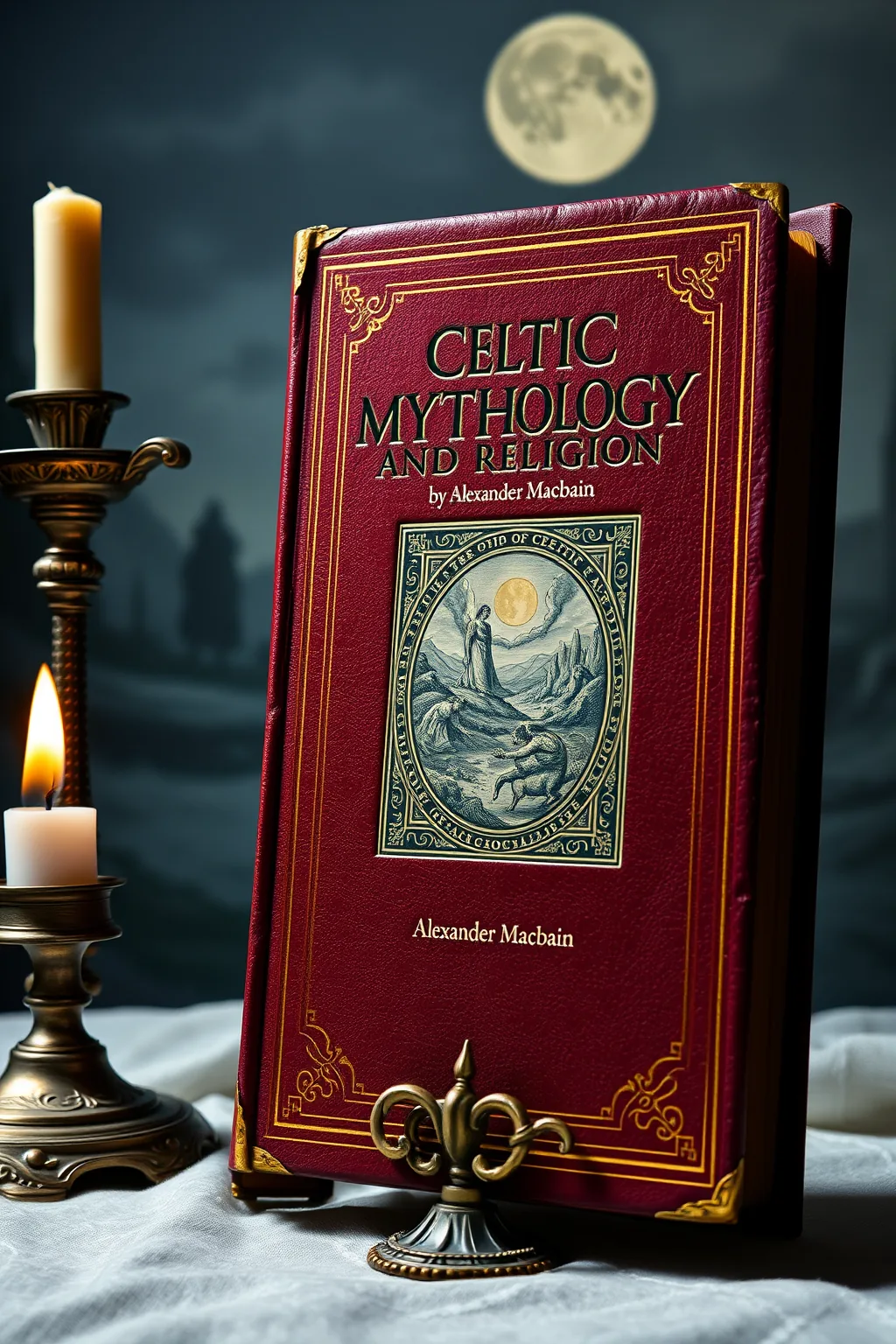
Celtic Mythology and Religion
 74
74

Celtic Mythology and Religion


Balthazar Finch (Senior Critic, Occult Philosophy) — Alexander Macbain's 'Celtic Mythology and Religion' remains an indispensable cornerstone for any serious exploration of Western esotericism. Macbain's philological prowess illuminates the linguistic roots of Celtic deities and practices, revealing layers of meaning often obscured by time. This work transcends mere historical recounting; it offers profound insights into the animistic worldview, the symbolic resonance of the natural world in Celtic belief, and the philosophical underpinnings of Druidic traditions. Its scholarly rigor is balanced by an evocative prose that draws the reader deep into the mystical heart of ancient Celtic spirituality. Highly recommended for occultists, mythographers, and anyone seeking a scholarly yet deeply insightful understanding of these foundational European mysteries.
📝 Description
74
Alexander Macbain's 1885 study dissects the spiritual heart of ancient Celtic beliefs.
Published in 1885, Alexander Macbain's 'Celtic Mythology and Religion' examines the spiritual traditions of the ancient Celts. Macbain, a philologist and historian, analyzes Celtic language to uncover the beliefs surrounding forgotten deities and primal spirits. The book goes beyond simple academic study, inviting readers to consider animistic beliefs in nature, the rituals of Druids, and how these elements shaped Celtic understanding across different eras.
Readers will find discussions on the symbolism of sacred natural sites, the concept of the Otherworld, and the ancient Celtic views on the cycles of life and death. Macbain's work aims to shed light on a rich body of esoteric thought, connecting to the enduring spirit of Celtic culture and its relationship with the unseen. It serves as a significant resource for grasping the deeper currents within European mysticism.
This work situates itself within the late 19th-century surge of interest in European folklore and pre-Christian religions. Macbain's philological approach grounds his study in linguistic evidence, aiming to reconstruct ancient belief systems from their oldest attestations. It reflects a broader scholarly trend of seeking 'authentic roots' in ancient European traditions, often with a focus on uncovering a perceived primal spirituality distinct from later organized religions. The book engages with concepts like the Otherworld and animism, common themes in esoteric studies of ancient European cultures.
✍️ Author
Alexander Macbain
Geoffrey is an English masculine given name. It is generally considered the Anglo-Norman form of the Germanic compound *gudą 'god' and *friþuz 'peace'.
💡 Why Read This Book?
Unravel the profound spiritual tapestry of the ancient Celts, exploring their animistic beliefs, Druidic wisdom, and rich mythology. Macbain's scholarly yet accessible approach provides deep insights into the symbolic language and esoteric traditions that shaped Celtic culture. Ideal for seekers of ancient wisdom, students of comparative religion, and practitioners looking to connect with primordial European spiritual currents.
⭐ Reader Reviews
Honest opinions from readers who have explored this book.
❓ Frequently Asked Questions
What is the primary focus of Alexander Macbain's 'Celtic Mythology and Religion'?
The book meticulously explores the ancient belief systems, pantheon of deities, and mythic traditions of the Celtic peoples, drawing significantly on linguistic evidence and folklore to reconstruct their spiritual landscape.
What makes Macbain's approach unique?
Macbain, a renowned philologist, utilizes linguistic analysis to uncover the deeper meanings and evolution of Celtic religious thought, offering a scholarly yet accessible perspective on these ancient practices.
Does the book cover pre-Christian Celtic beliefs?
Yes, a significant portion of the book delves into the animistic foundations and Druidic practices that characterized Celtic spirituality before the influence of Christianity.
Who would benefit most from reading this book?
This book is ideal for scholars of mythology and religion, students of Celtic history, occultists, and anyone interested in understanding the esoteric and spiritual dimensions of ancient European cultures.
Is 'Celtic Mythology and Religion' considered a primary source?
While Macbain's work is a scholarly interpretation based on historical and linguistic evidence, it is considered a foundational secondary source for understanding Celtic mythology and religion from the late 19th century.
🔮 Key Themes & Symbolism
The Animistic Heart of Celtic Spirituality
This theme explores the pervasive belief in spirits inhabiting all aspects of the natural world – trees, rivers, stones, and animals – a core tenet of pre-Christian Celtic consciousness. Macbain illuminates how this animistic perspective shaped their rituals, their understanding of the cosmos, and their deep reverence for the land, revealing a profound connection to the vibrant, spirit-infused world that informed their daily lives and spiritual practices.
Druidic Mysteries and Sacred Knowledge
Explore the enigmatic world of the Druids, the priestly class who served as custodians of Celtic spiritual and intellectual life. Macbain examines their role as philosophers, judges, and keepers of sacred lore, including their complex understanding of the afterlife, reincarnation, and the hidden forces of nature. This section uncovers the symbolic language and secret traditions that formed the bedrock of Celtic esoteric wisdom, offering glimpses into a sophisticated system of belief and practice.
The Syncretic Evolution of Celtic Beliefs
Trace the fascinating transformation of Celtic religious thought as it encountered and integrated external influences, particularly Christianity. Macbain details how ancient deities and myths were reinterpreted, adapted, or interwoven with new theological concepts, creating a unique spiritual collection that reflected periods of significant cultural and religious flux. This theme highlights the resilience and adaptability of Celtic beliefs in the face of historical change.
💬 Memorable Quotes
Direct passages from the work, attributed to the author.
“Language is the truest echo of the soul.”
— Highlighting Macbain's philological approach, this suggests that by studying language, we can access the deepest truths and essence of a culture's beliefs and spirit.
“The forest whispered secrets to the wise.”
— This evocative phrase points to the animistic belief in nature as a sentient entity, capable of imparting profound knowledge to those attuned to its presence.
“Deities wore the guise of earthly forms.”
— This interpretation suggests the pantheistic or immanent nature of Celtic divinity, where divine power could be perceived and honored within the tangible world.
“Myth is the shadow of ancient truth.”
— This philosophical statement positions myth not as mere fiction, but as a symbolic representation, a veiled unveiling of deeper, primordial realities and understandings.
💡 Key Ideas
Editorial paraphrase of the work's core concepts — not direct quotes.
The Celtic mind was steeped in the unseen.
This quote captures the pervasive spiritual awareness of ancient Celts, suggesting their reality was deeply intertwined with the mystical and the ethereal.
🌙 Esoteric Significance
Tradition
This work is foundational to the esoteric study of Western European traditions, particularly focusing on the Celtic spiritual lineage. It provides a scholarly gateway into understanding the animistic worldview, the symbolic cosmology, and the hidden knowledge preserved within ancient Celtic myth and religious practice, offering a basis for connecting with primal European spiritual currents.
Symbolism
Macbain's analysis uncovers strong symbolism, from the sacred groves and standing stones representing cosmic order and connection to the Otherworld, to the animal totems embodying specific spiritual attributes and powers. The cyclical nature of Celtic myths often symbolizes themes of death and rebirth, the interconnectedness of life, and the flow of spiritual energies within the natural world.
Modern Relevance
In an era seeking deeper connection to nature and ancient wisdom, Macbain's study offers profound relevance. It illuminates a spiritual paradigm rooted in immanence and reverence for the Earth, providing a counterpoint to modern materialism. Practitioners and scholars find renewed inspiration in the symbolic language and holistic worldview of the Celts for personal growth and understanding of enduring spiritual principles.
👥 Who Should Read This Book
This important work is essential for scholars of mythology, comparative religion, and Celtic history seeking a rigorous yet engaging exploration of ancient beliefs. Occult practitioners and spiritual seekers will find a rich source of inspiration in the animistic worldview and symbolic depth of Celtic traditions. Beginners will appreciate Macbain's clear prose and comprehensive overview, while advanced students can examine the linguistic nuances and historical context, making it a valuable resource for all levels of engagement with Celtic esotericism.
📜 Historical Context
Published in 1885, Alexander Macbain's 'Celtic Mythology and Religion' emerged during a period of intense scholarly interest in folklore, mythology, and comparative religion. The late Victorian era saw a burgeoning fascination with ancient cultures and their spiritual practices, often fueled by archaeological discoveries and advancements in linguistic analysis. Macbain's work was part of a broader movement to systematically study and preserve the oral traditions and belief systems of various peoples. His philological background, grounded in the scientific study of language, allowed him to approach these subjects with a rigor that sought to move beyond romanticized notions and toward a more evidence-based understanding. The book contributed significantly to the academic discourse surrounding Celtic studies, offering a comprehensive synthesis of existing knowledge and highlighting the interconnectedness of language, myth, and religion.
📔 Journal Prompts
Reflect on the concept of animism as described by Macbain. How might this worldview influence one's perception of the natural world today?
Consider the role of language in preserving spiritual traditions. What ancient Celtic words or concepts resonate most deeply with you, and why?
Explore the symbolism of a specific Celtic deity or myth mentioned in the text. What personal meaning or lesson can be drawn from it?
Imagine yourself as a student of the Druids. What aspect of their teachings or practices would you be most drawn to, and what would you hope to learn?
How does the syncretism of Celtic beliefs with later traditions reflect the adaptability of spiritual ideas throughout history?
🗂️ Glossary
Animism
The belief that natural objects, phenomena, and the universe itself possess a soul or spirit, a fundamental aspect of ancient Celtic religious thought.
Druid
An ancient Celtic priest, magician, and teacher, often serving as a spiritual and intellectual leader, deeply connected to nature and esoteric knowledge.
Philology
The study of language in oral and written historical sources, crucial for Macbain's method of understanding Celtic myths and beliefs through their linguistic roots.
Otherworld
A mystical realm or dimension in Celtic mythology, often associated with the supernatural, spirits, and the afterlife, accessed through sacred sites.
Syncretism
The merging or blending of different religious beliefs, myths, or practices, as seen in the evolution of Celtic spirituality under external influences.
This book appears in 1 collection
🔮 Readers Also Liked
Browse all →









From the “Transcendental Meditation” Collection
View all →




More Free Esoteric History & Biography Books
View all →