The secret language of tarot
 75
75

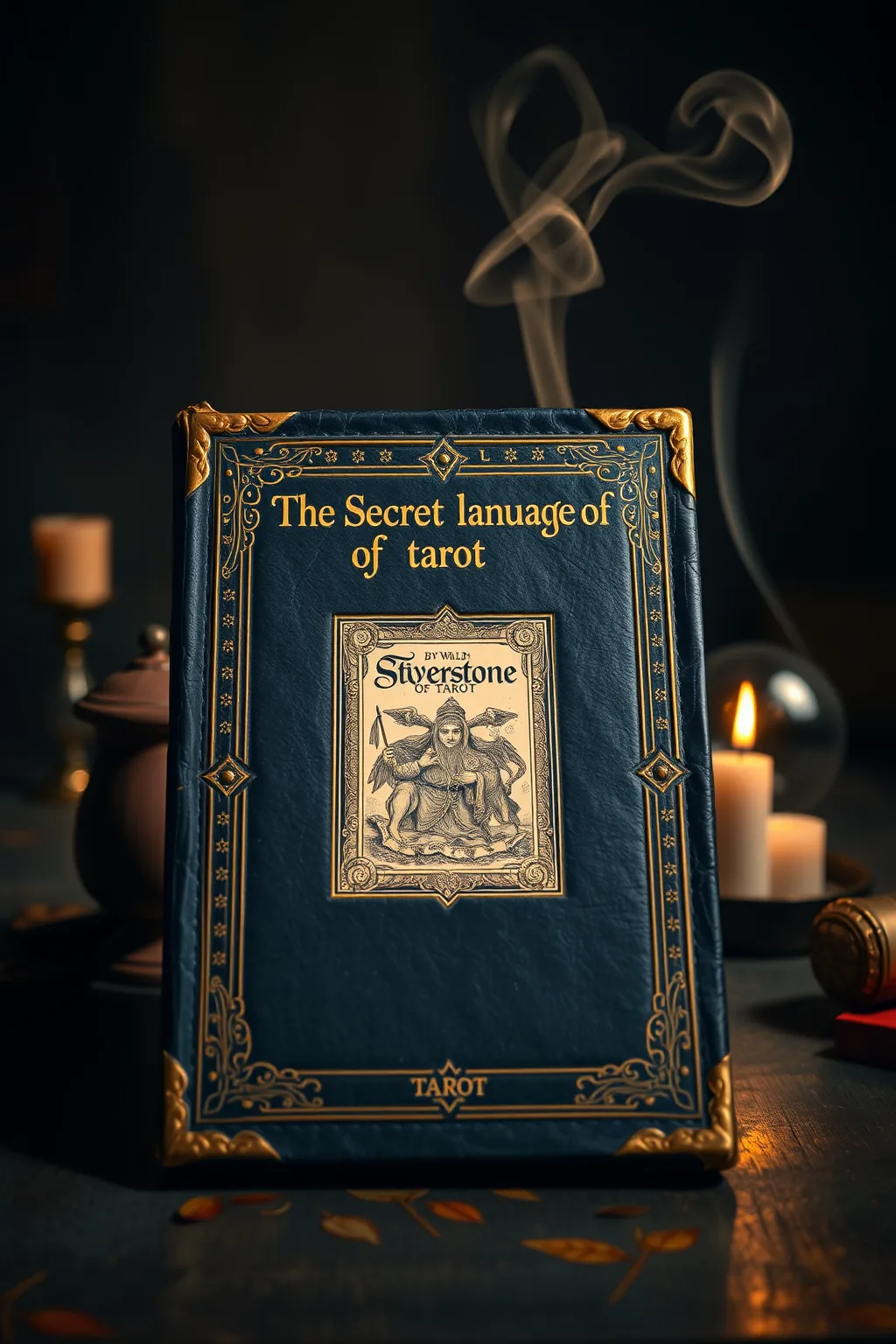
The secret language of tarot
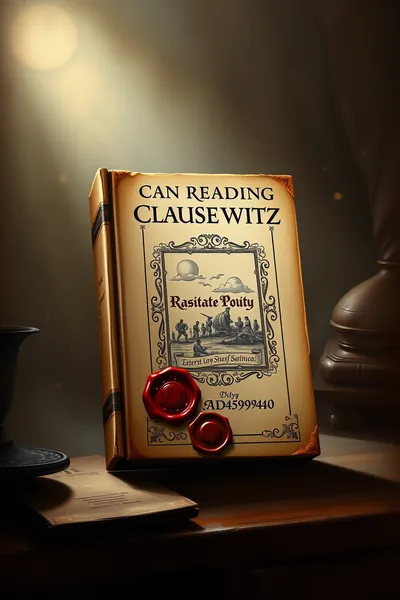
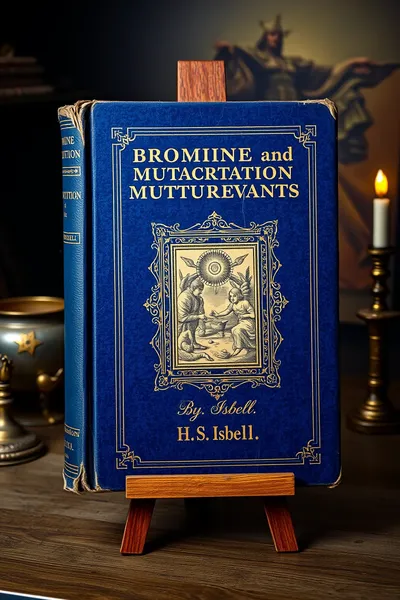
Wald and Ruth Ann Amberstone’s 2008 volume, 'The Secret Language of Tarot,' attempts to elevate the discourse surrounding the cards beyond mere fortune-telling. Its strength lies in its ambitious effort to anchor Tarot interpretation within a robust framework of Western esotericism and depth psychology. The authors are commendable in their attempt to map the Tarot's symbolic architecture, particularly how they discuss the Fool’s journey across the Major Arcana. However, the work occasionally falters under the weight of its own erudition, sometimes presenting complex ideas with an academic density that may alienate those seeking more immediate practical application. A passage discussing the Tarot’s relation to the Kabbalistic Tree of Life, for instance, is particularly dense but illuminating for those willing to engage. Ultimately, it is a valuable, if sometimes challenging, resource for the dedicated Tarot scholar.
📝 Description
75
### What It Is 'The Secret Language of Tarot' by Wald Amberstone and Ruth Ann Amberstone offers a comprehensive exploration of the Tarot, not merely as a divinatory tool, but as a complex symbolic system rooted in esoteric traditions. Published in 2008, this work moves beyond simple card meanings to examine the underlying philosophical and psychological structures that give the Tarot its enduring power. It presents the Tarot as a "language" capable of communicating profound truths about the human condition and the cosmos.
### Who It's For This book is geared towards serious students of Tarot and esoteric symbolism who seek a deeper, more intellectual understanding of the cards. It will appeal to those who are dissatisfied with superficial interpretations and desire to connect the Tarot to broader philosophical, psychological, and spiritual frameworks. Readers interested in Jungian archetypes, Hermetic philosophy, and the history of Western esotericism will find ample material to engage with.
### Historical Context The Amberstones' work emerged in the early 21st century, a period marked by a resurgence of interest in traditional esoteric systems, often filtered through modern psychological and philosophical lenses. While many contemporary Tarot books focused on practical application or New Age spirituality, 'The Secret Language of Tarot' positioned itself as a more scholarly and historically informed text. It engaged with the legacy of figures like A.E. Waite and Pamela Colman Smith, whose Rider-Waite-Smith deck became a standard, while also integrating more recent academic scholarship on occultism.
### Key Concepts The central thesis revolves around the Tarot as a sophisticated symbolic language, akin to hieroglyphs or alchemical texts, encoding universal patterns of consciousness and cosmic order. The book dissects the Major Arcana as archetypal stages of the soul's journey and the Minor Arcana as expressions of elemental and psychological forces. It emphasizes the interconnectedness of the cards and their relationship to established esoteric traditions, viewing them as a living system rather than a static set of images.
💡 Why Read This Book?
• Gain a structured understanding of the Tarot as a symbolic language, moving beyond rote memorization of card meanings, by examining the Amberstones' detailed analysis of the Major Arcana’s archetypal progression. • Connect Tarot symbolism to established esoteric traditions by exploring the book’s explicit links to Hermetic principles and Kabbalistic concepts, as presented in its 2008 publication. • Develop a more nuanced interpretive framework by studying the book’s approach to the Minor Arcana, understanding them not just as suits but as expressions of specific elemental and psychological forces.
⭐ Reader Reviews
Honest opinions from readers who have explored this book.
❓ Frequently Asked Questions
What is the core philosophy behind 'The Secret Language of Tarot'?
The book posits that Tarot is a symbolic language, a codified system of archetypes and cosmic principles that mirrors the human psyche and universal patterns, first published in 2008.
How does this book differ from other Tarot guides?
Unlike many introductory guides, 'The Secret Language of Tarot' focuses on the philosophical underpinnings and esoteric roots of the cards, treating them as a complex system rather than just a divinatory tool.
What esoteric traditions are referenced in the book?
The work draws heavily on Western esoteric traditions, including Hermeticism, Kabbalah, and Jungian psychology, to interpret the Tarot’s symbolism.
Who are the primary authors of 'The Secret Language of Tarot'?
The book is authored by Wald Amberstone and Ruth Ann Amberstone, who first published their comprehensive study in 2008.
Is this book suitable for complete beginners to Tarot?
While comprehensive, its depth and academic approach might be more suited to intermediate or advanced students who already possess a basic understanding of Tarot.
What is the significance of the 2008 publication date?
The 2008 publication date places the book within a contemporary wave of esoteric scholarship that sought to integrate traditional symbolism with modern psychological and philosophical thought.
🔮 Key Themes & Symbolism
Tarot as Esoteric Language
The Amberstones present the Tarot as a sophisticated symbolic language, analogous to ancient hieroglyphs or alchemical texts. This perspective moves beyond simple predictive meanings, viewing the cards as encoders of universal archetypes and cosmic principles. The work meticulously dissects how this 'language' functions, exploring its grammar and syntax through the arrangement and interplay of the Major and Minor Arcana, drawing parallels to established esoteric systems for a deeper interpretive framework.
Archetypal Psychology and the Tarot
A significant theme is the alignment of Tarot imagery with archetypal psychology, particularly Carl Jung's concepts. The book interprets the Major Arcana as stages in a universal human journey, reflecting the soul's evolution and the unfolding of consciousness. This psychological lens is applied to understand the inherent patterns within the cards, offering readers a way to engage with the Tarot on a personal, transformative level by recognizing these archetypes within themselves.
The Tarot's Hermetic and Kabbalistic Roots
The work emphasizes the historical and philosophical lineage of the Tarot, tracing its connections to Western esoteric traditions like Hermeticism and Kabbalah. It explores how concepts such as the Tree of Life and the Four Worlds are embedded within the Tarot structure. This contextualization provides a richer understanding of the cards' symbolism and their place within a continuum of mystical thought, dating back centuries before its 2008 publication.
The Minor Arcana as Elemental Forces
Beyond the dramatic narratives of the Major Arcana, 'The Secret Language of Tarot' dedicates significant attention to the Minor Arcana. The Amberstones detail how the suits (Wands, Cups, Swords, Pentacles) correspond to the four elements and how the numbered cards represent the unfolding of those elements through various stages. This framework allows for a nuanced interpretation of everyday situations and psychological states as reflected in the Minor Arcana.
💬 Memorable Quotes
“The Tarot is a mirror of the soul, reflecting the archetypal patterns that shape human experience.”
— This paraphrased concept highlights the book's central thesis: the Tarot's power lies not just in external divination but in its capacity to reveal the internal landscape of the individual through universal symbols.
“Each card is a word, and the spread is a sentence in the grand discourse of the cosmos.”
— This interpretation emphasizes the book's view of the Tarot as a coherent language system, where individual symbols (cards) combine to form meaningful narratives or insights within a larger symbolic structure.
“The Fool’s journey is not a linear path but an unfolding spiral of consciousness.”
— This paraphrased concept captures the book's nuanced approach to the Major Arcana, suggesting a cyclical and developmental model of spiritual and psychological growth rather than a simple progression.
“Understanding the elemental correspondences of the Minor Arcana unlocks their deeper significance.”
— This interpretation underscores the importance the Amberstones place on the foundational elements (Fire, Water, Air, Earth) as a key to deciphering the complexities and practical applications of the numbered Tarot cards.
“The Tarot acts as a bridge between the conscious and the unconscious mind.”
— This paraphrased concept points to the book's integration of psychological theory, positioning the Tarot as a tool for accessing deeper levels of awareness and understanding hidden aspects of the psyche.
🌙 Esoteric Significance
Tradition
This work firmly situates itself within the Western Esoteric Tradition, particularly drawing from Hermeticism and Kabbalah, with significant influence from Jungian depth psychology. It interprets the Tarot not as an isolated divinatory system but as a microcosm of a larger cosmic and psychological order described in these traditions. The Amberstones align the Tarot's structure, particularly the Major Arcana, with concepts like the Great Work and the stages of consciousness described in Hermetic texts, viewing it as a living symbolic language that transmits ancient wisdom.
Symbolism
Central to the book's exploration are the archetypes of the Major Arcana, such as The Fool and The Magician, which are presented as universal stages of human development and spiritual awakening. The Four Suits of the Minor Arcana—Wands (Fire), Cups (Water), Swords (Air), and Pentacles (Earth)—are analyzed in detail, representing fundamental forces and domains of experience. The number symbolism within the Minors, from Ace to Ten, is also explored as a progression of these elemental energies, echoing patterns found in Kabbalistic numerology.
Modern Relevance
Contemporary practitioners of esoteric studies, Jungian analysts, and serious Tarot enthusiasts frequently reference 'The Secret Language of Tarot' for its depth and scholarly approach. Its emphasis on the Tarot as a symbolic language and its integration with archetypal psychology continue to influence modern Tarot courses and literature. Thinkers exploring the intersection of consciousness studies, mythology, and symbolic systems find its framework valuable for understanding these complex interrelations in the 21st century.
👥 Who Should Read This Book
• Students of Western Esotericism seeking to understand the Tarot's place within Hermetic and Kabbalistic traditions, appreciating its historical context as presented in the 2008 publication. • Practitioners of Tarot who wish to move beyond basic interpretations and engage with the cards on a deeper psychological and philosophical level, exploring archetypal symbolism. • Comparative religion scholars and mythologists interested in how symbolic systems like the Tarot encode universal human experiences and spiritual narratives.
📜 Historical Context
Published in 2008, 'The Secret Language of Tarot' emerged during a period of renewed academic and popular interest in Western esotericism, following the influential work of scholars like Frances Yates and the resurgence of occult studies. The Amberstones’ book sought to bridge the gap between popular Tarot practices and serious esoteric scholarship. It appeared at a time when many Tarot books focused on self-help or simplified divinatory techniques, positioning itself as a more rigorous exploration of the cards’ symbolic and philosophical underpinnings. While the Rider-Waite-Smith deck, created by A.E. Waite and Pamela Colman Smith in 1909, had become the de facto standard, this work engaged with its legacy by offering a deeper theoretical framework. The Amberstones positioned their work within the lineage of occult philosophy, contrasting it with purely psychological or New Age interpretations that had become prevalent in the preceding decades.
📔 Journal Prompts
The Fool's journey across the Major Arcana: What stage of this archetypal path do you most identify with currently?
Reflect on the elemental correspondences of the Minor Arcana suits and how they manifest in your daily life.
Consider the concept of the Tarot as a 'language' – how can you apply this understanding to your card readings?
Explore the concept of The Magician as a symbol of conscious manifestation, as detailed in the book.
How does the structure of the Minor Arcana, as described in relation to the Four Worlds, inform your interpretation of numbered cards?
🗂️ Glossary
Archetype
Universal, archaic patterns and images that derive from the collective unconscious and are the psychic counterpart of the instincts. The Tarot's Major Arcana are often interpreted through this Jungian lens.
Hermeticism
A philosophical and religious tradition based on the purported teachings of Hermes Trismegistus. It emphasizes divine wisdom, the correspondence between the macrocosm and microcosm, and spiritual attainment.
Kabbalah
A system of Jewish mysticism that deals with the nature of God and the creation of the universe, often represented visually by the Tree of Life, which has been syncretized with Tarot symbolism.
Major Arcana
The 22 trump cards of the Tarot deck, typically depicting symbolic figures and allegorical scenes representing significant life events, spiritual lessons, and archetypal forces.
Minor Arcana
The 56 cards of the Tarot deck, divided into four suits (Wands, Cups, Swords, Pentacles), which correspond to the four elements and represent more mundane aspects of life and psychological states.
Symbolic Language
A system of communication that uses symbols, images, and metaphors to convey deeper meanings, often relating to spiritual, psychological, or philosophical concepts, as applied to the Tarot.
The Great Work
A central concept in alchemy and Hermeticism, referring to the process of spiritual transformation, purification, and the attainment of enlightenment or divine union.