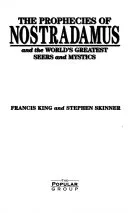
The Prophecies of Nostradamus and the World's Greatest Seers and Mystics
 81
81

The Prophecies of Nostradamus and the World's Greatest Seers and Mystics
Francis King’s exploration of prophetic figures, particularly Nostradamus, avoids the sensationalism that often mars such subjects. He grounds his analysis in the historical circumstances surrounding these seers, offering a scholarly yet accessible perspective. A notable strength is King’s ability to connect the pronouncements of figures like Nostradamus to specific historical periods, rather than treating them as abstract predictions. For instance, his discussion of how quatrains might relate to the political climate of 16th-century France provides a concrete anchor. However, the book occasionally feels like a survey rather than a deep dive, with some sections offering a broad overview where more detailed analysis would have been welcome. The treatment of less-known mystics, while informative, sometimes lacks the depth found in the chapters dedicated to Nostradamus. Overall, King offers a commendable and measured account of prophecy and its interpreters.
📝 Description
81
### What It Is Francis King's "The Prophecies of Nostradamus and the World's Greatest Seers and Mystics" offers a survey of individuals whose visions have purportedly shaped or predicted future events. First published in 2001, the work examines figures from antiquity to the modern era, analyzing their pronouncements and the impact they have had on historical interpretation and belief systems. It moves beyond simple biographical sketches to explore the nature of prophecy itself, questioning its origins and efficacy.
### Who It's For This book is suited for individuals intrigued by the intersection of history, psychology, and the paranormal. It appeals to those who study prophetic traditions, comparative religion, or the history of esoteric thought. Readers interested in figures like Nostradamus, but also those who seek to understand the broader phenomenon of foresight and its cultural significance, will find material here. It is for the skeptic and the believer alike, offering a balanced perspective on extraordinary claims.
### Historical Context The early 21st century, when this work was first released, saw a continued popular interest in prophecy, often fueled by anxieties about the new millennium. King's book emerged within a landscape where New Age spirituality was prominent, and where historical figures like Nostradamus were frequently referenced in popular culture, sometimes with scant regard for original context. The work situates itself against a backdrop of historical scholarship on prophecy and divination, as well as ongoing debates within parapsychology concerning the possibility of precognition.
### Key Concepts Central to the text is the examination of "quaternions" as employed by Nostradamus, the four-line verses that form the bulk of his prognostications. The book also explores concepts of "cryptomnesia," the idea that seemingly prophetic knowledge might stem from forgotten memories or influences. Another significant theme is the role of psychological projection and collective unconscious in shaping how prophecies are interpreted and perceived, particularly in periods of social upheaval or cultural transition.
💡 Why Read This Book?
• Gain insight into Nostradamus's quatrain structure, understanding the unique poetic and cryptic form he employed to record his visions, as detailed in the analysis of his work. • Explore the concept of cryptomnesia, learning how forgotten memories might manifest as seemingly prophetic insights, a psychological lens applied to prophetic claims. • Understand the historical reception of prophetic works, examining how pronouncements from figures like Nostradamus were interpreted and utilized during specific periods, such as the French Wars of Religion.
⭐ Reader Reviews
Honest opinions from readers who have explored this book.
❓ Frequently Asked Questions
What is the primary focus of 'The Prophecies of Nostradamus and the World's Greatest Seers and Mystics'?
The book primarily examines the prophecies of Michel de Nostradamus, analyzing his quatrains and their historical interpretations. It also surveys other significant seers and mystics throughout history to explore the phenomenon of prophecy.
When was Francis King's book on Nostradamus first published?
Francis King's 'The Prophecies of Nostradamus and the World's Greatest Seers and Mystics' was first published in 2001.
Does the book claim to prove the validity of prophecies?
The work takes a balanced approach, exploring the historical context, potential psychological explanations like cryptomnesia, and the cultural impact of prophecies, rather than definitively proving or disproving their supernatural origin.
What historical periods are discussed in relation to Nostradamus's prophecies?
The book contextualizes Nostradamus's prophecies within 16th-century France and discusses their later interpretations, particularly in relation to events like the French Wars of Religion and other significant historical junctures.
Besides Nostradamus, which other types of seers does the book cover?
The book broadly covers various 'greatest seers and mystics,' suggesting an exploration of individuals from different eras and traditions who claimed or were credited with prophetic abilities.
What is a 'quaternion' as discussed in the book?
A 'quaternion' refers to the four-line verses, or quatrains, that constitute the primary form of Nostradamus's prophecies, which King analyzes in the text.
🔮 Key Themes & Symbolism
Nostradamus's Quatrains
The text meticulously examines the structure and content of Nostradamus's quatrains, the four-line verses that form the core of his prognostications. King analyzes how these cryptic verses, written in a mix of French, Latin, Greek, and Occitan, were intended to predict future events. The work discusses the ambiguity inherent in these predictions and how they have been retroactively applied to historical occurrences, highlighting the challenges of direct interpretation and the role of historical context in shaping understanding.
The Phenomenon of Prophecy
Beyond Nostradamus, the book delves into the broader concept of prophecy across different cultures and historical periods. It questions the nature of foresight, exploring potential psychological underpinnings such as cryptomnesia—the unconscious recall of forgotten information—as an alternative to supernatural explanation. King investigates why societies turn to prophets and how these figures influence collective belief systems and historical narratives, especially during times of uncertainty.
Historical Interpretation and Reception
A significant theme is how prophecies, particularly those of Nostradamus, have been interpreted and reinterpreted over centuries. The book illustrates how interpretations often align with the prevailing concerns and events of the interpreter's era, rather than solely reflecting the seer's original intent. King explores the reception of these prophecies, noting their influence on political discourse and public imagination, particularly during periods of significant social and political upheaval.
Mysticism and Esotericism
The work situates prophetic claims within the wider context of mysticism and esoteric traditions. It touches upon the spiritual and philosophical frameworks that might give rise to such visions, differentiating between divinatory practices and deeper spiritual insights. By examining various seers, King offers a comparative view of how different traditions approach the idea of accessing knowledge beyond ordinary perception.
💬 Memorable Quotes
“The quatrains of Nostradamus are not a simple calendar of future events.”
— This statement suggests that Nostradamus's prophecies should not be read as a literal, day-by-day prediction. Instead, it implies a need for deeper analysis, acknowledging the metaphorical, symbolic, or conditional nature of his pronouncements.
“Prophecy often speaks loudest in times of crisis.”
— This highlights the societal tendency to seek answers and guidance from prophetic figures during periods of significant uncertainty, fear, or change, suggesting that the perceived relevance of prophecy is amplified by collective anxiety.
“Cryptomnesia offers a psychological explanation for seemingly prescient knowledge.”
— This interpretation points to the idea that what appears to be direct foresight might actually be the result of the unconscious mind accessing and recalling information that was previously encountered but forgotten by the conscious mind.
“The historical context is crucial for understanding any prophecy.”
— This emphasizes that Nostradamus's verses, or any prophetic utterance, cannot be fully grasped without considering the specific time, place, and social conditions in which they were created and subsequently interpreted.
“Seers often reflect the anxieties and hopes of their age.”
— This suggests that the visions attributed to mystics are not entirely detached from reality but are influenced by the prevailing sentiments, fears, and aspirations of the society from which they emerge.
🌙 Esoteric Significance
Tradition
King's work engages with the broad Western esoteric tradition, specifically touching upon divination, prophecy, and the history of occult thought. While not strictly adhering to a single lineage like Hermeticism or Kabbalah, it analyzes figures whose pronouncements are often considered within these frameworks. The book bridges the gap between historical scholarship and esoteric interests, exploring how individuals perceived as seers fit into a lineage of those who claim access to hidden knowledge or future events.
Symbolism
The primary symbolic motif explored is the 'quaternion' or quatrain, Nostradamus's chosen medium. These four-line verses are symbolic in their brevity and density, requiring interpretation. Beyond this, the book implicitly discusses symbols of fate, destiny, and the cyclical nature of history, often represented in astrological imagery that Nostradamus himself employed, suggesting a cosmic order or pattern accessible through visionary means.
Modern Relevance
Contemporary interest in predictive techniques, from tarot and astrology to more abstract forms of data analysis, echoes the enduring human desire to understand and anticipate the future. King's work remains relevant for those studying how such desires manifest across cultures and history, informing modern discussions on foresight, pattern recognition, and the psychology of belief in fields ranging from cultural studies to parapsychology.
👥 Who Should Read This Book
• Students of historical prophecy and divination seeking a scholarly yet accessible overview of key figures and concepts. • Individuals interested in the psychological underpinnings of belief, particularly the phenomenon of cryptomnesia and its role in perceived foresight. • Readers curious about the historical reception and interpretation of prophetic texts, especially those by Nostradamus, and their impact on different eras.
📜 Historical Context
Published in 2001, Francis King's work arrived during a period of renewed popular fascination with prophecies, particularly amplified by the turn of the millennium. This era saw a significant presence of New Age thought and a popular culture frequently referencing figures like Nostradamus, often divorced from their original historical settings. King's book emerged against a backdrop of both academic scholarship on divination and parapsychology's ongoing investigations into precognition. It positioned itself against less critical, more sensationalist treatments of prophecy prevalent in popular media. While not directly engaging with specific critiques of his work, King's approach implicitly responded to the trend of anachronistic interpretations of Nostradamus, which had been a subject of discussion since at least the 18th century, and offered a more grounded analysis compared to the speculative theories surrounding the French Wars of Religion.
📔 Journal Prompts
Nostradamus's quatrains and their varied interpretations.
The concept of cryptomnesia in relation to prophetic claims.
The role of historical context in understanding visionary pronouncements.
Comparing the methods and impact of different historical seers.
The societal need for prophecy during periods of crisis.
🗂️ Glossary
Quatrain
A stanza or poem consisting of four lines, specifically referring to the four-line verses used by Nostradamus in his prophecies.
Cryptomnesia
A psychological phenomenon where forgotten memories or influences resurface, potentially appearing as original thoughts or seemingly prophetic insights.
Divination
The practice of seeking knowledge of the future or the unknown by supernatural means, such as astrology, tarot, or prophecy.
Seer
A person reputed to have supernatural power of seeing or predicting future events.
Esotericism
Belief systems, theories, or practices that are secret, obscure, or understood by only a select group of initiates.
Precognition
The claimed ability to see or know future events before they happen, a concept often explored in relation to prophecy.
Occult
Practices, beliefs, or phenomena regarded as supernatural, mystic, or magical, often beyond the scope of normal scientific understanding.