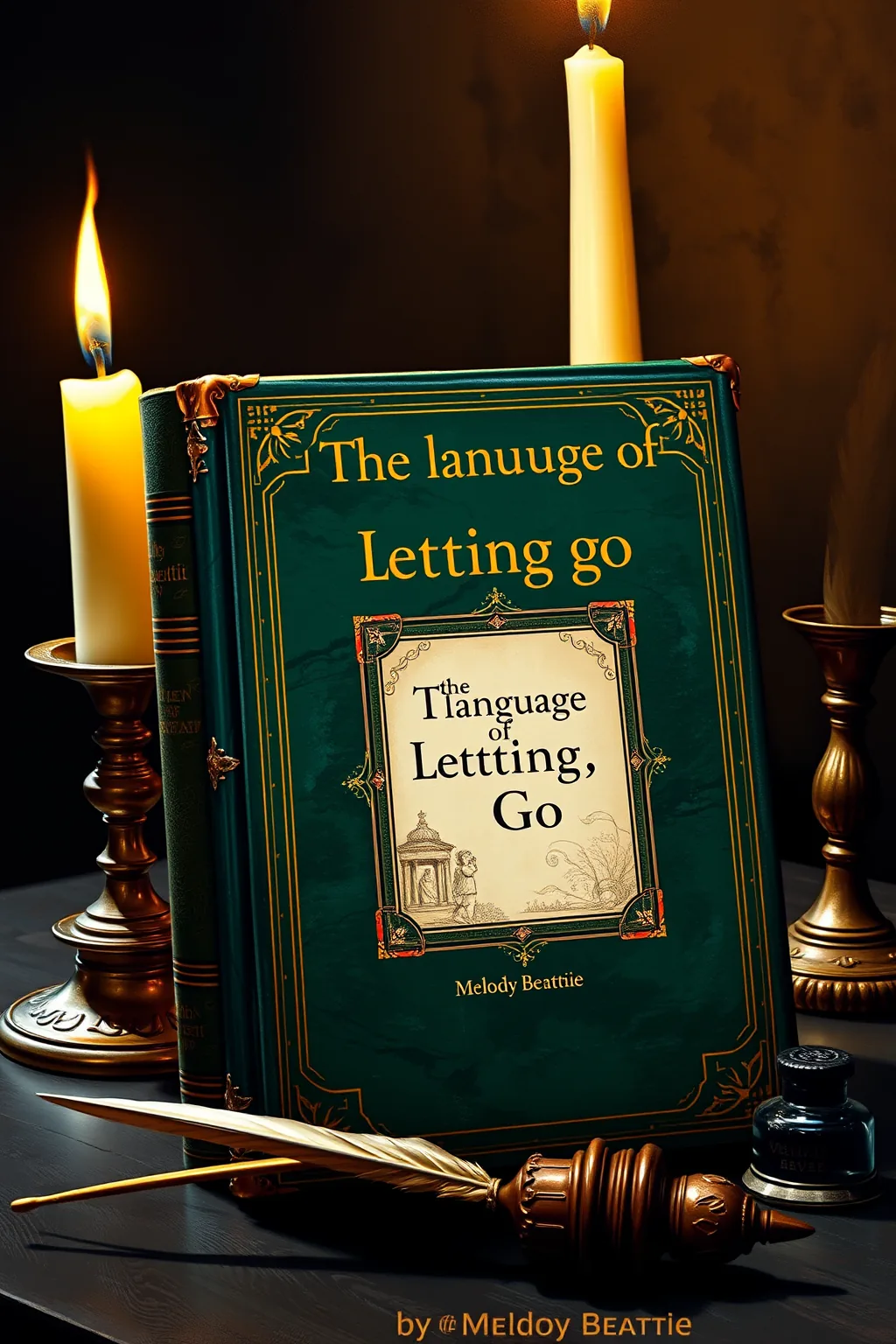
The language of letting go

 73
73

The language of letting go



Melody Beattie's "The Language of Letting Go" operates as a daily devotional, each entry a concise distillation of principles for disentangling oneself from controlling or dependent relationships. Its enduring appeal lies in its directness; it avoids psychological jargon for accessible, actionable advice. The strength is its consistent focus on personal agency – the repeated assertion that one's power lies in managing one's own reactions and choices, not in manipulating external circumstances. A limitation, however, is the occasional reliance on generalized spiritual platitudes that, while comforting, can sometimes obscure the deeper psychological work required. The passage on page 72, discussing the "courage to be imperfect," encapsulates the book's ethos: embracing flaws as part of the human experience rather than as failures to be hidden or corrected. It is a serviceable guide for those entering recovery or seeking to reframe their relational dynamics.
📝 Description
73
### What It Is This book offers a practical framework for understanding and managing emotional dependence and addiction. It presents a series of daily reflections and affirmations designed to guide individuals through the process of detaching from unhealthy patterns and embracing personal freedom. The work focuses on acknowledging one's own power and responsibility in relationships and life choices.
### Who It's For Individuals struggling with codependency, compulsive behaviors, or any form of emotional entanglement that hinders personal growth. It is particularly useful for those in recovery, experiencing relationship difficulties, or seeking to cultivate greater self-reliance and inner peace. The text assumes a willingness to confront difficult emotions and commit to a path of self-discovery.
### Historical Context Published in 1990, "The Language of Letting Go" emerged during a period of increased public awareness regarding codependency and addiction, heavily influenced by the self-help movements of the late 20th century. Works like Melody Beattie's gained traction alongside the burgeoning twelve-step program culture, offering accessible language for complex psychological and spiritual issues. This era saw a rise in literature that sought to empower individuals to take control of their lives, moving away from purely clinical approaches towards more personal, experiential guidance.
### Key Concepts The core concepts revolve around recognizing the signs of unhealthy attachment, understanding the role of fear and control in maintaining these patterns, and developing strategies for emotional detachment. It emphasizes the importance of self-care, setting boundaries, and finding serenity in the present moment. The book advocates for a shift in perspective, from focusing on changing others to focusing on one's own internal state and responses.
💡 Why Read This Book?
• Learn to identify and release unhealthy attachments, a core principle explored in the daily reflections first published in 1990, enabling you to foster healthier interpersonal dynamics. • Develop the capacity for emotional detachment by understanding concepts like "letting go of control," a key theme that empowers you to focus on your own well-being rather than external circumstances. • Cultivate self-reliance and inner peace through practical guidance on self-care and boundary setting, as detailed throughout the book's sections on personal responsibility.
why_read
⭐ Reader Reviews
Honest opinions from readers who have explored this book.
❓ Frequently Asked Questions
What is the primary message of Melody Beattie's 'The Language of Letting Go'?
The primary message is that individuals can achieve emotional freedom and peace by learning to detach from unhealthy dependencies and control issues, focusing instead on their own reactions and well-being.
When was 'The Language of Letting Go' first published?
'The Language of Letting Go' was first published in 1990, placing it within the self-help literature boom of the late 20th century.
Is this book suitable for people new to recovery programs?
Yes, the book's accessible language and daily format make it highly suitable for individuals beginning recovery, offering consistent support and principles for managing addictive or codependent behaviors.
Does the book offer specific exercises or just reflections?
While primarily based on daily reflections and affirmations, the underlying concepts encourage specific internal shifts and practical applications in daily life, guiding readers toward actionable change.
How does 'The Language of Letting Go' differ from other self-help books on relationships?
It emphasizes a spiritual approach to detachment and self-reliance, distinct from purely psychological or behavioral models, focusing on internal surrender and acceptance as pathways to freedom.
Can 'The Language of Letting Go' help with non-romantic relationships?
Absolutely. The principles of detachment, setting boundaries, and focusing on personal responsibility are applicable to all types of relationships, including family, friendships, and professional interactions.
🔮 Key Themes & Symbolism
Emotional Detachment
This work posits emotional detachment not as indifference, but as a conscious release from the need to control people, situations, and outcomes. It explores how clinging to outcomes or trying to manipulate others stems from fear and insecurity. By practicing detachment, as detailed in the daily entries, individuals can reclaim their energy and focus on what they can genuinely influence: their own thoughts, feelings, and actions. This theme is crucial for breaking cycles of codependency and finding serenity amidst life's uncertainties.
Personal Responsibility
A cornerstone of the book is the radical acceptance of personal responsibility for one's own happiness and reactions. It moves away from blaming external factors or individuals for one's distress. The text guides readers to recognize that while they cannot control others, they possess the inherent power to choose their responses and behaviors. This empowerment is key to overcoming feelings of helplessness and fostering a proactive approach to life, a concept central since its 1990 publication.
Spiritual Surrender
The book integrates spiritual principles, encouraging a surrender to a higher power or the natural flow of life. This is not about passivity but about trusting that things will work out as they should, even when they don't align with one's immediate desires. It involves releasing the illusion of control and embracing faith, finding peace in the present moment rather than anxiously anticipating future events. This spiritual dimension offers solace and resilience.
Self-Care and Boundaries
Essential to letting go is the practice of robust self-care and the establishment of clear boundaries. The book emphasizes that tending to one's own needs is not selfish but necessary for maintaining emotional equilibrium and healthy relationships. Setting boundaries is presented as an act of self-respect, protecting one's energy and preventing resentment. This theme provides practical tools for individuals to assert their needs respectfully.
💬 Memorable Quotes
“We can learn to let go of the things we can’t control.”
— This highlights the core principle of the book: recognizing the futility of attempting to manage external factors and redirecting energy towards internal management and acceptance.
“We are responsible for our own happiness.”
— An assertion of personal agency, this idea encourages readers to cease looking to others or external circumstances for fulfillment and to cultivate it from within.
“Letting go means accepting that what is done is done.”
— This interpretation focuses on the acceptance of past events, urging readers to release regret or the desire to change what is unchangeable, thereby freeing themselves from the past.
“We can choose our response to situations.”
— This emphasizes the power of free will, suggesting that even when faced with difficult circumstances, the individual retains control over their internal reaction and attitude.
“Serenity is found in the present moment.”
— This concept suggests that true peace is not contingent on future outcomes or past resolutions, but is accessible by grounding oneself in the 'now'.
🌙 Esoteric Significance
Tradition
While not explicitly tied to a single esoteric lineage, "The Language of Letting Go" draws heavily on principles found within New Thought and Recovery spirituality, which themselves have roots in earlier metaphysical traditions like Christian Science and Unity. It emphasizes the power of the mind, the importance of faith, and the inherent divinity within the individual, aligning with the Hermetic principle of 'As Above, So Below' by focusing on internal transformation to affect external reality.
Symbolism
The book frequently employs the metaphor of 'letting go' itself, symbolizing the release of burdens, attachments, and controlling impulses. This can be seen as a form of spiritual alchemy, transforming leaden anxieties into golden peace. Another implicit symbol is the 'present moment,' which functions as a sacred space – a gateway to serenity and a detachment from the past's grip or the future's anxieties, akin to Buddhist mindfulness practices or contemplative prayer.
Modern Relevance
Today, Beattie's work continues to be highly relevant, influencing contemporary self-help authors and therapists who focus on mindfulness, emotional regulation, and setting healthy boundaries. Its principles are echoed in modern therapeutic modalities like Acceptance and Commitment Therapy (ACT) and are foundational in many online communities dedicated to personal growth, addiction recovery, and relationship health. The book's enduring popularity attests to its resonance with ongoing human struggles for autonomy and peace.
👥 Who Should Read This Book
• Individuals grappling with codependency or enabling behaviors in relationships, seeking to understand their patterns and cultivate healthier interactions. • Those in recovery from addiction or compulsive behaviors who need daily reinforcement and spiritual guidance for maintaining sobriety and emotional stability. • Anyone feeling overwhelmed by life's circumstances and seeking practical strategies to reduce anxiety, increase personal power, and find inner peace.
📜 Historical Context
Melody Beattie's "The Language of Letting Go," published in 1990, arrived during a significant cultural moment. The late 1980s and early 1990s witnessed a surge in popular interest in codependency, addiction recovery, and personal empowerment, heavily influenced by the widespread adoption of twelve-step programs. This era saw authors like John Bradshaw and Pia Mellody gain prominence, exploring similar themes of dysfunctional family dynamics and healing. Beattie's work distinguished itself by offering a daily devotional format, making complex psychological and spiritual concepts more digestible for a broad audience. Unlike more academic or clinical texts, her approach was highly personal and accessible, resonating with individuals seeking practical guidance outside traditional therapeutic settings. The book became a staple in recovery circles and beyond, contributing to a cultural discourse that increasingly acknowledged the importance of emotional well-being and self-directed change.
📔 Journal Prompts
The concept of "letting go of control" and its application in your daily life.
Reflecting on the power of personal responsibility in managing your reactions.
Identifying one boundary you need to set, inspired by the self-care principles.
Exploring the meaning of "spiritual surrender" in the context of your current challenges.
Consider the impact of "clinging" versus "detachment" in a specific relationship.
🗂️ Glossary
Codependency
A behavioral condition in a relationship where one person enables another's addiction or unhealthy behavior, often at the expense of their own needs and well-being.
Emotional Detachment
The practice of releasing emotional ties to outcomes, people, or situations that are beyond one's control, fostering inner peace and reducing suffering.
Personal Responsibility
The acknowledgment and acceptance that one is accountable for one's own actions, choices, feelings, and happiness, rather than blaming external factors.
Higher Power
A concept, often used in recovery contexts, referring to a spiritual or divine force greater than oneself, relied upon for strength and guidance.
Serenity
A state of mental and emotional calmness, peace, and freedom from disturbance, often achieved through acceptance and detachment.
Boundaries
Limits and rules individuals set for themselves within relationships to protect their emotional, mental, and physical well-being.
Control
The attempt to dictate or influence the behavior of others or the course of events, often stemming from fear and a desire for security.