The Divination Handbook
 79
79

The Divination Handbook
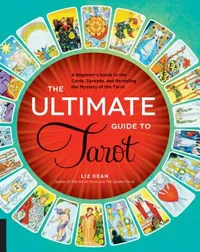
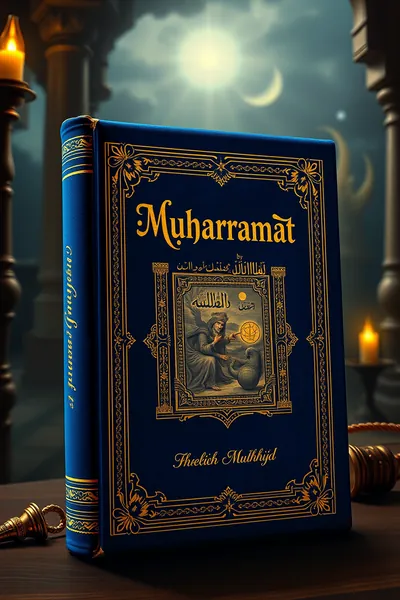
Liz Dean’s *The Divination Handbook* arrives as a competent, if somewhat conventional, introduction to a broad spectrum of fortune-telling practices. Its strength lies in its clarity and breadth, offering straightforward explanations of systems like tarot, runes, and pendulum dowsing. For instance, the section on interpreting tarot spreads is particularly well-organized, presenting common layouts with concise meanings for each card position. However, the book's primary limitation is its lack of deep dives into the more esoteric or philosophical underpinnings of these arts. It presents the 'how' with admirable efficiency but offers less of the 'why' that might satisfy a more seasoned practitioner or scholar of mysticism. The 2019 publication date positions it within a contemporary wave of interest, yet it doesn't significantly push the boundaries of existing literature. Nevertheless, for the uninitiated seeking a solid, no-nonsense primer, it functions effectively. Dean’s handbook is a functional tool for those beginning their divinatory exploration.
📝 Description
79
### What It Is The Divination Handbook by Liz Dean offers a practical guide to various methods of divination. Published in 2019, it serves as an accessible entry point for individuals curious about understanding the symbolic language and techniques used to gain insight into the past, present, and future. The book covers a range of popular divination systems, presenting them in a clear and structured manner.
### Who It's For This handbook is designed for beginners and those new to the world of divination. It caters to individuals seeking to develop their intuitive abilities and explore personal growth through symbolic interpretation. Readers interested in tools for self-reflection, decision-making, or understanding life's patterns will find its content relevant. It is also suitable for those who appreciate the historical and cultural aspects of esoteric practices.
### Historical Context While published in 2019, The Divination Handbook engages with traditions that stretch back centuries. Divination practices have existed across numerous cultures, from ancient Mesopotamia and Egypt to the oracle traditions of Greece and the cartomancy that gained popularity in Europe from the 18th century onwards. Dean's work, in a contemporary publishing landscape that saw a resurgence of interest in occult and esoteric studies, provides a modern synthesis of these historical threads, making them digestible for a 21st-century audience.
### Key Concepts The book introduces foundational concepts in divination, including the importance of intuition, the use of archetypal imagery, and the principles of symbolic interpretation. It explores how various tools, such as tarot cards, runes, and pendulum dowsing, act as conduits for accessing subconscious knowledge and universal patterns. Understanding the energy of a question and how to frame it effectively for divination is also a central tenet discussed within its pages.
💡 Why Read This Book?
• Learn to interpret symbolic language across multiple divination systems, such as the archetypal imagery of the Tarot, enabling a deeper understanding of personal narratives. • Gain practical skills in framing questions for divination, a technique rooted in historical practices from ancient oracles to modern cartomancy, to elicit clearer guidance. • Explore the foundational principles of intuitive development as presented in the book, using tools like runes to foster self-reflection and personal insight.
⭐ Reader Reviews
Honest opinions from readers who have explored this book.
❓ Frequently Asked Questions
What are the main divination methods covered in The Divination Handbook?
The handbook primarily covers tarot card reading, rune casting, and pendulum dowsing. It offers introductions to the history, tools, and basic interpretation techniques for each of these popular divination systems.
Is this book suitable for absolute beginners in divination?
Yes, The Divination Handbook is specifically designed for beginners. Liz Dean breaks down complex concepts into easy-to-understand steps, making it an accessible starting point for anyone new to esoteric practices.
When was The Divination Handbook first published?
The Divination Handbook was first published in 2019, positioning it as a contemporary guide to established divination traditions.
Does the book explain how to read tarot cards?
Yes, a significant portion of the book is dedicated to tarot. It explains the meaning of individual cards and provides guidance on interpreting spreads for different types of readings.
What other tools besides tarot does the book discuss?
Beyond tarot, the book introduces rune casting, explaining the origins and meanings of individual runes, and pendulum dowsing, detailing how to use a pendulum for yes/no answers and more complex queries.
Can I learn to use a pendulum for guidance from this book?
Certainly. The handbook includes a section on pendulum dowsing, teaching you how to calibrate your pendulum, ask questions, and interpret the movements to receive insights.
🔮 Key Themes & Symbolism
Tarot Archetypes and Spreads
The book explores the rich symbolic language of tarot, focusing on the archetypal meanings of the Major and Minor Arcana. It guides readers through understanding how these cards, when laid out in specific spreads like the Celtic Cross or a simple three-card draw, can illuminate personal challenges and opportunities. The emphasis is on using the tarot as a mirror to the psyche, drawing from its historical use since the late 18th century when cartomancy began to flourish.
Rune Lore and Interpretation
Dean delves into the ancient Germanic alphabet of runes, presenting each symbol with its associated meaning and historical context. The work outlines methods for casting runes, encouraging readers to connect with their intuitive responses to the patterns formed. This section highlights how runes, traditionally used for prophecy and magic, can offer direct, often stark, insights into situations, reflecting their use in pre-Christian Germanic societies.
Pendulum Dowsing for Answers
The handbook provides a clear introduction to pendulum dowsing, a technique often employed for seeking simple yes/no answers or more nuanced guidance. It explains the process of attuning to the pendulum, formulating clear questions, and interpreting the resulting movements. This method is presented as a direct conduit for subconscious or external intuitive information, a practice with roots in water and mineral dowsing.
Intuition and Symbolic Literacy
A core theme is the development of personal intuition through the practice of divination. The book posits that by engaging with symbolic systems like tarot and runes, individuals can enhance their ability to 'read' the subtle energies and messages around them. It frames divination not as passive fortune-telling, but as an active dialogue with one's inner wisdom and the symbolic patterns of the universe.
💬 Memorable Quotes
“The cards are a mirror to your inner world.”
— This statement underscores the book's perspective that tarot reading is primarily a tool for self-exploration and understanding one's own psyche, rather than solely predicting external events.
“Frame your question clearly before you begin.”
— This emphasizes the practical necessity of precise questioning in divination. A well-formed question, as discussed in the text, is crucial for receiving relevant and actionable insights from tools like runes or pendulums.
“Each rune holds ancient wisdom.”
— This highlights the historical depth and symbolic power attributed to runes. The interpretation suggests that engaging with runes connects the practitioner to a lineage of ancient knowledge and intuitive understanding.
“A pendulum can help you find clarity.”
— This paraphrase points to the book's presentation of pendulum dowsing as a method for cutting through confusion and obtaining direct, often binary, answers to pressing inquiries.
“Develop your intuition through practice.”
— This encapsulates the book's pedagogical approach, suggesting that the skills of divination are not innate but can be cultivated and strengthened through consistent engagement with the presented techniques.
🌙 Esoteric Significance
Tradition
The book draws broadly from Western esoteric traditions, particularly cartomancy and runic lore, which have roots in Hermeticism and Germanic paganism, respectively. While not strictly adhering to a single lineage, it presents divination as a practice of accessing subtle energies and symbolic knowledge, a concept central to many esoteric schools. It departs from purely academic or historical accounts by framing these practices as accessible tools for personal empowerment and intuitive development in a modern context.
Symbolism
Key symbols explored include the archetypal figures of the Tarot (e.g., The Fool, The Magician) representing stages of the human journey and universal energies, and the Elder Futhark runes (e.g., Fehu for wealth, Uruz for strength) which carry deep mythological and practical meanings. The pendulum, though a simpler tool, symbolizes a direct connection to intuitive guidance, acting as a physical pointer for subconscious or energetic communication.
Modern Relevance
Contemporary practitioners of modern witchcraft, New Age spirituality, and psychological astrology often utilize or reference the foundational divinatory techniques presented in works like Dean's. Its accessible format makes it relevant for online communities and self-study groups exploring intuitive arts and personal development, bridging historical practices with current trends in mindfulness and self-awareness.
👥 Who Should Read This Book
• Aspiring diviners seeking a clear, step-by-step introduction to core practices like tarot and runes, without getting lost in complex occult theories. • Individuals interested in developing their intuition and self-awareness through symbolic interpretation, looking for practical tools for personal reflection. • Readers exploring comparative esoteric traditions who want a foundational understanding of commonly used divination methods from a modern perspective.
📜 Historical Context
Published in 2019, *The Divination Handbook* emerges in an era marked by renewed popular interest in esoteric practices, often termed the 'spiritual but not religious' movement. This contemporary resurgence contrasts with earlier periods, such as the late 19th and early 20th centuries, when figures like Aleister Crowley and the Hermetic Order of the Golden Dawn significantly formalized and esotericized tarot and other divinatory arts within Western occultism. Dean’s work, while acknowledging historical roots, aims for a more accessible, less dogmatic presentation than some of its predecessors. It engages with a public seeking practical tools for self-help and personal insight, a trend distinct from the more ritualistic or philosophical approaches prevalent in earlier occult revivals. Unlike, for instance, the rigorous academic study of divination traditions by scholars like Walter Burkert focusing on Greek oracles, this handbook targets direct personal application.
📔 Journal Prompts
Reflect on the archetypal journey of The Fool as presented in the tarot section.
Consider how the meaning of the rune Fehu might apply to your current financial situation.
Explore a situation where a simple 'yes' or 'no' from a pendulum would bring clarity.
Journal about the intuitive messages you received while practicing rune casting.
Analyze the potential symbolism of a recent dream using the principles of tarot interpretation.
🗂️ Glossary
Archetype
Universal, primordial images or patterns that are part of the collective unconscious, often represented by figures in tarot cards or mythological beings.
Cartomancy
The practice of fortune-telling or divination using a deck of cards, most commonly a tarot deck.
Divination
The practice of seeking knowledge of the future or the unknown by supernatural means, often through symbolic interpretation.
Intuition
The ability to understand something immediately, without the need for conscious reasoning; a direct perception or knowing.
Major Arcana
The 22 trump cards in a tarot deck, representing significant life lessons, spiritual lessons, and karmic influences.
Minor Arcana
The 56 cards in a tarot deck that correspond to the four suits (Wands, Cups, Swords, Pentacles), representing everyday events and situations.
Rune
A letter of the ancient Germanic alphabet, also used for divination and magic, each symbol carrying a specific meaning and energy.