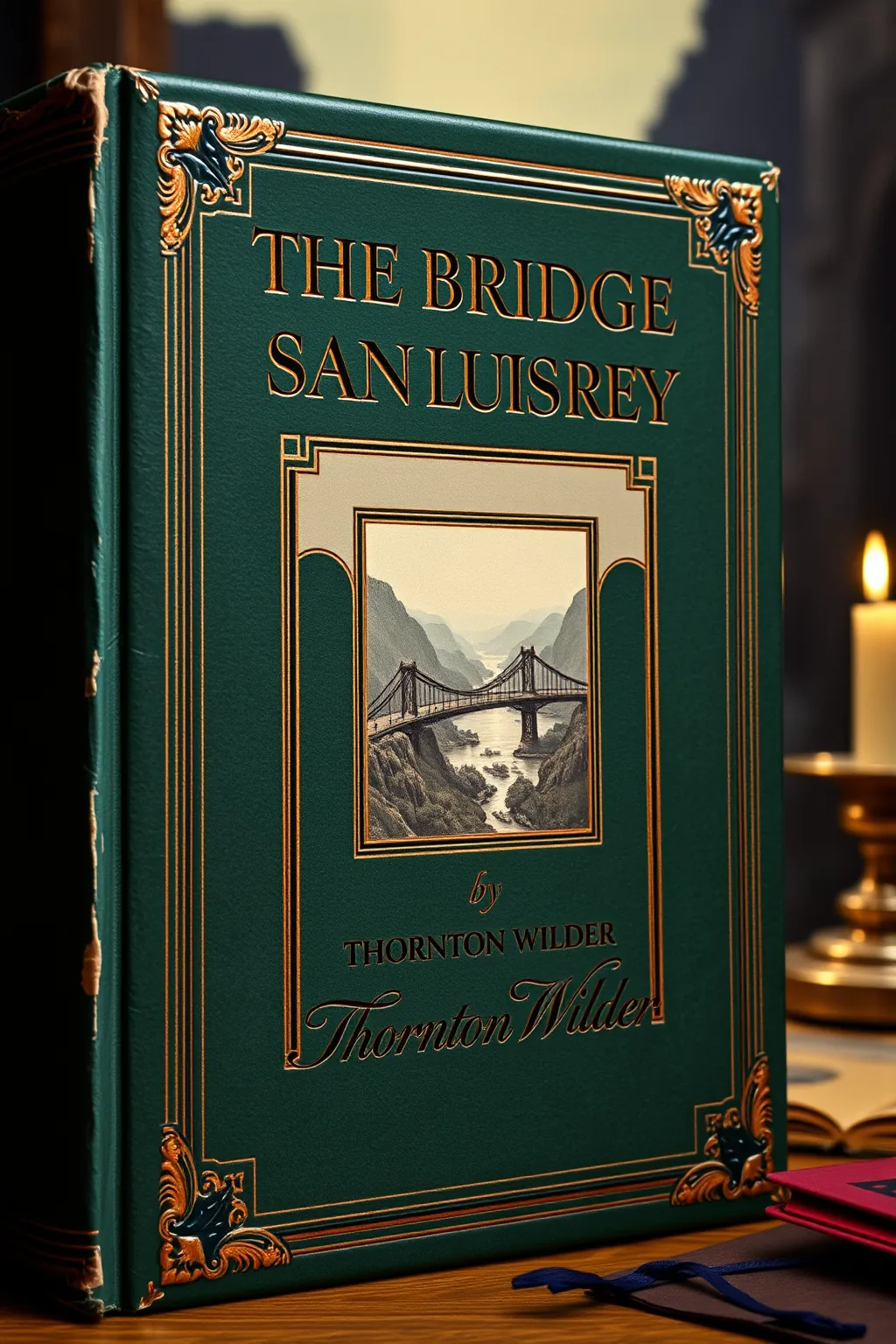
The Bridge of San Luis Rey
 72
72

The Bridge of San Luis Rey
The enduring power of Thornton Wilder's *The Bridge of San Luis Rey* lies not in its plot, but in its intricate examination of lives intersecting before a singular, fatal event. Wilder masterfully crafts distinct portraits of Doña María, the Vicuña, Uncle Pio, Esteban, and Pepita, imbuing each with a poignant humanity. The novel's central conceit – a friar's attempt to find divine meaning in the collapse of the bridge in 1714 – provides a framework for exploring how individual existences, however fleeting, leave indelible marks. A notable strength is the novel's structural ingenuity, unfolding backward from tragedy to illuminate the preceding moments of hope and despair. However, the friar's increasingly insistent search for divine justice can sometimes feel didactic, occasionally overshadowing the nuanced character studies. The passage describing Doña María's desperate letters to her estranged daughter, revealing a mother's raw longing, remains a potent example of the book's emotional core. Ultimately, *The Bridge of San Luis Rey* offers a compelling, if somber, reflection on the threads that bind us all.
📝 Description
72
### What It Is Thornton Wilder's 1927 novel, *The Bridge of San Luis Rey*, meticulously reconstructs the lives of five individuals who perished in a Peruvian bridge collapse. The narrative unfolds through a Franciscan friar's investigation into the identities and circumstances of the victims, seeking divine justification for their untimely deaths. It is a profound exploration of fate, coincidence, and the interconnectedness of human lives, presented as a series of biographical sketches leading up to the catastrophic event.
### Who It's For This work appeals to readers interested in philosophical fiction, character-driven narratives, and explorations of mortality. It is particularly suited for those who appreciate historical settings and literary approaches that examine the human condition through a lens of interconnectedness and divine providence. The novel's structure and thematic depth will engage those who enjoy dissecting the intricate relationships between individuals and the larger forces that shape their destinies.
### Historical Context Published in 1927, *The Bridge of San Luis Rey* emerged during a period of significant literary experimentation and philosophical inquiry. The interwar years saw a rise in existentialist thought and a questioning of traditional religious and societal structures. Wilder's novel, with its focus on fate and the seemingly random nature of death, engaged with these currents. It achieved considerable commercial success, earning Wilder the Pulitzer Prize for Fiction in 1928, though it was later challenged by some critics for its perceived sentimentality, a common debate among literary circles of the time.
### Key Concepts The novel grapples with the concept of divine providence, questioning whether such a catastrophic event can be understood as a deliberate act of God or merely a random occurrence. It delves into the idea of interconnectedness, illustrating how the lives of seemingly disparate individuals are linked in ways unseen until after their demise. The narrative also examines the nature of love, memory, and the lasting impact individuals have on one another, even after death, presenting a mosaic of human experience against a backdrop of impending tragedy.
✍️ Author
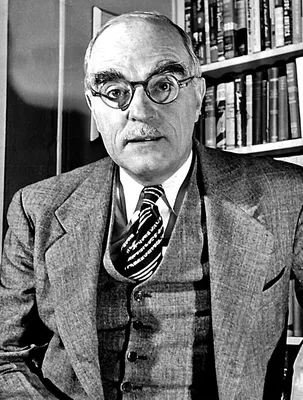
Thornton Wilder
Thornton Niven Wilder (April 17, 1897 – December 7, 1975) was an American playwright and novelist. He won three Pulitzer Prizes, for the novel The Bridge of San Luis Rey and for the plays Our Town and The Skin of Our Teeth, and a U.
💡 Why Read This Book?
• Gain insight into the philosophical debate surrounding divine providence and fate, as exemplified by the Franciscan friar's investigation into the 1714 bridge collapse. • Understand the concept of interconnectedness through the interwoven lives of Doña María, Uncle Pio, and the other victims, demonstrating how individual actions ripple outwards. • Experience a profound meditation on love and memory, particularly through the detailed character sketches of Esteban and Pepita, and their lasting impact.
⭐ Reader Reviews
Honest opinions from readers who have explored this book.
❓ Frequently Asked Questions
When was Thornton Wilder's The Bridge of San Luis Rey first published?
Thornton Wilder's acclaimed novel, *The Bridge of San Luis Rey*, was first published in 1927. It went on to win the Pulitzer Prize for Fiction the following year.
What is the central event in The Bridge of San Luis Rey?
The central event is the collapse of an ancient Incan rope bridge in Peru on Friday, July 20, 1714, which results in the death of five travelers. The novel investigates their lives.
Who is the main investigator in the book?
The primary investigator is a Franciscan friar named Brother Juniper, who witnesses the bridge collapse and dedicates himself to understanding the lives of the victims to find divine justification for the event.
What literary prize did The Bridge of San Luis Rey win?
The novel was awarded the Pulitzer Prize for Fiction in 1928, recognizing its significant literary merit and impact.
What are the main themes explored in the book?
The book explores themes of fate, divine providence, coincidence, love, memory, and the interconnectedness of human lives. It questions whether tragedies are random or part of a divine plan.
Where does the story of The Bridge of San Luis Rey take place?
The story is primarily set in colonial Peru, focusing on the lives of its characters leading up to the tragic collapse of the famous San Luis Rey bridge.
🔮 Key Themes & Symbolism
Divine Providence and Fate
The novel rigorously questions whether the tragic collapse of the San Luis Rey bridge on July 20, 1714, was a random accident or a manifestation of divine will. Brother Juniper's obsessive quest to find a theological justification for the deaths highlights the human need to impose order and meaning onto seemingly chaotic events. This theme probes the nature of fate, exploring whether lives are predetermined or if individuals possess agency in the face of destiny, a concept often debated in philosophical and theological circles concerning free will versus divine omnipotence.
Interconnectedness of Lives
Wilder masterfully demonstrates how the lives of the five victims – Doña María, Uncle Pio, Esteban, Pepita, and the marquesa – are intricately linked, often in subtle ways that only become apparent in retrospect. The narrative structure itself, revealing connections as it moves towards the bridge collapse, underscores this theme. It suggests that no life exists in isolation and that each individual's journey, however unique, contributes to a larger human continuum, echoing concepts found in network theory or the idea of a collective unconscious.
Love, Memory, and Legacy
The book delves into the enduring power of love and memory, even in the face of death. Characters like Doña María and the marquesa are driven by their deep affections and the desire for connection, their letters and memories serving as testaments to these bonds. The narrative explores how the impact of individuals persists through the recollections and actions of those left behind, forming a legacy that transcends physical presence. This resonates with psychological concepts of attachment and the formation of personal narratives that shape identity.
The Search for Meaning
At its core, *The Bridge of San Luis Rey* is about the human compulsion to find meaning, particularly in suffering and loss. Brother Juniper's mission to prove God's justice reflects this universal drive. The novel examines how different characters construct their own meanings through faith, art, service, or personal relationships. It suggests that while grand, universal answers may remain elusive, the individual search for understanding and the creation of personal significance are fundamental aspects of the human experience.
💬 Memorable Quotes
““There is a land of the living and a land of the dead and the bridge is love, the only survival, the only meaning.””
— This powerful interpretation posits love as the essential connection between existence and oblivion. It suggests that through genuine affection and connection, individuals transcend the finality of death, their essence preserved in the hearts and memories of others.
“Interpretation: The marquesa's letters reveal a desperate, almost obsessive, maternal love.”
— The marquesa's correspondence showcases the extreme lengths to which a parent might go, driven by profound longing and a need for validation from an estranged child. It illustrates a love that is both beautiful and tragically flawed.
“Interpretation: Brother Juniper sought divine order in the face of random tragedy.”
— This highlights Brother Juniper's theological imperative to rationalize the bridge collapse. His search for evidence of God's hand in the disaster reflects a common human desire to find purpose and justice, even when faced with inexplicable suffering.
“Interpretation: Esteban and La Chaumette's shared grief binds them.”
— The profound sorrow experienced by both twin brothers, and later by Esteban after La Chaumette's death, creates a deep, almost spiritual, bond. Their shared experience of loss becomes a defining element of their connection.
“Interpretation: Uncle Pio dedicated his life to the art of theatre and his proteges.”
— Uncle Pio's life was a testament to his passion for performance and his mentorship. His dedication to refining and promoting theatrical arts, and his care for figures like the marquesa and later Camila Perichole, defined his existence.
🌙 Esoteric Significance
Tradition
While not explicitly aligned with a single esoteric tradition, *The Bridge of San Luis Rey* engages with Gnostic and Hermetic inquiries into fate, divine will, and the nature of reality. The Franciscan friar's quest to understand the 'why' behind the tragedy echoes the Gnostic search for hidden knowledge and the Hermetic principle of correspondence – the idea that events on one plane reflect truths on another. The novel's structure, revealing hidden connections and motivations, can be seen as a literary exploration of esoteric principles concerning interconnectedness and the underlying order of the cosmos.
Symbolism
The central symbol is the bridge itself, representing the precarious passage between life and death, the known and the unknown, or even between divine will and human understanding. The number five, representing the number of victims, holds significance in numerology, often associated with change, transformation, and the human condition. The letters exchanged between Doña María and her daughter symbolize the enduring, often fraught, nature of human connection and the attempt to bridge emotional distance, mirroring the physical bridge's function.
Modern Relevance
Contemporary thinkers exploring narrative psychology, existential philosophy, and even systems theory find resonance in Wilder's work. The novel's examination of interconnectedness aligns with modern understandings of complex systems and network theory. Furthermore, its persistent questioning of meaning in the face of suffering continues to inform discussions in fields ranging from trauma studies to philosophical theology, making it relevant to those seeking to understand the human response to adversity.
👥 Who Should Read This Book
• Students of comparative religion and philosophy: To explore literary interpretations of divine providence, fate, and the human search for meaning in the face of tragedy. • Literary enthusiasts interested in narrative structure: To appreciate Wilder's skillful use of biographical sketches and retrospective revelation to build thematic depth and emotional impact. • Readers seeking character-driven narratives: To engage with deeply drawn portraits of individuals whose lives, though brief, offer profound insights into love, loss, and human connection.
📜 Historical Context
Published in 1927, *The Bridge of San Luis Rey* arrived during a period of significant literary and cultural transition in America. The Roaring Twenties were characterized by a questioning of traditional values, a burgeoning modernist aesthetic, and a fascination with existential themes. Thornton Wilder, already a respected author, tapped into this intellectual climate with a novel that pondered fate, divine intervention, and the interconnectedness of human lives. The book achieved remarkable success, winning the Pulitzer Prize for Fiction in 1928. Its thematic exploration of mortality and meaning stood in contrast to, yet also engaged with, the more experimental and often fragmented narratives of contemporaries like Ernest Hemingway and William Faulkner. While not overtly challenging established religious doctrine, its focus on theological interpretation and the nature of divine justice sparked considerable discussion among critics and readers alike, positioning it as a significant literary work of its era.
📔 Journal Prompts
The concept of the bridge as a symbol of connection between disparate realms.
Brother Juniper's fervent search for divine justification for the 1714 bridge collapse.
The enduring power of love, as exemplified by Doña María's letters.
Esteban's journey of grief and his connection to Pepita.
The interconnected threads linking the lives of the five victims before their demise.
🗂️ Glossary
Brother Juniper
A Franciscan friar and the novel's primary investigator. He witnesses the bridge collapse and dedicates himself to studying the lives of the victims to prove divine justice.
Doña María
A wealthy but lonely woman who attempts to reconnect with her estranged daughter through letters, forming a central narrative thread of maternal love and regret.
The Marquesa de Montemayor
Doña María's daughter, who is estranged from her mother. Her life and the complex relationship with her mother are explored through Doña María's letters.
Uncle Pio
A shrewd impresario and former tutor, deeply involved in the lives of actors and artists, including the actress Camila Perichole.
Esteban and La Chaumette
Twin brothers who suffer immense grief after the death of their mother. Their shared sorrow and Esteban's subsequent isolation are key elements of the narrative.
Pepita
A young orphan girl who serves Doña María and acts as a confidante, her fate becoming intertwined with the marquesa's.
Providence
Divine guidance or care; the protective care of God or nature. The novel questions whether the bridge collapse was an act of providence or mere chance.