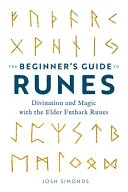
The Beginner's Guide to Runes
 79
79

The Beginner's Guide to Runes
Josh Simonds's The Beginner's Guide to Runes attempts to distill a complex system into digestible lessons for the uninitiated. The 2020 publication date places it firmly within a contemporary wave of renewed interest in ancient divinatory arts, offering a practical lens through which to view the Elder Futhark. Simonds's strength lies in his clear, step-by-step approach to each rune, avoiding overly academic jargon. However, the book occasionally feels constrained by its beginner-focused mandate, sometimes sacrificing depth for accessibility. For instance, while the discussion of Fehu (wealth) is clear, it could benefit from more nuanced exploration of its spiritual rather than purely material interpretations, a common theme in deeper runic scholarship. The work positions itself as a foundational text, and in that, it succeeds adequately, though seasoned practitioners might seek more advanced interpretations. It serves as a functional primer for those entirely new to the practice.
📝 Description
79
### What It Is The Beginner's Guide to Runes offers a foundational exploration of the ancient Germanic alphabet, commonly known as runes. Published in 2020, this work aims to demystify the practice of rune casting and interpretation for individuals new to the subject. It breaks down the Elder Futhark, the oldest runic alphabet, into manageable sections, explaining the individual meanings and symbolic significance of each rune. The book covers not only divination but also the historical context and potential magical applications associated with these powerful symbols.
### Who It's For This guide is specifically curated for novices and curious individuals seeking an accessible entry point into the world of runes. It is ideal for those who have perhaps encountered runes in popular culture or historical texts and wish to understand their deeper meanings and practical uses. Readers interested in personal growth, spiritual exploration, or ancient European divination systems will find this book a suitable starting point. It requires no prior knowledge of Norse mythology or esoteric practices, making it broadly appealing.
### Historical Context The study and use of runes have a lineage stretching back to at least the 2nd century CE, with evidence found across Northern Europe. While often associated with Norse mythology and Viking culture, the runes predate many of the sagas. The Elder Futhark, the focus of this guide, was in use for several centuries before evolving into later futharks. This book positions itself within a modern resurgence of interest in runic studies, which gained momentum in the late 19th and 20th centuries alongside occult revival movements and a renewed fascination with Germanic heritage.
### Key Concepts Central to The Beginner's Guide to Runes is the concept of the Futhark as both an alphabet and a divinatory tool. Each rune is presented with its phonetic value, its name (e.g., Fehu, Uruz, Thurisaz), and a corresponding meaning that can be applied to readings. The book likely explores the concept of 'wyrd' (fate or destiny) as it relates to runic divination, suggesting that runes can offer insights into the threads of one's life. The act of drawing runes and interpreting their patterns is presented as a method for self-reflection and understanding present circumstances.
💡 Why Read This Book?
• Gain a structured understanding of the Elder Futhark's 24 runes, learning their individual meanings and symbolic associations as presented in the book's detailed rune descriptions. • Explore the historical origins of runic scripts, understanding their use in Northern Europe before and during the Viking Age, providing context beyond modern divination. • Develop practical skills for interpreting rune casts, learning how to ask relevant questions and synthesize the meanings of multiple runes for personal insight.
⭐ Reader Reviews
Honest opinions from readers who have explored this book.
❓ Frequently Asked Questions
When was The Beginner's Guide to Runes first published?
The Beginner's Guide to Runes by Josh Simonds was first published on April 7, 2020, positioning it as a contemporary resource for learning about runic divination.
What runic alphabet does this book focus on?
The book primarily focuses on the Elder Futhark, which is the oldest known runic alphabet, consisting of 24 runes used by Germanic tribes.
Is prior knowledge of Norse mythology required to read this book?
No, The Beginner's Guide to Runes is designed for beginners and does not require prior knowledge of Norse mythology or esoteric practices.
Does the book cover only divination, or other uses of runes?
While divination is a key focus, the book also explores the historical context and potential magical applications associated with the runes.
What is the Elder Futhark?
The Elder Futhark is the oldest form of the runic alphabet, comprising 24 symbols believed to have been used by Germanic peoples from around the 2nd to 8th centuries CE.
Who is the author of The Beginner's Guide to Runes?
The author of The Beginner's Guide to Runes is Josh Simonds, who first published the work in 2020.
🔮 Key Themes & Symbolism
Rune Meanings
This guide systematically breaks down the 24 runes of the Elder Futhark, assigning specific meanings and symbolic interpretations to each. From Fehu representing wealth and abundance to Othala signifying heritage and inheritance, each rune is presented as a distinct energetic force or concept. The book encourages readers to connect these individual meanings to their own lives and questions, fostering a personalized understanding of runic wisdom beyond rote memorization.
Divination Practices
A core theme is the practical application of runes for divination and self-reflection. The work likely outlines methods for casting runes, such as drawing a single rune for daily guidance or using more complex spreads. It emphasizes interpreting the runes not as fixed predictions but as symbolic messages offering perspective on current situations and potential future paths, aligning with a modern approach to esoteric guidance.
Historical Roots
The book grounds the practice of runic divination in its historical context, tracing the Elder Futhark's origins to ancient Germanic peoples. It distinguishes between the runes as an alphabet and their later development into divinatory tools. Understanding this historical lineage adds weight and authenticity to the practice, connecting contemporary users to a tradition that has spanned centuries and diverse cultural interpretations.
Symbolic Interpretation
Beyond literal meanings, the guide fosters an appreciation for the deeper symbolic layers of each rune. It suggests that runes embody archetypal energies and cosmic principles relevant to human experience. This encourages a contemplative approach, where readers are invited to meditate on the visual form and associated myths or concepts of each rune to unlock its profound, multi-faceted significance.
💬 Memorable Quotes
“Each rune is a key, unlocking different aspects of the self and the world.”
— This statement highlights the transformative potential of runes, suggesting they are not merely static symbols but active agents that can reveal hidden knowledge and facilitate personal growth when properly understood and applied.
“The Elder Futhark predates many of the sagas associated with Norse mythology.”
— This clarifies the historical timeline, emphasizing that runic script has an independent and ancient lineage separate from, though often intertwined with, later literary and mythological traditions.
“Interpreting runes is an art of listening to intuition guided by ancient symbols.”
— This emphasizes the blend of subjective insight and structured knowledge required for effective rune reading, framing it as a practice that requires both personal connection and adherence to established symbolic meanings.
“Fehu represents beginnings, wealth, and the energy of manifestation.”
— This concise definition encapsulates the primary meanings of the first rune in the Elder Futhark, highlighting its association with prosperity, new ventures, and the power to bring things into being.
“The casting of runes offers a mirror to the soul's current landscape.”
— This poetic interpretation frames runic divination as a tool for introspection, suggesting that the patterns revealed by the runes reflect the inner state and immediate circumstances of the person seeking guidance.
🌙 Esoteric Significance
Tradition
This work fits within the broader Western Esoteric tradition, particularly drawing from Neo-Pagan and Germanic Reconstructionist spiritualities that seek to engage with pre-Christian European heritage. While not strictly Hermetic or Kabbalistic, it shares the esoteric principle of correspondences, where symbols (runes) are believed to map onto cosmic forces, psychological states, and divinatory outcomes. It departs from traditions that heavily rely on textual exegesis by focusing on the intuitive and symbolic interpretation of visual glyphs.
Symbolism
The Elder Futhark itself is a potent symbolic system. Key symbols explored likely include 'Fehu' (ᚠ), representing primal energy, wealth, and new beginnings, and 'Thurisaz' (ᚦ), symbolizing the destructive yet protective force of Thor's hammer or a thorn, indicating conflict or defense. 'Ansuz' (ᚨ), often associated with the god Odin, represents divine inspiration, communication, and wisdom, highlighting the connection between runic symbols and the divine or numinous.
Modern Relevance
Contemporary practitioners of Heathenry, Asatru, and various forms of modern paganism frequently utilize runes for divination, meditation, and magical workings. The Beginner's Guide to Runes serves as an accessible entry point for individuals drawn to these paths. Its focus on practical application resonates with modern spiritual seekers looking for tangible tools for self-discovery and connection to ancestral or nature-based spiritualities.
👥 Who Should Read This Book
• Aspiring practitioners of divination seeking a clear, step-by-step introduction to a unique symbolic system, moving beyond tarot. • Students of comparative mythology and ancient European cultures interested in the practical applications and historical context of runic scripts. • Individuals exploring personal growth and self-reflection tools who are drawn to ancient wisdom traditions and symbolic languages.
📜 Historical Context
Published in 2020, The Beginner's Guide to Runes enters a field with a long and varied history. Runic inscriptions, primarily using the Elder Futhark, emerged around the 2nd century CE among Germanic peoples. While often romanticized in connection with Viking Age Norse culture, their use predates many of the well-known sagas. The modern revival of interest in runes gained significant traction in the late 19th and early 20th centuries, fueled by occult revivalists and figures like Guido von List, who developed esoteric interpretations. Simonds's work benefits from this historical groundwork but aims for a more accessible entry point than some earlier, more academically or esoterically dense texts. Unlike scholars such as Sigurd Kværndrup who focused on linguistic and archaeological aspects, this guide prioritizes practical application for contemporary seekers, navigating a landscape where runes are studied both for historical linguistics and spiritual practice.
📔 Journal Prompts
Reflect on the rune Fehu and its representation of new beginnings in your current endeavors.
Consider the symbolism of Thurisaz and how its energies of conflict or protection might apply to a situation.
Meditate on the rune Ansuz and explore any insights or messages it seems to offer.
Analyze the visual form of a chosen rune and its connection to its interpreted meaning.
How might the concept of 'wyrd' as presented in the book inform your perspective on fate?
🗂️ Glossary
Elder Futhark
The oldest known runic alphabet, consisting of 24 symbols used by Germanic tribes from approximately the 2nd to 8th centuries CE. It served as both an alphabet and a system for divination and magic.
Rune Casting
The practice of drawing runes from a bag or container and interpreting their meanings based on their position and relation to each other, used for divination and self-reflection.
Fehu
The first rune of the Elder Futhark (ᚠ), typically associated with wealth, abundance, prosperity, beginnings, and mobile property. It represents primal energy and manifestation.
Uruz
The second rune of the Elder Futhark (ᚢ), symbolizing raw, untamed strength, primal energy, vitality, courage, and the wild nature of the aurochs. It represents potential and resilience.
Thurisaz
The third rune of the Elder Futhark (ᚦ), representing a thorn, a giant, or the hammer of Thor. It signifies conflict, defense, destructive forces, and the need for careful action.
Wyrd
An Old English and Old Norse concept often translated as fate, destiny, or that which is wrought. In runic divination, it refers to the interconnectedness of past, present, and future events.
Elder
In the context of runes, 'Elder' refers to the earliest form of the runic alphabet, the Elder Futhark, distinguishing it from later variations like the Younger Futhark.