The Bathhouse at Midnight
 78
78

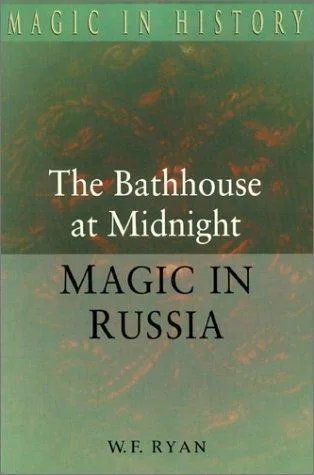
The Bathhouse at Midnight
Ryan’s collection, The Bathhouse at Midnight, offers a compellingly atmospheric take on the ghost story, eschewing cheap thrills for a more pervasive, creeping unease. The strength lies in its masterful evocation of place and mood, making the mundane settings of isolated villages and damp interiors feel pregnant with unseen menace. One particularly effective passage describes a seemingly ordinary object imbued with an inexplicable, chilling history, a testament to Ryan’s ability to imbue the everyday with the spectral. However, the interconnectedness of the stories, while ambitious, occasionally leads to a certain thematic repetition, with the overall melancholic tone sometimes overshadowing narrative momentum. The book excels at atmosphere but could benefit from more distinct narrative arcs across its pieces. Ultimately, The Bathhouse at Midnight is a finely crafted collection for those who prefer their chills to be slow-burning and intellectually engaging.
📝 Description
78
### What It Is The Bathhouse at Midnight is a collection of interconnected stories that explore the liminal spaces between reality and the supernatural. W. F. Ryan presents narratives that often begin with mundane settings and gradually introduce elements of the uncanny, folklore, and the occult. These tales are characterized by their atmospheric prose and a creeping sense of dread, drawing on a deep well of traditional ghost stories and European folklore. The book doesn't offer easy answers but instead immerses the reader in atmospheres where the veil between worlds is thin.
### Who It's For This work is intended for readers who appreciate ghost stories with a literary bent, those interested in European folklore, and individuals drawn to subtle, psychological horror. It will appeal to seekers of occult fiction that prioritizes mood and atmosphere over explicit gore or jump scares. Readers familiar with authors like Arthur Machen or M.R. James will find common ground here, as will those exploring the intersection of spirituality and darker, folkloric traditions. It's for the quiet reader who enjoys a story that lingers.
### Historical Context Published in 1999, The Bathhouse at Midnight emerged during a period of renewed interest in folk horror and literary ghost stories. The late 20th century saw a resurgence of authors engaging with traditional supernatural narratives, often reinterpreting them through a modern lens. Ryan's work fits within this milieu, drawing from a rich vein of ghost lore that predates the digital age. While not directly tied to a specific academic movement, it aligns with a broader cultural fascination with the uncanny and the hidden histories embedded in landscape and custom, echoing concerns found in the works of folklorists and supernatural fiction writers active throughout the 20th century.
### Key Concepts The collection frequently engages with the concept of the uncanny, where familiar settings become unsettling. Folklore is not merely decorative but often forms the bedrock of the supernatural events depicted, referencing specific regional tales and superstitions. Dreams and altered states of consciousness serve as portals to other realities or reveal hidden truths. The stories also explore the weight of the past, how historical events and lingering presences affect the present, and the psychological impact of encountering the inexplicable. Boundaries, whether between life and death, sanity and madness, or the known and unknown, are consistently blurred.
💡 Why Read This Book?
• Gain an appreciation for the subtle art of atmospheric horror, learning how W. F. Ryan uses evocative descriptions of place to build dread, as seen in the chilling depiction of the titular bathhouse setting. • Explore the rich tradition of European folklore and ghost stories, understanding how Ryan reinterprets these ancient narratives for a contemporary audience, referencing specific motifs like spectral visitations. • Experience a unique literary exploration of the uncanny, where the boundaries of reality blur, offering a different kind of psychological engagement than typical genre fiction, exemplified by the dreamlike sequences in certain tales.
⭐ Reader Reviews
Honest opinions from readers who have explored this book.
❓ Frequently Asked Questions
What is the central theme of The Bathhouse at Midnight?
The central theme revolves around the uncanny and the porous boundary between the ordinary world and the supernatural. W. F. Ryan uses folklore and atmospheric settings to explore how hidden histories and spectral presences can intrude upon everyday life.
What kind of stories can I expect in this collection?
Expect literary ghost stories and tales inspired by European folklore. The stories are characteristically atmospheric, focusing on mood, psychological unease, and the subtle intrusion of the supernatural into mundane settings, rather than overt horror.
When was The Bathhouse at Midnight first published?
The Bathhouse at Midnight by W. F. Ryan was first published in 1999, a period that saw a resurgence of interest in folk horror and literary ghost narratives.
Who are some authors similar to W. F. Ryan in this collection?
Readers who enjoy authors like Arthur Machen, M.R. James, or Robert Aickman might find Ryan's atmospheric and folkloric approach appealing. The focus on mood and the uncanny echoes these writers.
Does the book have a specific esoteric tradition it follows?
While not adhering to a single, defined esoteric system, the book draws broadly from folk magic, animism, and pre-Christian European spiritual traditions often explored in occult literature. It taps into a general sense of the numinous and the preternatural.
Are there any recurring symbols or motifs in the stories?
Yes, recurring motifs include liminal spaces (like the titular bathhouse), water as a symbol of transition or unconsciousness, old buildings holding residual energies, and the weight of forgotten histories influencing the present.
🔮 Key Themes & Symbolism
The Uncanny Intrusion
The collection excels at manifesting the uncanny, where the familiar suddenly becomes alien and menacing. Ryan often grounds his stories in seemingly ordinary locales – a village, a seaside town, an old house – only to reveal a sinister undercurrent. This isn't about external monsters but the unsettling feeling that the world itself is subtly wrong, that invisible forces are at play. The titular bathhouse, a place of cleansing, becomes a site of spectral encounter, blurring the lines between physical space and psychic residue. The narratives explore how a place can retain echoes of past events or inhabitants, influencing the present in deeply unsettling ways.
Folklore and Archaic Beliefs
W. F. Ryan deeply mines European folklore, drawing on ghost stories, local legends, and ancient superstitions. These aren't mere decorations but integral plot devices. The stories often feature characters who are either aware of or inadvertently stumble upon these older belief systems. The work engages with the idea that these tales, often dismissed as myth, possess a potent reality. The collection suggests that archaic fears and spectral entities persist, waiting for the right conditions or receptive minds to manifest, reflecting a broader interest in the enduring power of myth and the pre-rational psyche.
Liminality and Transition
Many of Ryan's stories are set in or explore liminal spaces – thresholds, crossroads, twilight hours, and places of transition like the bathhouse itself. These are environments where the veil between worlds is thin, allowing for supernatural incursions. The concept extends to psychological states, with dreams, altered perceptions, and moments of intense grief or isolation acting as portals. The bathhouse, a place for ritualistic cleansing and social gathering, becomes a potent symbol for this crossing-over, where the mundane gives way to the spectral and the hidden self is confronted. This focus on in-between states amplifies the sense of unease and mystery.
The Weight of the Past
A pervasive theme is how the past continues to exert influence on the present. This manifests not just as historical events but as lingering presences, unresolved traumas, and ancestral curses. Characters often find themselves entangled with the consequences of actions taken long before their time, suggesting that history is not merely a record but an active force. The old buildings and landscapes serve as repositories for these lingering energies. The collection explores the idea that certain places carry a psychic weight, and that confronting these spectral echoes is an inevitable part of understanding one's own reality and lineage.
💬 Memorable Quotes
“The water was never quite clean, no matter how often it was changed.”
— This line, likely referring to the bathhouse, symbolizes a pervasive spiritual or moral impurity that cannot be easily cleansed. It suggests a deep-seated corruption or an inescapable taint affecting the place and potentially its inhabitants.
“He felt the presence not as a distinct shape, but as a coldness that seeped into his bones.”
— This interpretation of spectral presence emphasizes the subtle, pervasive nature of supernatural influence. It’s not a visual apparition but a physical sensation that affects one’s core being, highlighting psychological and somatic horror.
“The village kept its secrets like a miser hoards gold, buried deep and rarely seen.”
— This metaphor illustrates the insular nature of the community and its hidden histories. The secrets are guarded, suggesting a collective effort to conceal something potentially sinister or shameful, making the village itself a character with its own dark agenda.
“Dreams were no longer a refuge, but another room in the haunted house.”
— This highlights the erosion of personal sanctuary. When even the subconscious mind becomes a site of terror, it signifies a complete invasion of the psyche by the supernatural or the uncanny, leaving no escape.
“The silence wasn't empty; it was listening.”
— This personifies silence, imbuing it with an active, observant quality. It suggests an unseen intelligence or presence is aware of the character's actions and thoughts, transforming a lack of sound into a source of profound dread.
🌙 Esoteric Significance
Tradition
The work draws implicitly from animistic and folkloric traditions prevalent in Western esotericism, rather than a structured magical system like Hermeticism or Kabbalah. It taps into the broader occult interest in the numinous power of place, the persistence of ancestral spirits, and the reality of phenomena dismissed by rationalism. Ryan’s approach aligns with a strain of esoteric thought that emphasizes direct, often unsettling, experiential encounters with the unseen, rooted in landscape and local myth rather than codified ritual.
Symbolism
The titular bathhouse serves as a potent symbol of liminality—a space for ritual cleansing that paradoxically becomes a site for spectral encounters and the exposure of hidden impurities. Water itself often symbolizes the unconscious, transition, and the blurring of boundaries between states of being. Old buildings and isolated landscapes function as repositories of memory and residual psychic energy, acting as conduits for the past to intrude upon the present, embodying the esoteric concept of 'place memory'.
Modern Relevance
Contemporary practitioners of folk magic, eco-occultism, and dark tourism find resonance in Ryan's work. His focus on the psychic weight of locations and the enduring power of local legends speaks to modern interests in re-enchanting the landscape and exploring the liminal. Thinkers and artists exploring themes of hauntology—the lingering presence of the past in the present—also find common ground, appreciating Ryan's subtle, atmospheric approach to spectral phenomena that transcends simple ghost-story tropes.
👥 Who Should Read This Book
• Students of comparative folklore and mythology seeking literary interpretations of traditional tales and superstitions. • Readers of literary ghost stories and atmospheric horror who appreciate mood over jump scares, similar to authors like M.R. James or Arthur Machen. • Individuals interested in Western esoteric traditions that focus on the power of place, ancestral memory, and the uncanny aspects of folklore.
📜 Historical Context
Published in 1999, The Bathhouse at Midnight emerged during a period marked by a resurgence of interest in literary ghost stories and folk horror. Authors like Ramsey Campbell and Thomas Ligotti were exploring darker, more atmospheric forms of the uncanny, while the success of films like *The Blair Witch Project* (1999) indicated a broader cultural fascination with folk-based horror. W. F. Ryan's work fits within this milieu, engaging with a tradition that stretches back through M.R. James and Arthur Machen. Unlike the more overtly supernatural or occult-focused writing of the early 20th century Theosophical or Golden Dawn circles, Ryan's stories lean towards psychological dread and folkloric unease. The collection implicitly engaged with the idea that ancient fears and beliefs retain potency, a counterpoint to the rationalism increasingly dominant in mainstream culture.
📔 Journal Prompts
The lingering coldness in a familiar place: explore its potential origins.
Reflect on a local legend or folktale from your region and its symbolic resonance.
The weight of unspoken secrets within a community: how might they manifest?
Consider the symbolic significance of water in your own experiences of transition.
When does a dream feel more real than waking life, and what does it reveal?
🗂️ Glossary
The Uncanny
A psychological concept describing the feeling of unease or strangeness evoked by something that is simultaneously familiar and unfamiliar, often related to repressed fears or the intrusion of the repressed into the ordinary.
Liminal Space
A transitional or in-between place or state, such as a threshold, doorway, crossroads, or twilight hour, where boundaries are blurred and conventional rules may not apply, often associated with increased supernatural activity.
Folklore
The traditional beliefs, customs, and stories of a community, passed through the generations by word of mouth, often encompassing myths, legends, ghost stories, and superstitions.
Atmosphere
In literature, the overall mood or feeling evoked by the setting, descriptions, and narrative tone, crucial for creating suspense and psychological impact.
Residual Haunting
A type of haunting where a place seems to replay past events or retain the psychic energy of past inhabitants or traumas, often perceived as an imprint rather than an interactive spirit.
Superstition
A belief or practice resulting from ignorance, fear of the unknown, or trust in magic or chance, often linked to specific omens or rituals believed to influence future events.
Psychic Residue
The idea that strong emotions, events, or presences can leave an energetic imprint on a location or object, which can be sensed or experienced by sensitive individuals.