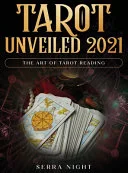
Tarot Unveiled 2021
 77
77

Tarot Unveiled 2021
Serra Night's Tarot Unveiled 2021 offers a welcome departure from the usual run of Tarot guides, grounding its exploration in genuine historical inquiry. The author skillfully unpacks the intellectual milieu of late 19th-century occultism, particularly its engagement with Kabbalistic frameworks. A notable strength lies in the detailed analysis of the Rider-Waite-Smith deck's creation, referencing specific design choices made by Pamela Colman Smith. However, the text occasionally becomes dense, requiring a reader already familiar with esoteric terminology. While Night avoids speculative leaps, a more robust engagement with non-Western influences on early cartomancy would have provided greater balance. Nevertheless, this work serves as a solid academic primer on the historical and philosophical dimensions of the Tarot.
📝 Description
77
### What It Is Tarot Unveiled 2021 is a scholarly examination of the Tarot's historical development and esoteric interpretations. Published in late 2020, it revisits established theories and presents new avenues of research into the cards' origins and symbolic language. The work focuses on the intellectual currents that shaped early Tarot studies, moving beyond purely divinatory applications to explore its philosophical underpinnings.
### Who It's For This text is aimed at serious students of occult philosophy, historians of esotericism, and practitioners seeking a deeper theoretical framework for their Tarot work. It assumes a foundational knowledge of Tarot symbolism and history, offering a more advanced perspective for those who have moved past introductory guides. Readers interested in the intersection of art, history, and mysticism will find substantial material here.
### Historical Context The book engages with the late 19th and early 20th-century revival of esoteric studies, a period marked by figures like Eliphas Lévi and later, A.E. Waite. It situates Tarot within the broader context of Hermeticism and Kabbalah, movements that profoundly influenced occult thought during this era. The 2021 edition, building on the 2020 original, reflects ongoing scholarly debates regarding the precise origins of the Tarot de Marseille and its connection to earlier cartomancy traditions.
### Key Concepts Central to Tarot Unveiled 2021 is the concept of the 'arcane' as it applies to the Major Arcana, exploring how these archetypal images were integrated into Western esotericism. The work also dissects the numerical and symbolic correspondences within the Minor Arcana, tracing their evolution from playing cards to vehicles of spiritual instruction. It examines the influence of specific historical events and philosophical ideas on the Tarot's visual and conceptual structure.
💡 Why Read This Book?
• Understand the foundational Kabbalistic correspondences as applied to the Tarot's Major Arcana, moving beyond simple divinatory meanings. This offers a specific framework for interpreting archetypal imagery. • Gain insight into the early 20th-century esoteric milieu, particularly the collaborative efforts behind iconic decks like the Rider-Waite-Smith, first published in 1909. • Appreciate the evolution of Tarot from common playing cards to a complex system of spiritual philosophy, understanding the historical shift in its perception and use.
⭐ Reader Reviews
Honest opinions from readers who have explored this book.
❓ Frequently Asked Questions
When was Tarot Unveiled originally published?
Tarot Unveiled was first published on December 17, 2020, with the 2021 edition building upon the original research and scholarship.
Does Tarot Unveiled focus on divination or history?
The book primarily focuses on the historical development and esoteric interpretations of the Tarot, examining its philosophical underpinnings rather than purely divinatory practices.
What esoteric traditions are discussed in relation to the Tarot?
Tarot Unveiled explores connections to Hermeticism and Kabbalah, tracing how these traditions influenced the symbolic language and structure of early Tarot decks.
Who was A.E. Waite in the context of Tarot history?
Arthur Edward Waite was a prominent figure in the late 19th and early 20th-century occult revival who, along with Pamela Colman Smith, designed the influential Rider-Waite-Smith Tarot deck.
Is Tarot Unveiled suitable for beginners?
The book is best suited for those with some existing knowledge of Tarot history and symbolism, as it delves into advanced theoretical frameworks and historical context.
🔮 Key Themes & Symbolism
The Arcane and the Major Arcana
This work meticulously examines the concept of the 'arcane' as it pertains to the Major Arcana. It traces how these 22 archetypal images transitioned from secular playing cards into a sophisticated system for spiritual instruction within Western esoteric traditions. The book emphasizes the philosophical and psychological dimensions encoded within each card, moving beyond simple fortune-telling to explore their role in self-knowledge and spiritual development, particularly within the Hermetic framework.
Kabbalistic Correspondences
A central focus is the intricate web of Kabbalistic correspondences applied to the Tarot. Serra Night details how elements of the Tree of Life and Hebrew alphabet were mapped onto the cards, especially the Major Arcana, by figures in the late 19th-century occult revival. This section deciphers the symbolic language that links Tarot imagery to mystical cosmology, providing readers with a structured method for understanding these esoteric connections.
Evolution of Symbolism
Tarot Unveiled 2021 charts the evolution of Tarot symbolism from its earliest known iterations, such as the Visconti-Sforza deck from the 15th century, to its more complex esoteric interpretations. It highlights how societal, artistic, and intellectual shifts influenced the visual representation and symbolic meaning of the cards. The book scrutinizes specific decks, like the Rider-Waite-Smith deck published in 1909, to illustrate these transformations.
Cartomancy and Esoteric Practice
The book distinguishes between historical cartomancy and later esoteric applications of the Tarot. It explores the shift from simple game-playing and fortune-telling to a profound philosophical tool. Night analyzes how practitioners and theorists integrated Tarot into systems of divination, meditation, and magical practice, examining the intellectual currents that legitimized this transformation within occult circles.
💬 Memorable Quotes
“The Major Arcana's archetypes served as a visual lexicon for the spiritual aspirations of the late 19th-century occultist.”
— This paraphrased concept highlights how the symbolic imagery of the Major Arcana was reinterpreted during a specific historical period to represent profound spiritual and philosophical ideas, becoming a key tool for occultists.
“Pamela Colman Smith's visual interpretations on the Rider-Waite-Smith cards were integral, not merely illustrative.”
— This emphasizes the significant contribution of artist Pamela Colman Smith to the Rider-Waite-Smith deck, suggesting her artistic vision was crucial to the deck's esoteric meaning and its impact.
“Early Tarot decks were not divorced from their playing card origins but were gradually imbued with deeper meaning.”
— This interpretation points to the gradual process by which the Tarot evolved, showing that its esoteric significance developed over time from its roots as a card game, rather than being a sudden invention.
“The Kabbalistic Tree of Life provided a structural blueprint for understanding the esoteric order of the Tarot.”
— This paraphrased concept illustrates the use of the Kabbalistic Tree of Life as a foundational model by esotericists to organize and interpret the symbolic order and spiritual progression represented within the Tarot.
“Understanding the Tarot requires acknowledging the historical context of its creators and interpreters.”
— This interpretation underscores the importance of historical scholarship in Tarot studies, suggesting that the meaning and significance of the cards are deeply tied to the specific eras and intellectual movements that shaped them.
🌙 Esoteric Significance
Tradition
The work firmly situates Tarot within the Western Esoteric Tradition, particularly Hermeticism and Kabbalah. It builds upon the foundations laid by figures like Eliphas Lévi in the 19th century, who began systematically mapping Kabbalistic concepts onto Tarot imagery. Serra Night's analysis extends this, exploring how these traditions provided a framework for understanding the Tarot not merely as a divinatory tool but as a symbolic representation of cosmic order and spiritual ascent.
Symbolism
Key symbols examined include the Fool (0), representing the unmanifest potential and the beginning of the spiritual journey, often linked to the Hebrew letter Aleph. The Hierophant (V) is explored as a symbol of institutionalized spiritual knowledge and tradition, connecting to established religious or esoteric orders. The Minor Arcana's suits (Wands, Cups, Swords, Pentacles) are analyzed for their elemental and astrological correspondences, further deepening their symbolic meaning.
Modern Relevance
Contemporary practitioners of Western Esotericism, particularly those working with Hermetic or Kabbalistic systems, continue to draw upon the foundational interpretations discussed in Tarot Unveiled. The book's detailed examination of the Rider-Waite-Smith deck, a cornerstone for many modern Tarot readers, provides a historically informed perspective. Its analytical approach influences contemporary scholarship and practice, encouraging a deeper, more context-aware engagement with Tarot symbolism beyond simple predictive methods.
👥 Who Should Read This Book
• Students of Western Esotericism: Those seeking to understand the historical integration of Tarot into Hermetic and Kabbalistic studies will find detailed analysis and context. • Comparative Religious Scholars: Researchers interested in how different spiritual traditions have adopted and adapted symbolic systems will benefit from the discussion of Tarot's evolution. • Advanced Tarot Practitioners: Individuals looking to deepen their theoretical understanding beyond basic divination will appreciate the historical and philosophical exploration of card meanings.
📜 Historical Context
Tarot Unveiled 2021 emerges from the fertile ground of late 19th and early 20th-century esoteric revivalism, a period intensely focused on rediscovering and systematizing ancient wisdom traditions. This era, populated by influential figures like Eliphas Lévi and later, A.E. Waite, saw a concerted effort to link Tarot imagery to Hermeticism, Kabbalah, and other mystical philosophies. The work contrasts with purely academic or purely divinatory approaches prevalent at the time. While many contemporaries focused on practical divination, Waite himself, a key figure discussed, sought to imbue the Tarot with a Christianized esoteric meaning. The book engages with the intellectual currents that sought to create a unified esoteric worldview, often drawing parallels between different religious and philosophical systems. Its focus on the Rider-Waite-Smith deck, first published in 1909, places it directly within this historical moment of symbolic reinterpretation.
📔 Journal Prompts
The Fool's journey across the Major Arcana: Map your own symbolic progression.
Kabbalistic correspondences: How does the Hebrew alphabet inform the Tarot's structure?
The Rider-Waite-Smith deck's symbolism: Analyze a card's visual elements and their esoteric meaning.
Elemental suits: Reflect on the Wands, Cups, Swords, and Pentacles in your daily life.
From playing cards to sacred text: Consider the historical shift in Tarot's perception.
🗂️ Glossary
Major Arcana
The 22 trump cards of the Tarot deck, often seen as representing significant life lessons, spiritual archetypes, and major events in a reading.
Minor Arcana
The 56 cards of the Tarot deck, divided into four suits, typically representing the everyday events, challenges, and circumstances encountered in life.
Kabbalah
A complex system of Jewish mysticism that explores the relationship between the divine and the created world, often represented through the Tree of Life.
Hermeticism
A philosophical and religious tradition based on the purported teachings of Hermes Trismegistus, emphasizing spiritual knowledge, alchemy, and the interconnectedness of all things.
Cartomancy
The practice of divination using playing cards or Tarot cards.
Rider-Waite-Smith Deck
An influential Tarot deck first published in 1909, known for its symbolic imagery and the full-scene illustrations of the Minor Arcana, designed by Pamela Colman Smith under A.E. Waite's direction.
Esotericism
Belief systems and practices that are secret or intended for a select group of initiates, often focusing on spiritual transformation and hidden knowledge.