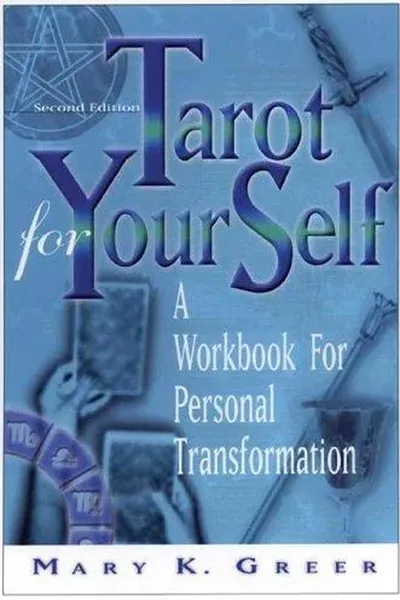
Tarot for your self
 81
81

Tarot for your self
Mary K. Greer’s "Tarot for Yourself" is less a book about reading the cards for others and more a rigorous manual for self-examination. Its strength lies in its systematic, almost academic approach to personal Tarot application, particularly the exercises designed to foster a direct dialogue with the archetypes. The original publication date of 1984 is significant; it predates much of the mainstream, often superficial, Tarot resurgence and offers a depth that feels refreshingly grounded. Greer’s emphasis on journaling and active engagement with the cards is particularly effective. A potential limitation for some might be the book's deliberate move away from predictive techniques, which some users seek from Tarot. The section detailing how to assign personal meanings to the cards, based on individual life experiences, exemplifies this user-centric methodology. It’s a vital resource for anyone aiming to use the Tarot as a mirror to the soul, rather than a crystal ball.
📝 Description
81
### What It Is Tarot for Yourself is a foundational text that moves beyond simple divination to explore the Tarot as a tool for psychological insight and personal growth. Published in 1984, it presents a systematic approach to using the cards for introspection, self-discovery, and creative problem-solving. The book emphasizes the personal relationship an individual can cultivate with the Tarot, fostering an understanding of its archetypal language as it applies to one's own life experiences.
### Who It's For This work is intended for individuals seeking a deeper, more personal engagement with the Tarot, moving past predictive methods towards a more introspective practice. It appeals to those interested in Jungian psychology, archetypal studies, and the use of symbolic systems for self-awareness. Beginners who wish to understand the cards beyond their surface meanings, and experienced readers looking to deepen their personal practice, will find value here.
### Historical Context Emerging in the early 1980s, a period of renewed interest in esoteric traditions and personal development, Mary K. Greer's "Tarot for Yourself" offered a distinct perspective. While occult circles had long explored the Tarot, Greer's approach aligned with the growing influence of psychological interpretations, particularly those inspired by Carl Jung's theories on archetypes and the collective unconscious. This contrasted with more purely divinatory or ceremonial magical approaches prevalent at the time.
### Key Concepts The book introduces several core concepts for personal Tarot work. It champions the idea of "self-reading," empowering the user to extract meaning directly from the cards without reliance on external authorities. Greer also outlines methods for "dream work" with the Tarot, integrating card imagery into dream analysis. Furthermore, the "personal archetypes" concept encourages readers to identify which Major Arcana cards most strongly represent their own inner patterns and life stages.
💡 Why Read This Book?
• You will learn to establish a direct, personal dialogue with the Tarot archetypes through structured self-reading techniques, moving beyond external interpretations, as detailed in the "self-reading" methodologies. • You will discover methods for integrating Tarot imagery into dream analysis, enhancing self-understanding by bridging the conscious and unconscious, a practice explored through "dream work" sections. • You will gain practical exercises for identifying your own "personal archetypes" within the Major Arcana, fostering a deeper connection to your own life's journey and inner patterns.
⭐ Reader Reviews
Honest opinions from readers who have explored this book.
❓ Frequently Asked Questions
What is the main purpose of Mary K. Greer's 'Tarot for Yourself'?
The book's primary purpose is to guide readers in using the Tarot as a tool for introspection, self-discovery, and personal growth, rather than solely for external divination.
When was 'Tarot for Yourself' first published?
'Tarot for Yourself' was first published in 1984, positioning it as an early influence in the psychological interpretation of Tarot.
Does the book focus on reading Tarot for others?
No, the book strongly emphasizes 'self-reading' and personal application, encouraging individuals to use the Tarot to understand their own inner landscape.
What psychological theories influence the book's approach?
The book draws heavily on Jungian psychology, particularly concepts like archetypes and the collective unconscious, to explain the Tarot's symbolic language.
Are there exercises for personal use in the book?
Yes, it is filled with practical exercises, including journaling techniques, dream work with cards, and methods for identifying personal archetypes.
Is prior Tarot knowledge required to read this book?
While some familiarity is helpful, the book is designed to teach a personal approach, making it accessible to beginners willing to engage deeply with the material.
🔮 Key Themes & Symbolism
Self-Reading Methodology
Greer champions the practice of "self-reading," empowering individuals to interpret the Tarot cards for their own lives. This approach shifts the focus from an external authority to the reader's own intuition and life experience. The book provides structured exercises and journaling techniques to facilitate this direct engagement, fostering a personal relationship with the archetypal imagery of the deck. It encourages a critical examination of how the cards reflect one's own psychological states and life circumstances.
Archetypal Psychology and the Tarot
Drawing from the work of Carl Jung, the book explores the Tarot as a symbolic language of the psyche. It posits that the Major Arcana, in particular, represent universal archetypes that manifest in individual lives. Understanding these archetypes—such as The Fool, The Magician, or The High Priestess—can offer profound insights into personal patterns, developmental stages, and unconscious motivations. This perspective elevates the Tarot from a divinatory tool to a map of the inner world.
Tarot as a Tool for Personal Growth
Beyond mere self-understanding, "Tarot for Yourself" frames the cards as catalysts for personal transformation. The book outlines practical methods for using Tarot insights to navigate challenges, make conscious choices, and foster creativity. Techniques like "dream work" with the cards and assigning "personal archetypes" help integrate Tarot wisdom into daily life, encouraging active participation in one's own psychological and spiritual evolution.
The Journaling and Dream Work Connection
A significant aspect of Greer's method involves dedicated journaling and integrating Tarot with dream analysis. The book provides frameworks for recording readings, reflections, and the symbolic content of dreams, creating a dialogue between the waking mind and the subconscious. This practice allows for a deeper exploration of the messages conveyed by the Tarot and dreams, revealing hidden connections and fostering a more holistic self-awareness.
💬 Memorable Quotes
“The Tarot is a book of wisdom that can be read by anyone who learns its language.”
— This highlights Greer's belief in the accessibility of Tarot knowledge. It suggests that the cards are not an esoteric secret held by a few, but a learnable system that can unlock personal understanding for any dedicated individual.
“Use the cards to ask questions of yourself.”
— This encapsulates the core principle of 'self-reading.' Instead of asking what the future holds, the focus is on using the Tarot's imagery and symbolism to explore the present state of one's inner world and motivations.
“Each person can discover their own meanings for the cards.”
— This emphasizes the subjective and personal nature of Tarot interpretation advocated by Greer. It encourages readers to trust their intuition and connect the card imagery to their unique life experiences and psychological landscape.
“The Major Arcana represent the stages of the soul's journey.”
— This interpretation aligns the Tarot's structure with developmental psychology and spiritual progression, suggesting the cards offer a map of human experience and transformation.
“Integrate the archetypes into your waking life.”
— This points to the practical application of Tarot insights, urging readers to actively embody or work with the energies and lessons represented by the cards beyond the reading itself.
🌙 Esoteric Significance
Tradition
While not strictly adhering to a single lineage, Greer's work significantly draws from Hermeticism's emphasis on correspondence between the microcosm (individual) and the macrocosm (universe) and Jungian psychology's exploration of the psyche. It reframes Tarot archetypes within a framework of individuation and self-knowledge, aligning with psychological occultism that seeks to understand spiritual principles through the lens of the human mind.
Symbolism
Key symbols like The Fool represent the initial leap of faith and the potential for new beginnings, mirroring the Hermetic principle of "As Above, So Below" in the context of personal journey. The Magician symbolizes the power of conscious will and the ability to manifest reality, emphasizing the user's agency in their own life. The High Priestess embodies intuition, the subconscious, and hidden knowledge, encouraging introspection and engagement with inner wisdom.
Modern Relevance
Greer's approach continues to influence contemporary Tarot practitioners and psychological counselors who use archetypal work. Modern schools of Tarot study and online communities frequently cite "Tarot for Yourself" as a foundational text for developing a personal, introspective practice. Its emphasis on self-discovery through symbolic systems remains relevant in therapeutic and self-development contexts.
👥 Who Should Read This Book
• Aspiring Tarot practitioners seeking a method beyond simple fortune-telling, looking to understand the cards as a psychological map and tool for self-discovery. • Students of Jungian psychology and archetypes interested in practical applications of symbolic systems for understanding the human psyche. • Individuals engaged in journaling, creative writing, or dream analysis who wish to incorporate a powerful symbolic system for deeper introspection and personal insight.
📜 Historical Context
Mary K. Greer's "Tarot for Yourself," first published in 1984, emerged during a period of significant interest in psychological approaches to esoteric subjects. The book offered a counterpoint to purely divinatory or occult systems, aligning with the growing influence of Carl Jung's analytical psychology. While figures like Joseph Campbell were popularizing mythology and archetypes, Greer applied these concepts directly to the Tarot, presenting it as a mirror for the psyche. This contrasted with the more traditional ceremonial magic circles or the burgeoning New Age movement, which often focused on predictive or spiritualistic elements. The book's emphasis on personal exploration and journaling resonated with the self-help and personal growth movements of the era, carving out a niche for introspective Tarot study. Its reception was largely positive among those seeking a deeper, psychologically informed understanding of the cards.
📔 Journal Prompts
The Fool's journey and your current path.
Reflections on the "personal archetypes" identified in your readings.
Dream imagery and its connection to specific Tarot cards.
The Magician's tools and your own manifested intentions.
Lessons from The High Priestess regarding intuition and inner knowing.
🗂️ Glossary
Self-Reading
The practice of using the Tarot to gain personal insight and understanding, rather than seeking predictions or readings from another person. It emphasizes the individual's connection to the cards.
Archetype
In Jungian psychology, a universal, inherited pattern of thought or image derived from the life experience of ancestors, believed to be present in the collective unconscious. The Tarot's Major Arcana are often seen as embodying these archetypes.
Personal Archetype
A specific Major Arcana card or cards that strongly resonate with an individual's personality, life journey, or dominant psychological patterns, identified through self-reflection and Tarot study.
Dream Work
A therapeutic technique involving the analysis and interpretation of dreams, often used in conjunction with other symbolic systems like the Tarot to access subconscious material.
Active Imagination
A technique, often associated with Jung, that involves engaging consciously with images, symbols, and fantasies arising from the unconscious to integrate them into conscious awareness.
Divination
The practice of seeking knowledge of the future or the unknown by supernatural means. Greer's book offers an alternative focus on self-exploration over prediction.
Major Arcana
The set of 22 trump cards in a standard Tarot deck, representing significant life lessons, spiritual journeys, and archetypal forces.