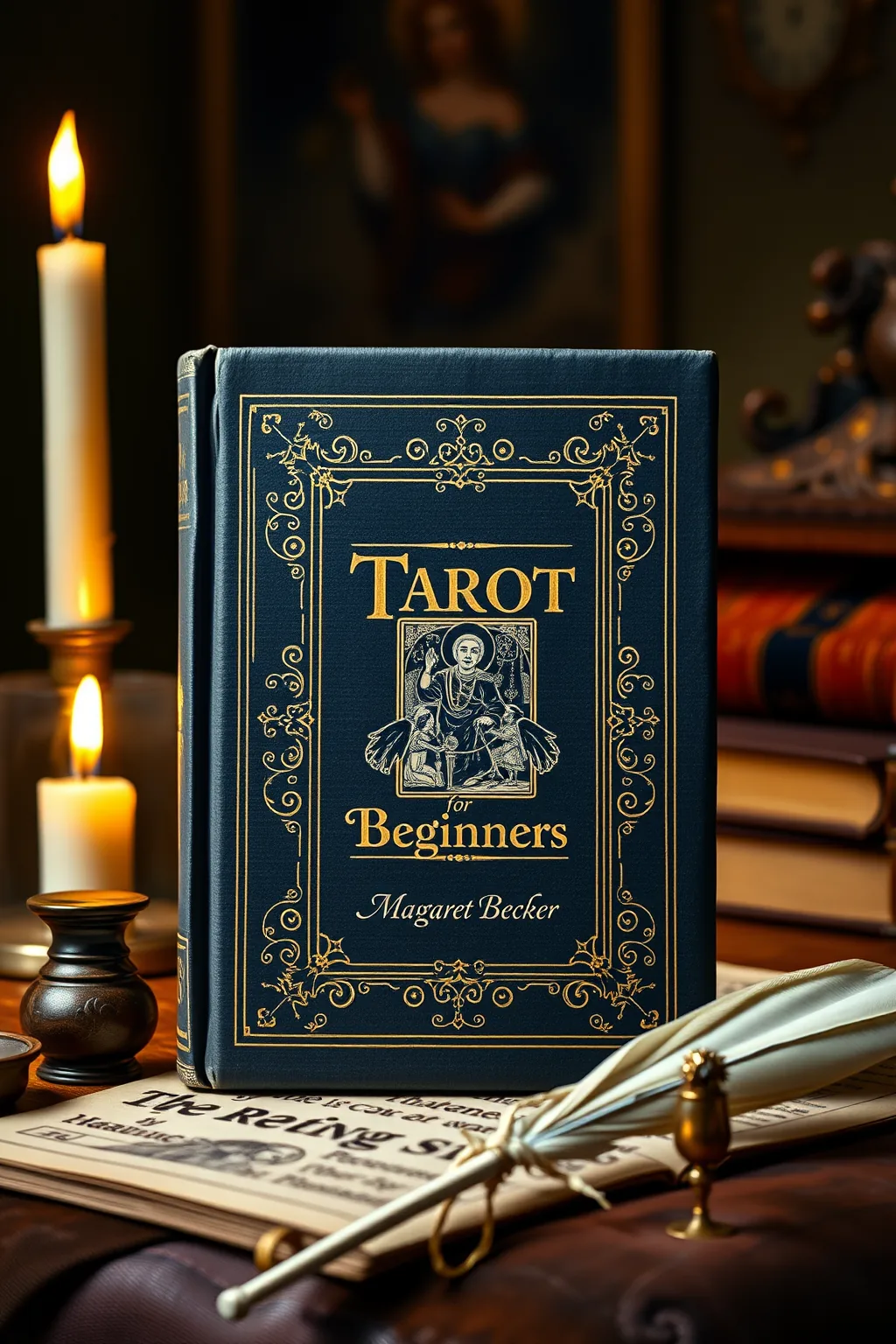
Tarot for Beginners
 78
78

Tarot for Beginners
Margaret Becker’s "Tarot for Beginners" tackles the daunting task of introducing the Tarot with commendable clarity. Its strength lies in its straightforward approach, eschewing overly esoteric jargon for accessible explanations. The emphasis on Tarot as a tool for self-reflection rather than fortune-telling is a wise starting point for neophytes. A particularly well-handled section is the explanation of the Minor Arcana, breaking down the numerical and suit correspondences in a digestible manner. However, the book occasionally feels constrained by its beginner-focused mandate, sometimes sacrificing depth for breadth. The section on spreads, while functional, could benefit from more nuanced examples beyond the typical three-card layout. It offers a solid, if somewhat conventional, foundation for anyone stepping onto the Tarot path.
📝 Description
78
### What Tarot For Beginners Offers Margaret Becker's "Tarot for Beginners" serves as a foundational text for individuals seeking to understand the symbolic language of Tarot. Published in 2019, it addresses a contemporary audience eager to connect with their inner intuition and explore personal growth through cartomancy. The book aims to demystify the often-intimidating world of Tarot cards, presenting them not as tools of prediction, but as mirrors reflecting psychological states and potential life paths.
### Who Can Benefit from This Guide This work is explicitly designed for those new to Tarot. It assumes no prior knowledge, making it suitable for individuals interested in spirituality, self-discovery, and enhancing their intuitive faculties. Readers looking to integrate Tarot into their personal practices, whether for self-reflection, meditation, or understanding symbolic communication, will find a clear and accessible entry point. The book caters to those who wish to move beyond superficial interpretations and engage with the cards on a deeper, more personal level.
### A Brief Historical Perspective While "Tarot for Beginners" is a modern publication from 2019, its subject matter draws from centuries of esoteric tradition. The use of playing cards for divination dates back to at least the 18th century, with the Rider-Waite-Smith deck, first published in 1909, becoming a pivotal influence on modern Tarot imagery and interpretation. Becker’s work, therefore, stands in dialogue with a lineage of occult scholarship and popular interest in cartomancy that has ebbed and flowed since the late 19th century, particularly during the Theosophical movement.
### Core Concepts Introduced The book systematically introduces fundamental Tarot concepts, including the structure of the deck (Major and Minor Arcana), the meaning of individual cards, and basic spreads for interpretation. It emphasizes the archetypal significance of the Major Arcana figures, such as The Fool and The High Priestess, and the elemental associations within the Minor Arcana suits (Wands, Cups, Swords, Pentacles). The central thesis is that Tarot is a symbolic language capable of facilitating self-awareness and personal insight.
💡 Why Read This Book?
• Learn the foundational meanings of the Major and Minor Arcana, understanding how the 78 cards, first codified in forms recognizable today by the late 18th century, function as a symbolic language for introspection. • Discover practical methods for interpreting card combinations and constructing simple spreads, moving beyond rote memorization to intuitive understanding, as exemplified by the book's approach to the Rider-Waite-Smith imagery. • Develop a personal connection with Tarot as a tool for self-awareness, fostering intuition and personal insight, a practice deeply rooted in 20th-century occult revivalist interpretations of the cards.
⭐ Reader Reviews
Honest opinions from readers who have explored this book.
❓ Frequently Asked Questions
What is the best way to start learning Tarot according to Margaret Becker?
Margaret Becker suggests starting with understanding the structure of the Tarot deck, focusing on the 22 Major Arcana and the 56 Minor Arcana cards. She advises familiarizing oneself with the core symbolism and archetypes before attempting readings.
Does 'Tarot for Beginners' teach how to predict the future?
No, the book emphasizes Tarot as a tool for self-discovery, intuition development, and understanding current life circumstances rather than a method for predicting future events. It frames readings as reflections of inner states and potential paths.
Which Tarot deck does Margaret Becker recommend for beginners?
While not explicitly stating a single recommendation, the book's explanations and imagery are clearly aligned with the widely popular Rider-Waite-Smith deck, first published in 1909, making it the implicit standard for learners using this guide.
How does 'Tarot for Beginners' explain the difference between Major and Minor Arcana?
The book clarifies that the Major Arcana represent significant life lessons and archetypal energies, while the Minor Arcana correspond to daily events and challenges, categorized into four suits: Wands, Cups, Swords, and Pentacles.
Can I use 'Tarot for Beginners' without any prior spiritual or occult knowledge?
Absolutely. The book is designed for complete novices, assuming no prior background in spirituality or occult studies. It provides clear, step-by-step guidance to make the Tarot accessible to everyone.
What kind of Tarot spreads are covered in this book?
The book introduces basic and commonly used Tarot spreads suitable for beginners, such as the three-card Past-Present-Future spread, providing practical applications for interpreting card combinations.
🔮 Key Themes & Symbolism
Archetypal Symbolism
The work meticulously unpacks the archetypal figures and narratives present in the Major Arcana. Cards like The Magician, The Empress, and The Hermit are presented not just as images, but as representations of universal human experiences and psychological states. Becker connects these archetypes to personal growth, encouraging readers to see how these ancient symbols manifest in their own lives. This approach grounds the esoteric nature of Tarot in relatable human psychology, a practice that gained traction in esoteric circles following Carl Jung's work on archetypes in the mid-20th century.
Intuitive Development
A central tenet of "Tarot for Beginners" is the cultivation of intuition. Becker posits that Tarot cards act as a catalyst for inner knowing, providing a framework through which individuals can access their subconscious wisdom. The book guides readers to move beyond memorized meanings and develop a personal dialogue with the cards, fostering a sense of inner guidance. This aligns with contemporary approaches to mindfulness and self-awareness, framing Tarot as a practical tool for enhancing one's intuitive capacity in everyday life.
The Structure of the Deck
Becker provides a clear breakdown of the Tarot deck's organization: the 22 Major Arcana and the 56 Minor Arcana, further divided into four suits (Wands, Cups, Swords, Pentacles) and numbered cards. Understanding this structure, a system refined over centuries of cartomantic practice, is presented as the essential first step. The book explains how the suits relate to elemental energies and aspects of life, and how the numbered cards depict progression within those themes, offering a logical framework for interpretation.
Tarot as a Mirror
The book frames Tarot readings as a means of self-reflection rather than deterministic prophecy. Cards are presented as mirrors reflecting the querent's current situation, inner landscape, and potential outcomes based on present trajectories. This perspective encourages agency and personal responsibility, aligning with psychological interpretations of divination that gained prominence in the latter half of the 20th century. The focus is on gaining clarity and insight to make informed decisions about one's path.
💬 Memorable Quotes
“The Tarot is not a crystal ball, but a map of the soul.”
— This statement encapsulates the book's philosophy, positioning Tarot as a tool for introspection and self-understanding rather than fortune-telling. It emphasizes understanding one's inner landscape and life journey.
“Each card is a conversation waiting to happen.”
— This highlights the interactive and personal nature of working with Tarot. It suggests that the meaning of a card is not fixed but emerges through the reader's engagement and interpretation.
“The Minor Arcana reflect the ebb and flow of our daily lives.”
— This concisely explains the role of the Minor Arcana, contrasting them with the grander themes of the Major Arcana. It frames them as relating to the practical, day-to-day experiences and challenges encountered by individuals.
“Embrace the Fool's leap; every journey begins with a single step.”
— This interpretation draws on the symbolism of The Fool card, encouraging readers to approach new beginnings with courage and an open mind, acknowledging that the learning process itself is a significant part of the journey.
“The High Priestess guards secrets accessible through inner knowing.”
— This references the enigmatic High Priestess card, emphasizing its connection to intuition, the subconscious, and hidden knowledge. It suggests that true understanding comes from within, not solely from external sources.
🌙 Esoteric Significance
Tradition
This work primarily engages with the Western esoteric tradition, particularly as popularized through the Rider-Waite-Smith system. While not strictly Hermetic, it draws on the Hermetic principles of correspondence and the understanding of the universe as a symbolic reflection of inner states. It departs from more complex Kabbalistic or Golden Dawn interpretations by focusing on accessible psychological archetypes, making it a gateway text for those interested in later developments in Tarot scholarship and practice.
Symbolism
Key symbols include the archetypal figures of the Major Arcana, such as The Fool representing new beginnings and potential, and The High Priestess embodying intuition and the subconscious. The four suits of the Minor Arcana—Wands (fire, action), Cups (water, emotion), Swords (air, intellect), and Pentacles (earth, material—are also central, each representing distinct energetic forces and life domains that readers are encouraged to explore.
Modern Relevance
Contemporary practitioners and thinkers in fields like transpersonal psychology, mindfulness coaching, and personal development often reference the symbolic language of Tarot, as presented in accessible guides like Becker's. It serves as a foundational text for individuals exploring modern witchcraft, self-help spirituality, and digital divination communities, demonstrating the enduring appeal of Tarot as a tool for psychological insight and self-awareness.
👥 Who Should Read This Book
• Aspiring Tarot enthusiasts seeking a clear, step-by-step introduction to the 78-card deck and its core meanings, particularly those interested in the Rider-Waite-Smith system. • Individuals exploring personal development and self-awareness tools who want to understand Tarot's potential for introspection and intuitive guidance. • Students of esoteric symbolism interested in a foundational text that bridges historical Tarot practices with modern psychological interpretations.
📜 Historical Context
Published in 2019, Margaret Becker's "Tarot for Beginners" enters a contemporary landscape shaped by decades of popular interest in esoteric practices. The Tarot itself, with roots tracing back to 15th-century Italian playing cards, evolved into a divinatory tool significantly influenced by occultists like Eliphas Lévi in the 19th century. The Rider-Waite-Smith deck, released in 1909 by Arthur Edward Waite and Pamela Colman Smith, became a cornerstone of modern Tarot interpretation, with its richly illustrated cards fostering a more accessible approach. Becker’s work builds upon this legacy, addressing a modern audience seeking personal growth and spiritual exploration, a trend amplified in the early 21st century. This period saw a resurgence of interest in divination and mindfulness practices, often presented through accessible online resources and books, distinguishing it from the more academic or clandestine occult circles of the late 19th and early 20th centuries.
📔 Journal Prompts
The Fool's journey and your own path forward.
Reflecting on the wisdom of The High Priestess within.
Interpreting the Wands suit in the context of your current projects.
The significance of the Swords suit for your mental clarity.
Understanding the Pentacles suit in relation to your material world.
🗂️ Glossary
Major Arcana
The 22 trump cards in a Tarot deck, representing significant life lessons, archetypal energies, and spiritual themes. They are often seen as the 'greater journey' of the soul.
Minor Arcana
The 56 cards of a Tarot deck, divided into four suits (Wands, Cups, Swords, Pentacles). These cards typically represent daily events, challenges, and situations.
Rider-Waite-Smith Deck
A highly influential Tarot deck first published in 1909, known for its detailed illustrations by Pamela Colman Smith, which depict scenes even in the numbered Minor Arcana cards.
Spread
A specific arrangement of Tarot cards laid out to answer a particular question or explore a topic. Different spreads have different symbolic layouts.
Archetype
A universal, archaic pattern of behavior or symbolic image that recurs across cultures and time, such as The Hero, The Mother, or The Trickster, often represented in the Major Arcana.
Intuition
The ability to understand something immediately, without the need for conscious reasoning. In Tarot, it's the inner knowing that guides interpretation beyond literal meanings.
Querent
The person for whom a Tarot reading is performed. The cards are laid out to provide insight relevant to the querent's questions or situation.