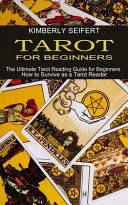
Tarot for Beginners
 72
72

Tarot for Beginners
Kimberly Seifert's Tarot for Beginners provides a serviceable, if somewhat conventional, introduction to the cards. Its strength lies in its clear, step-by-step approach, particularly in explaining the distinct roles of the Major and Minor Arcana. The section on different reading types, from simple one-card pulls to more complex spreads, is well-organized. However, the work occasionally leans into generalizations about symbolism without offering deeper historical or philosophical context that might satisfy a more critical reader. For instance, while the book discusses the symbolism of The Fool, it could benefit from referencing specific philosophical concepts like Nietzsche's Eternal Recurrence, which some scholars link to the card's archetypal journey. Ultimately, Seifert delivers a competent primer, but it lacks the unique critical edge or historical depth found in more advanced texts.
📝 Description
72
### What It Is Tarot for Beginners by Kimberly Seifert, first published in 2021, offers a foundational exploration of the tarot deck. It aims to demystify the practice of card reading, guiding novices through the structure of the cards and the process of interpretation. The work addresses the symbolic language inherent in the Major and Minor Arcana, presenting them not as arcane mysteries but as accessible tools for self-reflection and divination.
### Who It's For This book is explicitly designed for individuals with little to no prior experience with tarot. It caters to those curious about the practice, seeking a structured approach to understanding card meanings and developing their own reading skills. Readers interested in esoteric studies, personal development, or simply exploring a new form of introspection will find this an entry point.
### Historical Context While Seifert's book is a contemporary guide, it emerges from a long lineage of tarot scholarship and practice. The tarot deck itself has a complex history, evolving from 15th-century Italian playing cards into a significant tool in occultism, particularly from the late 19th century onwards. Influential figures like Eliphas Lévi and Arthur Edward Waite, who designed the Rider-Waite-Smith deck in 1909, shaped much of modern tarot interpretation, a foundation Seifert builds upon.
### Key Concepts The core concepts covered include the distinction between the Major and Minor Arcana, the archetypal meanings of each card, and various spreads (layouts) used for readings. Seifert introduces the reader to the idea that tarot is a symbolic language, a mirror to the querent's inner state, and a framework for understanding life's patterns and potential outcomes. The book emphasizes practical application and personal intuition.
💡 Why Read This Book?
• Gain a practical understanding of the 78-card tarot structure, including the distinct roles of the Major and Minor Arcana, as detailed in the book's early chapters. • Learn to interpret individual card meanings and their significance in various spreads, moving beyond rote memorization to intuitive understanding. • Explore the historical evolution of tarot, noting its transition from playing cards to an esoteric tool, as touched upon in the book's contextual sections.
⭐ Reader Reviews
Honest opinions from readers who have explored this book.
❓ Frequently Asked Questions
What is the origin of the tarot deck discussed in Tarot for Beginners?
Tarot for Beginners acknowledges the tarot deck's origins in 15th-century Italy as playing cards, before its later adoption and development as an esoteric tool in the 19th and 20th centuries.
How does Seifert explain the difference between Major and Minor Arcana?
Seifert explains that the Major Arcana represent significant life lessons and archetypal themes, while the Minor Arcana detail the everyday events and challenges in a person's life, often categorized by suits.
What are some common tarot reading layouts covered in the book?
The book covers various spreads, including the foundational one-card draw for simple questions and more involved layouts like the three-card spread often used for past, present, and future.
Can I start reading tarot for others after using this book?
Yes, the book is designed to equip beginners with the interpretive skills and practical techniques necessary to conduct readings for themselves and others.
Does the book discuss the symbolism of specific cards?
Absolutely. Tarot for Beginners provides interpretations for each of the 78 cards, delving into their symbolic imagery and meanings within a reading context.
Is this book suitable for someone interested in the history of occultism?
While primarily a practical guide, the book touches upon the historical context of tarot's use in esoteric traditions, offering a starting point for those interested in the subject.
🔮 Key Themes & Symbolism
Archetypes and Universal Narratives
The book explores how the Major Arcana, in particular, function as archetypes, representing fundamental human experiences and stages of spiritual development. Seifert unpacks figures like The Fool and The Magician not just as card images but as symbolic representations of journeys, potential, and the power of manifestation, drawing parallels to universal narrative structures found across cultures and mythologies. This approach frames tarot reading as an engagement with collective unconscious patterns.
Symbolic Language of the Cards
Central to Seifert's approach is the concept of tarot as a symbolic language. The work details how elements like the suits (Wands, Cups, Swords, Pentacles), numbers, and imagery within each card contribute to a rich lexicon of meaning. Understanding this symbolic grammar is presented as key to unlocking the tarot's divinatory and self-reflective capabilities, allowing for nuanced interpretations beyond simple keyword associations.
Practical Application and Intuition
Tarot for Beginners emphasizes the practical application of tarot knowledge. It guides readers through the process of conducting readings, from shuffling and drawing cards to interpreting their interplay within various spreads. The book encourages the development of personal intuition, suggesting that while card meanings provide a framework, the reader's inner guidance is crucial for a meaningful and accurate interpretation.
Tarot as a Tool for Self-Discovery
The book positions tarot not merely as a predictive tool but as a powerful instrument for self-discovery and personal growth. By examining the symbolic messages and narrative arcs presented by the cards, readers are invited to gain insight into their own motivations, challenges, and potential paths forward. This introspective aspect transforms tarot reading into a practice of applied psychology and spiritual inquiry.
💬 Memorable Quotes
“Tarot cards offer a symbolic map of the human experience.”
— This highlights the book's core premise: that the tarot deck is not merely a random collection of images but a structured system designed to reflect the complexities and archetypal patterns inherent in life's journey.
“The Minor Arcana detail the everyday flow of life.”
— This succinctly explains the function of the Minor Arcana, contrasting them with the Major Arcana's focus on grander life lessons and spiritual milestones. It emphasizes their role in interpreting daily events and circumstances.
“Intuition is the bridge between the card's meaning and your understanding.”
— This emphasizes the active role of the reader in interpretation. It suggests that while knowledge of card meanings is essential, personal insight and inner knowing are vital for truly connecting with the tarot's message.
“Each card holds a lesson waiting to be discovered.”
— This framing encourages a learning-oriented approach to tarot. It suggests that even challenging cards offer opportunities for growth and understanding, promoting a positive and constructive engagement with the practice.
“Begin with simple spreads to build confidence.”
— This practical advice guides novices toward manageable steps in learning tarot. It acknowledges the potential overwhelm of complex layouts and recommends a gradual approach to developing reading skills.
🌙 Esoteric Significance
Tradition
This work engages with the Western Esoteric tradition, specifically the modern popularization of tarot as a divinatory and psychological tool. While not deeply rooted in specific Hermetic or Kabbalistic texts, it draws from the symbolic language and interpretive frameworks established by late 19th and early 20th-century occultists like Arthur Edward Waite. It represents a contemporary iteration of this lineage, making established esoteric concepts accessible to a wider audience.
Symbolism
Key symbols explored include The Fool's journey, representing the nascent soul embarking on experience, and the four suits (Wands, Cups, Swords, Pentacles), which correspond to elemental forces and aspects of human life—will, emotion, intellect, and material reality, respectively. The archetypes within the Major Arcana, such as The Magician signifying active manifestation or The High Priestess representing intuition and hidden knowledge, are central to the book's interpretive approach.
Modern Relevance
Contemporary practitioners of modern witchcraft, New Age spirituality, and self-help psychology frequently utilize tarot decks informed by the Rider-Waite-Smith tradition, which Seifert's book implicitly supports. Thinkers and communities focused on mindfulness, shadow work, and archetypal psychology often incorporate tarot readings as a method for introspection and personal development, continuing the legacy of tarot's integration into psychological and spiritual discourse.
👥 Who Should Read This Book
• Aspiring tarot readers seeking a structured introduction to the 78-card system, including the distinct roles of the Major and Minor Arcana. • Individuals interested in self-exploration and personal development who wish to use tarot as a tool for introspection and understanding life patterns. • Curious newcomers to esoteric practices who want a clear, step-by-step guide to learning card meanings and basic reading techniques without overwhelming jargon.
📜 Historical Context
Kimberly Seifert's Tarot for Beginners (2021) enters a field with a rich, albeit sometimes contested, history. The tarot deck's lineage traces back to 15th-century Italy, initially as a card game. Its transformation into an esoteric tool began significantly in the late 18th century, notably with Antoine Court de Gébelin's theories linking it to ancient Egyptian wisdom. By the late 19th century, figures like Eliphas Lévi were instrumental in developing Kabbalistic interpretations, a path further codified by Arthur Edward Waite and Pamela Colman Smith with their iconic Rider-Waite-Smith deck, first published in 1909. This deck remains a dominant influence, shaping much of modern tarot pedagogy. Seifert's work, while contemporary, implicitly builds upon this foundation laid by Waite and others who integrated occult symbolism into the cards, distinguishing it from purely cartomantic or gaming traditions.
📔 Journal Prompts
The Fool's journey: What is your current 'leap of faith' and what lessons might it hold?
Reflect on the elemental correspondences of the four suits (Wands, Cups, Swords, Pentacles) in your daily life.
The Magician's tools: Identify three resources or skills you possess that can help you manifest your intentions.
The High Priestess's veil: What intuitive nudges have you been receiving lately, and how can you honor them?
Interpreting The Lovers: Consider a recent significant choice and the underlying values that guided it.
🗂️ Glossary
Major Arcana
The set of 22 cards in a tarot deck (numbered 0-21) that represent significant life lessons, archetypal themes, and spiritual milestones in a reading.
Minor Arcana
The set of 56 cards in a tarot deck, divided into four suits (Wands, Cups, Swords, Pentacles), which typically represent everyday events, challenges, and situations.
Spread
A specific arrangement or layout of tarot cards used in a reading, designed to address particular questions or explore different aspects of a situation.
Querent
The person for whom a tarot reading is being conducted; the individual seeking insight or guidance from the cards.
Divination
The practice of seeking knowledge of the future or the unknown by supernatural means, often utilizing tools like tarot cards.
Archetype
A universally understood symbol, character, or pattern of behavior that recurs in different cultures and embodiments, such as those found in the Major Arcana.
Rider-Waite-Smith Deck
An influential tarot deck first published in 1909, known for its fully illustrated Minor Arcana and rich symbolism, designed by Arthur Edward Waite and illustrated by Pamela Colman Smith.