Tarot
 72
72

Tarot
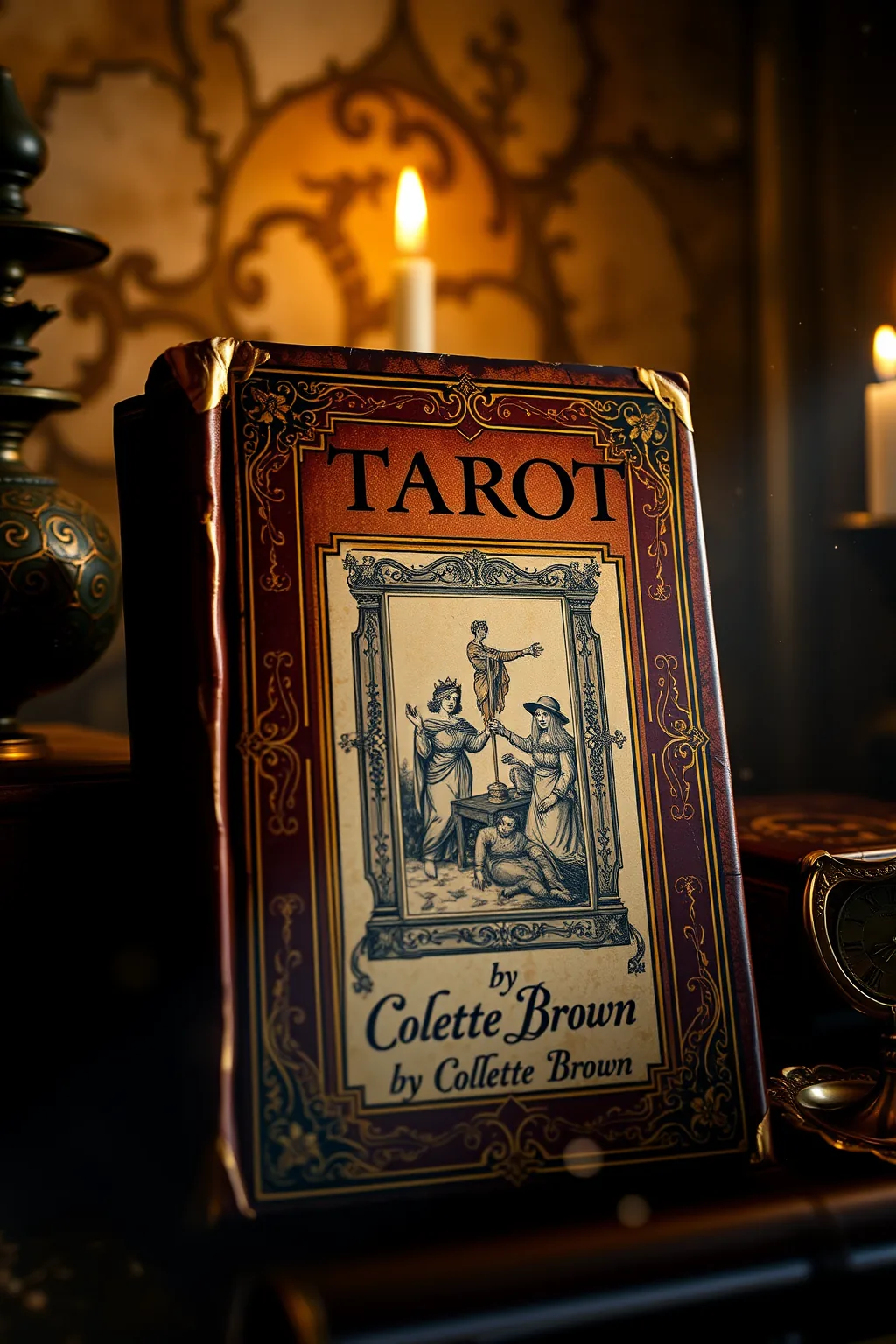
Colette Brown's "Tarot" approaches the familiar deck with a welcome academic rigor, stripping away much of the popular mysticism to reveal the underlying symbolic architecture. The strength lies in its systematic deconstruction of the Major Arcana, presenting them as a coherent philosophical narrative rather than a disparate collection of images. Brown’s analysis of the Fool’s journey, for instance, offers a compelling framework for understanding personal growth through archetypal stages. However, the book occasionally suffers from a density that might deter absolute beginners, particularly in its early chapters detailing historical origins. A passage discussing the Rider-Waite-Smith deck's influence, though crucial, could benefit from more visual aids to fully convey its impact. Despite this, the work provides a solid foundation for serious study. It is a valuable resource for those seeking depth beyond simple divinatory meanings.
📝 Description
72
### What It Is Colette Brown's "Tarot" offers a focused examination of the Tarot deck, moving beyond mere divination to explore its symbolic language and historical underpinnings. The work presents the cards not as fortune-telling devices but as a system of archetypes and allegories, integral to Western esoteric traditions. It aims to equip readers with a deeper understanding of the visual narratives and philosophical concepts embedded within each card, from the Fool's journey to the complex symbolism of the Major Arcana.
### Who It's For This book is structured for those interested in the Tarot as a contemplative tool and symbolic map, rather than solely as a predictive instrument. It will appeal to students of Western esotericism, Jungian psychology, comparative mythology, and individuals seeking a more analytical approach to the cards. Readers looking to engage with the Tarot's philosophical dimensions and its role in spiritual development will find value here.
### Historical Context The book situates the Tarot within a lineage of symbolic systems that have informed Western thought and practice. It acknowledges the deck's evolution from its 15th-century Italian origins, likely as a card game, to its later adoption and reinterpretation by occultists in the late 19th and early 20th centuries. Brown's work engages with this historical layering, presenting the Tarot as a dynamic text that has been continuously re-contextualized.
### Key Concepts Central to Brown's exploration is the concept of the Tarot as a psychological and spiritual atlas. The book emphasizes the archetypal nature of the figures depicted, linking them to universal human experiences and stages of consciousness. It also highlights the numerological and elemental correspondences that form the structural grammar of the deck, providing a framework for interpreting the interplay between different cards and their sequences.
💡 Why Read This Book?
• Gain a structured understanding of the Major Arcana as an archetypal journey, inspired by the book's detailed exploration of the Fool's progression. • Learn to interpret the Tarot through its historical esoteric context, appreciating its evolution from 15th-century Italy to occult reinterpretation. • Develop analytical skills for reading the cards as symbolic maps, focusing on concepts like numerological correspondences and elemental associations presented by Brown.
⭐ Reader Reviews
Honest opinions from readers who have explored this book.
❓ Frequently Asked Questions
What is the historical origin of the Tarot deck discussed in Colette Brown's book?
Colette Brown's "Tarot" traces the deck's origins to 15th-century Italy, where it likely began as a game before later occultists in the late 19th century reinterpreted its symbolism.
Does the book focus on divination or a deeper symbolic meaning of the Tarot?
The book emphasizes the Tarot as a system of archetypes and a symbolic language for exploring philosophical concepts and personal development, moving beyond purely divinatory applications.
Which esoteric traditions are explored in relation to the Tarot?
Brown's work situates the Tarot within Western esoteric traditions, examining its role as a psychological and spiritual atlas with connections to archetypal psychology and symbolic systems.
What is the significance of the Major Arcana according to Colette Brown?
The book presents the Major Arcana as a narrative of archetypal stages and universal human experiences, forming a coherent philosophical journey for the reader to explore.
Is this book suitable for beginners in Tarot study?
While offering a comprehensive overview, the book's analytical depth may be best suited for those with some prior exposure or a specific interest in the esoteric and symbolic aspects of the Tarot.
What are some key concepts Brown uses to explain Tarot symbolism?
Brown discusses concepts such as archetypes, numerological correspondences, elemental associations, and the Tarot's function as a symbolic map for consciousness and spiritual growth.
🔮 Key Themes & Symbolism
Archetypal Journey
The work frames the Tarot, particularly the Major Arcana, as a symbolic representation of the human journey through various archetypal stages. Brown elucidates how figures like the Fool, the Magician, and the High Priestess embody universal psychological and spiritual experiences. This perspective encourages readers to view the cards not as isolated symbols but as interconnected elements within a narrative of personal transformation and consciousness development, originating from the deck's 15th-century Italian roots.
Symbolic Language
Brown emphasizes the Tarot's function as a complex symbolic language, rich with numerological and elemental correspondences. The book details how these underlying structures contribute to the cards' meanings, offering a method for interpreting their interactions. This approach moves beyond simple divinatory meanings to a deeper appreciation of the visual and conceptual grammar that governs the deck, making it a tool for philosophical contemplation.
Historical Reinterpretation
A significant theme is the historical evolution and reinterpretation of the Tarot. Brown discusses its transformation from a 15th-century game into a profound tool for esoteric study, particularly through the work of occultists in the late 19th and early 20th centuries. The book acknowledges how different eras and thinkers have infused the cards with new layers of meaning, highlighting the Tarot's adaptability and enduring relevance across centuries.
Esoteric Framework
The book firmly places the Tarot within the broader context of Western esoteric traditions. It presents the deck as a 'psychological and spiritual atlas,' aligning it with practices that seek self-understanding and spiritual development. This framework encourages readers to engage with the Tarot as a sophisticated system for exploring consciousness, similar to other Hermetic or Kabbalistic symbolic systems.
💬 Memorable Quotes
“The Tarot functions as a symbolic map of consciousness.”
— This highlights the book's core thesis: that the Tarot is not merely a tool for prediction but a structured representation of psychological states and spiritual development, akin to a cartography of the inner world.
“Each card offers an archetype relevant to the human experience.”
— This emphasizes the universality of the Tarot's imagery, suggesting that the figures and scenes depicted resonate with fundamental patterns of human behavior, challenges, and growth across different cultures and times.
“Understanding the historical context illuminates the Tarot's symbolic layers.”
— This points to the importance of tracing the Tarot's lineage, from its origins as a 15th-century Italian game to its later occult interpretations, as key to unlocking its deeper esoteric meanings.
“Numerological and elemental correspondences provide a grammar for interpretation.”
— This interpretation focuses on the structural elements of the Tarot, suggesting that numerical and elemental systems are crucial for deciphering the relationships between cards and understanding their complex interplay.
“The Fool's journey represents a progression through distinct stages of awareness.”
— This concept underscores the narrative aspect of the Major Arcana, presenting the Fool's path as a metaphor for personal evolution, learning, and the unfolding of consciousness through a series of archetypal encounters.
🌙 Esoteric Significance
Tradition
Brown's work aligns with the Hermetic and psychological interpretations of esoteric symbolism. It views the Tarot as a system for understanding consciousness and spiritual development, echoing themes found in Western Hermeticism, which seeks gnosis through symbolic study. The book positions the Tarot not as a magical tool for external manipulation but as an internal map for self-discovery, consistent with modern esoteric approaches that integrate psychological depth.
Symbolism
Key symbols explored include the Fool, representing the uninitiated journey and potential, and the Major Arcana figures, which embody archetypal forces and stages of consciousness. The book also delves into the numerological and elemental correspondences that underpin the deck's structure, framing them as a sophisticated symbolic grammar essential for deeper interpretation and understanding of the cards' interconnected meanings.
Modern Relevance
Contemporary thinkers and practitioners in fields like Jungian psychology, archetypal studies, and contemplative spirituality often draw upon the symbolic depth of the Tarot as explored in works like Brown's. It informs modern approaches that utilize the cards for self-reflection, personal growth, and understanding psychological dynamics, bridging historical esoteric concepts with contemporary therapeutic and philosophical inquiry.
👥 Who Should Read This Book
• Students of Western Esotericism: Individuals seeking to understand the Tarot's place within historical occult traditions and its development from 15th-century origins. • Psychological Archetype Enthusiasts: Those interested in Jungian psychology and the concept of archetypes, who will find the book's analysis of the cards as symbolic representations of human experience compelling. • Contemplative Tarot Readers: Individuals who approach the Tarot as a tool for self-reflection and philosophical inquiry, rather than solely for divination, will appreciate its structured symbolic framework.
📜 Historical Context
Published in 2011, Colette Brown's "Tarot" emerged in an era where Tarot scholarship was increasingly diverse, moving beyond purely occultist perspectives. The work engages with the deck's long history, acknowledging its 15th-century Italian origins, possibly as a game like *tarocchi*. It critically examines the late 19th and early 20th-century occultist re-interpretations, particularly the influential Rider-Waite-Smith deck designed by Arthur Edward Waite and illustrated by Pamela Colman Smith, which significantly shaped modern Tarot symbolism. Brown's approach situates the Tarot within a broader lineage of symbolic systems, drawing parallels with philosophical and psychological frameworks, distinguishing it from purely divinatory manuals. This scholarly treatment positions the book as a contribution to the understanding of Tarot's evolution as a cultural and esoteric artifact, distinct from, yet informed by, earlier occult traditions.
📔 Journal Prompts
The Fool's initial step and its representation of beginning awareness.
Archetypal figures and their parallels to personal life challenges.
The structure of numerological correspondences within a chosen spread.
Interpreting the symbolic narrative of the Major Arcana sequence.
The historical evolution of a specific card's symbolism.
🗂️ Glossary
Major Arcana
The set of 22 trump cards in a Tarot deck, often interpreted as representing significant life lessons, archetypal figures, and stages of spiritual development.
Minor Arcana
The 56 cards of a Tarot deck divided into four suits (typically Wands, Cups, Swords, Pentacles), representing more mundane events, daily experiences, and specific situations.
Archetype
A universal, archaic pattern and image that derives from the collective unconscious and is a manifestation of a primordial human experience.
Esotericism
Belief systems and practices that are concerned with the inner life or the spiritual development of the individual, often involving secret knowledge or teachings.
Numerological Correspondences
The system of assigning symbolic meanings to numbers, often applied to Tarot cards to understand their relationships and progression within the deck.
Elemental Correspondences
The association of Tarot cards with the four classical elements (Fire, Water, Air, Earth), used to interpret their energies and influences.
Rider-Waite-Smith Deck
A highly influential Tarot deck first published in 1909, known for its fully illustrated Minor Arcana and its significant impact on modern Tarot symbolism and interpretation.