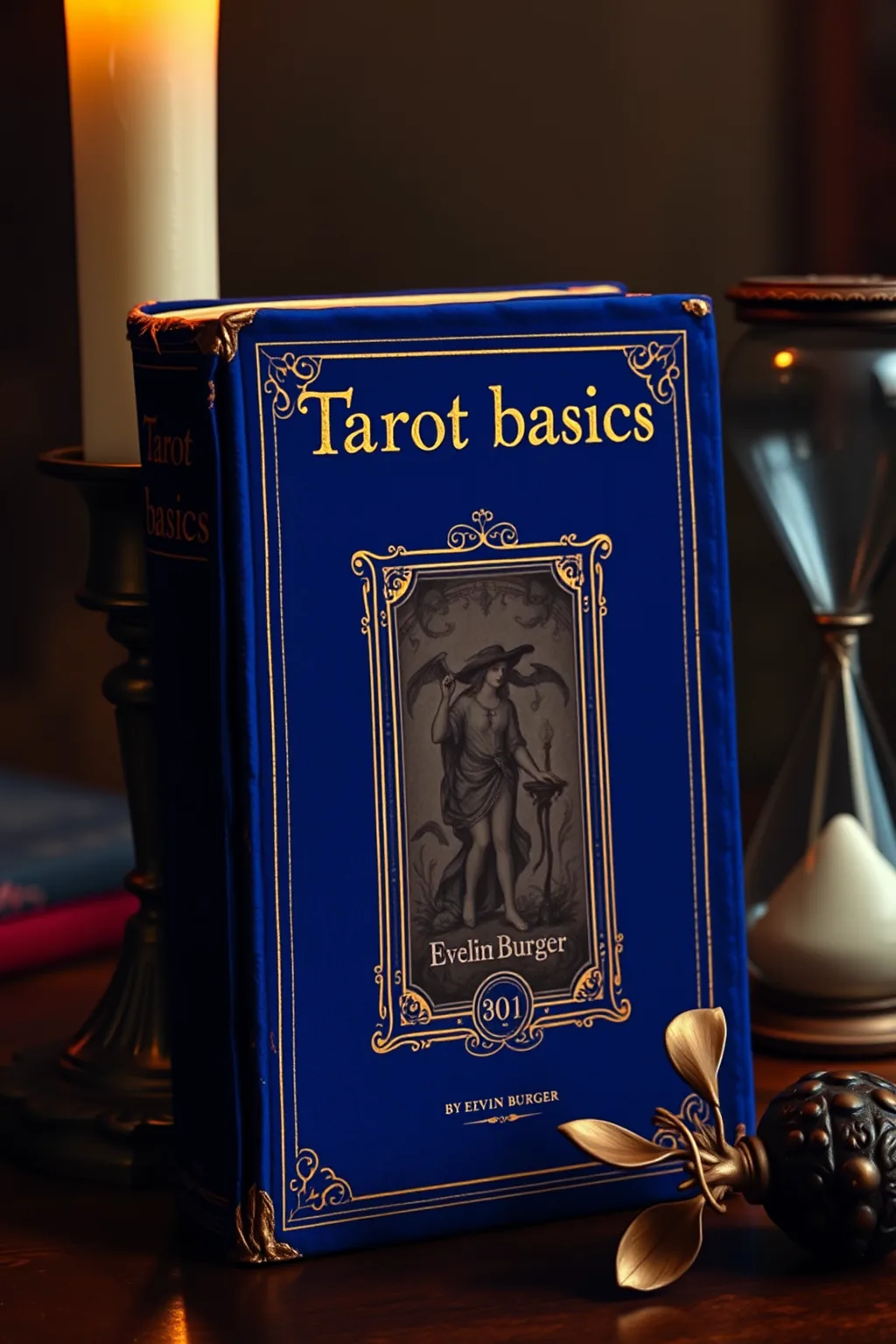
Tarot basics
 78
78

Tarot basics
Evelin Burger’s “Tarot Basics” provides a remarkably clear and uncluttered introduction to a subject often shrouded in arcane jargon. Its strength lies in its methodical approach, stripping away esoteric embellishments to focus on the practical mechanics of card interpretation. The section detailing the symbolism of the Minor Arcana, for instance, offers a direct correlation between the suit, the number, and a core archetypal meaning, making it easy for a beginner to grasp. However, the book’s very directness can also be its limitation; it occasionally feels overly simplified, potentially leaving readers wanting a deeper exploration of the psychological or spiritual underpinnings that more seasoned practitioners seek. The concept of the Fool's Journey, though mentioned, could benefit from more extensive elaboration. Ultimately, Burger delivers a functional, no-frills guide that serves its stated purpose effectively, offering a solid launchpad for nascent cartomancers.
📝 Description
78
### What It Is Tarot Basics by Evelin Burger offers a foundational exploration of the Tarot deck. It functions as an accessible entry point for individuals new to cartomancy, presenting core principles and methods for interpreting the cards. The work systematically breaks down the structure of the Tarot, including the Major and Minor Arcana, and introduces fundamental spread layouts. It aims to demystify the process of card reading, moving beyond superstition to a structured approach to divination and self-reflection.
### Who It's For This book is primarily intended for complete novices to the Tarot. Those who have never touched a Tarot deck or who feel intimidated by the vastness of esoteric literature will find Burger's approach straightforward. It is also suitable for individuals seeking a no-nonsense guide to understanding the basic meanings and applications of the cards for personal insight or to begin a practice. It caters to the intellectually curious but not yet initiated.
### Historical Context Published in 1997, Evelin Burger's "Tarot Basics" emerged during a period of renewed popular interest in Western esoteric traditions, following the New Age movements of the 1970s and 80s. This era saw a proliferation of accessible guides to various occult practices. Unlike more academic or historically dense works like A.E. Waite's "The Pictorial Key to the Tarot" (1910), Burger's book aimed for immediate practical application for a contemporary audience, sidestepping extensive historical etymologies in favor of direct instruction.
### Key Concepts The book introduces essential Tarot concepts, such as the distinction between the 22 Major Arcana and the 56 Minor Arcana. It details the four suits (Wands, Cups, Swords, Pentacles) and the significance of court cards (Page, Knight, Queen, King). Furthermore, it explains basic numerological associations within the Minor Arcana and provides guidance on performing simple one-card and three-card readings, emphasizing the Tarot as a tool for psychological exploration and intuitive development.
💡 Why Read This Book?
• Learn the fundamental structure of the Tarot deck, including the distinct roles of the 22 Major Arcana and 56 Minor Arcana, enabling you to engage with any Tarot spread. • Understand the core meanings of the four suits—Wands, Cups, Swords, and Pentacles—as presented by Burger, allowing for nuanced interpretations beyond simple keywords. • Gain practical skills for performing simple readings, such as one-card draws and three-card spreads, empowering immediate personal reflection using the Tarot.
⭐ Reader Reviews
Honest opinions from readers who have explored this book.
❓ Frequently Asked Questions
What is the difference between Major and Minor Arcana in Tarot Basics?
In Tarot Basics, the 22 Major Arcana cards represent significant life lessons and archetypal energies, while the 56 Minor Arcana cards detail the everyday events and challenges, divided into four suits (Wands, Cups, Swords, Pentacles).
Does Evelin Burger's book explain how to read Tarot cards for others?
While the focus is on personal interpretation and understanding, the principles taught in Tarot Basics can be applied to reading for others. The book covers basic spreads and interpretation methods suitable for developing this skill.
What are the four suits mentioned in Tarot Basics?
Tarot Basics identifies the four suits as Wands, Cups, Swords, and Pentacles. Each suit is associated with different aspects of life and corresponds to elements and energies that influence our experiences.
Is Tarot Basics suitable for someone with no prior knowledge of Tarot?
Yes, Tarot Basics is specifically designed for beginners. Evelin Burger presents the information in a clear, structured manner, making it an ideal starting point for individuals completely new to Tarot card reading.
When was Evelin Burger's Tarot Basics first published?
Evelin Burger's "Tarot Basics" was first published in 1997, reflecting a period of significant public interest in accessible esoteric guides.
What is the purpose of the court cards in Tarot Basics?
Tarot Basics explains the court cards (Page, Knight, Queen, King) as representing people, personality types, or specific roles within the context of a reading, adding a human element to the interpretation.
🔮 Key Themes & Symbolism
Structure of the Deck
This theme dissects the fundamental architecture of the Tarot, differentiating between the 22 Major Arcana and the 56 Minor Arcana. The work details how each component contributes to the overall narrative and divinatory potential of the deck. It explains the significance of the sequential journey through the Major Arcana, representing archetypal stages of human experience, and the cyclical nature of the Minor Arcana, reflecting daily life and specific challenges.
Suit and Number Symbolism
Burger systematically explores the symbolism inherent in the four suits—Wands, Cups, Swords, and Pentacles—and their corresponding numbers. Each suit is linked to specific elements and areas of life (e.g., Wands with action and creativity, Cups with emotions and relationships). The numerical progression within each suit, from Ace to Ten, is presented as a development or intensification of the suit's core theme, providing a framework for interpreting the Minor Arcana.
Basic Reading Techniques
A central theme is the practical application of Tarot knowledge through reading techniques. The book introduces foundational spread patterns, starting with simple one-card draws for daily guidance and progressing to three-card layouts that explore past, present, and future. Emphasis is placed on developing an intuitive connection with the cards while adhering to structured interpretation methods, making the practice accessible for self-reflection.
The Fool's Journey Archetype
While presented as a foundational concept, the 'Fool's Journey' serves as an overarching narrative framework. This theme illustrates how the sequence of the Major Arcana can be seen as the path of the Fool, embarking on a life cycle of experiences, lessons, and transformations. It provides a cohesive mythological structure that imbues the entire deck with a sense of purpose and progression.
💬 Memorable Quotes
“The Major Arcana represent the great archetypes and major life lessons.”
— This highlights the foundational distinction between the Major and Minor Arcana, positioning the 22 Major cards as representing pivotal spiritual and psychological turning points in an individual's life.
“Each suit corresponds to an element and a different aspect of life.”
— This explains the elemental associations (Fire for Wands, Water for Cups, Air for Swords, Earth for Pentacles) and how they relate to distinct domains such as inspiration, emotion, intellect, and material reality.
“Court cards can represent people or specific personality traits.”
— This offers a practical guideline for interpreting the Page, Knight, Queen, and King cards, suggesting they can signify individuals in a reading or particular characteristics of the querent or situation.
“A simple three-card spread can reveal past, present, and future.”
— This points to a fundamental reading technique, demonstrating how a limited number of cards can be arranged to provide a concise overview of a situation's temporal flow and development.
“The Tarot is a tool for self-discovery and intuitive development.”
— This frames the purpose of Tarot study beyond mere prediction, emphasizing its value as a psychological mirror and a means to enhance one's inner knowing and self-awareness.
🌙 Esoteric Significance
Tradition
While "Tarot Basics" doesn't explicitly align with a single esoteric lineage like Hermeticism or Kabbalah, it draws heavily from the Western esoteric tradition's approach to cartomancy. It assumes the Tarot deck itself, particularly the Rider-Waite-Smith imagery popularized in the early 20th century, carries symbolic weight. The work fits within a broader modern tradition that views Tarot as a tool for psychological insight and personal development, rather than solely a divinatory device.
Symbolism
The book centers on the symbolism of the Major Arcana, such as The Fool representing new beginnings and potential, and The World signifying completion and integration. It also details the core symbolism of the Minor Arcana suits: Wands (action, passion), Cups (emotions, relationships), Swords (intellect, conflict), and Pentacles (material world, finances), explaining how these elemental associations frame interpretations.
Modern Relevance
Contemporary Tarot practitioners, especially those focused on psychological and self-help applications, continue to benefit from the clear, foundational approach pioneered by books like "Tarot Basics." Modern online courses and beginner-focused communities often echo Burger's emphasis on understanding suit meanings and basic spread structures, making it a relevant stepping stone for digital-native learners.
👥 Who Should Read This Book
• Absolute beginners to Tarot seeking a clear, step-by-step introduction to card meanings and basic reading techniques. • Individuals interested in using Tarot for self-reflection and personal growth who prefer a practical, no-nonsense approach over complex historical or mystical lore. • Comparative-religion or occult studies students needing a foundational text to understand the core components of a standard Tarot deck before engaging with more advanced material.
📜 Historical Context
Evelin Burger's "Tarot Basics," published in 1997, arrived during a significant resurgence of interest in esoteric subjects, fueled by the burgeoning internet and a post-New Age spiritual seeking. This period saw a demand for accessible, practical guides to practices like Tarot, astrology, and Wicca. Burger’s work competed with, yet complemented, more established texts. While authors like Rachel Pollack were exploring deeper symbolic and psychological layers in works like "Seventy-Eight Degrees of Wisdom" (published earlier but influential throughout the 90s), Burger targeted the absolute beginner. The late 1990s was also a time when online forums and early websites began to democratize esoteric knowledge sharing, making foundational texts like Burger's widely available and discussed.
📔 Journal Prompts
The significance of The Fool's initial journey.
Reflecting on the elemental associations of the Wands suit in your life.
Interpreting the Court Cards as aspects of personality.
Applying the three-card spread to a recent event.
Understanding the symbolic progression within the Pentacles suit.
🗂️ Glossary
Major Arcana
The 22 trump cards of the Tarot deck, representing significant archetypal figures, life lessons, and spiritual journeys. They are often seen as the 'major' events or themes in a reading.
Minor Arcana
The 56 cards of the Tarot deck divided into four suits (Wands, Cups, Swords, Pentacles). They typically represent everyday occurrences, challenges, and details of life.
Suits
The four divisions of the Minor Arcana: Wands (fire, action), Cups (water, emotions), Swords (air, intellect), and Pentacles (earth, material world). Each suit has unique symbolism and themes.
Court Cards
The four royal cards within each suit: Page, Knight, Queen, and King. They can represent people, personality traits, or specific dynamics within a reading.
Spread
A specific arrangement of Tarot cards laid out in a pattern for interpretation. Different spreads are designed to answer different types of questions or explore various aspects of a situation.
The Fool's Journey
An archetypal narrative that describes the progression through the 22 Major Arcana cards, often interpreted as the soul's journey through life's experiences and lessons.
Cartomancy
The practice of divination or fortune-telling using playing cards or, in this context, Tarot cards. It involves interpreting the symbols and combinations of the cards.