Prophéties

 78
78

Prophéties



The 1668 edition of Nostredame's "Propheties" remains a foundational text for anyone investigating the history of Western prophecy. Its enduring appeal lies not in clarity, but in its profound ambiguity. The quatrains, penned with a linguistic tapestry that challenges even modern scholars, offer a glimpse into the mind of a Renaissance intellectual grappling with a turbulent era. A particular strength is the sheer volume of material, allowing for endless reinterpretation across generations. However, its primary limitation is precisely this opacity; without extensive commentary and historical context, the verses can easily devolve into Rorschach tests for pre-existing beliefs. The quatrain referencing "the great king of terror" and "the year 1999" exemplifies this, sparking debate for centuries with little definitive conclusion. The work is a historical artifact as much as a prophetic one, a testament to humanity's persistent fascination with the future. It serves as a critical document for understanding the evolution of esoteric thought, even if its predictive accuracy remains a subject of fervent disagreement.
📝 Description
78
### What It Is
Nostredame's "Propheties," first published in its complete form in 1668, presents a collection of quatrains, or four-line poems, organized into centuries. These cryptic verses have been interpreted as predictions of future events, ranging from political upheavals to natural disasters. The original text is dense, employing a unique blend of French, Latin, Greek, and Occitan, which has fueled centuries of scholarly and popular analysis. The work is not a narrative but a compendium of enigmatic pronouncements, demanding careful interpretation.
### Who It's For
This volume is for the serious student of esotericism, historical prophecy, and Renaissance intellectual currents. It will appeal to those who engage with primary source material and are not deterred by linguistic complexity or interpretive ambiguity. Readers interested in the history of divination, the psychology of prediction, or the cultural impact of prophetic texts will find substantial material. It is particularly suited for individuals seeking to understand the roots of Western esoteric traditions and their engagement with perceived future trajectories.
### Historical Context
The "Propheties" emerged from a period of intense religious and political flux in 16th-century Europe. Michel de Nostredame, a physician and astrologer, composed these verses during the French Wars of Religion and the broader anxieties of the Renaissance. His work was published amidst widespread interest in astrology, alchemy, and apocalyptic literature, often under scrutiny from religious authorities. The 1668 edition represents a significant consolidation and dissemination of his prophecies, solidifying their place in occult literature despite ongoing debate about their authenticity and meaning.
### Key Concepts
The core of "Propheties" lies in its quatrains, which are believed by adherents to encode future events through symbolic language and astrological allusions. Nostredame’s method, if it can be called that, appears to blend astrological calculations with historical precedents and prophetic visions. Central to understanding the text is the concept of "quatrains" themselves, the specific poetic structure used. Another key element is the allegorical nature of the predictions, which often require deciphering hidden meanings related to celestial events, historical figures, and geographical locations. The work also touches upon cyclical theories of history and the potential for foreknowledge.
✍️ Author
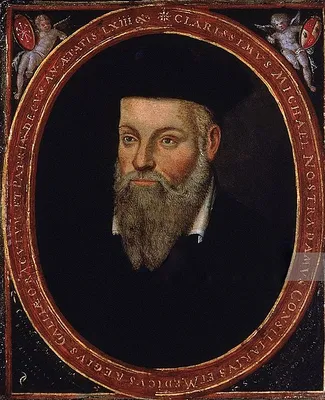
Michel de Nostredame, Henry Robert
Michel de Nostredame (December 1503 – July 1566), usually Latinised as Nostradamus, was a French astrologer, apothecary, physician, and reputed seer, who is best known for his book Les Prophéties (published in 1555), a collection of 942 poetic quatrains allegedly predicting future events. Nostradamus's father's family had originally been Jewish, but had converted to Catholic Christianity a generation before Nostradamus was born.
💡 Why Read This Book?
• Gain insight into the historical context of Renaissance prophecy by examining the quatrains penned during the French Wars of Religion, understanding how contemporary anxieties shaped predictive literature. • Analyze the unique linguistic style and poetic structure (quatrains) employed by Nostredame, a method that has influenced subsequent prophetic traditions and requires careful decipherment. • Explore the enduring cultural impact of the "Propheties," specifically how certain predictions, like the famous 1999 quatrain, have been interpreted and reinterpreted, revealing patterns in collective prognostication.
⭐ Reader Reviews
Honest opinions from readers who have explored this book.
❓ Frequently Asked Questions
What is the original language of Nostredame's Propheties?
The original text of "Propheties" by Nostredame is a complex mix of French, Latin, Greek, and Occitan. This linguistic fusion contributes to the text's enigmatic nature and the challenges faced by translators and interpreters.
When was the first complete edition of Propheties published?
The first complete edition of Nostredame's "Propheties," consolidating his quatrains, was published in 1668. Earlier versions existed, but this edition is considered the definitive compilation of his prophetic verses.
Who was Michel de Nostredame?
Michel de Nostredame (Nostradamus) was a 16th-century French physician, astrologer, and reputed seer. He gained renown for his collection of prophecies, "Propheties," which he published throughout his life, culminating in the posthumous editions that cemented his legacy.
How are Nostredame's prophecies structured?
Nostredame's prophecies are structured as quatrains, which are four-line stanzas. These are further organized into 'Centuries,' collections of 100 quatrains, forming the bulk of his published prophetic work.
What is the historical significance of the 1668 edition?
The 1668 edition is significant as it represents a major consolidation and widely circulated version of Nostredame's complete prophecies. It played a crucial role in disseminating his work and solidifying its place in esoteric and occult traditions.
Are Nostredame's prophecies considered literal predictions?
Interpretations vary widely. While some believe Nostredame's quatrains are literal predictions, many scholars and esotericists view them as allegorical, symbolic, or reflections of the author's era, requiring significant interpretation to connect to specific events.
🔮 Key Themes & Symbolism
Quatrain Structure
The "Propheties" are famously composed of quatrains, four-line stanzas that form the fundamental unit of Nostredame's predictive output. This specific poetic form, while seemingly simple, allowed for dense encoding of meaning, blending imagery, astrological references, and historical allusions. The repetition of this structure across centuries of prophecies creates a rhythmic, incantatory effect, inviting sustained contemplation. Understanding the quatrain as a container for prophecy is crucial to engaging with the text's unique methodology and its influence on subsequent divination practices and esoteric literature.
Astrological Allusions
Central to interpreting Nostredame's work is the pervasive presence of astrological symbolism. References to planets, constellations, eclipses, and celestial configurations are woven throughout the quatrains. These are not mere decorative elements but are often understood as key indicators for dating or contextualizing the predicted events. The work implies a cosmic order influencing human affairs, a hallmark of Renaissance esoteric thought. Deciphering these astrological cues is a primary task for those seeking to unlock the specific meanings Nostredame allegedly embedded within his verses.
Historical Cycles
Nostredame's "Propheties" often allude to recurring patterns in history, suggesting a cyclical view of time rather than a strictly linear progression. Events are presented as echoes of past occurrences, or as part of a larger, unfolding destiny. This concept of historical recurrence is a significant theme, implying that by understanding past epochs and their characteristics, one can anticipate future developments. The work taps into a deep-seated human interest in identifying grand narratives and predictable arcs within the chaos of human events.
Ambiguity and Interpretation
Perhaps the most defining characteristic of Nostredame's "Propheties" is its inherent ambiguity. The verses are deliberately cryptic, employing coded language, puns, and layered meanings. This lack of explicit clarity has allowed the prophecies to remain relevant across centuries, adaptable to new historical contexts and interpretations. The method encourages the reader to actively participate in constructing meaning, making the act of interpretation itself a key component of engaging with the text. This invites diverse schools of thought to find their own validation within its lines.
💬 Memorable Quotes
“The year 1999, the seventh month, From the sky will come a great King of Terror.”
— This famous quatrain, often cited regarding the end of the second millennium, exemplifies the text's prophetic nature and its capacity for widespread interpretation. Its specific date and ominous prediction have fueled centuries of speculation about apocalyptic events.
“The beast, the sick, the army, famine, war, Will be found all over Europe.”
— This verse speaks to the widespread anxieties of Nostredame's era, marked by conflict and disease. It reflects a perceived cyclical nature of suffering and societal collapse that resonates with historical patterns.
“The great one will be struck down in the day by a thunderbolt.”
— This passage, like many others, is open to symbolic or literal readings. It could refer to the downfall of a leader through political intrigue, natural disaster, or even divine intervention, highlighting the text's polysemous quality.
“When the bells of God begin to sound, And the Pope is taken prisoner.”
— This quatrain points to significant religious and political upheaval, specifically referencing the Papacy. It suggests that future events will involve major shifts in ecclesiastical and temporal power structures.
“The language of the prophecy is French, but the code is hidden.”
— This interpretation captures the essence of Nostredame's cryptic style. While the primary language is French, the true meaning is concealed through complex symbolism and wordplay, requiring dedicated effort to unravel.
🌙 Esoteric Significance
Tradition
Nostredame's "Propheties" are firmly rooted in the Western Esoteric Tradition, drawing heavily on Hermeticism, Renaissance astrology, and potentially Kabbalistic concepts of hidden knowledge. He operated within a lineage that sought to understand the divine through the study of natural phenomena and symbolic language, viewing the cosmos as a reflection of divine order. His work departs from purely theological interpretations by offering a system of divination tied to celestial mechanics and historical patterns, positioning him as a bridge between medieval prognostication and later occult revival movements.
Symbolism
Key symbols in "Propheties" include celestial bodies (Sun, Moon, planets) representing cosmic influences and divine will, and animals (lions, eagles, serpents) often symbolizing nations, rulers, or specific historical forces. The concept of the "King of Terror" is a potent motif representing destructive forces or figures destined to bring about significant change. These symbols are not arbitrary but draw from established iconographies within astrological and allegorical traditions, requiring a lexicon of esoteric meanings to begin deciphering.
Modern Relevance
Contemporary esoteric practitioners and historical researchers continue to engage with Nostredame's "Propheties." Modern astrologers may reference his astrological allusions, while prophecy enthusiasts analyze his quatrains for perceived future events. Various esoteric schools, particularly those focused on Western Hermeticism and divination, often cite him as a foundational figure. His work remains a touchstone for discussions on fate, free will, and the human desire to comprehend and anticipate the unfolding of time.
👥 Who Should Read This Book
• Students of Renaissance history and occultism seeking primary source material on 16th-century prophetic traditions. • Researchers of comparative divination practices interested in the structure and interpretation of quatrain-based prophecy. • Individuals fascinated by the historical reception and enduring influence of prophetic texts in Western culture.
📜 Historical Context
Michel de Nostredame's "Propheties" emerged in 16th-century France, a period rife with religious strife, political instability, and burgeoning interest in occult sciences. Published initially in fragmented forms starting in 1555, the work gained traction amidst the anxieties of the French Wars of Religion. Nostredame, a physician trained in Padua and Montpellier, operated within an intellectual milieu that included astrology, alchemy, and Neoplatonism. His prophecies were viewed with suspicion by some religious authorities, yet they found a receptive audience among those seeking meaning in turbulent times. Contemporaries like the astrologer Conrad Lycosthenes were also publishing on similar themes of prognostication. The 1668 edition, appearing well after Nostredame's death in 1566, represents a significant consolidation of his verses into the now-familiar structure of centuries, cementing its status in esoteric literature and sparking continuous debate over its predictive veracity.
📔 Journal Prompts
The "King of Terror" quatrain's enduring impact.
Deciphering the astrological allusions in a chosen century.
Comparing Nostredame's historical context to contemporary anxieties.
The role of ambiguity in prophetic texts.
Reflecting on the cyclical versus linear view of time presented.
🗂️ Glossary
Quatrain
A stanza or poem consisting of four lines. In Nostredame's work, these four-line verses are the primary vehicle for his prophecies, each containing a cryptic prediction.
Century
A collection of 100 quatrains. Nostredame organized his prophecies into ten such 'Centuries,' forming the main structure of his published work.
Occitan
A Romance language historically spoken in southern France, parts of Italy, and Spain. Nostredame incorporated Occitan, along with French, Latin, and Greek, into his prophecies.
Divination
The practice of seeking knowledge of the future or the unknown by supernatural means. Nostredame's work is a form of textual divination.
Hermeticism
A philosophical tradition based on writings attributed to Hermes Trismegistus. It emphasizes hidden knowledge, the correspondence between macrocosm and microcosm, and spiritual ascent.
Astrology
The study of the movements and relative positions of celestial bodies interpreted as having an influence on human affairs and the natural world. A key component in Nostredame's method.
Esotericism
Belief systems and practices that focus on hidden knowledge, spiritual initiation, and the pursuit of ultimate truth, often distinct from mainstream religious or scientific doctrines.