My Tarot Reading Journal
 82
82

My Tarot Reading Journal
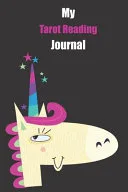
Ukouw Publishing's "My Tarot Reading Journal" offers a functional, no-frills approach to documenting Tarot readings. Its straightforward 6x9, 110-page format is practical, providing ample space for notes and sketches without unnecessary embellishments. The inclusion of a unicorn motif, while perhaps intended as a whimsical touch, feels somewhat disconnected from the serious intent of deep interpretive work. The journal's strength lies in its simplicity; it allows the user to dictate the structure of their readings and interpretations, avoiding pre-defined spreads that might not suit everyone. A notable limitation is the lack of any guiding prompts or sections for common reading analyses, which could aid less experienced readers. For instance, a section prompting reflection on the querent's emotional state in relation to the 'The High Priestess' card, a common figure in Tarot, would have added value. Ultimately, this journal serves its basic purpose efficiently but offers little beyond a blank canvas for the Tarot enthusiast.
📝 Description
82
### What It Is
My Tarot Reading Journal, first published in May 2019 by Ukouw Publishing, functions as a dedicated space for individuals to record and analyze their Tarot readings. It is structured as a classic notebook, featuring 110 pages of white lined paper suitable for extensive writing, sketching, and note-taking. The dimensions, 6 x 9 inches, provide ample room for detailed entries without being cumbersome.
### Who It's For
This journal is designed for anyone engaging with Tarot, from novice interpreters seeking to track their progress to seasoned practitioners who value meticulous record-keeping. Its straightforward format makes it accessible to those new to the practice, while its 110 pages offer sufficient capacity for dedicated users. It serves as an excellent gift for individuals interested in divination, self-reflection, or journaling as a spiritual practice.
### Historical Context
The publication of My Tarot Reading Journal in 2019 situates it within a contemporary resurgence of interest in esoteric practices, including Tarot divination. This period saw a proliferation of accessible tools and resources aimed at demystifying spiritual disciplines. Unlike earlier, more academic or specialized occult texts, this journal represents a trend toward user-friendly, mass-marketed aids for personal spiritual exploration, drawing from traditions that gained prominence in the late 19th and early 20th centuries with figures like Arthur Edward Waite.
### Key Concepts
The core concept is structured record-keeping for Tarot readings. This involves logging card positions, the cards drawn, and the interpreter's thoughts on their meaning within a specific spread. The journal implicitly encourages the practice of interpreting the symbolism inherent in Tarot cards, such as the archetypal figures and numerological significance found in decks like the Rider-Waite-Smith. It also supports the development of intuitive understanding through consistent practice and reflection on patterns observed over time.
💡 Why Read This Book?
• Gain a structured method for tracking your Tarot readings, enabling you to identify recurring patterns and personal interpretations over time, distinct from casual note-taking. • Develop a deeper understanding of Tarot symbolism, such as the 'The Fool' card's representation of new beginnings, by consistently recording and reflecting on its appearance in your spreads. • Cultivate a personal divination practice that builds upon itself, using the journal to document insights gained from specific spreads like the Celtic Cross, facilitating spiritual growth beyond isolated readings.
⭐ Reader Reviews
Honest opinions from readers who have explored this book.
❓ Frequently Asked Questions
What is the primary purpose of My Tarot Reading Journal?
The journal's primary purpose is to provide a dedicated space for users to record, analyze, and reflect upon their Tarot card readings, aiding in personal interpretation and tracking progress.
How many pages does the journal contain?
My Tarot Reading Journal contains 110 pages of classic white lined paper, offering ample space for writing and sketching.
What is the physical size of the journal?
The journal measures 6 x 9 inches, a common notebook size that balances portability with sufficient writing area.
Is this journal suitable for beginners in Tarot?
Yes, its simple lined format is suitable for beginners as it doesn't impose specific structures, allowing them to learn and record at their own pace.
When was My Tarot Reading Journal first published?
The book was first published on May 8, 2019, by Ukouw Publishing.
What kind of paper is used in the journal?
The journal uses classic white lined paper, which is standard for notebooks and journals intended for writing.
🔮 Key Themes & Symbolism
Structured Divination Practice
The journal emphasizes the importance of systematic recording in Tarot divination. By providing 110 lined pages, it encourages users to document each reading meticulously. This includes noting the date, the spread used (e.g., Celtic Cross, three-card draw), the cards drawn in each position, and the interpretation. This structured approach moves beyond casual readings, fostering a disciplined engagement with the cards and allowing for the identification of personal patterns and evolving understanding of Tarot symbolism.
Personal Interpretation and Intuition
While the journal itself is a blank slate, its purpose is to facilitate the development of personal interpretive skills. Users are encouraged to record their immediate intuitive responses to the cards, alongside more analytical interpretations. This process helps in distinguishing between learned meanings and genuine inner knowing. The act of writing and sketching within the journal serves to solidify these insights, making the connection between the querent, the cards, and the subtle energies at play more tangible.
Tarot Symbolism and Archetypes
The journal serves as a canvas for exploring the rich symbolism inherent in Tarot decks, such as the Rider-Waite-Smith. Users can document their understanding of archetypes like 'The Emperor' or 'The Lovers' as they appear in readings. By consistently recording these interpretations, practitioners can deepen their familiarity with the numerological, astrological, and symbolic layers of each card, building a personal lexicon of meanings grounded in their own experience.
Self-Reflection and Growth
Ultimately, My Tarot Reading Journal supports a path of self-reflection and personal growth. The act of documenting readings provides a mirror to the user's inner landscape and current life circumstances. Reviewing past entries can reveal areas of progress, persistent challenges, or subconscious patterns. This introspective process, facilitated by the journal, allows for a more conscious engagement with life's journey, using Tarot as a tool for insight and empowerment.
💬 Memorable Quotes
“Lined - Size: 6 x 9'' - Notebook - Journal - Planner - Dairy - 110 Pages”
— This excerpt, detailing the journal's physical specifications, highlights its utilitarian design. It emphasizes the practical aspects—size, page count, and lined format—making it a straightforward tool for recording, rather than a text offering esoteric theory.
“Makes an excellent gift for any occasion”
— This phrase positions the journal as a versatile present. It suggests the book's broad appeal, suitable for anyone interested in Tarot or journaling, regardless of their specific spiritual path or experience level.
“For Writing, Sketching, Journals and Hand Lettering”
— This indicates the journal's multipurpose nature. Beyond just recording readings, it invites creative expression, allowing users to incorporate sketches of cards, diagrams of spreads, or unique lettering styles into their practice.
“Unicorn & Tarot Reading notebook / Journal”
— This highlights a distinctive design element, the unicorn, combined with its core function. It suggests a blend of whimsical imagery and practical application for those who appreciate such aesthetic choices in their spiritual tools.
“Classic White Lined Paper”
— This specifies the interior material, emphasizing a traditional and clean aesthetic. The 'classic white lined paper' implies a focus on readability and a clean surface for writing, free from distracting elements.
🌙 Esoteric Significance
Tradition
This journal aligns with the modern, personalized approach to divination that has evolved from various Western esoteric traditions, particularly those influenced by the Rider-Waite-Smith paradigm popularized in the early 20th century. While not tied to a specific lineage like Kabbalah or Gnosticism, it serves as a practical aid for practitioners engaging with Tarot's archetypal and symbolic language, which itself draws from diverse esoteric streams.
Symbolism
The journal's design, featuring a unicorn, introduces a symbol often associated with purity, innocence, and magic. Within esoteric contexts, the unicorn can represent untamed spiritual power and the pursuit of the divine. While not a core symbol in traditional Tarot decks, its inclusion suggests a modern interpretation that blends popular mystical imagery with the practice of Tarot interpretation, encouraging users to find personal meaning.
Modern Relevance
Contemporary practitioners, particularly those engaged in self-help spirituality and intuitive development, find value in such journals. Thinkers and communities focused on mindfulness, digital witchcraft, and accessible divination tools often utilize resources like this. It supports the modern trend of integrating spiritual practices into daily life through easily manageable, personal record-keeping systems, making esoteric tools more approachable.
👥 Who Should Read This Book
• Aspiring Tarot readers seeking a simple, structured way to begin documenting their practice and track their learning curve. • Experienced Tarot enthusiasts who value detailed record-keeping to analyze reading patterns and deepen their intuitive insights over time. • Individuals looking for a practical, accessible gift for friends or family interested in divination, self-discovery, or journaling as a spiritual tool.
📜 Historical Context
Published in May 2019, My Tarot Reading Journal emerged during a period of significant mainstreaming of esoteric practices. The early 21st century witnessed a growing interest in divination, mindfulness, and alternative spirituality, fueled by online communities and accessible media. This coincided with a broader cultural trend towards self-care and personal development. Unlike earlier, more esoteric-focused publications from the late 19th century, such as those by the Hermetic Order of the Golden Dawn or A.E. Waite's own scholarly works on Tarot, Ukouw Publishing's journal represents a mass-market approach. It caters to a wider audience seeking practical tools for personal exploration rather than deep dives into the historical or philosophical underpinnings of Tarot. This democratization of occult tools contrasts with the more guarded dissemination of knowledge within traditional occult societies of the past.
📔 Journal Prompts
The 'The High Priestess' card's appearance and your initial feelings.
Recurring symbols or themes across multiple readings.
The querent's question versus the cards drawn.
The relationship between 'The Emperor' and 'The Empress' in a reading.
How the sequence of cards in a spread unfolded.
🗂️ Glossary
Tarot Reading
The practice of using a deck of Tarot cards to gain insight into a situation, question, or personal state. It involves interpreting the symbolic meaning of cards drawn in a specific order or 'spread'.
Spread
A specific arrangement of Tarot cards laid out to address a particular question or area of inquiry. Examples include the Celtic Cross, three-card Past-Present-Future, or a custom layout.
Querent
The person for whom a Tarot reading is being performed, or the person asking the question being addressed by the cards.
Interpretation
The process of assigning meaning to the Tarot cards drawn in a reading, based on traditional symbolism, intuition, and the context of the spread and question.
Symbolism
The use of images, figures, colors, and numbers within Tarot cards to represent abstract concepts, archetypes, or energies. Understanding symbolism is key to Tarot interpretation.
Archetype
A universal, symbolic figure or pattern of behavior found in the collective unconscious, such as 'The Fool,' 'The Magician,' or 'The Mother,' often represented by cards in the Major Arcana.
Divination
The practice of seeking knowledge of the future or the unknown by supernatural means. Tarot is one method of divination.









![Cicero in twenty eight volumes. Vol.20: De senectute, De amicitia, De divinatione [Loeb 154]](/img/thumb/cicero-in-twenty-eight-volumes-vol-20-de-senectute-de-amicitia-de-divinatione-loeb-154-cicero-marcus-tulius-106-43-bce.webp)