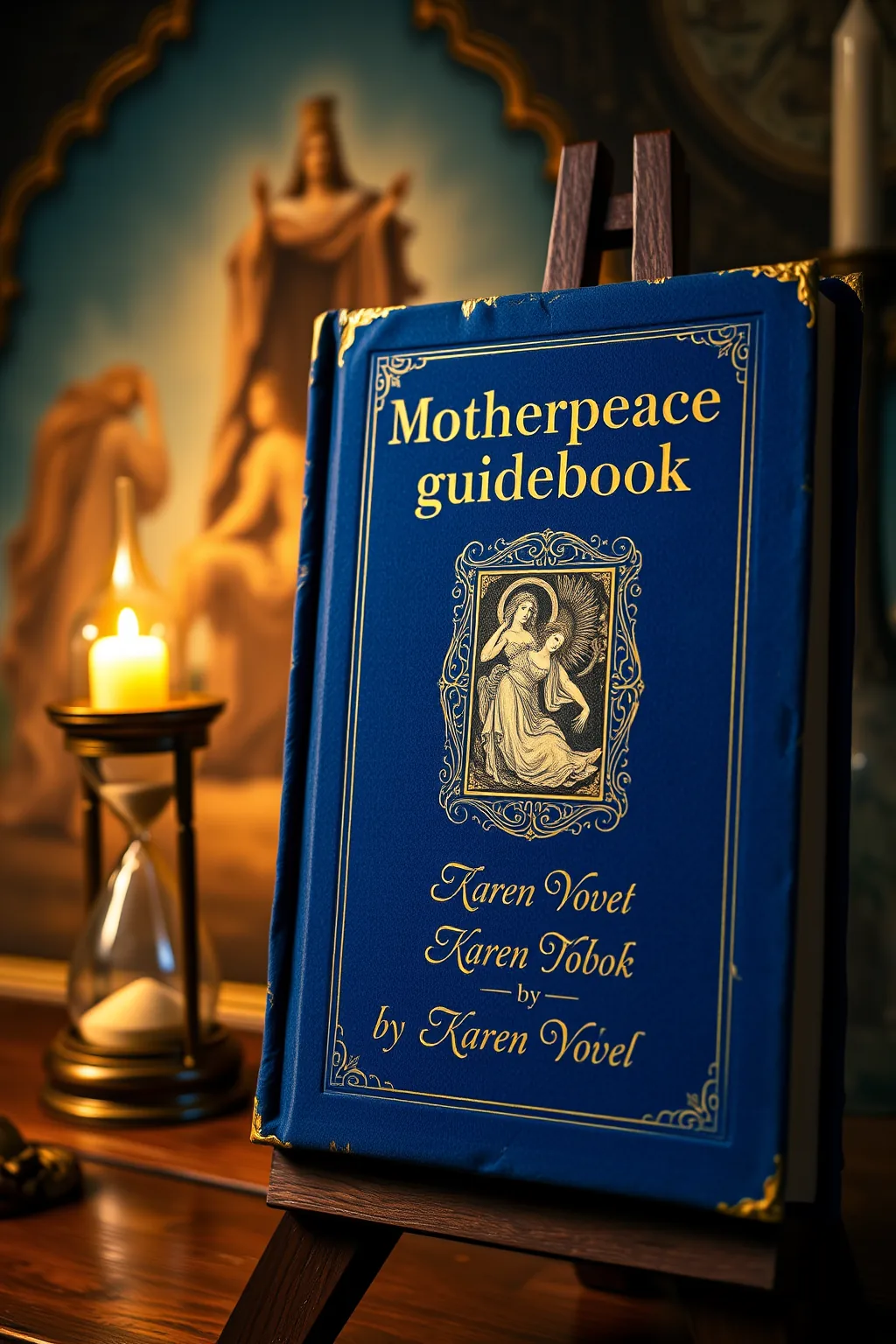
Motherpeace tarot guidebook
 71
71

Motherpeace tarot guidebook
Karen Vogel's Motherpeace Tarot Guidebook, first appearing in 1995, presents a distinct perspective on the tarot, rooted in intuitive understanding and archetypal exploration. Unlike many texts that lean heavily on rigid interpretations, Vogel encourages a more fluid, personal engagement with the cards. The strength of the work lies in its accessible language and its consistent focus on empowering the querent. The illustrations by Vicki Noble, which inform the guidebook's interpretations, are central to this approach, offering a visually rich and symbolically dense set of cards. A point of consideration, however, is that the guidebook's interpretations are intrinsically tied to the unique artistic style and thematic focus of the Motherpeace deck itself; it may not translate seamlessly to other tarot decks. The section detailing the Minor Arcana, for instance, consistently links the pips and court cards to dynamic energies rather than fixed meanings, a concept clearly illustrated by the "Four of Cups" interpretation which speaks of inner dissatisfaction and the need for introspection. Vogel’s work offers a valuable, if specialized, pathway into tarot reading.
📝 Description
71
### What It Is
The Motherpeace Tarot Guidebook, authored by Karen Vogel and first published in 1995, serves as a companion to the Motherpeace tarot deck. It provides detailed interpretations for each of the 78 cards, exploring their symbolism and potential applications in divination and self-reflection. The book moves beyond simple meanings, offering context and guidance for understanding the cards in relation to one another and to the querent's life.
### Who It's For
This volume is intended for individuals interested in tarot who seek a deeper, more nuanced understanding of the cards. It is particularly suited for those drawn to the Motherpeace deck itself, aiming to unlock its unique visual language and philosophical underpinnings. Beginners to tarot will find accessible explanations, while experienced practitioners can explore new perspectives on established archetypes and their interplay.
### Historical Context
Emerging in the mid-1990s, a period marked by a resurgence of interest in esoteric practices and personal growth movements, the Motherpeace tarot system and its accompanying guidebook offered a distinct voice. It emerged from a counter-cultural milieu influenced by feminist spirituality and alternative approaches to psychology and divination, diverging from more traditional, male-dominated tarot interpretations prevalent in earlier decades. The deck and book aimed to empower individuals through intuitive understanding.
### Key Concepts
The guidebook emphasizes the intuitive interpretation of tarot imagery, encouraging readers to connect with the cards on a personal level. It explores archetypal energies present in both the Major and Minor Arcana, framing them as dynamic forces rather than static predictions. The book also touches upon the cyclical nature of life as represented through the card spreads and the inherent wisdom accessible through symbolic language.
💡 Why Read This Book?
• Learn to connect intuitively with tarot imagery, moving beyond rote memorization, as exemplified by the detailed interpretations of the 78 Motherpeace cards. • Understand archetypal energies as dynamic forces in personal growth, a concept central to the guidebook's approach to both Major and Minor Arcana. • Explore a unique approach to divination that emerged from 1990s esoteric thought, offering a counterpoint to more traditional tarot systems.
⭐ Reader Reviews
Honest opinions from readers who have explored this book.
❓ Frequently Asked Questions
When was the Motherpeace Tarot Guidebook first published?
The Motherpeace Tarot Guidebook by Karen Vogel was first published in 1995, offering a companion to the distinctive Motherpeace tarot deck.
What makes the Motherpeace tarot system unique?
The Motherpeace system, as explained in the guidebook, emphasizes intuitive interpretation and archetypal energies, often with a focus on feminist spirituality and personal empowerment, distinguishing it from more traditional tarot approaches.
Is the Motherpeace Tarot Guidebook suitable for beginners?
Yes, the guidebook provides accessible explanations of each card's symbolism and meaning, making it suitable for those new to tarot who are interested in the Motherpeace deck.
Does the guidebook include card spread examples?
The guidebook discusses how to understand cards in relation to each other and in spreads, aligning with the intuitive approach of the Motherpeace deck.
Can I use this guidebook with other tarot decks?
While the core principles of tarot apply, this guidebook's interpretations are specifically tailored to the artwork and thematic focus of the Motherpeace tarot deck by Karen Vogel and Vicki Noble.
Who are the key figures associated with the Motherpeace tarot?
Karen Vogel is the author of the guidebook, and Vicki Noble is the artist behind the Motherpeace tarot deck, with both collaborating on the system's development.
🔮 Key Themes & Symbolism
Archetypal Energetics
The guidebook frames tarot cards not as fixed predictions but as representations of dynamic archetypal energies. It encourages readers to see the Major and Minor Arcana as expressions of universal forces at play in human experience. This perspective invites a more interactive and less deterministic relationship with divination, where understanding the symbolic language of archetypes like The Empress or The Hierophant can illuminate inner states and external circumstances. Vogel's work emphasizes identifying these energies within oneself and the world.
Intuitive Divination
A core tenet of the Motherpeace system is the primacy of intuition in tarot reading. The guidebook guides users to look beyond standardized meanings and to connect with the visual cues and personal resonance of each card. This approach is particularly evident in the interpretations of the Minor Arcana, where the focus is on the flow of energy and the querent's subjective experience rather than rigid, pre-defined outcomes. The aim is to foster a direct, inner dialogue facilitated by the cards.
Feminist Spirituality and Empowerment
The Motherpeace tarot emerged from a context influenced by feminist spirituality, and this ethos permeates the guidebook. It presents tarot as a tool for personal empowerment, self-discovery, and reclaiming intuitive wisdom, often challenging patriarchal structures found in more traditional esoteric systems. The artwork by Vicki Noble, integral to the guidebook's interpretations, often features strong feminine imagery and narratives, reflecting this commitment to a more inclusive and woman-centered spiritual perspective.
Symbolic Language of the Soul
The guidebook treats tarot as a rich symbolic language, a means by which the unconscious or the soul communicates its truths. It encourages a deep engagement with the visual symbolism of the Motherpeace deck, viewing each image as a key to unlocking deeper psychological and spiritual insights. By understanding this symbolic lexicon, readers are invited to interpret the messages of their inner landscape and to gain clarity on life's challenges and opportunities.
💬 Memorable Quotes
“The cards are mirrors reflecting what is within us.”
— This statement highlights the guidebook's emphasis on the internal landscape as the primary source of meaning in a tarot reading. It suggests that the cards do not impose external fate but rather reveal the querent's own thoughts, feelings, and subconscious patterns.
“Each card is an archetype, a universal pattern of energy.”
— This paraphrased concept underscores the book's approach to tarot as a system of archetypal psychology. It posits that the figures and symbols on the cards represent fundamental human experiences and cosmic forces that resonate across cultures and time.
“The Minor Arcana are about the ebb and flow of daily life.”
— This interpretation speaks to the guidebook's view of the Minor Arcana, differentiating them from the grander narratives of the Major Arcana. It positions them as tools for understanding the practical, cyclical, and often mundane, yet significant, aspects of existence.
“Intuition is the key to unlocking the cards' true message.”
— This sentiment emphasizes the practical application of the Motherpeace system. It encourages readers to trust their gut feelings and personal connections to the imagery over rigid, pre-learned meanings, fostering a more personalized and dynamic reading practice.
“The Motherpeace deck offers a feminist perspective on tarot.”
— This highlights the specific lineage and intent behind the Motherpeace tarot. It signals that the system aims to challenge traditional, often patriarchal, interpretations and offer a more empowering, woman-centered viewpoint through its symbolism and narrative.
🌙 Esoteric Significance
Tradition
The Motherpeace tarot system, as elaborated in Vogel's guidebook, draws from a modern synthesis of esoteric thought, heavily influenced by feminist spirituality, Jungian psychology, and a general appreciation for archetypal symbolism. It departs from strict adherence to older traditions like Kabbalah or Hermeticism, instead prioritizing an intuitive and empowering interpretation. It represents a contemporary evolution within the broader Western esoteric tradition, emphasizing personal revelation and immanent divinity rather than codified dogma or hierarchical structures.
Symbolism
Key symbols in the Motherpeace tarot, as interpreted by Vogel, include the archetypal feminine figures that often populate the cards, representing various aspects of the divine feminine and personal power. The vibrant, often abstract, visual style employed by artist Vicki Noble encourages viewers to project their own meanings, fostering a dialogue between the inner and outer worlds. Concepts like the cyclical nature of life, often symbolized through recurring motifs of nature and transformation, are central to understanding the deck's symbolic language.
Modern Relevance
Contemporary practitioners of tarot, particularly those interested in feminist witchcraft, intuitive divination, and psychological tarot interpretation, continue to draw on the Motherpeace system. Its emphasis on personal empowerment and archetypal exploration aligns with current trends in self-help and spiritual growth. Thinkers and practitioners focused on somatic practices and embodied spirituality also find resonance in its intuitive, non-dogmatic approach, making it a relevant tool for modern seekers looking for alternative pathways to self-understanding.
👥 Who Should Read This Book
• Tarot enthusiasts seeking a unique, intuitive, and empowering approach to card interpretation, especially those drawn to feminist spiritual perspectives. • Students of archetypal psychology interested in how universal symbols manifest in personal divination and self-reflection, as detailed in the guidebook's interpretations. • Individuals exploring alternative esoteric traditions who wish to engage with a system that prioritizes inner wisdom over rigid doctrine, as presented in the 1995 publication.
📜 Historical Context
The Motherpeace Tarot Guidebook, published in 1995, emerged during a period of significant engagement with esoteric and New Age thought, particularly within circles influenced by feminist spirituality. This era saw a growing interest in reclaiming ancient traditions and reinterpreting them through a modern, often egalitarian, lens. The work can be seen as a development from earlier feminist paganism and goddess movements that sought to counter patriarchal narratives in religion and spirituality. While Aleister Crowley's Thelema and the Hermetic Order of the Golden Dawn represented earlier, more established Western esoteric orders, Motherpeace offered a distinct, counter-cultural approach. The deck and guidebook, created by Karen Vogel and artist Vicki Noble, provided a visually distinct and thematically focused system that diverged from the Rider-Waite-Smith tradition's widespread influence. Its reception was largely within alternative spiritual communities, where its empowering message and unique artistry found a receptive audience.
📔 Journal Prompts
The archetypal energies within the Major Arcana, as described in the guidebook.
The interplay of symbols in the Four of Cups and its relation to inner dissatisfaction.
Personal resonance with the concept of intuitive divination versus fixed meanings.
Reflections on the feminine archetypes depicted in the Motherpeace deck.
The cyclical nature of life as represented by the Minor Arcana suits.
🗂️ Glossary
Archetype
A universal, inherited pattern of thought or imagery derived from the collective unconscious, as described by Carl Jung. In the Motherpeace tarot, archetypes represent fundamental human experiences and cosmic forces.
Divination
The practice of seeking knowledge of the future or the unknown by supernatural means. The Motherpeace Guidebook presents tarot as a tool for intuitive divination and self-discovery.
Major Arcana
The 22 trump cards of the tarot deck, typically representing significant life events, spiritual lessons, and major stages of a journey. The guidebook interprets these as powerful archetypal energies.
Minor Arcana
The 56 cards of the tarot deck, divided into four suits (Wands, Cups, Swords, Pentacles). The Motherpeace Guidebook views these as representing the ebb and flow of daily life and personal experience.
Intuition
The ability to understand something immediately, without the need for conscious reasoning. The guidebook emphasizes intuition as the primary tool for interpreting the Motherpeace tarot cards.
Symbolism
The use of symbols to represent ideas or qualities. The Motherpeace tarot relies heavily on rich visual symbolism, which the guidebook helps to decode.
Querent
The person for whom a divination reading is performed. The Motherpeace Guidebook is written to empower the querent's own interpretation process.