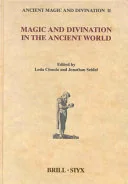
Magic and Divination in the Ancient World
 71
71

Magic and Divination in the Ancient World
Leda Jean Ciraolo and Jonathan Lee Seidel’s "Magic and Divination in the Ancient World" offers a refreshingly critical look at a practice often misunderstood. The strength lies in its refusal to present a monolithic view of ancient divination; instead, it champions the diversity of methods and their cultural specificity. I found the chapter discussing Babylonian extispicy particularly illuminating, detailing the precise methodology and theological underpinnings. However, the collection occasionally suffers from its own academic rigor, with some essays proving dense and less accessible to a general reader. The lack of a unified theoretical conclusion, while true to the fragmented nature of the subject, might leave some desiring a more synthesized takeaway. Despite this, the volume is a valuable contribution for its scholarly depth and focus on the intellectual currents surrounding ancient divination.
📝 Description
71
### What It Is This collection of essays, first published in 2002, scrutinizes the practice and theory of divination across the ancient world. The contributors examine a broad chronological sweep, from the earliest Mesopotamian cultures through to the late Roman Empire. The focus is not on cataloging divinatory methods but on understanding their cultural, intellectual, and even poetic dimensions. The work aims to illuminate a phenomenon that has often been relegated to the periphery of ancient studies, presenting it as a vital component of ancient belief systems and social practices.
### Who It's For This volume is primarily for academic researchers and advanced students of ancient history, religious studies, and classics. Those interested in the history of magic, ritual, and belief systems will find substantial material. It is also suited for practitioners of esoteric traditions who seek a scholarly grounding in the historical development of divination, moving beyond modern interpretations to engage with ancient sources and scholarly analysis. The work demands a certain familiarity with ancient history and terminology.
### Historical Context The essays analyze divination within its specific historical and cultural milieus. This includes understanding how practices like augury in Rome or dream interpretation in Mesopotamia functioned within their respective societies. The book considers the theoretical frameworks that underpinned these practices, exploring how divination was conceptualized and justified by ancient thinkers. It highlights the interconnectedness of divination with other aspects of ancient life, such as politics, medicine, and literature, demonstrating its pervasive influence.
### Key Concepts Central to the collection is the exploration of divination not merely as fortune-telling but as a complex system of communication with the divine or supernatural. The authors address the poetics of divination, examining how divinatory pronouncements were articulated and understood. Concepts like the theory of signs, the role of intermediaries, and the interpretation of omens are discussed in relation to various cultures. The work also touches upon the ethical and philosophical implications of seeking or revealing future knowledge in the ancient world.
💡 Why Read This Book?
• Gain a scholarly understanding of divination beyond mere fortune-telling, examining its role in Mesopotamian and Roman societies as detailed in the essays. • Explore the intellectual and poetic frameworks ancient cultures used to interpret omens and divine will, moving beyond simplistic notions of magic. • Understand how the theoretical underpinnings of divination, as analyzed in the context of late antiquity, informed broader philosophical and religious thought.
⭐ Reader Reviews
Honest opinions from readers who have explored this book.
❓ Frequently Asked Questions
What ancient cultures are covered in Magic and Divination in the Ancient World?
The book focuses on divination across the Ancient World, with specific attention given to early Mesopotamia and extending through to late antiquity, encompassing Roman practices and other relevant cultures within that broad timeline.
Who are the authors of Magic and Divination in the Ancient World?
The book is a collection of essays edited by Leda Jean Ciraolo and Jonathan Lee Seidel. It features contributions from various scholars specializing in ancient history and religious studies.
What is the main focus of the essays in this collection?
The primary focus is on the forms, theory, and poetics of divination as practiced and understood in various ancient societies, aiming for a deeper comprehension of this complex phenomenon.
Is this book suitable for beginners in the study of ancient magic?
While it offers scholarly insights, the dense academic nature of the essays makes it more suitable for advanced students and researchers rather than absolute beginners. It presupposes some familiarity with ancient history.
When was Magic and Divination in the Ancient World first published?
This collection of essays was first published on January 1, 2002.
What is meant by 'poetics of divination' in this context?
The 'poetics of divination' refers to how divinatory messages, pronouncements, and interpretations were crafted, articulated, and understood in terms of language, rhetoric, and literary style within ancient cultures.
🔮 Key Themes & Symbolism
Divination as Communication
This collection presents divination not as mere fortune-telling but as a sophisticated system of communication between humans and the divine or cosmic order. The essays explore how various ancient cultures, from Mesopotamia to the Roman Empire, developed intricate methods like extispicy (interpreting entrails) or augury (observing birds) to glean divine will or cosmic insights. The focus is on the underlying belief systems that legitimized these practices and the conceptual frameworks that allowed for such communication to be considered valid and meaningful within their societies.
Theory and Poetics of Signs
A significant aspect of the work delves into the theoretical underpinnings and the literary dimension of divinatory practices. The authors examine how signs and omens were interpreted, the intellectual currents that shaped these interpretations, and the very language used to convey divinatory knowledge. This includes exploring how pronouncements were formulated, the rhetorical strategies employed, and how the 'poetics' of divination contributed to its perceived authority and efficacy in the ancient world.
Cultural Specificity of Practice
The essays underscore the diverse manifestations of divination across different ancient civilizations. Rather than seeking universal patterns, the collection emphasizes the unique historical, social, and religious contexts that gave rise to distinct divinatory traditions. Whether examining dream interpretation in ancient Egypt or oracles in Greece, the work highlights how these practices were deeply embedded in their respective cultural fabrics, reflecting specific worldviews and societal needs.
Divination's Role in Society
Beyond its purely spiritual or intellectual aspects, the book investigates the practical functions of divination in ancient societies. This includes its influence on political decisions, military campaigns, legal judgments, and personal lives. The essays explore how societies integrated divinatory practices into their governance, legal systems, and daily routines, revealing its pervasive impact on the social and political landscape of the ancient world.
💬 Memorable Quotes
“The authors deal with the forms, theory and poetics of this important and still poorly understood ancient phenomenon.”
— This statement from the original blurb succinctly captures the core academic ambition of the collection: to move beyond superficial descriptions of divination towards a nuanced analysis of its intellectual and expressive dimensions.
“Divination across the Ancient World from early Mesopotamia to late antiquity.”
— This phrase highlights the expansive chronological and geographical scope of the essays, emphasizing the comparative approach taken to understanding divinatory practices across diverse historical periods and cultures.
“The authors deal with the forms, theory and poetics of this important and still poorly understood ancient phenomenon.”
— This sentence from the original blurb encapsulates the scholarly intent of the book, aiming to illuminate divination by examining its methods, underlying thought processes, and rhetorical expressions.
“Focuses on divination across the Ancient World from early Mesopotamia to late antiquity.”
— This specific scope indicates the book's commitment to tracing the evolution and variation of divinatory practices across a vast historical and geographical span, making it a comprehensive resource.
“The authors deal with the forms, theory and poetics of this important and still poorly understood ancient phenomenon.”
— This core statement of purpose reveals the collection's analytical approach, seeking to understand divination not just as a practice, but as a subject of intellectual inquiry and artistic expression.
🌙 Esoteric Significance
Tradition
This work does not strictly adhere to a single esoteric lineage but serves as a vital bridge for understanding the historical roots of practices often incorporated into modern Western Esotericism. By examining divination in its ancient contexts, it provides foundational knowledge for Hermetic, Gnostic, and Kabbalistic practitioners who seek to understand the origins of their own divinatory methodologies, often drawing from ancient Near Eastern and Greco-Roman traditions.
Symbolism
The collection explores various symbolic systems inherent in ancient divination. For instance, the interpretation of animal entrails (extispicy) involved a complex symbolic language where specific patterns and formations were imbued with meaning, often relating to celestial configurations or divine favor. Similarly, the observation of bird flight patterns (augury) relied on a symbolic grammar where direction, type of bird, and action all carried distinct messages understood within a specific cosmological framework.
Modern Relevance
Contemporary practitioners of astrology, tarot, or other forms of divination can draw significant insights from this collection. Understanding the historical development and theoretical underpinnings of these ancient practices offers a deeper appreciation for their symbolic complexity and cultural weight. Thinkers and groups exploring historical magical traditions, comparative religion, or the philosophical implications of knowing the future find this work indispensable for grounding their modern inquiries in verifiable ancient practices and thought.
👥 Who Should Read This Book
• Academic researchers in ancient history, religious studies, and classical antiquity seeking in-depth analysis of divinatory practices and their theoretical frameworks. • Students of comparative religion and mythology interested in understanding the diverse roles of divination across early civilizations like Mesopotamia and Rome. • Esoteric practitioners and historians of magic aiming to connect modern divinatory arts with their ancient intellectual and cultural origins, moving beyond superficial interpretations.
📜 Historical Context
When "Magic and Divination in the Ancient World" was first published in 2002, it entered a scholarly landscape where the study of ancient religion and magic was increasingly sophisticated. The collection's focus on the 'poetics' of divination, for instance, aligned with broader trends in the humanities to analyze texts and practices through literary and rhetorical lenses. The work engaged with established scholarship on Mesopotamian divination and Roman augury, but sought to push beyond mere descriptive accounts. It implicitly responded to earlier, perhaps more reductionist, approaches by emphasizing the intellectual and cultural significance of these practices. While not directly engaging with contemporaries in a polemical way, the essays by scholars like Leda Jean Ciraolo and Jonathan Lee Seidel contribute to ongoing academic dialogues, particularly within classical studies and the history of religions, offering a more integrated understanding of ancient belief systems.
📔 Journal Prompts
The poetics of divination: how ancient pronouncements were articulated.
Compare Mesopotamian omen interpretation with Roman augury, noting differences in practice.
The theoretical frameworks underpinning ancient divinatory systems.
Reflect on the societal functions of divination in the ancient world.
Extispicy symbolism: What might the entrails have communicated?
🗂️ Glossary
Divination
The practice of seeking knowledge of the future or the unknown by supernatural means, often through interpreting omens, signs, or specific rituals.
Mesopotamia
An ancient region in Western Asia situated in the fertile corridor between the Tigris and Euphrates rivers, known for early developments in writing, law, and divination.
Late Antiquity
The period bridging the ancient and medieval worlds, generally considered from the 2nd to the 8th century CE, encompassing the later Roman Empire and the rise of new religious movements.
Poetics
In this context, referring to the literary, rhetorical, and stylistic aspects of how divinatory messages and interpretations were expressed and understood.
Extispicy
A form of divination involving the examination of the entrails of sacrificed animals, particularly common in ancient Mesopotamia and Rome.
Augury
A practice of divination derived from the behavior of birds, especially their flight and feeding patterns, prominent in ancient Rome.
Omen
An event or circumstance that is believed to be a sign or warning of future good or evil.