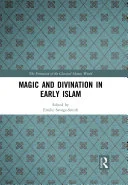
Magic and Divination in Early Islam
 75
75

Magic and Divination in Early Islam
Emilie Savage-Smith's "Magic and Divination in Early Islam" offers a meticulous survey of occult practices that are often overlooked or misrepresented in standard historical accounts. The strength of the collection lies in its scholarly rigor, drawing on a wide array of textual and material evidence to reconstruct the complex reality of these traditions. A particular highlight is the detailed analysis of amulets and their inscriptions, which provides concrete examples of how magical beliefs were materialized. While the book excels in its detailed exposition, some readers might find the academic tone and dense argumentation less accessible than a more narrative approach. The section on the theory of magic in healing, however, offers a crucial bridge between esoteric belief and practical application, demonstrating the sophisticated thinking involved. This collection serves as an indispensable resource for anyone seriously investigating the hidden currents of early Islamic culture.
📝 Description
75
### What It Is Magic and Divination in Early Islam presents ten scholarly studies examining the diverse practices and theoretical underpinnings of occult arts within the formative centuries of Islamic civilization. It moves beyond simplistic categorizations to explore the intricate reality of these traditions, from popular beliefs to learned systems. The collection investigates the continuity of pre-Islamic Arabian, Hellenistic, and Persianate magical and divinatory frameworks, as well as their adaptation and integration into the burgeoning Islamic worldview.
### Who It's For This work is essential for scholars of Islamic history, religious studies, and the history of science and magic. It will also appeal to practitioners and students of esotericism interested in the historical roots of magical systems and their cross-cultural transmission. Readers seeking a nuanced understanding of early Islamic society, beyond purely theological or political narratives, will find significant value here.
### Historical Context The studies are situated within the crucial period of early Islam, spanning roughly from the 7th to the 10th centuries CE. This era witnessed the rapid expansion of Islamic empires and the flourishing of intellectual life, where diverse traditions, including those of the Byzantine and Sasanian empires, were encountered and synthesized. The work implicitly engages with the broader intellectual currents of late antiquity and the early medieval period, a time when the boundaries between natural philosophy, medicine, theology, and occult practices were often fluid. The research reflects scholarship that emerged following the initial waves of Orientalism, aiming for a more detailed and less prejudiced view of Islamic occult traditions.
### Key Concepts The book delves into concepts such as the belief in jinn and their influence, the potent force of the evil eye (al-'ayn), the creation and function of talismans and amulets, the practice of conjuration, and the interpretation of dreams as a divinatory tool. It also addresses methods of weather prediction, casting lots (khat), astrology, and physiognomy. The underlying theoretical frameworks for magic, particularly in its application to healing, are explored, alongside the decipherment of magical inscriptions and symbols found on artifacts.
💡 Why Read This Book?
• Gain insight into the pre-Islamic antecedents of Islamic magic, understanding how existing traditions were incorporated and transformed, as detailed in the studies concerning the 7th-10th centuries CE. • Explore the intricate theory and practice of amulet production and decipherment, learning about the specific symbols and materials used in early Islamic magical artifacts. • Understand the theoretical frameworks for magic in healing, as presented through the analysis of texts and practices from early Islamic scholarship.
⭐ Reader Reviews
Honest opinions from readers who have explored this book.
❓ Frequently Asked Questions
What range of magical practices are covered in 'Magic and Divination in Early Islam'?
The book encompasses a broad spectrum including belief in jinn, warding off the evil eye, the creation of amulets and magical equipment, conjuring, dream interpretation, weather prediction, astrology, and physiognomy.
Does the book focus only on Islamic magic, or does it include earlier influences?
It specifically examines the pre-Islamic antecedents of these practices, exploring how Hellenistic, Persianate, and Arabian traditions influenced early Islamic magic.
Who is the author of 'Magic and Divination in Early Islam'?
The author is Emilie Savage-Smith, a noted scholar in the field of Islamic medicine and magic.
When was 'Magic and Divination in Early Islam' first published?
The book was first published on January 20, 2021.
What kind of evidence does the book use to support its claims?
The studies draw upon a variety of sources, including textual analysis of historical manuscripts and the examination of material evidence like amulets and magical instruments.
Is this book suitable for beginners in the study of Islamic esotericism?
While scholarly, it provides foundational information and detailed case studies that can be valuable for dedicated beginners interested in the historical context of Islamic occult traditions.
🔮 Key Themes & Symbolism
The Jinn and the Unseen
The collection investigates the pervasive belief in jinn, supernatural beings integral to early Islamic cosmology and popular belief. These entities were understood to influence human affairs, requiring specific practices for appeasement, protection, or even manipulation. The book explores how these beliefs were integrated into the broader Islamic worldview, often interacting with existing folk traditions and notions of spiritual agency.
Talismans and Amulets
A significant focus is placed on the production, use, and decipherment of amulets and talismans. These objects served as material conduits for magical power, designed to ward off harm, attract fortune, or effect specific outcomes. The studies analyze their inscriptions, materials, and symbolic iconography, revealing a sophisticated system of applied magic deeply embedded in daily life and ritual practice.
Divinatory Arts
The book examines various methods of divination employed in early Islam, including dream interpretation, astrology, and casting lots. These practices were not merely superstitious but often formed part of a learned tradition, integrated with philosophical and scientific inquiry. The work highlights the intellectual frameworks that supported these arts, showing how they were used to understand the will of God or the workings of the cosmos.
Magic in Healing
The theoretical and practical aspects of magic as applied to healing are a central theme. This includes understanding the relationship between spiritual afflictions, the evil eye, and physical ailments, and the magical interventions used to restore well-being. The studies explore the overlap between folk medicine, learned medical traditions, and esoteric practices in addressing illness.
💬 Memorable Quotes
“Belief in jinn, warding off the evil eye, the production of amulets and other magical equipment, conjuring, wonder-working, dream interpretation, predicting the weather, casting lots, astrology, and physiognomy.”
— This foundational statement outlines the vast scope of magical and divinatory practices present in early Islam, demonstrating their pervasiveness beyond purely religious or legalistic concerns.
“The ten studies here are concerned with the pre-Islamic antecedents of such practices...”
— This highlights the book's commitment to historical depth, tracing the origins and evolution of Islamic occult traditions by examining their roots in earlier cultures and belief systems.
“...and with the theory of magic in healing, the nature and use of amulets and their decipherment, the arts of astromete”
— This points to the detailed focus on specific areas, particularly the sophisticated theoretical underpinnings of magic in medicine and the complex semiotics of amulets, showcasing the intellectual engagement with these subjects.
“The work explores the theory of magic in healing...”
— This emphasizes the analytical approach taken, moving beyond mere description to understand the intellectual frameworks and conceptualizations that informed the application of magic for therapeutic purposes.
“The studies here are concerned with... the nature and use of amulets and their decipherment...”
— This specific focus underscores the importance of material culture and epigraphy in understanding early Islamic magic, revealing how tangible objects served as vehicles for esoteric knowledge and power.
🌙 Esoteric Significance
Tradition
This work contributes significantly to understanding esoteric traditions within the Islamic world, which, while distinct from Western Hermeticism or Kabbalah, shares common ground in its exploration of unseen forces, symbolic languages, and the pursuit of hidden knowledge. It highlights a lineage of practical mysticism and applied occultism that existed within Islamic societies, often operating parallel to, or integrated with, Sufi and philosophical currents.
Symbolism
Key symbols explored include the protective iconography found on amulets, often incorporating Quranic verses, astrological symbols, and apotropaic imagery designed to ward off the evil eye or jinn. The interpretation of dreams also functions as a symbolic language, offering insights into the divine will or future events. The inherent symbolism in astrological charts and physiognomic interpretations further demonstrates a worldview rich in interconnected signs and correspondences.
Modern Relevance
Contemporary practitioners of Islamic spirituality, scholars of comparative religion, and students of esoteric history find relevance in Savage-Smith's work. It informs modern discussions on the history of magic, the interplay between religion and popular belief, and the cultural transmission of occult knowledge. Thinkers exploring syncretic spiritualities or the historical roots of talismanic magic often reference such detailed scholarly analyses.
👥 Who Should Read This Book
• Scholars of Islamic history and religious studies seeking a comprehensive overview of occult practices in early Islamic societies. • Students of comparative esotericism interested in the historical development and cross-cultural influences on magical traditions. • Practitioners of occult arts looking for historical context and the theoretical underpinnings of practices that may have influenced later traditions.
📜 Historical Context
Published in 2021, "Magic and Divination in Early Islam" engages with scholarship on a period spanning the 7th to 10th centuries CE, a pivotal era for Islamic civilization. This was a time of immense intellectual synthesis, where the burgeoning Islamic world absorbed and reinterpreted traditions from the Byzantine, Sasanian, and Indian empires. The work implicitly situates itself within ongoing academic discourse concerning the history of science, medicine, and religion in the medieval Near East. It moves beyond earlier, often prejudiced, Orientalist views to present a nuanced picture of occult practices. While not explicitly detailing contemporary reception, the book's detailed analysis of primary sources—including rare manuscripts and archaeological finds—contributes to a richer understanding of intellectual life that existed alongside, and often intertwined with, more orthodox theological and philosophical pursuits.
📔 Journal Prompts
The theory of magic in healing as presented in the text.
The specific function and decipherment of amulets discussed.
The role of jinn in early Islamic belief systems.
Connections between pre-Islamic practices and those documented in early Islam.
The divinatory arts like dream interpretation and astrology.
🗂️ Glossary
Jinn
Supernatural beings in Islamic mythology and theology, created from smokeless fire. They are believed to inhabit the world alongside humans and can influence events, requiring specific rituals or charms for interaction.
Evil Eye (al-'ayn)
A malicious glare believed to cause misfortune, illness, or injury to whomever it is directed at. Practices to ward off the evil eye were common in early Islamic societies.
Amulets
Objects, typically worn or carried, believed to possess protective or magical properties. In early Islam, these often bore inscriptions from the Quran, names of God, or symbolic imagery.
Talismans
An object inscribed with magical symbols or formulae, believed to confer supernatural powers or protection. Often associated with astrological alignments or specific ritual consecrations.
Conjuring
The practice of invoking or summoning supernatural entities, such as jinn, often through specific incantations or rituals, with the aim of gaining their assistance or knowledge.
Dream Interpretation
The practice of analyzing the content of dreams to derive meaning, often related to future events, spiritual messages, or psychological states. It was a significant divinatory art in early Islam.
Physiognomy
A pseudoscientific practice of assessing a person's character or personality traits based on their outward appearance, particularly facial features.