It's All in the Cards
 74
74

It's All in the Cards
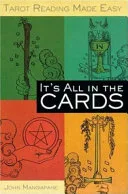
John Mangiapane’s "It's All in the Cards" tackles the often-overwhelming world of Tarot with refreshing directness. Its primary strength lies in its unwavering commitment to accessibility, a quality that genuinely benefits the absolute novice. The author eschews the dense symbolism and elaborate spreads that can paralyze newcomers, instead offering a method designed for immediate application. I found Mangiapane's emphasis on linking card imagery directly to everyday concerns particularly effective; the idea of the 'Simple Spread' for quick insights is a solid departure from more academic approaches. However, for those already familiar with Tarot's deeper currents, the book might feel somewhat rudimentary. The limitation here is that in striving for simplicity, some of the richer archetypal layers and nuanced historical context of the Tarot are necessarily streamlined. The concept of interpreting the 'Six of Cups' primarily as 'nostalgia or childhood memories' rather than exploring its deeper themes of giving, receiving, and past influences, exemplifies this simplified lens. Ultimately, this book serves its intended audience well as a clear entry point.
📝 Description
74
### What It Is
"It's All in the Cards" by John Mangiapane presents a distinct approach to Tarot interpretation, focusing on clarity and directness for individuals seeking straightforward answers. Published initially in 2004, the book moves away from complex, multi-card spreads, championing a method designed for ease of use. Mangiapane's system prioritizes accessibility, making it suitable for those entirely new to cartomancy or those who find traditional Tarot daunting. The core philosophy centers on extracting essential meanings to address immediate concerns regarding life, relationships, career, and future outlook.
### Who It's For
This work is specifically crafted for non-experts and beginners in Tarot. If you've felt intimidated by the vastness of Tarot literature or the intricate symbolism often presented, Mangiapane's method offers a welcome alternative. It’s for the curious individual who wants practical, actionable guidance without an extensive background in esoteric studies. The book targets those who prefer a no-nonsense, easy-to-learn system for gaining personal insights into their daily questions and broader life path. It caters to the desire for quick, understandable divination.
### Historical Context
Released in 2004, "It's All in the Cards" emerged during a period of continued popular interest in Tarot, following a surge in the late 20th century. While many contemporary works focused on deepening symbolic analysis or exploring specific Tarot decks, Mangiapane's approach distinguished itself by prioritizing a simplified, user-friendly method. This era saw a proliferation of self-help and practical spirituality books, and Mangiapane's work tapped into a desire for accessible tools for personal empowerment and insight, distinct from more academic or historically dense occult studies.
### Key Concepts
Mangiapane's method is built on a foundation of simplifying Tarot readings. Instead of elaborate layouts, the book advocates for a focused interpretation of individual cards or very small, manageable spreads. The emphasis is on extracting the most pertinent message from the cards relevant to the question asked. Key concepts include the direct correlation between card imagery and everyday life situations, the importance of intuitive connection rather than rote memorization of meanings, and the idea that complex futures can be understood through clear, concise card interpretations. The goal is to demystify the process.
💡 Why Read This Book?
• Gain a practical, no-nonsense method for Tarot interpretation, focusing on direct answers to life questions as presented in Mangiapane's unique 'Simple Spread' technique. • Learn to connect Tarot card imagery directly to everyday situations, bypassing extensive memorization and complex symbolism often found in older Tarot traditions. • Understand how to approach divination for love, work, and future concerns with a simplified system, making the 2004 publication a practical tool for immediate insight.
⭐ Reader Reviews
Honest opinions from readers who have explored this book.
❓ Frequently Asked Questions
What is John Mangiapane's main approach to Tarot in "It's All in the Cards"?
Mangiapane's approach prioritizes simplicity and directness. He offers a unique method for reading cards that is designed to be accessible to non-experts, focusing on extracting clear answers to pressing life questions without relying on complex spreads.
Is "It's All in the Cards" suitable for experienced Tarot readers?
While experienced readers might find value in Mangiapane's simplified perspective, the book is primarily aimed at beginners. Its strength lies in demystifying Tarot for those new to the practice, rather than offering advanced techniques.
When was "It's All in the Cards" first published?
The book was first published in 2004, positioning it within the broader wave of accessible self-help and divination literature popular in the early 21st century.
What kind of questions can I ask using Mangiapane's method?
Mangiapane's method is designed for practical, everyday questions concerning life, love, work, and the future. The focus is on obtaining simple, actionable answers to immediate concerns.
Does the book cover specific Tarot spreads?
Yes, the book introduces Mangiapane's own simplified approach, which moves away from complex, multi-card spreads. The emphasis is on making the interpretation process as straightforward as possible for the user.
What makes this Tarot book different from others published around 2004?
Unlike many contemporary works that might delve into deep symbolism or specific deck histories, Mangiapane's 2004 publication distinguishes itself through its radical simplification and focus on immediate, practical application for beginners.
🔮 Key Themes & Symbolism
Simplified Divination
The core of Mangiapane's work is the demystification of Tarot. It argues that complex astrological associations or deep Kabbalistic connections, while valid, can obscure the direct messages the cards hold for everyday concerns. The book champions a method where the reader can achieve clarity on pressing issues like career changes or relationship dynamics without needing years of study. This theme is evident in his proposed 'Simple Spread', designed to extract the most relevant information efficiently.
Direct Card Interpretation
Instead of relying solely on traditional meanings or elaborate positional interpretations within a spread, Mangiapane encourages readers to connect the card's imagery directly to their question. For instance, the visual representation of the 'Two of Cups' might be interpreted straightforwardly as a mutual connection or partnership relevant to a relationship query. This focus on intuitive, image-based interpretation makes the practice more immediate and less academic.
Practical Life Guidance
The book frames Tarot not as a mystical oracle for predicting grand destinies, but as a practical tool for navigating the immediate challenges and opportunities of daily life. Whether seeking advice on a job offer, a financial decision, or interpersonal conflict, Mangiapane's system aims to provide clear, concise guidance. The emphasis is on actionable insights that empower the user to make informed choices.
Accessibility for Beginners
A significant theme is the deliberate design of the method for individuals with no prior experience in Tarot or esoteric studies. The language is straightforward, the concepts are simplified, and the learning curve is intentionally minimized. This makes the 2004 publication a welcoming entry point for anyone curious about Tarot but intimidated by more traditional or scholarly resources.
💬 Memorable Quotes
“The goal is to get simple answers to pressing questions.”
— This encapsulates Mangiapane's central philosophy: Tarot as a practical tool for immediate problem-solving, rather than a complex system for esoteric exploration.
“You don't need to memorize every meaning to read the cards.”
— This paraphrased concept highlights the book's emphasis on intuitive understanding and direct connection to card imagery, reducing the perceived barrier to entry for beginners.
“The cards speak directly to our lives.”
— This interpretation suggests Mangiapane believes Tarot imagery possesses a clear, decipherable connection to everyday experiences and concerns, making it a relevant guide.
“A simplified approach makes Tarot accessible.”
— This highlights the book's core strategy: stripping away complexity to reveal the underlying utility of Tarot for personal insight, as intended by the author.
“Focus on the question and the card's immediate message.”
— This paraphrased concept underscores the book's methodology, advocating for a direct link between the query and the visual or symbolic content of the card drawn.
🌙 Esoteric Significance
Tradition
While "It's All in the Cards" doesn't explicitly align with a specific historical esoteric lineage like Hermeticism or Kabbalah, it operates within the broader modern Western esoteric tradition's application of divination. It departs from traditions that heavily emphasize complex symbolic systems or ritualistic preparation, instead focusing on a practical, almost secularized approach to cartomancy. The work can be seen as a contemporary evolution, stripping down Tarot for maximum user-friendliness in a fast-paced world, prioritizing immediate psychological insight over deep metaphysical exploration.
Symbolism
The book's approach downplays complex multi-card symbolism, focusing instead on the direct visual cues of individual cards. For instance, the 'Ace of Swords' might be interpreted simply as a new idea or clarity related to the question asked, rather than a deep dive into its association with the element of Air or its position in a Qabalistic cross. The 'Sun' card would likely be presented as straightforward happiness and success, its deeper archetypal significance simplified for quick understanding.
Modern Relevance
Mangiapane's emphasis on accessible, practical divination resonates with contemporary trends in mindfulness and self-help apps that offer quick insights. Thinkers and practitioners focused on applied psychology, coaching, and simplified spiritual tools often draw on this pragmatic approach. While not directly cited by major contemporary esoteric scholars, the book's spirit lives on in digital platforms and beginner-focused workshops that aim to make tools like Tarot less intimidating and more integrated into daily life for a broad audience.
👥 Who Should Read This Book
• Absolute beginners curious about Tarot who feel intimidated by traditional methods or extensive symbolism, seeking a clear, easy-to-follow starting point. • Individuals looking for a practical tool to gain quick insights into everyday questions about life, love, and work, rather than deep philosophical exploration. • Those interested in comparative divination systems who want to understand a simplified, modern approach to cartomancy distinct from more complex historical or psychological interpretations.
📜 Historical Context
Published in 2004, John Mangiapane's "It's All in the Cards" arrived during a period where Tarot continued its mainstream integration, often presented through self-help lenses. This era saw a proliferation of accessible guides, moving beyond the more esoteric or academic treatments that characterized earlier 20th-century occultism. While authors like Rachel Pollack were exploring deeper symbolic layers and Mary K. Greer was championing intuitive approaches, Mangiapane carved out a niche by prioritizing radical simplification. His method offered a distinct contrast to the dense Jungian psychological interpretations or the intricate Kabbalistic frameworks popular in some circles. The book's reception likely aligned with a broader cultural trend favoring practical, immediately applicable self-improvement tools, distinct from, for example, the more traditional Rider-Waite-Smith system's extensive historical commentary.
📔 Journal Prompts
The 'Simple Spread' and its relation to direct question-answering.
Connecting the visual imagery of the 'Ace of Cups' to a personal feeling of new emotional beginnings.
Evaluating the efficacy of focusing on one card's core meaning versus multiple interpretations.
The role of the 'Four of Pentacles' in representing personal security or limitations.
Reflecting on how the book's approach to the 'Tower' card offers a simplified perspective on sudden change.
🗂️ Glossary
Tarot
A deck of 78 cards, traditionally used for divination and/or games, consisting of 22 Major Arcana and 56 Minor Arcana cards. In Mangiapane's work, it's a tool for practical guidance.
Divination
The practice of seeking knowledge of the future or the unknown by supernatural means. Mangiapane focuses on using Tarot for practical, present-moment insights.
Cartomancy
Divination using playing cards or, more commonly, Tarot cards. Mangiapane offers a specific method within this practice.
Spread
A specific arrangement of cards laid out for interpretation in a Tarot reading. Mangiapane advocates for simplified spreads.
Major Arcana
The 22 trump cards in a Tarot deck, representing significant life lessons, archetypal energies, and spiritual themes. Mangiapane simplifies their interpretation.
Minor Arcana
The 56 cards in a Tarot deck divided into four suits (Wands, Cups, Swords, Pentacles), typically representing everyday events and circumstances. Their interpretation is streamlined in the book.
Simple Spread
A term likely referring to Mangiapane's own method of laying out and interpreting cards, designed for ease of use and direct answers.