Intrachange
 61
61

Intrachange



William Horden's 'Intrachange' is a luminous beacon in the often-murky waters of Tarot literature. Ashcroft writes with an alchemist's precision, transforming the familiar deck into a sophisticated instrument for soul-exploration. Horden eschews simplistic interpretation for a deep dive into the symbolic ether, connecting each card to broader metaphysical principles and psychological archetypes. This work is not for the casual dabbler; it is a potent catalyst for those committed to the serious practice of inner alchemy and self-realization through divination. Its strength lies in its ability to foster genuine insight rather than mere prediction, making it an indispensable companion for the serious student of esoteric wisdom.
📝 Description
61
Venture beyond the veil with William Horden's 'Intrachange,' a profound exploration into the luminous pathways of divination and the archetypal language of the Tarot. This esoteric tome doesn't merely present cartomancy; it invites readers to engage in a deep, introspective dialogue with the self, mediated by the potent symbolism of the cards. Horden masterfully decodes the intricate tapestry of the Tarot, revealing its ancient roots and its perennial power to illuminate the hidden currents of consciousness. 'Intrachange' is crafted for the earnest seeker, the burgeoning mystic, and the seasoned practitioner who yearns to move past superficial readings and embrace a truly transformative practice. It is an alchemical vessel, promising to transmute mundane inquiry into profound self-discovery, fostering an intimate connection with the unseen forces that shape our reality. Prepare to unlock the secrets whispered by the archetypes and to initiate an inner revolution guided by the ancient wisdom held within each card.
✍️ Author
William Horden
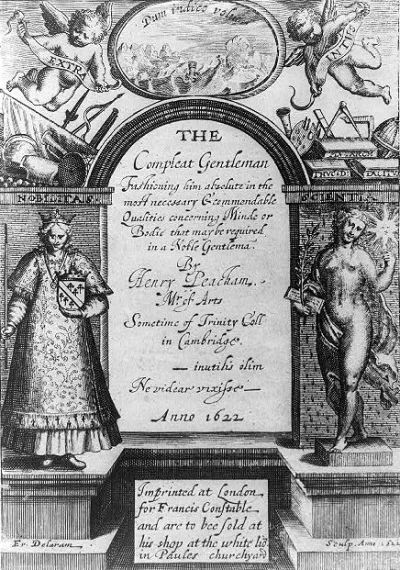
Henry Peacham (born 1578, d. in or after 1644) was an English poet and writer, known today primarily for his book, The Compleat Gentleman, first printed in 1622. == Biography == Son of Henry Peacham the Elder, a clergyman, Peacham was a graduate of Trinit…
💡 Why Read This Book?
Embark on a journey of profound self-discovery, unlocking the esoteric wisdom encoded within the Tarot. 'Intrachange' offers a unique lens to understand the subtle energies that govern our lives, transforming divination from a predictive tool into a profound dialogue with the soul. Ideal for seekers yearning for deeper meaning, scholars of the occult, and practitioners seeking to elevate their craft beyond superficial interpretations. Dive into a text that promises not just answers, but transformative insight.
⭐ Reader Reviews
Honest opinions from readers who have explored this book.
❓ Frequently Asked Questions
What makes 'Intrachange' unique in Tarot literature?
'Intrachange' distinguishes itself by focusing on the internal, transformative power of the Tarot, viewing it as a tool for profound self-dialogue and spiritual growth rather than mere fortune-telling. It emphasizes the symbolic and archetypal connections to deeper metaphysical principles.
Who is the intended audience for 'Intrachange'?
This book is primarily for serious seekers, students of mysticism, and practitioners of divination who are looking to deepen their understanding and practice. It caters to those who desire a more philosophical and esoteric approach to the Tarot.
Does 'Intrachange' require prior knowledge of the Tarot?
While prior familiarity with basic Tarot concepts is beneficial, Horden's comprehensive approach and clear explanations aim to guide even those new to the cards. However, a genuine interest in esoteric philosophy will greatly enhance the reader's experience.
What kind of insights can one expect from reading 'Intrachange'?
Readers can expect to gain profound insights into the archetypal forces at play in their lives, a deeper understanding of their own psyche, and practical methods for using the Tarot as a catalyst for personal transformation and spiritual evolution.
Is 'Intrachange' a practical guide for reading cards for others?
While 'Intrachange' is deeply practical, its focus is primarily on the inner work and self-understanding facilitated by the Tarot. The principles discussed can certainly be applied to readings for others, but the emphasis is on cultivating the reader's own intuitive and symbolic comprehension.
🔮 Key Themes & Symbolism
Archetypal Resonance and the Inner Cosmos
Explore the profound connection between the Tarot's archetypes and the hidden landscapes of the human psyche. 'Intrachange' posits that each card is a mirror reflecting universal patterns of consciousness, offering a potent means to understand the intricate workings of the inner cosmos. Horden guides the reader to perceive these symbols not as static images, but as living energies that can be invoked and understood to illuminate one's personal journey and spiritual destiny. This theme delves into how engaging with these archetypes can catalyze profound psychological and spiritual integration.
Divination as Alchemical Transformation
William Horden re-envisions divination not as a passive act of prediction, but as an active, alchemical process of transformation. 'Intrachange' reveals how the careful contemplation of Tarot imagery can transmute lower vibrational energies into higher states of consciousness, fostering self-awareness and personal evolution. The book presents the Tarot as a crucible where the raw materials of experience are refined, leading to the 'gold' of wisdom and enlightenment. This perspective encourages practitioners to view their readings as sacred rituals for spiritual alchemy.
The Luminous Pathways of Symbolic Language
'Intrachange' illuminates the Tarot as a sophisticated symbolic language, a sacred script penned by ancient mystics to guide humanity. Horden masterfully decodes this esoteric lexicon, revealing the layered meanings and interconnectedness of the cards. The book emphasizes that understanding this symbolic tapestry is key to unlocking hidden knowledge and perceiving the subtle energetic currents that influence existence. It encourages readers to develop their own intuitive fluency in this symbolic dialogue, fostering a deeper connection with universal wisdom and the divine mind.
💬 Memorable Quotes
“The cards are not oracles of fate, but mirrors of the soul's unfolding journey.”
— This quote underscores the book's central thesis: the Tarot's true power lies in self-reflection and personal growth, not in deterministic predictions. It emphasizes agency and the internal nature of wisdom.
“Within each symbol lies an echo of the primordial.”
— This highlights the ancient, archetypal nature of Tarot imagery, suggesting that the symbols connect us to fundamental, universal truths and the very essence of creation.
“To read the cards is to converse with the silent wisdom of the universe.”
— This evocative statement frames divination as a sacred dialogue, a means of accessing a deeper, intuitive intelligence that transcends ordinary thought processes and connects us to cosmic consciousness.
“The path of introspection is the true divination.”
— This emphasizes that the most valuable insights are gained not from external pronouncements, but from the inner work and self-examination facilitated by symbolic tools like the Tarot.
“Let the arcana become your inner compass, guiding you through the labyrinth of being.”
— This metaphor positions the Tarot's major and minor arcana as essential guides for navigating life's complexities, offering direction and clarity through the challenges and mysteries of existence.
🌙 Esoteric Significance
Tradition
This work is deeply rooted in the Hermetic and Kabbalistic traditions, viewing the Tarot as a visual representation of the Tree of Life and its associated energies. It draws upon Neoplatonic concepts of emanation and the interconnectedness of all things, framing the divinatory process as a method for aligning the individual consciousness with these universal principles.
Symbolism
The symbolism in 'Intrachange' goes beyond literal interpretation, delving into the archetypal meanings of each card. It explores the interplay of the Major and Minor Arcana, the elemental correspondences, and the numerological significance, presenting them as keys to understanding the cosmic order and the human condition. The book emphasizes the rich, multi-layered nature of Tarot symbolism as a language of the soul.
Modern Relevance
In an age often characterized by fragmentation and a disconnect from inner wisdom, 'Intrachange' offers a vital pathway to reconnection. Its emphasis on introspection, archetypal understanding, and symbolic dialogue provides powerful tools for navigating modern life with greater awareness, resilience, and spiritual depth. The book empowers individuals to find meaning and guidance within themselves, utilizing the timeless wisdom of the Tarot for personal transformation and holistic well-being.
👥 Who Should Read This Book
This profound work is essential for the dedicated seeker of esoteric truths, yearning to move beyond superficial divination and engage with the Tarot on a deeper, psychological, and spiritual level. Scholars of occultism and comparative religion will find its historical and symbolic insights invaluable. For practitioners, 'Intrachange' offers advanced techniques and a philosophical framework to elevate their readings from mere prediction to potent tools of self-mastery and inner alchemy. Beginners with a serious inclination towards mystical exploration will also find a rich, albeit challenging, introduction to the deeper currents of Tarot wisdom.
📜 Historical Context
William Horden's 'Intrachange' emerges from a rich tapestry of esoteric thought that flourished particularly in the late 19th and early 20th centuries, a period marked by a resurgence of interest in Hermeticism, Kabbalah, and mystical traditions. Influenced by occult revivalists like Eliphas Lévi and the Golden Dawn, Horden contributes to a lineage of thinkers who sought to synthesize ancient wisdom with modern psychological understanding. This era saw a profound exploration of symbolism as a key to unlocking hidden knowledge, and the Tarot, with its potent archetypes, became a central focus. 'Intrachange' reflects this intellectual milieu by treating the Tarot not merely as a divinatory tool, but as a profound philosophical and psychological system, deeply embedded within a broader spiritual cosmology.
📔 Journal Prompts
Reflect on a card that has recently appeared in a reading for you. What 'intrachange' did it signify in your inner landscape?
How can the archetypes presented in 'Intrachange' be seen as reflections of your current life challenges and opportunities?
Consider the concept of divination as alchemical transformation. What 'base metal' in your life could the Tarot help you transmute into 'gold'?
If the Tarot is a symbolic language, what is a 'word' or 'phrase' from the deck that resonates most strongly with your current inner dialogue?
How does the idea of the Tarot as an 'inner compass' apply to a recent decision or situation you have faced?
🗂️ Glossary
Archetype
Universal, archaic patterns and images that derive from the collective unconscious and are the psychic counterpart of instinct. In Tarot, these are embodied by figures like The Fool, The Magician, and The High Priestess.
Hermeticism
A religious, philosophical, and esoteric tradition based primarily upon writings attributed to Hermes Trismegistus. It emphasizes spiritual wisdom, the interconnectedness of macrocosm and microcosm, and the pursuit of divine knowledge.
Kabbalah
A complex system of Jewish mysticism that explores the nature of God and the universe through symbolic interpretations of scripture, often visualized through the Tree of Life. It profoundly influenced Western esoteric traditions.
Esoteric
Intended for or likely to be understood by only a small number of people with a specialized knowledge or interest; inner, hidden, or secret.
Alchemical Transformation
In an esoteric context, the process of spiritual purification and self-perfection, often symbolized by the transmutation of base metals into gold, representing the elevation of consciousness and the attainment of higher spiritual states.