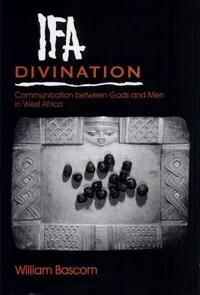
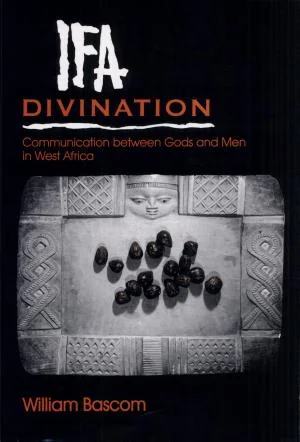
Ifa divination
 81
81

Ifa divination



William Russell Bascom's "Ifa Divination" is a monumental, if somewhat dry, academic achievement. Its strength lies in its exhaustive detail, presenting the mechanics of Ifa divination with an almost surgical precision that few subsequent works have matched. Bascom’s decades of fieldwork in the 1930s and 1940s, particularly his immersion in the practices of the Oyo Yoruba, lend undeniable authority to his descriptions. He carefully lays out the structure of the *odu*, the performance of the diviner, and the cosmological framework. However, the book’s academic rigor can also be its limitation; the prose is dense and often clinical, making it a challenging read for those not already steeped in anthropological discourse. The section detailing the seventy-nine *odu* is particularly dense. Despite this, the work remains a cornerstone for understanding Ifa as a complex socio-religious system, offering a valuable, albeit demanding, window into Yoruba spiritual life.
📝 Description
81
### What It Is William Russell Bascom's "Ifa Divination," first published in 1969, offers a foundational ethnographical account of the Ifa divination system as practiced by the Yoruba people of West Africa. The work meticulously details the complex symbolic language, the intricate procedures of the divination ritual, and the philosophical underpinnings of this ancient practice. It serves as a critical academic resource for understanding a spiritual tradition that has influenced diaspora religions across the Americas. Bascom's research, conducted over several decades, provides an insider's perspective, aiming to demystify and illuminate the mechanics and meaning behind Ifa.
### Who It's For This text is essential for students and scholars of African religious systems, comparative mythology, and anthropology. It is also of significant value to practitioners of Ifa and related traditions, such as Santería and Candomblé, who seek a deeper understanding of its historical and structural roots. Those interested in the cross-cultural transmission of spiritual knowledge, particularly the impact of African spiritualities on global cultures, will find this book indispensable. It is not a beginner's guide to performing divination but rather a scholarly examination of its form and function.
### Historical Context Bascom's work emerged during a period of increased academic interest in African cultures and religions, following decolonization movements. Prior to this publication, much of the understanding of Ifa was fragmented or filtered through colonial lenses. Bascom, an anthropologist who had extensive fieldwork experience, sought to present a systematic and respectful portrayal of the Yoruba belief system. His research engaged with the intellectual currents of the time, which often debated the nature of 'primitive' religions and the validity of oral traditions. The book aimed to counter prevailing biases by providing empirical data and detailed analysis.
### Key Concepts The book elaborates on core Ifa concepts, including the role of the *babalawo* (diviner), the significance of the *odu* (divinatory verses), and the cosmology that underpins the system. It explores how Ifa functions not merely as a predictive tool but as a comprehensive worldview that addresses ethics, social order, and the relationship between humans and the divine. The intricate system of signs and symbols, derived from the manipulation of *ikin* (divining nuts) or the *opele* (divining chain), is presented as a sophisticated language through which spiritual guidance is sought and received. The work also touches upon the importance of ancestral veneration within the Ifa framework.
💡 Why Read This Book?
• Gain a foundational understanding of the Ifa divination system's structure and symbolic language, as meticulously documented by William Russell Bascom through extensive fieldwork. • Appreciate the historical context of Ifa studies, recognizing Bascom's 1969 publication as a pivotal academic intervention in understanding West African religious traditions. • Learn about the specific roles of the *babalawo* and the significance of the *odu* within the Yoruba cosmology, as detailed in the book's ethnographic account.
why_read
⭐ Reader Reviews
Honest opinions from readers who have explored this book.
❓ Frequently Asked Questions
When was William Russell Bascom's "Ifa Divination" first published?
William Russell Bascom's seminal work, "Ifa Divination," was first published in 1969, marking a significant academic contribution to the study of Yoruba religious practices.
What is the primary focus of Bascom's "Ifa Divination"?
The book primarily focuses on the ethnographical details of the Ifa divination system as practiced by the Yoruba people, detailing its rituals, symbolic language, and underlying philosophy.
Who is considered the primary audience for "Ifa Divination"?
The primary audience includes scholars of African religions, anthropologists, comparative mythologists, and practitioners of Ifa-derived traditions like Santería and Candomblé.
What are the 'odu' in Ifa divination?
The 'odu' are the fundamental divinatory verses or chapters within the Ifa system, each containing a vast body of wisdom, myths, and ethical teachings, which the diviner interprets.
Did Bascom practice Ifa divination himself?
While Bascom was an anthropologist who conducted extensive fieldwork and detailed observations of Ifa practice, his work is presented as an academic ethnography rather than a personal account of practice.
How does "Ifa Divination" relate to modern esoteric practices?
The book provides essential source material and context for understanding the origins of Ifa divination, which continues to influence esoteric and spiritual practices in the African diaspora and beyond.
🔮 Key Themes & Symbolism
The Mechanics of Ifa
Bascom meticulously breaks down the physical and procedural aspects of Ifa divination. This includes the use of the *ikin* (palm nuts) or *opele* (divining chain) to cast patterns that correspond to specific *odu*. The work details the sequence of casting, the role of the *babalawo* (diviner) in interpreting the signs, and the importance of the client's engagement with the process. It highlights Ifa not as a simple fortune-telling device but as a structured system for accessing spiritual knowledge and guidance from Orunmila.
Cosmology and Worldview
Beyond the ritual mechanics, Bascom explores the Ifa system as a reflection of the Yoruba worldview. The *odu* are presented as narrative and ethical compendiums that explain the origins of the world, human conditions, and societal norms. The book illustrates how Ifa divination is intrinsically linked to Yoruba cosmology, encompassing concepts of destiny, fate, the relationship between humanity and the Orishas (deities), and the importance of ancestral veneration. It underscores Ifa's role in maintaining social order and individual well-being.
The Role of the Babalawo
Central to the practice of Ifa is the figure of the *babalawo*, or father of secrets. Bascom's work details the rigorous training and spiritual authority required to become a diviner. The *babalawo* is portrayed not just as an interpreter of signs but as a spiritual counselor, healer, and preserver of tradition. The book elucidates the responsibilities and ethical considerations inherent in the diviner's role, emphasizing their function as intermediaries between the human and divine realms within the Yoruba cultural context.
Ifa in Diaspora
While primarily focused on Yoruba practice in West Africa, Bascom's foundational research implicitly illuminates the roots of Ifa-influenced divination systems found in the Americas, such as those within Santería (Lukumi) and Candomblé. Understanding the original structure and philosophical underpinnings detailed in this 1969 text is crucial for appreciating the adaptations and continuities of Ifa in diaspora religions, highlighting the resilience and adaptability of these spiritual traditions across geographical and cultural divides.
💬 Memorable Quotes
“The babalawo is the priest of Ifa, the god of wisdom, and the intermediary between man and Orunmila.”
— This statement encapsulates the core function of the diviner within the Ifa system. It emphasizes their role as a spiritual authority, a conduit for divine wisdom, and their direct connection to Orunmila, the deity of divination and knowledge.
“Each of the 256 Odu has its own body of myths and sayings.”
— This highlights the immense scope and depth of the Ifa divination corpus. The 256 *odu* are not merely categories but vast libraries of oral tradition, each containing narratives, proverbs, and teachings relevant to human experience.
“Ifa divination is concerned with the character of the individual and his destiny.”
— This interpretation points to the ethical and existential dimensions of Ifa. It suggests that the practice aims to provide insight into one's inherent nature and predetermined life path, offering guidance for navigating personal challenges.
“The casting of the ikin or opele is a ritual act that seeks to elicit a response from the spiritual realm.”
— This emphasizes the sacred nature of the divination process. The physical manipulation of sacred objects is understood as a form of prayer or communication, designed to invoke a divine reply and reveal hidden truths.
“The entire body of Ifa literature is believed to have been revealed by Orunmila himself.”
— This assertion underlines the divine origin and ultimate authority attributed to the Ifa system. It frames the knowledge contained within the *odu* as sacred scripture, directly imparted from the god of wisdom.
🌙 Esoteric Significance
Tradition
While Ifa originates from the Yoruba tradition of West Africa, its complex symbolic language and divinatory methods have found resonance within various global esoteric circles. It is not strictly aligned with Western Hermeticism, Kabbalah, or Gnosticism but shares with them an emphasis on cosmic order, symbolic interpretation, and the pursuit of hidden knowledge. Ifa's intricate cosmology and its focus on destiny and the unseen forces governing life offer a distinct, yet complementary, framework to these Western esoteric lineages.
Symbolism
Central to Ifa symbolism are the *odu*, the 256 'chapters' of Ifa wisdom, each represented by a unique pattern. These patterns, derived from the divining chain or nuts, are understood as cosmic signatures. Another key symbol is the *ere ibeji*, twin figures often carved to honor deceased twins, representing the Yoruba belief in the spiritual significance of twin births and the connection between the living and the ancestral realms. The *ikin* (palm nuts) themselves are sacred objects, imbued with spiritual power through ritual.
Modern Relevance
Contemporary practitioners of Ifa, both in Africa and the diaspora (e.g., Santería, Candomblé), continue to draw upon Bascom's foundational work for its detailed cataloging of the *odu* and divination procedures. Modern thinkers in comparative religion and consciousness studies also engage with Ifa's sophisticated system of divination as a model for understanding symbolic language and divinatory practices. Its holistic approach to spiritual guidance, ethics, and cosmology remains relevant for those seeking alternative frameworks outside mainstream religious or psychological paradigms.
👥 Who Should Read This Book
• Anthropologists and religious studies scholars seeking rigorous ethnographic data on West African spiritual systems, particularly the Yoruba tradition. • Practitioners of Ifa and its diaspora derivatives (Santería, Candomblé) aiming to deepen their academic understanding of the divination system's structure and historical context. • Students of comparative mythology and divination interested in exploring the complexities of symbolic languages and cosmology in non-Western traditions.
📜 Historical Context
William Russell Bascom's "Ifa Divination" emerged in 1969, a pivotal moment in African studies. The post-colonial era saw a surge of anthropological research aimed at documenting and understanding indigenous cultures, often in response to earlier colonial or missionary perspectives. Bascom's work positioned itself within this academic milieu, offering a detailed ethnography of a complex Yoruba religious system. His extensive fieldwork, conducted primarily in the 1930s and 1940s, predated many later studies and provided a foundational account. This period also saw the rise of structural-functionalism in anthropology, influencing Bascom's systematic approach. While scholars like Geoffrey Parrinder were also publishing on West African religions, Bascom's focus on the intricate mechanics and cosmology of Ifa offered a distinct contribution. The work sought to validate oral traditions as legitimate sources of knowledge, challenging prevailing Western biases against non-literate societies.
📔 Journal Prompts
The structure of the *odu* as described by Bascom.
The role of the *babalawo* in Yoruba society.
Reflect on the relationship between divination and cosmology presented in Ifa.
The symbolic meaning of the *ikin* or *opele*.
How Ifa's approach to destiny compares to other traditions.
🗂️ Glossary
Ifa
A complex system of divination and wisdom tradition originating with the Yoruba people of West Africa, considered a source of spiritual guidance and cosmological knowledge.
Odu
The primary 'chapters' or verses within the Ifa divination system. There are 256 main *odu*, each containing a vast body of oral literature, myths, proverbs, and ethical teachings.
Babalawo
A highly trained male priest and diviner within the Ifa tradition, considered an intermediary between humans and the divine, particularly Orunmila.
Orunmila
The Orisha (deity) of wisdom, knowledge, divination, and destiny in Yoruba religion, to whom Ifa is believed to have been revealed.
Ikin
Sacred palm nuts used in Ifa divination. Typically, sixteen *ikin* are used by the *babalawo* to cast divination patterns.
Opele
A divining chain consisting of eight half-seeds or shells, used by the *babalawo* to cast divination patterns that correspond to the *odu*.
Ere Ibeji
Carved figures representing twins, often made in pairs. They are significant in Yoruba culture due to the high incidence of twin births and the belief in their spiritual importance.