Gifted Tarot Card Reader
 83
83

Gifted Tarot Card Reader
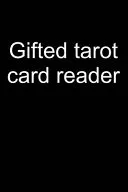
Tatyana Tarotista's "Gifted Tarot Card Reader" notebook presents itself as a practical tool rather than a theoretical treatise. Its straightforward design, featuring 120 lined pages, a table of contents, and numbered pages, aims to provide structure for Tarot enthusiasts. The cover's "Gifted tarot card reader" text, coupled with an "elegant typographic design," certainly aims for visual appeal, though its effectiveness as an "eye-catcher" might depend on individual taste. The core strength lies in its utilitarian purpose: offering a dedicated space for personal Tarot readings and reflections, a valuable asset for anyone serious about developing their practice. However, its limitation is precisely this singular focus. It offers no guidance, no interpretive frameworks, and no historical context beyond its implied utility for existing practitioners. A passage detailing how to record a specific spread, for instance, would have added more concrete value than the generic "convenient - original" descriptors. Ultimately, it's a functional, if uninspired, organizational tool for the devoted Tarot reader.
📝 Description
83
### What It Is This publication functions as a specialized notebook, meticulously designed for individuals engaged with Tarot card readings. Measuring 6x9 inches, it provides 120 lined pages, complete with a table of contents and pagination for efficient organization. Its primary utility lies in its structured format, offering a dedicated space for recording insights, interpretations, and observations related to Tarot practices.
### Who It's For The intended user is the dedicated Tarot card reader. This includes those who already possess a collection of Tarot decks, reference books, protective bags, and other associated accouterments. The design specifically caters to those who value systematic record-keeping and wish to document their personal journey with Tarot, enhancing their practice through detailed annotation and reflection.
### Historical Context While the book itself is a modern artifact, its purpose is deeply rooted in the long tradition of divination and esoteric study. Since the late 19th century, with the rise of figures like Eliphas Lévi and the Hermetic Order of the Golden Dawn, Tarot has been integrated into more formalized systems of occult philosophy. This notebook echoes the need for personal grimoires and journals that have been a staple for practitioners seeking to codify their experiences and correspondences with symbolic systems, a practice evident since at least the era of Antoine Court de Gébelin's extensive writings on the subject in the late 18th century.
### Key Concepts The core concept revolves around the systematization of Tarot practice. It emphasizes that consistent journaling and observation are crucial for developing intuitive skills and understanding the nuanced language of the cards. The notebook facilitates this by providing a framework for tracking card placements, meanings in context, and personal reflections, thereby transforming passive reading into an active, evolving dialogue with the archetypal imagery of the Tarot.
💡 Why Read This Book?
• Gain structured practice enhancement by utilizing the 120 lined pages and table of contents to meticulously document your personal Tarot readings, fostering a deeper connection with card meanings beyond initial interpretations. • Develop a personalized Tarot lexicon by recording specific card combinations and their unique significance within your readings, directly referencing the notebook's numbered pages as a growing personal grimoire. • Enhance intuitive accuracy through consistent annotation, inspired by the notebook's handy 6x9 inch size and its invitation to record observations after each session, much like practitioners have done since the late 19th-century occult revival.
⭐ Reader Reviews
Honest opinions from readers who have explored this book.
❓ Frequently Asked Questions
What is the primary purpose of the "Gifted Tarot Card Reader" notebook?
The notebook serves as a dedicated journal for Tarot enthusiasts to record their readings, interpretations, and insights. It's designed to help users systematically track their progress and develop a more personal understanding of the Tarot.
What are the physical specifications of this notebook?
It is a 6x9 inch notebook with 120 lined pages. It features a table of contents and numbered pages to aid in organization and easy reference for past readings.
Who is the ideal user for this product?
The ideal user is an active Tarot card reader who already owns Tarot decks and related materials and wishes to document their practice systematically.
Does the notebook contain any Tarot interpretations or guidance?
No, the notebook is designed as a blank journal. It provides space for the user to record their own interpretations and insights, rather than offering pre-written guidance.
What makes the design stand out according to the description?
The design is described as an "eye-catcher" featuring "original artwork with elegant typographic design," intended to be distinctive for those passionate about Tarot.
When was this notebook first published?
The notebook was first published on April 14, 2019, indicating it is a contemporary tool for modern Tarot practitioners.
🔮 Key Themes & Symbolism
Personalized Divination Practice
This notebook champions the idea that Tarot reading is not merely about memorizing card meanings but about cultivating a dynamic, personal dialogue with the archetypes. By providing 120 pages for recording readings, it encourages users to move beyond generic interpretations and develop their own unique understanding of the cards' messages. The inclusion of a table of contents and numbered pages supports this, allowing for easy retrieval and comparison of past readings, thereby fostering a sense of progression and deepening intuitive skills over time.
Systematic Esoteric Record-Keeping
The publication embodies the historical practice of occultists maintaining detailed journals. From the elaborate grimoires of Renaissance magicians to the structured notebooks of 20th-century Theosophists, the act of writing down esoteric experiences has been crucial for internalizing knowledge and charting spiritual progress. This notebook, with its 6x9 inch format and lined pages, offers a modern, accessible iteration of this tradition, providing a tangible space to document the often-ephemeral insights gained from Tarot sessions.
The Tarot Reader's Toolkit
Positioned as an essential accessory for the serious Tarot practitioner, this notebook complements existing Tarot decks, books, and supplies. It addresses the need for a dedicated space to process the information received during readings, acknowledging that effective divination requires not just access to tools but also a method for integrating their use. The design anticipates the requirements of someone actively engaged in the practice, offering a practical component to their established ritualistic or intuitive approach.
Archetypal Symbolism in Practice
While the notebook itself is blank, its purpose is intrinsically linked to the interpretation of archetypal symbols found within Tarot cards. It serves as a canvas upon which the user maps their understanding of these symbols—the Fool's journey, the High Priestess's intuition, the Tower's upheaval. The act of writing down these interpretations, as facilitated by the structured pages, helps solidify the connection between the visual language of the cards and the user's evolving psychological and spiritual landscape.
💬 Memorable Quotes
“Stylish notebook 6x9 inches lined 120 pages with table of contents and numbered pages.”
— This descriptive passage highlights the functional design of the notebook, emphasizing its practical features such as size, page count, and organizational aids, positioning it as a tool for systematic use.
“FOR TAROT CARD READERS - Great design for those who love tarot and already own a tarot card deck, books, sets, bags, and other supplies!”
— This directly targets the intended audience, clearly stating that the product is specifically crafted for individuals already invested in the practice of Tarot, suggesting it complements their existing collection.
“EYE-CATCHER - This design stands out! Original artwork with elegant typographic design.”
— This asserts the aesthetic appeal of the notebook's cover, claiming its unique visual elements and sophisticated typography are designed to be noticed and appreciated by its users.
“GREAT GIFT - Buy this funny design for a passionate tarot card reader!”
— This suggests the notebook is suitable as a present, highlighting its appeal to those deeply enthusiastic about Tarot, with a hint of lightheartedness ('funny design') in its presentation.
“Handy - convenient - original Fits into your backback or handbag thanks to the handy”
— This emphasizes the portability and practicality of the notebook, noting its convenient size makes it easy to carry for use on the go, blending utility with a sense of unique design.
🌙 Esoteric Significance
Tradition
This notebook aligns with the practical, experiential branches of Western Esotericism that emphasize personal gnosis and self-development through symbolic systems. While not tied to a specific lineage like Kabbalah or Hermeticism, it serves as a modern tool for practitioners who engage with Tarot as a form of divination, psychological exploration, or spiritual guidance, traditions that have roots stretching back to figures like Etteilla in the late 18th century.
Symbolism
The notebook itself is a symbolic vessel for the user's interpretations of Tarot archetypes. The blank pages represent potential, the numbered pages signify order and progression, and the table of contents acts as a map to the user's personal esoteric journey. It transforms abstract symbols encountered in a Tarot deck—such as the Major Arcana figures or suit meanings—into concrete, recorded experiences.
Modern Relevance
Contemporary practitioners of Tarot, often influenced by psychological approaches popularized in the late 20th century and the digital age's emphasis on personal branding and self-care, find value in such tools. Thinkers and practitioners exploring the intersection of Tarot, mindfulness, and personal growth, often found in online communities and modern occult publications, utilize journals like this to document their evolving relationship with the cards.
👥 Who Should Read This Book
• Aspiring Tarot readers seeking to build a foundational practice by documenting their initial interpretations and learning experiences, leveraging the numbered pages for organized study. • Experienced Tarot practitioners looking to deepen their intuitive connection and refine their reading techniques by systematically recording spreads and insights, utilizing the table of contents for cross-referencing. • Students of divination and esoteric journaling who wish to integrate Tarot into a broader practice of self-reflection and spiritual development, benefiting from the convenient 6x9 inch format for consistent use.
📜 Historical Context
Published in 2019, Tatyana Tarotista's notebook arrives in an era where esoteric practices, particularly Tarot, have seen a significant resurgence, moving from niche occult circles into mainstream wellness culture. This contrasts sharply with the late 19th and early 20th centuries, a period dominated by figures like A.E. Waite and Pamela Colman Smith, whose Rider-Waite deck (1909) standardized much of modern Tarot imagery. During that time, engagement with Tarot was often framed within more formal esoteric orders like the Hermetic Order of the Golden Dawn, and practitioners meticulously recorded their findings in personal journals to align with established occult philosophies. While Waite himself published extensively on Tarot symbolism, the contemporary trend, reflected in this notebook, emphasizes personal, unmediated interpretation. Unlike the scholarly debates surrounding Aleister Crowley's Thoth Tarot and its reception by figures like Lady Frieda Harris, this notebook focuses solely on the user's direct experience, sidestepping theoretical discourse and historical lineage.
📔 Journal Prompts
Record three key symbols from the 'Ace of Swords' reading and their immediate intuitive associations.
Detail the narrative arc observed across the three cards drawn for today's 'Past-Present-Future' spread.
Note any recurring themes or patterns observed between the 'Gifted tarot card reader' cover text and the cards drawn.
Reflect on the significance of the 'numbered pages' concept in relation to the sequential nature of the Major Arcana.
Document the personal meaning derived from the 'elegant typographic design' of the notebook in the context of your Tarot practice.
🗂️ Glossary
Tarot Card Reader
An individual who practices divination or self-exploration using a deck of Tarot cards, interpreting their symbolic imagery to gain insights.
Esoteric
Relating to or being concerned with the inner workings of a subject, often involving spiritual or mystical knowledge accessible only to a select group.
Divination
The practice of seeking knowledge of the future or the unknown by supernatural means, such as interpreting omens, casting lots, or using tools like Tarot cards.
Archetypes
In Jungian psychology and esoteric traditions, universal, primordial images and patterns of thought that derive from the collective unconscious and are the psychic counterpart of instinct.
Spread
A specific arrangement of Tarot cards laid out for interpretation, designed to address a particular question or area of inquiry.
Gnosis
Knowledge, especially spiritual knowledge, of a transcendent, mystical nature, often attained through direct experience or intuition.
Typographic Design
The art and technique of arranging type (letters and symbols) to make written language legible, readable, and appealing when displayed.