Fortune-telling with Tarot Cards
 72
72

Fortune-telling with Tarot Cards
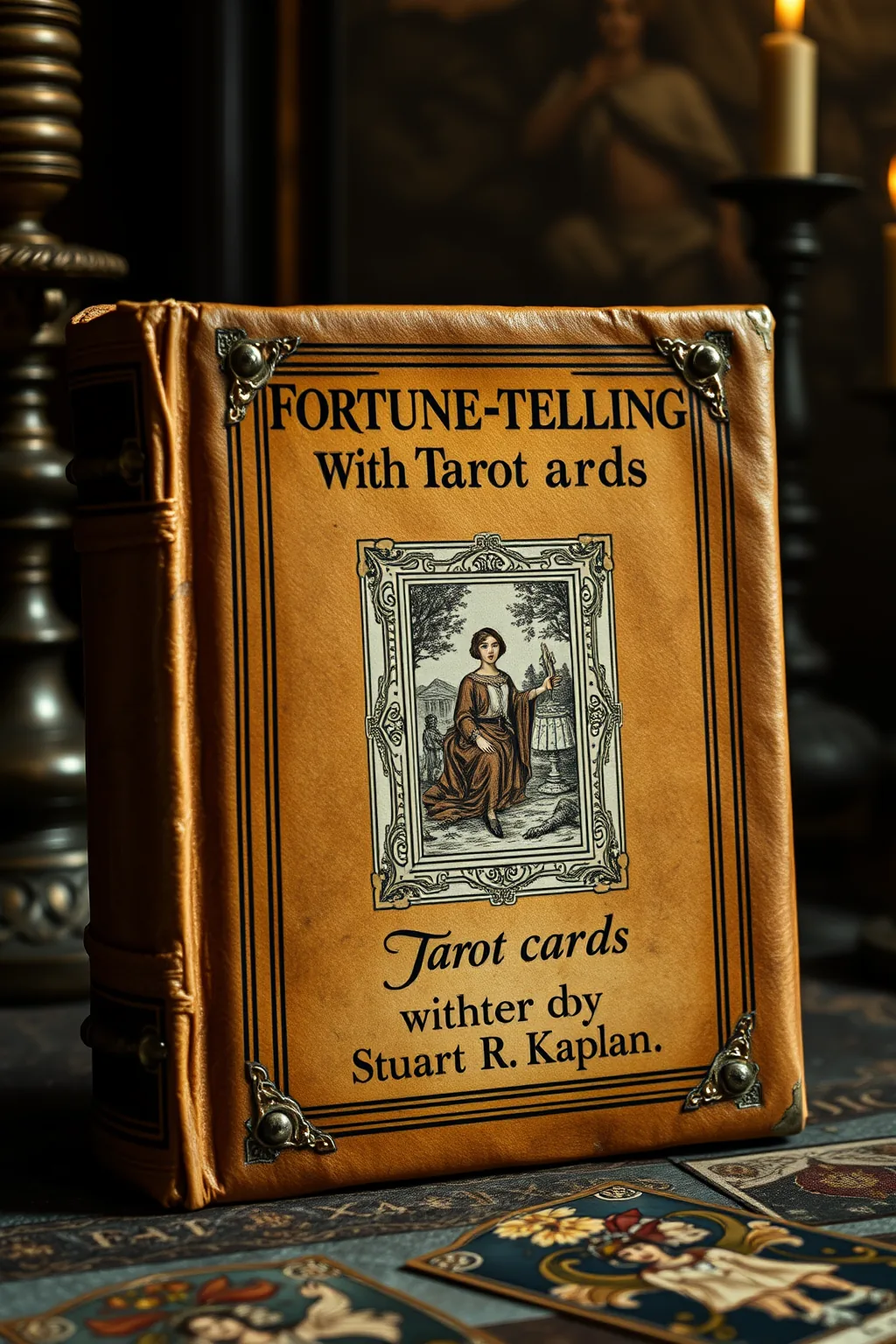
Stuart R. Kaplan's "Fortune-telling with Tarot Cards" presents a grounded approach to cartomancy, eschewing overly mystical jargon for clear, actionable instruction. The work’s strength lies in its systematic breakdown of the 78 cards and its detailed explanations of common spreads, such as the Celtic Cross. For instance, the chapter detailing the Minor Arcana's suit correspondences provides a solid framework for understanding their everyday implications. However, the book occasionally feels more like a comprehensive manual than a text that invites deep intuitive exploration. While it offers the mechanics of reading, it could benefit from more nuanced discussions on integrating the cards into a broader psychological or spiritual practice. Nevertheless, Kaplan delivers a reliable and informative guide for serious students of the Tarot.
📝 Description
72
Stuart R. Kaplan's 1995 book unpacks the symbolic language of the Tarot deck for divination.
Fortune-telling with Tarot Cards provides a structured approach to cartomancy. The book examines the Tarot deck's composition, offering detailed interpretations for each card. It also presents various spread layouts used in readings, guiding readers through different interpretive methods. Kaplan moves beyond simple prediction, framing the Tarot as a tool for self-examination and spiritual awareness. This methodical presentation aims to make the practice accessible to those seeking a clear understanding of Tarot's divinatory applications.
The book is suitable for newcomers to the Tarot and those with existing experience who wish to refine their skills. Students of esoteric studies will find its systematic overview helpful for integrating Tarot symbolism into their work with mythology, psychology, or general symbolism. Kaplan's text is designed for serious learners who prefer a step-by-step method for mastering cartomancy.
Published in 1995, this book emerged during a period of revived interest in esoteric subjects. It follows earlier popularizations of Tarot, such as those associated with the Rider-Waite deck. Kaplan's work synthesizes various interpretive approaches into an organized system. It aims to present Tarot knowledge in a clear, accessible format, distinguishing it from more intuitive or less structured methods. The book reflects a desire to systematize and teach the practice of Tarot divination.
💡 Why Read This Book?
• Gain a structured understanding of the 78 Tarot cards, including the distinct symbolism of the Major and Minor Arcana, which provides a foundational knowledge base unlike generalized divination guides. • Learn specific card spreads, such as the Celtic Cross as detailed in the book, enabling practical application for focused inquiries beyond simple yes/no answers. • Grasp the historical context of Tarot interpretation, understanding how Kaplan’s 1995 publication fits into the broader evolution of cartomancy and esoteric studies.
⭐ Reader Reviews
Honest opinions from readers who have explored this book.
❓ Frequently Asked Questions
What is the origin of the Tarot deck as discussed in Kaplan's book?
Kaplan's "Fortune-telling with Tarot Cards" focuses on the divinatory use of the Tarot, largely referencing the 78-card structure popularized in the late 19th and early 20th centuries, particularly the Rider-Waite system which emerged around 1909.
How does Kaplan differentiate between Major and Minor Arcana?
The book explains that the Major Arcana represent significant life events and spiritual lessons, while the Minor Arcana, divided into four suits, describe more everyday circumstances and challenges faced by the querent.
Are specific card reading techniques taught in this book?
Yes, "Fortune-telling with Tarot Cards" details various spreads, including the widely used Celtic Cross, and explains how to interpret card positions within these layouts for comprehensive readings.
Is this book suitable for beginners in Tarot?
Absolutely. Kaplan's methodical approach breaks down complex symbolism into digestible parts, making it an excellent resource for those new to Tarot who seek a structured learning path.
What is the significance of the publication year, 1995, for this book?
Published in 1995, the book reflects a mature phase of modern Tarot scholarship, synthesizing earlier traditions and presenting them in a clear, accessible format for a growing esoteric audience.
Does the book cover the historical evolution of Tarot cards?
While primarily focused on interpretation and divination, the work touches upon the established structure of the 78-card deck, acknowledging its lineage without extensive historical tracing.
🔮 Key Themes & Symbolism
The Arcana's Dual Nature
Kaplan elucidates the fundamental division within the Tarot deck: the Major Arcana and the Minor Arcana. The Major Arcana are presented as archetypal forces governing significant life transitions and spiritual growth, such as The Fool's journey or The Hierophant's wisdom. Conversely, the Minor Arcana, comprising four suits (Wands, Cups, Swords, Pentacles), are detailed as reflecting the ebb and flow of daily life, relationships, intellect, and material concerns. This distinction is crucial for understanding the layered meanings conveyed in a reading.
Symbolic Language of Cards
Central to the book is the interpretation of individual card imagery and symbolism. Kaplan guides readers through the traditional meanings associated with figures like The High Priestess, the elemental associations of each suit, and the numerological significance of the numbered cards. The work emphasizes that each card is a symbolic representation, offering insights into the querent's situation through its unique visual narrative and traditional associations.
Cartomantic Spreads and Interpretation
The book dedicates substantial attention to various methods of arranging cards for divination, known as spreads. It details common layouts like the Celtic Cross, explaining the specific divinatory significance of each position within the spread. Kaplan teaches how to synthesize the meanings of individual cards in relation to each other and their positional context, transforming a collection of symbols into a coherent narrative or answer.
Tarot as a Divinatory Tool
Kaplan positions the Tarot primarily as a tool for fortune-telling and gaining foresight. The work focuses on practical application, providing readers with the knowledge to use the cards for prediction and guidance on specific questions. It explores how different card combinations can suggest potential outcomes or highlight influencing factors in a given situation, emphasizing the predictive power of the deck.
💬 Memorable Quotes
Direct passages from the work, attributed to the author.
“The Major Arcana represent the archetypal forces governing significant life transitions.”
— This highlights Kaplan's view of the Major Arcana as embodying universal spiritual lessons and major life path markers, distinct from the everyday concerns of the Minor Arcana.
“Each suit in the Minor Arcana corresponds to a different domain of human experience.”
— This interpretation underscores the book's systematic approach, assigning specific areas of life—like emotions (Cups) or intellect (Swords)—to each of the four suits for clearer understanding.
“Card positions within a spread modify individual card meanings.”
— This concept stresses that context is key in Tarot reading; a card's meaning is not static but is influenced by its place in the overall layout and its relationship to other cards.
“The Fool's journey is a metaphor for spiritual evolution.”
— This captures the idea that the sequence of the Major Arcana can be seen as a narrative arc, charting a path of growth and self-discovery from innocence to wisdom.
“The Tarot is a mirror reflecting the querent's subconscious.”
— This interpretation suggests that the cards act as symbolic prompts, bringing hidden thoughts, feelings, or potentials to the surface for conscious examination.
🌙 Esoteric Significance
Tradition
This work firmly sits within the Western esoteric tradition, specifically drawing from the cartomantic and divinatory streams that gained prominence in the late 19th and early 20th centuries. It aligns with the popularization of Tarot as a tool for psychological insight and future telling, building upon foundations laid by figures like Eliphas Lévi and A.E. Waite. While not strictly Hermetic or Kabbalistic in its core presentation, it utilizes the symbolic framework that these traditions helped to establish within Tarot imagery.
Symbolism
Key symbols explored include the archetypal figures of the Major Arcana, such as The Magician representing agency and skill, and The Hermit symbolizing introspection and inner guidance. The four suits of the Minor Arcana—Wands (action/creativity), Cups (emotions/relationships), Swords (intellect/conflict), and Pentacles (material world/security)—are central motifs, each conveying distinct energies and areas of life.
Modern Relevance
Kaplan's systematic approach continues to influence contemporary Tarot readers and educators. Modern practitioners, particularly those interested in practical application and clear methodology, often reference works like this for foundational knowledge. Its influence can be seen in online Tarot courses, modern divinatory guides, and even in therapeutic settings where Tarot is used for self-exploration, albeit often with a more nuanced psychological overlay than Kaplan’s primary focus on fortune-telling.
👥 Who Should Read This Book
['• Beginning Tarot students seeking a clear, step-by-step introduction to card meanings and basic spreads.', '• Aspiring fortune-tellers or diviners who want to develop practical skills in interpreting card combinations.', '• Esoteric researchers interested in the practical application and historical development of cartomancy in the late 20th century.']
📜 Historical Context
Stuart R. Kaplan’s "Fortune-telling with Tarot Cards," published in 1995, arrived during a resurgence of interest in esoteric practices following the counterculture movements of the 1960s and 70s. This era saw a growing acceptance and academic study of occultism, moving it from the fringes towards mainstream curiosity. While figures like A.E. Waite had profoundly shaped modern Tarot interpretation with his deck in 1909, Kaplan’s work emerged in a landscape influenced by psychological approaches, notably Carl Jung’s theories on archetypes which found fertile ground in Tarot symbolism. Unlike more radical interpretations or those focused solely on ritual, Kaplan’s book offered a structured, almost academic, presentation of divinatory techniques, making it accessible to a wider audience seeking practical knowledge rather than pure mysticism. Its publication did not coincide with significant controversy or censorship but rather contributed to a growing body of accessible guides for the burgeoning esoteric consumer market.
📔 Journal Prompts
The Fool's journey as a metaphor for personal growth.
Interpreting the suit of Swords in relation to contemporary challenges.
Reflecting on the symbolism of The Hierophant in modern societal structures.
Analyzing the interplay between Major and Minor Arcana in a personal reading.
The role of The Hermit in seeking inner guidance.
🗂️ Glossary
Cartomancy
The practice of divination using a deck of cards, most commonly the Tarot. It involves interpreting the symbols and arrangement of cards to gain insight into past, present, or future events.
Major Arcana
The set of 22 trump cards in a Tarot deck, numbered from 0 (The Fool) to XXI (The World). They represent significant life lessons, archetypal figures, and major spiritual themes.
Minor Arcana
The 56 cards of a Tarot deck, divided into four suits (Wands, Cups, Swords, Pentacles). They typically represent everyday events, challenges, and circumstances.
Spread
A specific arrangement or layout of Tarot cards used for divination. Different spreads are designed to answer particular types of questions or explore specific aspects of a situation.
Querent
The person for whom a Tarot reading is being performed. The cards are drawn and interpreted in relation to the querent's questions or situation.
Archetype
In the context of Tarot, a universal, primordial image or pattern of thought that influences human behavior and understanding, often represented by the Major Arcana cards.
Divination
The practice of seeking knowledge of the future or the unknown by supernatural means. In this context, it refers specifically to using Tarot cards for insight.